High-Speed Positioners: What Improves Response Without Instability
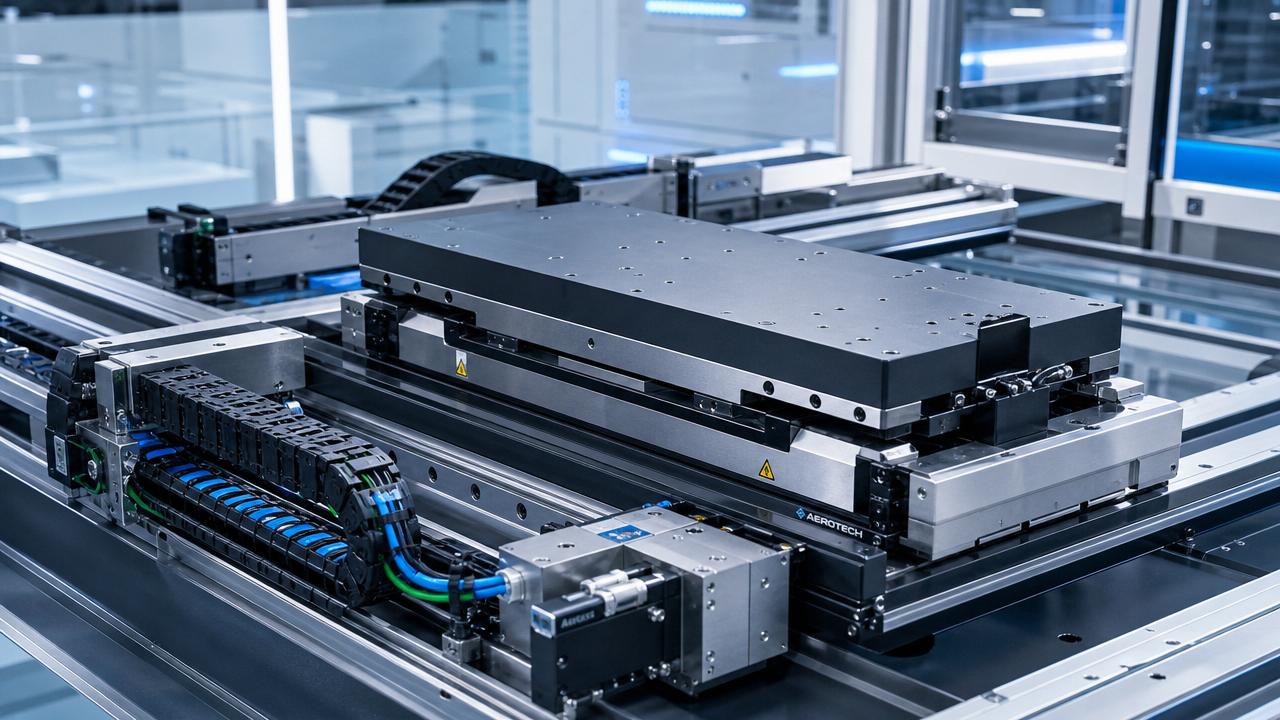
High-speed positioners improve productivity only when faster motion remains controlled. In practice, the best response comes from matching mechanics, actuator technology, sensor quality, and control tuning to the task.
For operators and system users, the main question is not how to make motion simply faster. It is how to reduce settling time, hold accuracy, and avoid overshoot, resonance, and unstable behavior.
In most systems, response without instability is improved by lowering moving mass, increasing structural stiffness, using better feedback, tuning the controller carefully, and staying within realistic operating limits.
This article explains what really affects high-speed positioners, what signs suggest poor tuning or poor system matching, and how users can judge whether a faster stage will stay stable in production.
Why High-Speed Positioners Become Unstable So Easily
Many users assume instability starts in the controller. Often, the problem begins earlier, in the mechanical system, the load, or the way the positioner is being used.
High-speed positioners operate with very short move times and high acceleration. That creates more force, more vibration energy, and more sensitivity to even small weaknesses in mounting, alignment, or feedback quality.
When response is pushed too aggressively, the system may overshoot the target, oscillate before settling, or react differently at different points in travel. These are classic signs that speed exceeds stable system behavior.
A positioner can also appear fast in a specification sheet but become unstable in the real machine. Payload changes, cable drag, fixture compliance, and thermal drift all reduce practical stability margins.
What “Better Response” Really Means in Daily Operation
For operators, faster response should not be judged only by peak speed. The more useful metric is total time to accurate position, including acceleration, deceleration, and settling after the move.
If a stage reaches the target quickly but then rings for several milliseconds, throughput may not improve at all. In inspection, dispensing, optics, and semiconductor work, that extra settling time matters greatly.
Better response also means repeatable behavior. A system that performs one fast move well but struggles after thermal change, different payloads, or long duty cycles is not truly optimized.
So the practical goal is short settling time with acceptable overshoot, strong repeatability, and stable performance across the real operating window, not just under ideal lab conditions.
The Mechanical Design Factors That Improve Response
Mechanical design is often the first limit on stable speed. Even excellent control tuning cannot fully compensate for a flexible frame, weak mounting base, or poorly distributed mass.
Lower moving mass helps because the actuator must control less inertia. That usually allows higher acceleration and faster correction with less energy stored in the motion system.
Higher structural stiffness also matters. A stiff stage, carriage, bracket, and load interface push resonant frequencies higher, making the system easier to control at faster response rates.
Shorter force paths improve behavior too. When the actuator, guide, sensor, and payload are arranged compactly, the system usually has less compliance and fewer opportunities for vibration to grow.
Good cable management is frequently underestimated. Stiff or poorly routed cables can add variable side force, change effective load, and introduce motion disturbances that look like tuning problems.
Mounting quality is equally important. If the positioner sits on a flexible machine frame, some commanded energy goes into moving the support structure rather than the intended axis.
Why Actuator Selection Has a Direct Impact on Stability
Different actuator types behave very differently at high speed. Piezoelectric, voice coil, linear motor, and pneumatic systems each have strengths, but each requires matching to stroke, load, and accuracy needs.
Piezo-based high-speed positioners are known for extremely fast response and high resolution. They work especially well for small strokes, light loads, and applications where microsecond or millisecond behavior matters.
However, piezo systems need careful control because they can be affected by hysteresis, creep, and structural resonance if the full system is not designed well.
Voice coil and linear motor stages can deliver smooth dynamic motion over longer strokes. They often perform well when high acceleration is needed, but thermal load and servo tuning become important.
Pneumatic positioners can be fast in some industrial tasks, but compressibility makes ultra-precise, highly damped control harder than with direct-drive electric systems in demanding precision applications.
For users, the key question is whether the actuator’s natural behavior supports the required stroke, payload, duty cycle, and precision level without relying on overly aggressive control correction.
Feedback Quality: Fast Motion Depends on What the System Can Actually See
A controller cannot stabilize motion it cannot measure correctly. High-speed positioners depend heavily on feedback resolution, latency, linearity, and signal quality.
If the encoder or sensor has delay, noise, or insufficient bandwidth, the control loop reacts too late or to the wrong information. That directly increases overshoot and settling time.
Sensor placement also matters. Measuring position close to the actual payload is usually better than measuring at a distant motor location where compliance and backlash can be hidden.
In precision systems, users should pay attention not only to nominal resolution but also to update rate, interpolation quality, electrical noise resistance, and thermal stability.
Good shielding, grounding, and cable routing support stable feedback. In high-frequency industrial environments, poor electrical practice can create apparent instability that is really measurement corruption.
Control Tuning: Faster Is Not the Same as More Aggressive
One of the most common mistakes is increasing gain until motion looks fast during simple tests. That approach can produce unstable behavior as soon as the load changes or the move profile becomes harder.
Well-tuned high-speed positioners balance responsiveness and damping. The controller must correct error quickly while avoiding excitation of resonant modes in the mechanical structure.
Proportional, integral, and derivative settings all affect this balance. Too much proportional gain can create oscillation. Too much integral action can worsen settling. Poor derivative use can amplify noise.
Feedforward control is often valuable because it helps the system anticipate motion demand instead of correcting only after error appears. This can improve tracking without requiring excessive feedback gain.
Notch filters and resonance compensation can also help when a known vibration mode limits response. But they should be used carefully, because filtering cannot fully fix weak mechanics.
For operators, the practical lesson is simple: a stable tuning profile is usually one that remains predictable across payloads, temperatures, and duty cycles, not only one that looks sharp during setup.
Motion Profile Design Can Improve Speed Without Raising Instability
Many instability problems are caused not by the hardware itself but by the commanded move profile. Abrupt starts and stops inject unnecessary vibration into the system.
S-curve profiles often reduce excitation compared with simple trapezoidal moves because acceleration changes more smoothly. That can shorten real settling time even if peak acceleration is slightly lower.
Command shaping is especially useful in systems with known resonance. By controlling how motion energy is introduced, users can reach target position faster in practice with less oscillation.
Move distance also matters. A profile optimized for long travel may be unsuitable for very short indexing moves, where settling dominates total cycle time.
In production, it is often better to optimize the complete motion sequence rather than chase maximum axis speed. Stable motion between actual process points is what improves throughput.
Load, Environment, and Installation Conditions Often Decide the Outcome
Two identical high-speed positioners can behave very differently in different machines. Installation conditions strongly influence stability, especially at high acceleration and fine positioning tolerances.
Payload mass and center of gravity are major factors. A load mounted too high or too far from the motion center increases moment forces and can excite tilt or structural bending.
Temperature is another hidden variable. Heat from nearby equipment, continuous duty, or motor losses can change dimensions, sensor performance, and actuator characteristics over time.
Vacuum, cleanroom, and other controlled environments may also change design choices. Material selection, lubrication limits, outgassing control, and cable behavior can all affect dynamic performance.
Users should also consider external vibration from pumps, fans, conveyors, or nearby axes. A well-tuned stage may become unstable when environmental vibration enters the same frequency range.
How Operators Can Recognize a Well-Matched High-Speed Positioner
From a user perspective, the best system is not the one with the most impressive top-line numbers. It is the one that delivers stable, repeatable motion under actual working conditions.
Look for settling time data, not just maximum speed. Ask whether performance is specified with a real payload, over the intended stroke, and within the expected duty cycle.
Check whether the supplier provides frequency response information, resonance data, or tuning guidance. These details often reveal far more about practical stability than generic brochure language.
It is also useful to ask how the system behaves after installation changes. Can it tolerate cable changes, fixture replacement, or modest payload variation without complete retuning?
For critical processes, request demonstration data from an application similar to your own. A fast move in an unloaded demo is less meaningful than stable production-style performance.
Common Warning Signs That Response Is Being Pushed Too Far
Several symptoms suggest a high-speed positioner is operating beyond a stable range. The most obvious are overshoot, ringing, audible vibration, and inconsistent settling from move to move.
Another sign is sensitivity to small changes. If slight payload adjustments or minor temperature shifts suddenly change performance, control margins may be too narrow.
Watch for rising following error during repeated cycles, increasing heat, or worsening precision at the ends of travel. These can indicate mechanical stress, tuning limits, or sensing problems.
In some systems, process quality reveals the issue first. Dispensing lines may blur, optical alignment may drift, or inspection images may smear before motion alarms appear.
When these signs appear, the answer is not always stronger tuning. Often the better solution is to revisit load, profile, mounting, or the fundamental fit between actuator and application.
A Practical Checklist for Improving Response Without Losing Stability
Start by defining the real target: required move distance, payload, allowed overshoot, final accuracy, and acceptable settling time. Without this, “faster” has no useful meaning.
Next, verify the mechanics. Check mounting rigidity, payload alignment, cable forces, and fixture stiffness. Mechanical weaknesses should be corrected before controller gains are changed.
Then review feedback quality. Confirm sensor bandwidth, noise level, and placement relative to the load. Reliable measurement is essential for stable high-speed control.
After that, tune the control loop conservatively and test across realistic operating conditions. Include temperature variation, production duty cycle, and expected payload range.
Optimize the motion profile as part of the solution. Smoother acceleration and better command shaping often provide safer gains in throughput than simply raising loop aggressiveness.
Finally, evaluate results using total cycle performance, not just move start or peak speed. The best high-speed positioners are those that reach position quickly and stay there predictably.
Conclusion
High-speed positioners deliver real value when response improvements reduce total process time without creating vibration, overshoot, or unstable control behavior.
For most users, stable speed comes from system balance: stiff mechanics, suitable actuator choice, high-quality feedback, realistic motion profiles, and disciplined tuning.
If any one of these elements is weak, pushing for faster response usually creates new problems instead of better productivity. If they are aligned, fast motion and precise settling can coexist.
The best approach is to judge high-speed positioners by stable performance in the real application. That is what turns impressive motion capability into repeatable production value.
Industry Briefing
Get the top 5 industry headlines delivered to your inbox every morning.