Is Smart Seal Monitoring Technology Ready Yet?
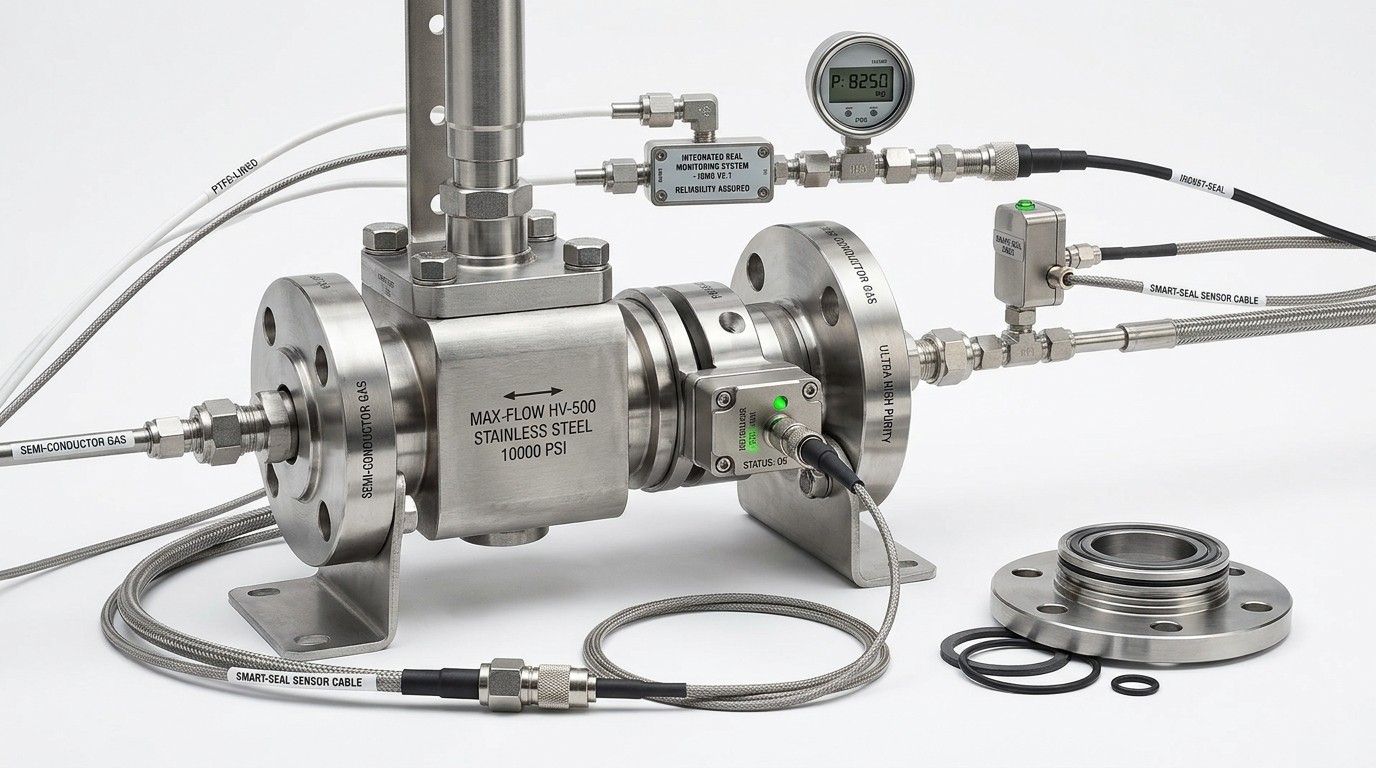
As critical flow systems grow more complex, smart seal monitoring technology is moving from concept to operational necessity. For decision-makers evaluating energy containment, containment technology, and extreme-environment seals, the real question is no longer whether digital monitoring matters, but whether today’s high-performance components can deliver measurable gains in reliability, compliance, and uptime across the world’s most demanding industrial applications.
What does smart seal monitoring actually mean in critical industrial systems?
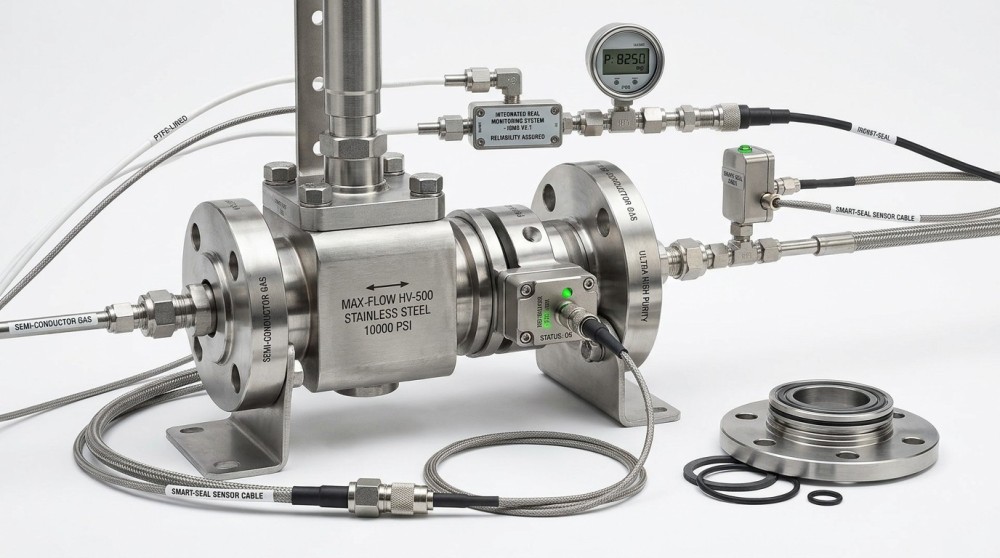
Smart seal monitoring refers to the use of sensors, signal processing, and condition-based analytics to detect changes in sealing performance before leakage, contamination, pressure loss, or thermal instability become operational failures. In practice, this can include monitoring temperature drift, pressure fluctuation, vibration patterns, acoustic signatures, or media exposure around a sealing interface over continuous operating windows of 24/7 duty cycles.
For information researchers and enterprise decision-makers, the key issue is not the label “smart.” It is whether the monitoring layer can support the logic of containment and flow without introducing new failure points. In sectors such as semiconductor processing, hydrogen handling, vacuum systems, RF energy platforms, and high-pressure actuation, even a small deviation over 5–30 minutes can trigger costly downtime, product scrap, or compliance review.
This is why smart seal monitoring should be evaluated as a system-level reliability tool rather than a stand-alone accessory. The seal, housing, media chemistry, operating pressure, thermal cycling profile, and control architecture all influence whether digital monitoring is useful, noisy, or misleading. A monitored seal in a 700 bar hydrogen-compatible valve must be judged differently from a monitored FFKM sealing point in a clean process chamber.
Why the market is paying closer attention now
Three shifts are driving adoption. First, tolerances are becoming tighter in advanced manufacturing and energy systems. Second, maintenance models are moving from scheduled replacement every 3–6 months toward condition-based intervention. Third, procurement teams are under pressure to justify total lifecycle value, not just initial component cost. Smart seal monitoring fits this transition when it can shorten diagnosis time from hours to minutes and reduce unplanned inspections.
At G-PCS, this topic matters because sealing performance cannot be separated from broader engineering realities. Across Ultra-High Pressure Control & Valves, Industrial Microwave & RF Energy Systems, Extreme-Environment Mechanical Seals, High-Precision Pneumatic & Piezoelectric Actuators, and Specialized Polymer & Composite Gaskets, the real benchmark is not novelty. It is whether monitoring aligns with ISO, API, SEMI, or MIL-SPEC expectations and with the reliability framework of the host equipment.
- A useful monitoring scheme should identify at least 3 classes of change: process drift, seal degradation, and installation-related anomalies.
- Signal review intervals are commonly set by operating risk, such as real-time alarms, hourly trending, or weekly maintenance analysis.
- The highest-value deployments are usually found where downtime, contamination, or leakage costs exceed the added integration effort.
Is the technology ready today, or only for selected applications?
The short answer is that smart seal monitoring is ready in selected applications, partially ready in others, and still immature where environmental variables overwhelm signal quality. Decision-makers should avoid a binary yes-or-no view. Readiness depends on four conditions: sensor survivability, signal relevance, integration discipline, and maintenance response capability. If one of these four is weak, the monitoring layer may produce data without producing action.
Applications with relatively stable process windows often show earlier readiness. Examples include monitored pressure retention in UHP valve assemblies, leak-risk observation in controlled gas delivery systems, and wear pattern tracking in repeat-cycle mechanical seals. By contrast, extremely noisy environments with rapid thermal shock, aggressive media attack, or complex multiphysics loading may still require hybrid strategies that combine manual inspection with limited digital sensing.
A practical way to judge readiness is to ask whether the monitoring system can support a repeatable decision within 1 of 3 response windows: immediate shutdown, planned intervention within 24–72 hours, or trend review during the next service interval. If data cannot be tied to one of those actions, the business case remains weak regardless of sensor sophistication.
Where readiness is strongest
Readiness is strongest where sealing points are mission-critical, access is limited, and process contamination is expensive. Semiconductor fluid control, high-purity gas delivery, high-pressure hydrogen systems, aerospace test environments, and advanced RF thermal process equipment are strong candidates. In these environments, a monitored seal can support leak avoidance, chamber integrity control, and maintenance prioritization, especially when operating conditions are logged continuously over weeks or months.
Where caution is still necessary
Caution is still necessary in highly compact assemblies where adding sensors changes the thermal or mechanical profile of the seal package. It is also necessary where false positives can trigger unnecessary shutdowns. In some systems, a conventional high-performance seal with better materials selection and stricter installation control may outperform a monitored but poorly integrated smart sealing concept. This is particularly true when procurement focuses on electronics first and sealing fundamentals second.
For enterprise buyers, this means readiness is not a general market claim. It is an application-specific decision. The most reliable path is to evaluate smart seal monitoring by operating media, pressure band, temperature range, maintenance access, and data-handling maturity before requesting full-scale rollout.
Which performance metrics matter most when comparing smart seal monitoring options?
Buyers often compare sensor features but miss the decision metrics that actually affect uptime. A useful comparison should include detection objective, environmental survivability, response speed, integration burden, and failure-mode relevance. In most industrial procurement reviews, 5 metrics are enough to separate a viable smart seal monitoring solution from a demonstration-grade concept.
The table below summarizes how decision-makers can compare smart seal monitoring approaches in critical containment systems. The purpose is not to rank one sensing method as universally superior, but to connect technology choice with application risk, seal type, and maintenance strategy.
A strong procurement review should treat these metrics as a package. For example, fast response is attractive, but not if environmental survivability is weak or if false alarms increase operator intervention every week. In many cases, minute-level trend detection with stable interpretation is more valuable than raw high-speed sensitivity.
Smart monitoring versus conventional sealing strategy
Many teams also need to compare monitored sealing against upgraded conventional seals. That comparison is especially important when budgets are tight or when deployment must start within 2–4 weeks. The next table supports that decision by aligning performance expectations with real procurement trade-offs.
For many B2B buyers, the best entry point is not the most advanced architecture. It is the architecture that delivers a clear operational answer within one maintenance cycle. That is often why phased adoption works better than immediate plant-wide standardization.
How should procurement teams evaluate fit across different applications?
Smart seal monitoring does not create equal value in every environment. Procurement teams should segment use cases by consequence of leakage, process sensitivity, service access, and downtime cost. A seal in an accessible utility skid may not justify the same digital layer as a seal embedded in a vacuum process module, a high-pressure hydrogen interface, or an extreme-environment actuator.
At G-PCS, cross-pillar evaluation matters because containment problems often span more than one component family. A failure that appears to be a gasket issue may actually reflect pressure pulsation from a control valve, thermal behavior from an RF energy source, or motion instability in a pneumatic or piezoelectric actuator. A repository-led procurement review can therefore reduce misdiagnosis before hardware is specified.
Application-based selection logic
The table below can help information researchers and decision-makers prioritize where smart seal monitoring deserves immediate attention and where conventional containment engineering may still be the better first investment.
This comparison shows why “ready yet” depends on context. In high-consequence environments, even moderate monitoring capability can justify itself. In lower-risk systems, improved seal material selection, installation controls, and verification steps may deliver better value per budget cycle.
A 4-step procurement checklist
- Define the failure consequence: leakage, contamination, pressure decay, safety exposure, or lost process stability.
- Map the operating range: media type, temperature band, pressure band, cycle rate, and access constraints.
- Decide the required response window: real-time trip, 24-hour service planning, or quarterly trend review.
- Validate standards and compatibility: ISO, API, SEMI, MIL-SPEC, and internal qualification protocols where applicable.
This 4-step method prevents a common mistake: specifying a smart seal monitoring system before defining what operational decision it is supposed to support.
What are the main implementation risks, standards concerns, and common misconceptions?
The most common misconception is that adding monitoring automatically improves sealing reliability. It does not. Reliability still begins with correct material choice, seal geometry, installation control, and system compatibility. Monitoring adds value by revealing deterioration patterns earlier, but it cannot compensate for an unsuitable elastomer, poor compression control, or a housing that distorts under thermal load.
A second misconception is that any available sensor data can be treated as predictive. In reality, many projects remain diagnostic rather than predictive for the first 6–12 months because teams need time to map signal behavior against actual maintenance findings. Without this correlation period, decision-makers may overestimate readiness and underestimate false alarm exposure.
Standards and compliance also matter. While no single global rule governs every smart seal monitoring architecture, buyers should review whether the host equipment operates under ISO, API, SEMI, or MIL-SPEC-related expectations, and whether digital additions affect validation, cleanliness, documentation, or maintenance traceability. In regulated or mission-critical environments, documentation discipline can matter as much as hardware selection.
Risk points to review before rollout
- Sensor placement may alter mechanical packaging, thermal behavior, or service access if not designed early in the assembly process.
- Signal interpretation may vary across 3 operating states: startup transient, normal steady-state, and shutdown or purge conditions.
- Data ownership and alarm response workflows must be defined across engineering, maintenance, and operations teams before commissioning.
- Replacement planning should consider spare availability, calibration intervals, and integration dependencies, not just seal inventory.
FAQ for researchers and enterprise buyers
The questions below reflect common search and procurement concerns around smart seal monitoring technology in high-reliability containment applications.
How do I know if smart seal monitoring is worth the added cost?
Start by quantifying the consequence of one unplanned seal-related event. If downtime, contamination, product loss, or safety review creates material cost, monitoring may be justified. If the asset is easy to inspect and the seal is low-risk, upgraded conventional sealing and stricter inspection intervals may deliver stronger value.
What delivery and implementation timeline is typical?
For a pilot program, internal review and technical confirmation often take 2–4 weeks, followed by integration planning and validation steps. Full deployment can take longer depending on control-system interfaces, qualification requirements, and whether the monitored seal package must be customized for pressure, media, or environmental resistance.
Which industries benefit most right now?
The strongest near-term benefit appears in applications where containment failure is expensive and process sensitivity is high: semiconductor tools, UHP gas delivery, hydrogen systems, aerospace test assets, RF thermal processing, and extreme-environment equipment where maintenance access is restricted.
Can monitoring replace physical inspection?
Usually no. In most mature programs, monitoring reduces unnecessary inspection frequency and improves timing, but it does not eliminate inspection, validation, or replacement planning. A balanced strategy combines monitored trends with physical verification at defined service intervals.
Why work with G-PCS when evaluating smart seal monitoring?
Decision-makers rarely struggle because they lack product catalogs. They struggle because smart seal monitoring sits at the intersection of sealing materials, pressure control, actuator behavior, compliance expectations, and lifecycle economics. G-PCS is built for that intersection. Our role is to help CTOs, R&D leaders, and procurement directors evaluate containment technology through a technical intelligence lens, not through isolated component claims.
Because G-PCS is organized around five industrial pillars, we can frame monitoring decisions within the broader flow-and-containment architecture. That means comparing not only seal concepts, but also related risks in UHP valve dynamics, RF or microwave thermal effects, extreme-environment mechanical sealing loads, actuator precision behavior, and specialized gasket material compatibility. This cross-domain perspective is especially valuable when a seal issue is actually a system interaction issue.
If you are assessing whether smart seal monitoring is ready for your application, the most useful next step is a focused technical review rather than a generic sales call. We can support parameter confirmation, use-case prioritization, standards-oriented evaluation, and shortlist comparison based on your media type, pressure range, temperature profile, response time requirement, and maintenance model.
What you can discuss with us
- Parameter confirmation for pressure bands, thermal ranges, media compatibility, and duty cycle exposure.
- Selection guidance between monitored sealing, upgraded conventional sealing, or hybrid maintenance strategies.
- Expected delivery path, pilot-stage evaluation scope, and phased rollout planning across 1–3 asset classes.
- Certification and documentation considerations aligned with ISO, SEMI, API, MIL-SPEC, or internal compliance frameworks.
- Custom solution discussions for specialized seals, extreme environments, and mission-critical containment architectures.
If your team needs to determine whether smart seal monitoring is operationally ready, commercially justified, or technically over-specified, contact G-PCS with your application parameters, target delivery window, qualification requirements, and evaluation priorities. That conversation can clarify whether the right move is immediate deployment, a controlled pilot, or a better-engineered conventional sealing upgrade.
Industry Briefing
Get the top 5 industry headlines delivered to your inbox every morning.