Modular Seal System Trends to Watch in 2026
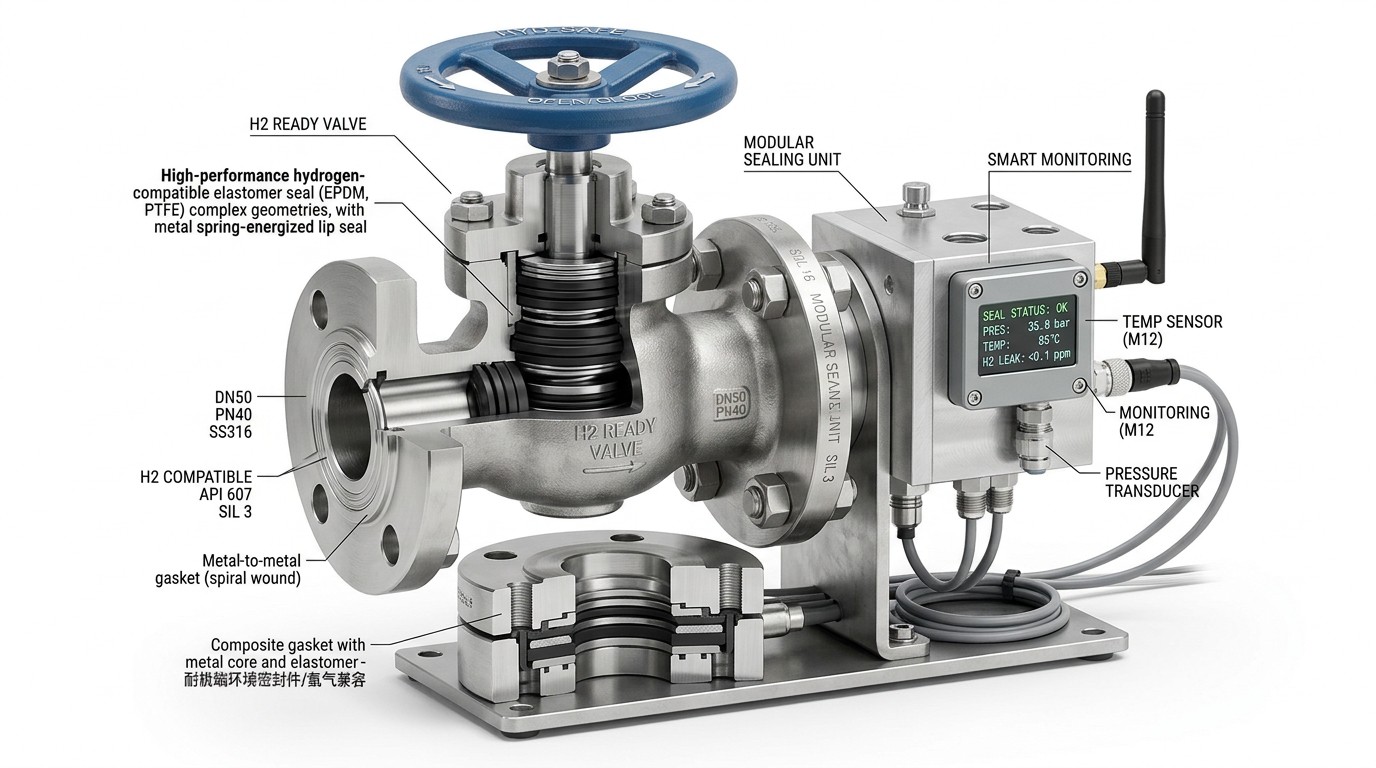
As energy containment and critical flow systems evolve, modular seal system trends in 2026 are becoming a strategic priority for enterprises seeking higher reliability, compliance, and performance. From smart seal monitoring technology to extreme-environment seals, perfluoroelastomer seals, and hydrogen compatible valves, this outlook helps decision-makers track high-performance components, supply chain shifts, and containment technology innovations shaping the next phase of industrial sealing.
For most buyers and technical evaluators, the real question is not simply which modular seal system trends are emerging, but which of them will materially affect uptime, compliance risk, total cost of ownership, and supplier strategy in 2026. The short answer: the market is moving toward smarter, more application-specific, and more qualification-intensive sealing architectures. Companies operating in hydrogen, semiconductor, microwave, chemical processing, aerospace, and other high-consequence environments should expect tighter material scrutiny, stronger demand for modularity, and greater pressure to validate seal performance under real operating conditions rather than relying on general catalog claims.
Which modular seal system trends will matter most in 2026?
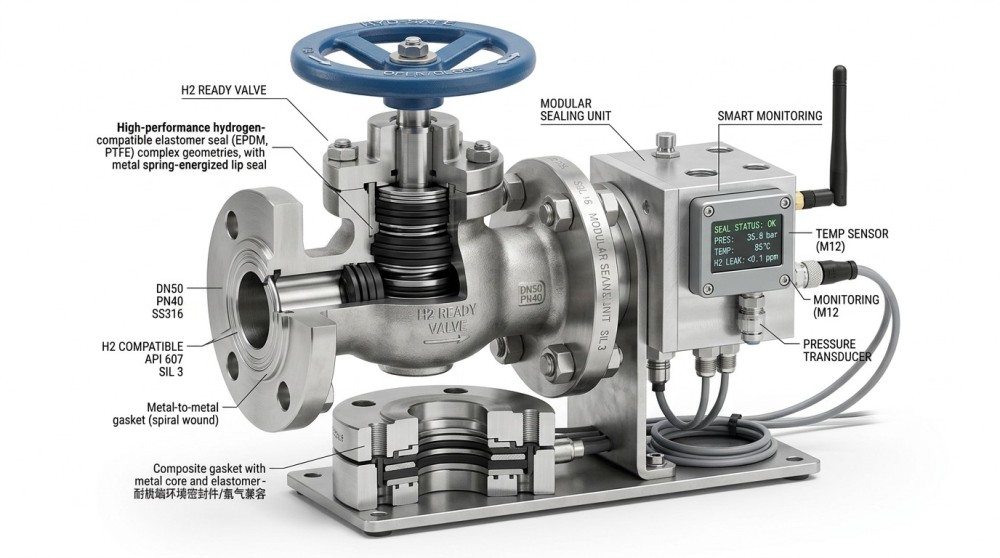
In 2026, the most important modular seal system trends will center on five shifts that directly influence industrial decision-making.
1. Smart seal monitoring moves from pilot use to targeted deployment.
Seal systems in critical assets are increasingly being paired with condition-monitoring frameworks that track leakage indicators, thermal behavior, pressure variation, vibration, and wear-related changes. This does not mean every sealing system becomes fully digitalized, but it does mean high-value equipment is more likely to use sensor-assisted maintenance logic. For enterprises, the value is practical: earlier fault detection, less unplanned downtime, and more reliable maintenance scheduling.
2. Material selection becomes more application-specific and regulation-driven.
The days of broad, one-material-fits-most assumptions are fading. Buyers are paying closer attention to chemical resistance, permeation, compression set, thermal cycling endurance, outgassing behavior, and media compatibility. This is particularly true for perfluoroelastomer seals, advanced composite gaskets, and specialized polymers used in highly corrosive, ultra-clean, or high-temperature systems. In regulated or sensitive industries, material traceability and standards alignment are becoming as important as baseline sealing performance.
3. Extreme-environment seals gain strategic importance.
Applications involving cryogenic media, ultra-high pressure, vacuum, aggressive plasma, microwave energy, or space-grade environments require sealing systems designed around edge-case failure modes. In 2026, more procurement teams will evaluate extreme-environment seals not as niche components, but as risk-control elements essential to process continuity and asset protection.
4. Hydrogen containment drives new design and qualification priorities.
As hydrogen infrastructure scales, sealing performance in valves, fittings, and control assemblies is under greater scrutiny. Hydrogen compatible valves and their seal interfaces must address permeability, embrittlement-related system concerns, pressure cycling, and long-life containment reliability. This trend is especially relevant for companies involved in energy transition, mobility, storage, and high-pressure gas handling.
5. Modular design is increasingly linked to maintainability and supply resilience.
Modular seal architectures are attractive because they can simplify servicing, reduce replacement complexity, and support platform-based equipment strategies. In 2026, buyers will view modularity not only as a design preference, but as a way to reduce lead-time exposure, standardize spare parts, and improve lifecycle planning across distributed operations.
What are enterprise decision-makers actually trying to evaluate?
For information researchers and business decision-makers, interest in modular seal system trends usually maps to a few concrete concerns.
Will this improve reliability in critical operations?
Reliability remains the first filter. A modular seal system must show repeatable performance across pressure cycles, temperature extremes, chemical exposure, and dynamic operating conditions. Trend awareness is only useful if it helps teams identify which technologies reduce leakage incidents, maintenance frequency, and production interruption.
Will the investment make financial sense?
Seal systems are often low-visibility components with high operational consequence. A higher-cost sealing solution may be justified if it extends service intervals, reduces contamination risk, limits warranty exposure, or supports tighter process control. Decision-makers increasingly want a lifecycle cost view rather than a unit-price comparison.
Is the solution genuinely qualified for our environment?
This is where many purchasing mistakes happen. A sealing technology may perform well in general industrial service but fail under semiconductor clean-process conditions, hydrogen duty, RF-intensive environments, or extreme thermal cycling. In 2026, validation data, standards alignment, and environment-specific performance evidence will carry more weight than marketing claims.
Can the supply base support long-term continuity?
Even technically strong seal systems become risky if material availability, compound consistency, regional sourcing, or regulatory documentation are unstable. Procurement teams are increasingly evaluating not just the product, but the resilience of the supplier ecosystem behind it.
How is smart seal monitoring changing the value of modular systems?
Smart seal monitoring technology is becoming relevant because it changes how sealing systems are managed after installation. Traditional maintenance practices often rely on scheduled replacement or failure response. That approach can be wasteful in stable applications and dangerous in critical ones.
When paired with modular systems, monitoring technology can create a more adaptive maintenance model. If a seal cartridge, gland assembly, or contained sealing unit is designed for easier replacement, then predictive insight becomes more actionable. Teams can intervene earlier and with less disruption.
For enterprises, the strongest use cases are typically found in:
- High-value process lines where downtime is expensive
- Remote or hard-to-access assets
- Safety-critical containment systems
- Facilities facing audit pressure for maintenance traceability
However, smart monitoring should not be treated as universally necessary. For many organizations, the better question is where monitoring delivers enough operational or compliance value to justify integration complexity. In 2026, the most effective adopters will likely be those who apply it selectively, starting with the highest-risk sealing points rather than attempting full-system digitization at once.
Why are perfluoroelastomer seals and advanced materials receiving more attention?
Material science is becoming one of the biggest differentiators in modular seal system performance. This is especially true where systems must withstand aggressive chemistries, elevated temperatures, low contamination tolerance, or long service intervals.
Perfluoroelastomer seals continue to attract attention because they offer strong resistance in demanding chemical and thermal environments. For sectors such as semiconductor manufacturing, advanced chemical processing, pharmaceutical systems, and specialty energy equipment, these materials can help reduce degradation-related failures that standard elastomers may not tolerate well.
But higher-performing materials do not automatically mean better outcomes. Buyers should examine:
- Actual compatibility with process media, not just general resistance categories
- Compression set and long-term sealing retention
- Cleanliness, extractables, and outgassing characteristics where relevant
- Batch consistency and supplier quality controls
- Cost impact relative to maintenance savings and failure avoidance
In many cases, the real trend is not just adoption of premium materials, but more disciplined material matching. Enterprises are moving away from over-specifying expensive compounds everywhere and toward using advanced materials where failure consequences justify them.
What should buyers know about extreme-environment seals and hydrogen-compatible systems?
Two of the most strategically important growth areas for 2026 are extreme-environment seals and systems designed for hydrogen service. Both reflect the same broader market truth: sealing requirements are becoming more severe, and generic solutions are less acceptable.
Extreme environments may include:
- Ultra-high pressure applications
- Cryogenic media
- Deep vacuum conditions
- Rapid thermal cycling
- Corrosive or high-purity process streams
- Radiation, plasma, or RF-adjacent operating exposure
In these settings, modular seal systems offer potential advantages in maintainability and assembly consistency, but only if the design has been engineered specifically for the environment. Mechanical fit alone is not enough. Teams need to evaluate deformation behavior, leakage pathways, friction effects, wear mechanisms, and installation sensitivity.
For hydrogen systems, the challenge is even more specific. Hydrogen compatible valves and associated sealing interfaces must perform under high pressure, repeated cycling, and small-molecule permeation conditions that can expose weaknesses quickly. Decision-makers should ask suppliers for test data tied to realistic hydrogen duty cycles, not just generic gas-service suitability.
In both categories, the key trend is qualification rigor. By 2026, the winning suppliers will be those able to provide traceable data, standards references, and application-relevant validation rather than broad product-family positioning.
How should procurement and technical teams assess suppliers in 2026?
Supplier evaluation is becoming a strategic part of seal system selection. A robust modular seal system is not just a component choice; it is also a documentation, testing, manufacturing, and support decision.
Procurement and engineering teams should focus on the following criteria:
- Application-specific test evidence: Can the supplier show data relevant to your pressure, temperature, media, cycling, and contamination requirements?
- Material transparency: Are compounds, fillers, and performance limitations clearly documented?
- Standards alignment: Does the supplier work against relevant ISO, API, SEMI, MIL-SPEC, or sector-specific frameworks?
- Manufacturing consistency: Are tolerances, traceability, and change-control systems strong enough for critical service?
- Serviceability support: Does the modular design simplify field replacement, maintenance training, and spare-parts planning?
- Supply continuity: Can the supplier support regional demand, long-term programs, and raw-material stability?
This assessment matters because many seal failures are not caused by the visible design alone. They often emerge from specification drift, installation inconsistency, undocumented material changes, or poor alignment between component capability and actual duty conditions.
What is the practical outlook for modular seal systems in 2026?
The outlook is clear: modular seal systems are becoming more valuable where reliability, compliance, maintainability, and technical qualification matter more than lowest upfront cost. The strongest trends are not hype-driven. They are responses to real industrial pressures, including tougher operating environments, growing hydrogen infrastructure, stricter performance expectations, and more demand for intelligent asset management.
For business leaders, the right response is not to chase every new sealing technology. It is to identify where modularity, advanced materials, monitoring capability, and environment-specific qualification can reduce operational risk or strengthen lifecycle economics.
For technical evaluators, 2026 will reward a disciplined approach: define the actual duty profile, validate material compatibility, assess supplier evidence, and prioritize systems that can be maintained and supported over time.
In short, the most important modular seal system trends to watch in 2026 are those that improve containment certainty in the real world. Enterprises that treat sealing as a strategic reliability function rather than a commodity line item will be better positioned to protect performance, compliance, and long-term asset value.
Industry Briefing
Get the top 5 industry headlines delivered to your inbox every morning.