Modular Seal System Trends: Faster Swaps, Lower Downtime?
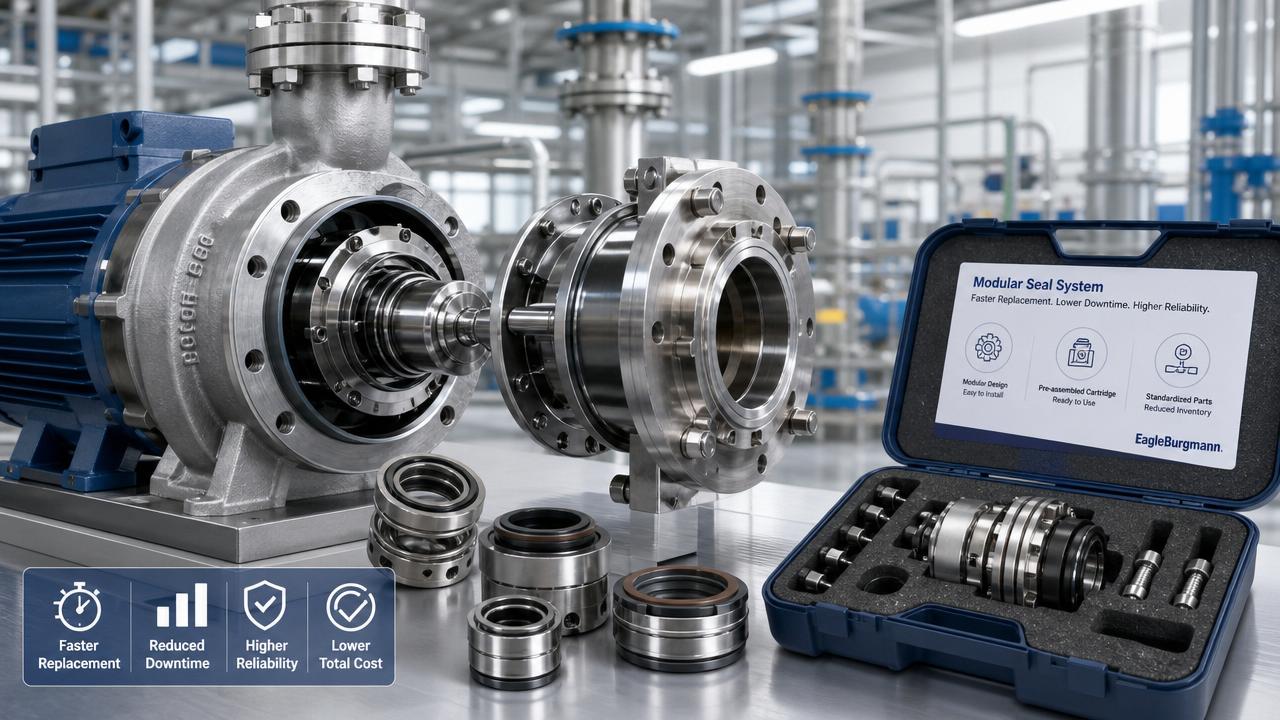
For aftermarket maintenance teams, modular seal system trends are changing service priorities in real equipment, not just in product catalogs.
The main question is straightforward: do modular designs really enable faster swaps and lower downtime without creating new reliability or compliance risks?
In most cases, the answer is yes, but only when the seal architecture, installation process, spare strategy, and operating environment are aligned.
For maintenance teams, the value is practical rather than theoretical: shorter interventions, fewer assembly errors, cleaner changeouts, and more predictable return-to-service timing.
This matters most in systems where sealing failure can interrupt production, compromise media purity, create safety exposure, or trigger expensive troubleshooting across connected assets.
At the same time, not every modular concept performs equally well, and not every application benefits from faster exchange over traditional rebuild methods.
To make good decisions, aftermarket teams need to understand where modular seal system trends deliver measurable gains and where caution is still necessary.
What maintenance teams are really searching for when they look at modular seal system trends
Search intent around modular seal system trends is usually commercial and operational, not academic.
Aftermarket professionals want to know whether these systems can reduce mean time to repair, simplify field service, and cut the cost of unplanned shutdowns.
They also want to know which designs are easier to install correctly under pressure, especially in environments with limited access or strict restart deadlines.
Another key concern is repeatability.
Teams need confidence that a fast swap today will not become a secondary leak, contamination event, or early failure next week.
That is why the most useful discussion is not a broad technology overview but a maintenance-centered evaluation of downtime, installation risk, spare standardization, and lifecycle reliability.
Why modular seal architectures are gaining traction in service environments
Traditional sealing arrangements often demand multiple handling steps, precise manual orientation, and careful management of small components during disassembly and rebuild.
That creates avoidable time loss during urgent maintenance events.
Modular systems reduce complexity by packaging sealing functions into more serviceable units, cartridges, split assemblies, or pre-configured kits.
Instead of rebuilding a seal interface from many separate elements, technicians can replace a validated assembly with fewer adjustment points in the field.
This trend is especially attractive in high-value equipment where every additional minute of line stoppage has a visible operational cost.
It is also useful where skilled labor is limited, because modularization can reduce dependence on highly individualized assembly technique.
In many plants, the attraction is not just speed.
It is the possibility of making maintenance outcomes more consistent across shifts, sites, and technician experience levels.
Do faster swaps actually translate into lower downtime?
Usually yes, but only if downtime is being measured correctly.
Many teams focus on wrench time alone and overlook delays from isolation, access, cleaning, inspection, parts verification, and recommissioning.
A modular seal can cut direct replacement time, yet total downtime will only improve if upstream and downstream tasks are also streamlined.
For example, a cartridge-style or pre-set seal assembly often reduces installation steps and alignment checks.
That can shorten the critical path during shutdown work.
However, if the wrong spare is issued, if mating hardware is worn, or if contamination is left in the housing, the time advantage disappears quickly.
The best results come when modular systems are supported by standardized service procedures, kitted parts, and a restart checklist that verifies seal condition before re-energizing equipment.
In other words, modularity can lower downtime, but process discipline is what converts design potential into operational reality.
Where modular sealing delivers the clearest maintenance advantage
Not every asset class gains equally from modularity.
The strongest benefits usually appear in equipment that is serviced frequently, is difficult to access, or operates in contamination-sensitive conditions.
Pumps, valve assemblies, actuator interfaces, vacuum subsystems, RF energy equipment, and high-purity gas handling systems are common examples.
In these environments, maintenance teams value any design that reduces part handling and minimizes the chance of installation error.
Applications with strict cleanliness requirements also benefit because pre-configured seal modules can reduce touch points during replacement.
Systems exposed to extreme pressure, aggressive chemicals, thermal cycling, or demanding duty profiles may also gain from modular service concepts.
But in those cases, the materials, compression behavior, hardware tolerances, and qualification data matter far more than the word modular itself.
If the operating envelope is severe, serviceability is an advantage only after core sealing performance has been proven.
What trends matter most beyond the marketing language
Several modular seal system trends deserve attention because they affect daily maintenance performance, not just product positioning.
One is the rise of pre-assembled seal cartridges and service kits designed to reduce assembly variation in the field.
Another is the use of application-specific material packages, where elastomers, composites, or engineered polymers are matched more precisely to media and temperature exposure.
There is also a growing move toward easier traceability.
Serialized modules, batch-level material records, and digital maintenance documentation help teams verify what was installed and when.
For critical industries, this supports both quality assurance and regulatory confidence.
A further trend is design for maintainability.
Manufacturers are paying more attention to access geometry, orientation features, anti-misassembly elements, and simplified torque or compression requirements.
These are not glamorous features, but they often determine whether a quick swap stays quick in real service conditions.
How to judge whether a modular seal system is truly service-friendly
Maintenance teams should evaluate modular sealing products with practical questions rather than broad claims.
How many handling steps are eliminated compared with the current design?
Can the assembly be installed with common tools and clear visual confirmation of proper seating?
Does the design reduce the need for in-field adjustment, shimming, trimming, or orientation guesswork?
Is there a documented procedure with defined acceptance checks after installation?
Good service-friendly modular systems usually have consistent geometry, obvious installation logic, and limited opportunities for technician-induced variation.
They should also come with a realistic spare strategy.
If every variant requires a unique module with long lead times, the field benefit may be undermined by supply risk.
The strongest solutions combine easier replacement with stocking simplicity, documentation quality, and compatibility discipline across equipment families.
Common failure points that modularity does not automatically solve
One of the biggest mistakes is assuming that modularity eliminates root causes of seal failure.
It does not.
If the housing is damaged, if shaft runout is excessive, if pressure spikes exceed design limits, or if media compatibility is poor, a modular replacement will still fail.
Likewise, installation speed does not protect against poor cleanliness control.
Particles, residue, surface damage, and incorrect lubrication remain common causes of early leakage.
Another issue is overconfidence in interchangeability.
Some modular systems appear simple, but small differences in material grade, hardness, spring loading, or dimensional tolerance can strongly affect sealing behavior.
Maintenance teams should therefore treat modular kits as engineered components, not generic consumables.
Faster swaps are valuable, but they do not replace condition assessment, fit verification, and disciplined root-cause review after repeated failures.
Balancing speed, reliability, and compliance in critical applications
For many aftermarket teams, the central challenge is not whether a swap can be faster.
It is whether faster service can be achieved without weakening reliability or compliance controls.
That is especially important in sectors influenced by ISO, API, SEMI, or internal validation protocols.
In regulated or high-consequence environments, maintenance managers should ask whether the modular seal system has documented test performance under relevant pressure, temperature, chemical, and cycling conditions.
They should also confirm whether changeout procedures preserve cleanliness and traceability requirements.
A good modular design supports compliance by making correct installation more repeatable.
A weak one creates ambiguity through hidden orientation errors or poorly controlled replacement options.
The best practice is to qualify the module, the procedure, and the spare chain together.
That creates a clearer link between maintenance speed and acceptable operational risk.
How to build a stronger spare-parts and service strategy around modular systems
One major advantage of modular sealing is the opportunity to improve spare management.
Instead of storing many small components and relying on on-site assembly skill, teams can hold fewer, better-controlled replacement units.
That can reduce picking errors and simplify training.
However, modularity only strengthens inventory performance if standardization is intentional.
Too many near-identical modules can create confusion and stock fragmentation.
Maintenance planners should map which assets can share the same seal kits, which require unique materials, and which modules are critical enough to justify local stocking.
It is also useful to pair modular spares with failure history and service interval data.
When swap frequency, operating conditions, and installed base are known, reorder points become more rational and emergency procurement becomes less common.
This is where modular seal system trends intersect directly with downtime reduction: not just in installation speed, but in spare readiness.
What technicians need on the ground for modular systems to work well
Even the best design fails to deliver if field execution is weak.
Technicians need clear work instructions, contamination control guidance, dimensional inspection criteria, and post-install verification steps.
They also need to know when a modular replacement is appropriate and when a broader equipment repair is required.
Short training focused on common failure modes is often more valuable than broad product presentations.
For example, teams should understand compression set, chemical attack, extrusion risk, thermal damage, and how hardware wear can affect a new module.
Color coding, orientation marks, pre-lubrication guidance, and torque specifications can also improve consistency.
Where downtime is expensive, a dry-run installation on a spare housing or training rig can pay back quickly.
The goal is simple: make the fast path also the correct path.
Questions to ask suppliers before adopting a new modular sealing concept
Supplier evaluation should go beyond brochures and headline claims.
Ask for failure-mode data, installation time comparisons, material compatibility guidance, and evidence from similar service conditions.
Request details on dimensional tolerances, shelf life, packaging cleanliness, and traceability support.
It is also worth asking whether the module was designed for original equipment assembly only or for practical aftermarket replacement as well.
Some products are easy to install in controlled factory environments but less forgiving in field maintenance situations.
Good suppliers can also help define conversion criteria.
Which existing assets can be retrofitted?
What housing checks are required?
What technician training is recommended?
What lead times apply to standard versus custom variants?
These details matter because real downtime outcomes depend as much on support quality as on component design.
A practical decision framework for maintenance teams
If you are assessing modular seal system trends for your site, start with a narrow set of high-impact assets.
Focus on equipment with repeated seal-related stoppages, long repair durations, or high installation variability.
Then compare the current state against a modular alternative across five factors: swap time, error risk, spare complexity, qualification burden, and lifecycle performance.
Do not treat speed as the only metric.
A slightly faster replacement is not compelling if the module increases stocking cost or introduces uncertainty under harsh operating conditions.
Likewise, a premium-priced modular kit may still be economical if it avoids one major unplanned outage.
The most reliable decisions come from pilot use, documented installation feedback, and tracked performance over several maintenance cycles.
This approach turns trend watching into evidence-based adoption.
Conclusion: faster swaps matter, but dependable outcomes matter more
Modular seal system trends are moving in a direction that clearly supports aftermarket maintenance needs.
Faster swaps, lower handling complexity, and more repeatable service outcomes can produce real downtime benefits.
But the gains are not automatic.
They depend on the right fit between module design, operating duty, technician practice, spare management, and compliance requirements.
For maintenance teams, the smartest view is balanced.
Look beyond the promise of speed and ask whether the modular system will reduce total service disruption, not just replacement minutes.
When supported by sound qualification, practical procedures, and disciplined inventory planning, modular sealing can become a meaningful reliability tool.
That is the real takeaway behind current modular seal system trends: the best systems do not just swap faster, they help maintenance teams return critical equipment to service with greater confidence.
Industry Briefing
Get the top 5 industry headlines delivered to your inbox every morning.