Industrial Seal Investment Insights: Where Growth Looks More Durable
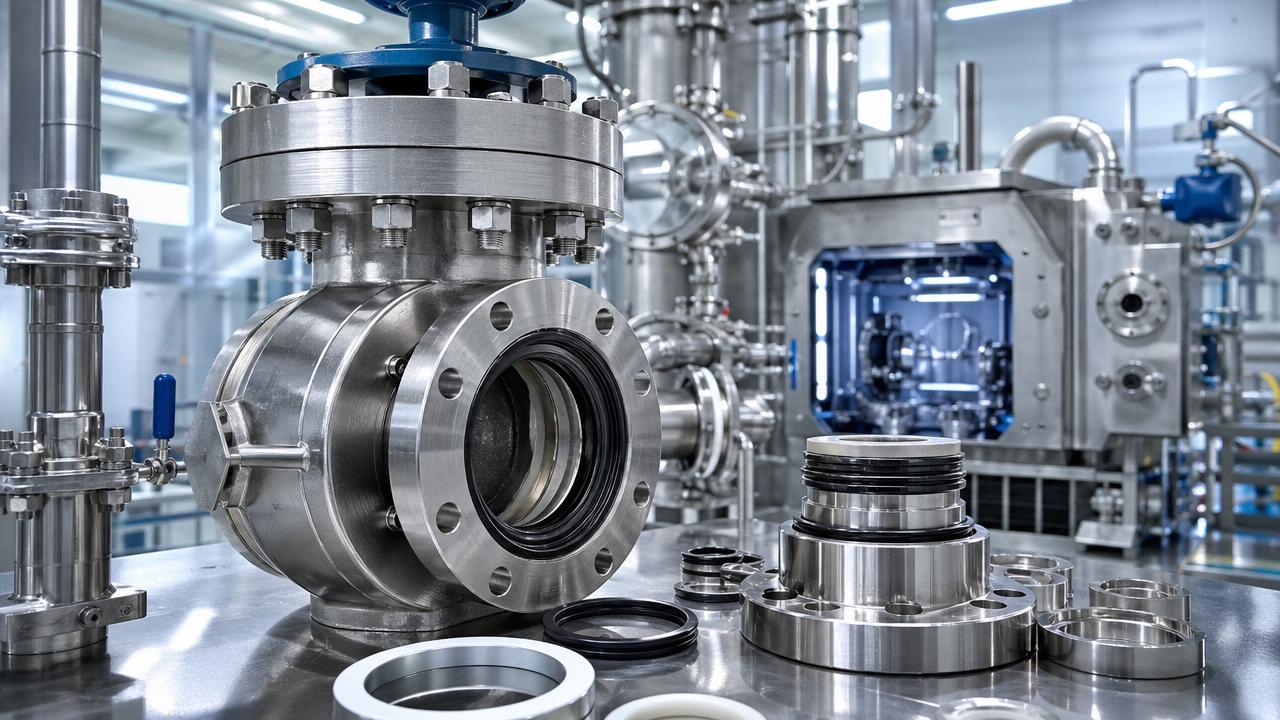
For financial approvers evaluating resilient industrial segments, industrial seal investment insights point to a market shaped by reliability, compliance, and lifecycle cost control rather than short-term demand spikes. As advanced manufacturing, energy systems, and extreme-environment applications raise performance thresholds, durable growth is increasingly tied to specialized sealing technologies that reduce risk, downtime, and total asset exposure.
Why are industrial seal investment insights attracting more attention now?
The answer is simple: seals sit at the exact point where performance, safety, and compliance meet. In many industrial systems, a low-cost sealing component protects high-value assets such as semiconductor tools, hydrogen valves, chemical reactors, turbines, RF systems, and aerospace assemblies. When a seal fails, the financial consequences rarely stay limited to replacement cost. They spread into unplanned downtime, contamination, energy losses, warranty claims, environmental exposure, and delayed production schedules.
That is why industrial seal investment insights increasingly focus on sectors where containment integrity is mission critical. Investors and financial approvers are looking beyond cyclical volume and asking whether a sealing supplier is embedded in applications with high switching costs, strict validation requirements, and recurring aftermarket demand. Those features tend to create more durable revenue streams than commodity industrial categories.
Another reason for rising attention is the global shift toward harsher operating conditions. Equipment now faces higher pressures, broader temperature swings, more aggressive chemistries, tighter cleanliness rules, and faster operating cycles. As a result, specialized polymer gaskets, extreme-environment mechanical seals, and engineered elastomer systems are no longer niche line items. They are becoming core reliability enablers in advanced industry.
What makes seal-related growth more durable than a short-term industrial rebound?
Durable growth in sealing markets usually comes from structural demand drivers rather than one-off capital expenditure waves. Financial approvers should separate temporary order spikes from deeper business quality. The strongest industrial seal investment insights point to four durable factors.
First, replacement demand is often recurring. Even premium seals have service intervals, wear profiles, or qualification cycles that generate repeat business. Second, certified applications create barriers to entry. Once a sealing solution is validated under ISO, API, SEMI, or customer-specific testing protocols, buyers are reluctant to switch suppliers without a compelling reason. Third, system complexity is increasing. As applications become more sensitive, customers value engineering support, material science expertise, and failure-analysis capability, not just unit price. Fourth, total cost of ownership matters more than acquisition cost. That shifts budget decisions toward reliability-focused suppliers.
This is especially visible in high-spec markets served by organizations such as G-PCS, where sealing decisions affect pressure control, chemical purity, microwave integrity, or actuator precision. In those environments, demand is not built only on expansion; it is also built on risk avoidance. From an investment standpoint, that distinction matters because risk-driven demand tends to hold up better during uncertain cycles.
Which end markets make industrial seal investment insights more compelling for financial approvers?
Not every sealing segment offers the same resilience. Financial approvers should favor markets where failure consequences are expensive, validation cycles are long, and performance standards are difficult to replicate. Several end markets stand out.
Semiconductor and advanced electronics manufacturing remain attractive because purity, contamination control, and uptime are critical. FFKM seals, ultra-clean gaskets, and specialty sealing assemblies can command premium pricing when they support vacuum integrity or corrosive process compatibility. Energy transition applications, including hydrogen handling and high-pressure fluid systems, also deserve attention. Hydrogen-compatible valves and seals require material performance that many general suppliers cannot easily provide.
Chemical processing and pharmaceutical systems create another durable layer of demand, driven by chemical resistance, sterilization requirements, and regulatory traceability. Aerospace, defense, and extreme-environment platforms offer lower volume but often stronger margins due to testing rigor and qualification burdens. Industrial microwave and RF systems, while narrower, can also create specialized sealing demand where thermal stability and environmental isolation are mandatory.
For financial decision-makers, the best opportunities are usually found where seals are a small percentage of system cost but a large determinant of operational reliability. That imbalance supports pricing power and long-term account retention.
What should financial approvers actually evaluate beyond revenue growth?
This is where many investment reviews become too shallow. Revenue growth alone can hide weak customer concentration, commodity exposure, or specification risk. High-quality industrial seal investment insights should include a broader set of indicators.
In practical terms, a supplier with modest top-line growth but strong aftermarket mix, proprietary compounds, and embedded positions in regulated systems may be more attractive than a faster-growing firm selling mostly standard parts into price-driven channels. Financial approvers should reward predictability, retention quality, and technical defensibility.
How do premium sealing technologies create financial value instead of just technical value?
This is a critical question because procurement teams may initially frame seals as consumables. However, premium sealing technologies generate measurable financial value across the asset lifecycle. They can reduce leakage, extend maintenance intervals, improve process stability, lower contamination risk, and protect adjacent components from early failure. In systems with costly downtime, even small reliability gains can justify a significantly higher unit price.
For example, in advanced processing environments, a seal that preserves media purity and vacuum integrity may prevent batch loss or tool contamination. In high-pressure energy systems, improved sealing can reduce safety incidents and extend equipment operating windows. In aerospace or defense assemblies, validated sealing performance may be central to mission assurance rather than a maintenance convenience. These are not abstract technical benefits; they directly affect utilization rates, warranty costs, insurance exposure, and revenue continuity.
The best industrial seal investment insights therefore translate engineering advantage into economic impact. Financial approvers should ask whether the supplier can quantify reduced failure rates, longer mean time between maintenance events, or lower total ownership cost. If yes, the business may have stronger pricing authority than a conventional parts vendor.
What are the biggest mistakes investors and budget holders make in this segment?
One common mistake is treating all seals as interchangeable. This leads to poor benchmarking, especially when comparing general industrial products with engineered solutions for harsh, clean, or high-frequency environments. Another mistake is overemphasizing raw material cost while underestimating conversion know-how, application testing, and field performance data. In specialized sealing, process discipline and application validation can be more valuable than the base polymer itself.
A third mistake is ignoring customer qualification inertia. Many investors assume a lower-priced competitor can quickly win business, but that is often unrealistic in critical systems. Requalification can consume engineering time, compliance resources, and production risk, which makes switching less attractive than spreadsheet comparisons suggest. A fourth mistake is overlooking concentration risk at the end-market level. A supplier heavily exposed to one cyclical niche may appear strong until that niche pauses.
Finally, some reviews fail to distinguish between standard replacement demand and strategically embedded design-in positions. The latter usually deserves a higher confidence level because it reflects technical trust, not just transactional purchasing behavior.
How can financial approvers separate commodity exposure from defensible niche leadership?
A practical way is to examine the supplier’s revenue logic. If sales depend mostly on distributor reach and price competition, the business may be exposed to margin compression. If sales depend on engineering collaboration, specification fit, custom compounds, and application-specific compliance, the business is more likely to have niche leadership.
Look for evidence such as co-development with OEMs, documented performance in extreme conditions, low customer defection after qualification, and alignment with standards that matter in the end market. G-PCS-style technical intelligence is useful here because it links component performance to the wider reliability framework of critical systems. That broader view helps approvers identify whether a sealing product is merely purchased or genuinely depended upon.
It also helps to compare gross margin stability, warranty history, application diversity, and the share of revenue coming from technically regulated sectors. Defensible niche leaders rarely win on price alone. They win because the cost of failure around their product is disproportionate to the product’s invoice value.
What questions should be asked before approving investment, sourcing, or partnership decisions?
Before moving forward, financial approvers should align technical and commercial diligence. The goal is not simply to confirm current demand, but to test whether growth durability is supported by application quality and operational discipline.
- Which industries generate the highest-margin seal demand, and how cyclical are they?
- What percentage of revenue is recurring through maintenance, replacement, or validated repeat orders?
- How long does customer qualification take, and what data supports retention after approval?
- Which standards, certifications, or test protocols materially influence competitiveness?
- Does the supplier control proprietary formulations, design know-how, or failure-analysis capability?
- How sensitive is demand to raw material swings, and can premium pricing be defended?
- Are there concentration risks by customer, geography, or application family?
The most useful industrial seal investment insights come from connecting these questions to real operating conditions. If a supplier serves applications where failure is expensive, qualification is hard, and performance data is trusted, growth is more likely to be durable than speculative.
What is the practical takeaway for decision-makers?
For financial approvers, industrial seal investment insights are most valuable when they move beyond broad industrial optimism and focus on the economics of reliability. The strongest opportunities are usually not in the cheapest products or the noisiest volume spikes. They are in specialized sealing businesses that protect uptime, support compliance, and reduce lifecycle risk across critical systems.
That makes this segment especially relevant in advanced manufacturing, energy infrastructure, chemical processing, aerospace, and other performance-driven markets. If you need to confirm a specific direction, supplier shortlist, budget case, qualification cycle, pricing logic, or cooperation model, the first issues to clarify are application severity, validation barriers, aftermarket depth, standards alignment, and the measurable cost of failure the sealing solution helps prevent.
Industry Briefing
Get the top 5 industry headlines delivered to your inbox every morning.