Industrial Environmental News and Its Impact on Compliance Planning
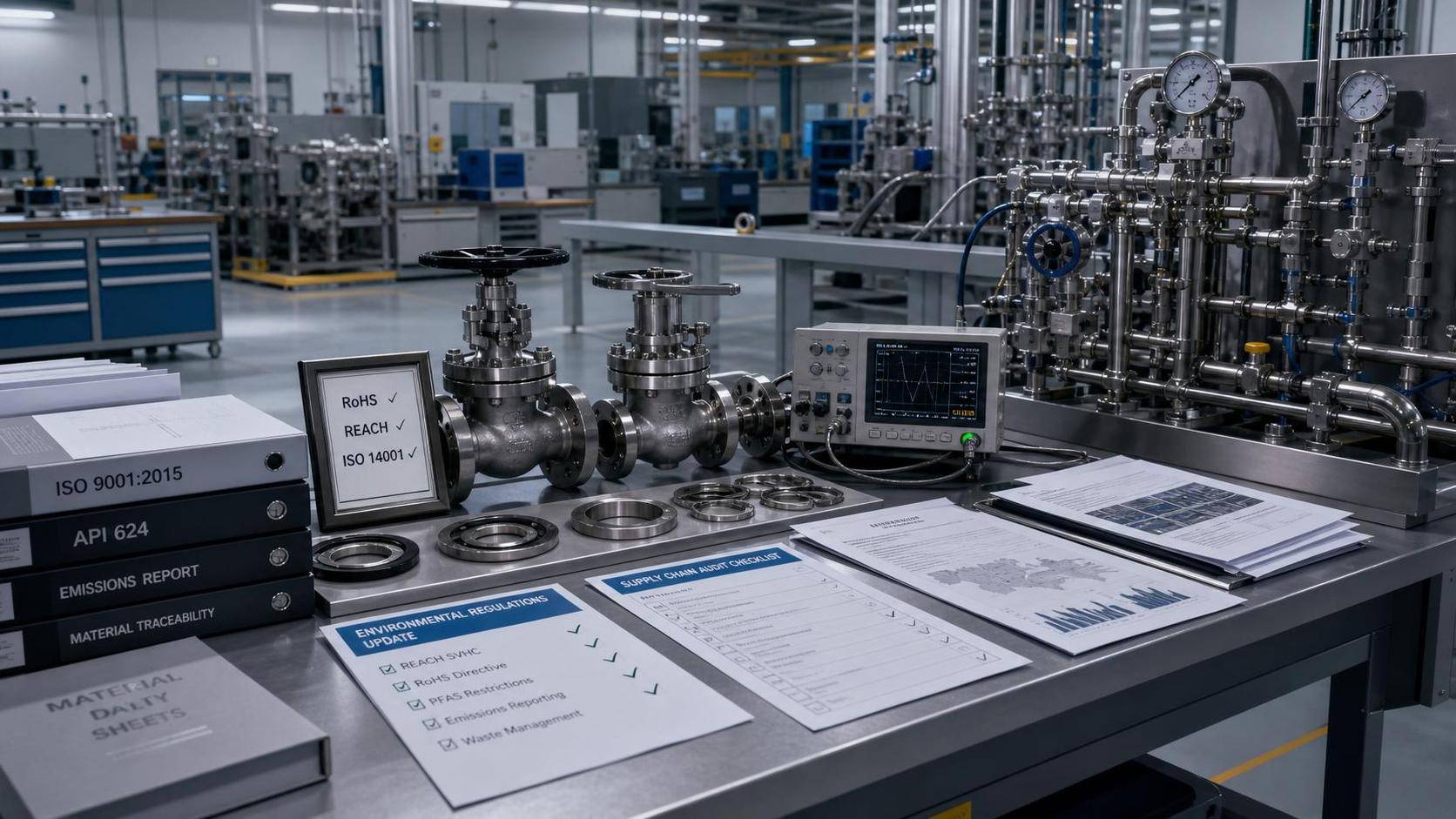
Industrial environmental news now sits close to the center of compliance planning. It affects design choices, approved materials, supplier audits, emissions reporting, and project timing across complex industrial programs.
That is especially true where sealing, pressure control, RF energy, and precision motion operate under strict reliability and contamination limits. In these environments, delayed regulatory awareness can quickly become an engineering problem.
For that reason, industrial environmental news for environmental impact should be treated as an operating input, not a passive information stream. The value lies in turning policy signals into practical compliance decisions early.
Why this topic matters now
Environmental oversight is expanding in both scope and technical depth. Regulators are looking beyond plant-level emissions and focusing more closely on materials, process chemicals, energy intensity, waste streams, and product lifecycle exposure.
In advanced manufacturing, the impact is rarely limited to environmental teams. A new PFAS restriction, updated leak standard, or reporting threshold can alter specifications for seals, valves, actuators, coatings, lubricants, or cleaning processes.
The same pattern appears in hydrogen systems, semiconductor tools, aerospace platforms, industrial microwave equipment, and ultra-clean fluid handling. Compliance pressure often reaches the component level faster than many schedules assume.
This is where industrial environmental news for environmental impact becomes strategically useful. It helps teams detect early shifts before they trigger redesign, qualification delays, or unexpected sourcing gaps.
What industrial environmental news really includes
The phrase covers more than headlines about pollution or climate policy. In practical terms, it includes regulatory proposals, standard revisions, enforcement trends, chemical restrictions, disclosure rules, and sector-specific guidance.
It also includes technical signals from certification bodies, trade groups, and major end users. Many compliance changes appear first as consultation drafts, customer requirements, or regional policy direction rather than finished law.
A useful reading of industrial environmental news for environmental impact therefore combines legal change with engineering relevance. The question is not only what changed, but where the change touches hardware, process stability, and qualification evidence.
Signals that deserve close attention
- Material bans or phase-down plans affecting elastomers, fluorinated chemistries, adhesives, or specialty polymers.
- Leakage, containment, and fugitive emissions rules tied to valves, seals, or pressure systems.
- Energy efficiency and process emissions guidance for thermal, plasma, RF, or microwave equipment.
- Expanded supplier disclosure requirements covering origin, substance content, and environmental performance.
- Changes in ISO, API, SEMI, or MIL-SPEC alignment that influence acceptance criteria.
From policy update to compliance consequence
Not every news item deserves action, but every item deserves screening. The discipline is to translate broad environmental developments into concrete questions for engineering, sourcing, quality, and program governance.
A material restriction may require an alternate gasket compound. A revised emissions rule may demand lower leakage from a high-pressure valve assembly. A customer sustainability standard may require deeper supplier traceability.
These changes often interact. One substitution can solve a chemical issue while weakening temperature resistance, cleanroom behavior, dielectric performance, or maintenance interval. That tradeoff has to be identified before formal qualification begins.
Industrial environmental news for environmental impact is most valuable when it supports this translation step quickly and with technical context.
Where the pressure is strongest
The compliance burden is highest in systems where containment failure, contamination, or thermal instability carries outsized operational risk. That includes equipment designed for ultra-clean, ultra-high-pressure, corrosive, or vacuum-intensive conditions.
G-PCS is relevant in this context because its coverage sits at the intersection of component performance and regulatory consequence. Its five industrial pillars reflect exactly the categories where environmental shifts can alter qualification logic.
Ultra-High Pressure control systems face scrutiny around leakage, hydrogen compatibility, and material durability. Industrial Microwave and RF systems draw attention to energy use, thermal management, and process emissions.
Extreme-environment mechanical seals and specialized gaskets are exposed to chemical restrictions and sealing integrity demands. Precision actuators may also be affected through clean manufacturing requirements and restricted substance declarations.
Viewed this way, industrial environmental news for environmental impact is not abstract sustainability content. It is a forward indicator for what may become nonconformance, delay, or redesign within critical flow and energy assets.
How to read environmental news in a project setting
A practical method starts with relevance mapping. Each update should be tested against the current bill of materials, process route, target geography, end-use environment, and customer acceptance framework.
The next step is timing. Some issues affect immediate shipment. Others matter at the next sourcing cycle, the next qualification window, or the next platform redesign. That distinction prevents overreaction while still preserving schedule control.
Evidence quality matters as well. News summaries are useful, but decisions should rest on source documents, draft texts, notified body guidance, and supplier-backed technical data.
A workable review sequence
- Classify the news by region, regulation type, and affected component family.
- Link it to materials, emissions points, or documentation already inside the project scope.
- Check whether current suppliers can support revised declarations, testing, or substitutes.
- Estimate schedule impact before formal design freeze or release.
- Record assumptions so later compliance reviews are traceable.
Supplier qualification is where the issue becomes visible
Many compliance plans fail because environmental monitoring stops at internal review. In reality, the largest exposure often sits with suppliers that cannot provide stable declarations, revision control, or equivalent material options.
That problem becomes sharper in specialized components. A high-performance FFKM seal, hydrogen valve trim set, or piezoelectric motion assembly may have limited alternate sources, long validation cycles, and tightly coupled process behavior.
Industrial environmental news for environmental impact can therefore improve sourcing resilience when it is used to rank supplier readiness. The real question is whether the supply base can absorb regulatory change without quality drift.
Useful qualification checks include document freshness, restricted substance response time, test report alignment, manufacturing change notification discipline, and familiarity with international standards relevant to the application.
The value of standards-based interpretation
Environmental updates rarely stand alone. They intersect with performance standards that already govern safety, cleanliness, pressure tolerance, electromagnetic behavior, and mechanical endurance.
This is why standards benchmarking matters. G-PCS frames technical intelligence across ISO, SEMI, API, and MIL-SPEC references, making it easier to interpret whether a compliance change affects only paperwork or core design acceptability.
That distinction is critical. A documentation-only change can be scheduled and managed. A performance-linked change can force revalidation, recertification, or field risk review.
When industrial environmental news for environmental impact is read through a standards lens, teams gain a clearer basis for prioritization and fewer false alarms.
What to do next
Start by identifying which environmental topics intersect most directly with containment, flow control, specialty materials, and high-reliability energy systems. Those areas usually create the fastest compliance consequences.
Then build a simple internal filter for industrial environmental news for environmental impact. Focus on region, affected component type, supplier exposure, standards overlap, and likely schedule effect.
Finally, review open projects against those signals before the next design gate. A short, disciplined review often reveals whether the issue is informational, monitor-only, or serious enough to trigger sourcing and validation action.
That approach turns environmental news into a planning tool. It also helps protect compliance confidence in the industrial systems where precision, containment, and reliability leave very little room for late surprises.
Industry Briefing
Get the top 5 industry headlines delivered to your inbox every morning.