Environmental Equipment News: What Sustainable Packaging Plants Are Adopting
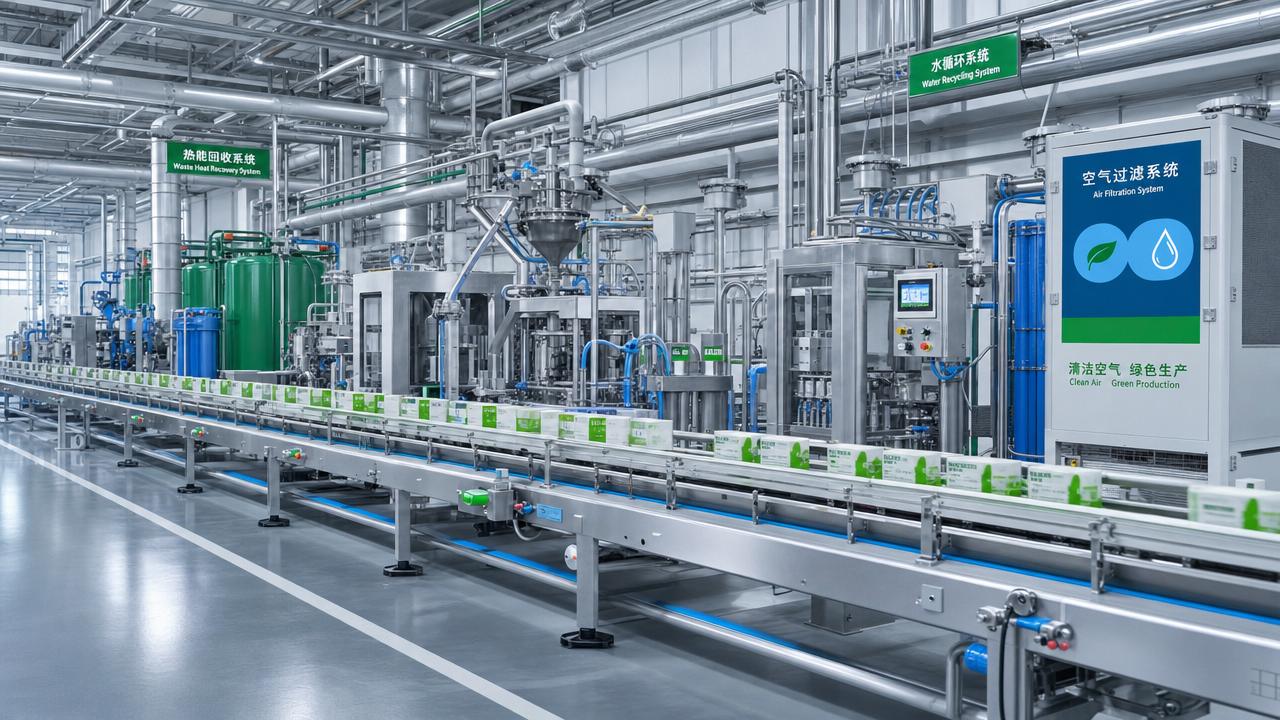
Environmental equipment news for sustainable packaging is shifting from image to infrastructure
Environmental equipment news for sustainable packaging now points to a deeper operational change across modern plants.
The conversation is no longer limited to recyclable films, lighter cartons, or public climate targets.
What is changing inside facilities is more structural.
Material handling, washdown systems, compressed air networks, sealing components, thermal processes, and emissions control are being redesigned together.
That matters because sustainable packaging performance is increasingly judged by measurable plant behavior, not just package claims.
In current environmental equipment news for sustainable packaging, one pattern stands out.
Plants are adopting equipment that reduces waste while maintaining containment, uptime, and product protection.
This is especially visible where precision flow-control and specialized sealing determine whether a sustainability upgrade actually performs under industrial stress.
The broader lesson is practical.
Greener lines succeed when environmental integrity, energy efficiency, and process stability are engineered as one system.
Why this change is becoming more visible now
Several pressures are converging at the same time.
First, packaging formats are changing faster than plant infrastructure traditionally does.
Mono-material structures, thinner substrates, paper-based hybrids, and reusable systems all behave differently on lines.
That creates new demands on tension control, heat management, leak prevention, and particulate control.
Second, compliance expectations are tightening around energy intensity, water use, waste discharge, and traceable operational data.
Plants can no longer treat utilities as background assets.
They are now part of the sustainability scorecard.
Third, line speeds remain high even as packaging materials become less forgiving.
That mismatch is one reason environmental equipment news for sustainable packaging increasingly mentions sensors, actuators, valves, and sealing upgrades.
- Utilities are being measured as controllable sources of waste, not fixed overhead.
- Material shifts are exposing weak points in thermal, pneumatic, and containment systems.
- Audit pressure is pushing plants toward equipment with clearer performance documentation.
- Downtime costs are making reactive retrofits less acceptable.
From recent deployments, the sharper signal is not bigger machines.
It is smarter integration around critical control points.
Adoption is moving toward precise control, cleaner energy use, and tighter containment
Environmental equipment news for sustainable packaging shows adoption spreading across several technical layers at once.
Not every plant makes the same choice, but the direction is consistent.
The table explains why environmental equipment news for sustainable packaging increasingly sounds technical.
Plants are learning that sustainability targets can fail at the gasket, valve, actuator, or energy interface.
That is where the logic of containment and flow becomes central.
The real driver is reliability under new material and regulatory conditions
A useful reading of environmental equipment news for sustainable packaging is that reliability has become the hidden sustainability metric.
When lines stop, purge, leak, overheat, or drift out of tolerance, sustainability claims quickly lose credibility.
This explains the growing interest in components once treated as secondary.
High-performance valves affect utility stability.
Mechanical seals determine whether fluids stay contained during aggressive cleaning cycles.
Pneumatic and piezoelectric actuators influence repeatability when flexible substrates require faster micro-adjustment.
Specialized polymer gaskets matter when chemical compatibility and compression recovery define maintenance intervals.
This is also why technical intelligence platforms with cross-industry benchmarking are gaining relevance.
Standards such as ISO, API, SEMI, and MIL-SPEC are not all written for packaging plants.
Yet their discipline around reliability, contamination control, and response precision increasingly informs equipment decisions far beyond their original sectors.
That cross-pollination is one of the more interesting signals in environmental equipment news for sustainable packaging.
The impact does not stay in one workshop or one utility room
The consequences of these equipment choices spread across the full operating chain.
On converting lines, tighter thermal control reduces substrate damage and improves seal consistency.
In filling and dosing areas, better valve response limits overuse of product and cleaning media.
In utility systems, leak-resistant compressed air and fluid handling can deliver savings that remain invisible in packaging-only reviews.
Maintenance teams also feel the shift.
Sustainable materials often create narrower process windows, so component wear becomes easier to detect but harder to ignore.
Quality teams see a parallel effect.
Package integrity, contamination risk, and shelf-life stability are increasingly tied to small control failures rather than obvious machine breakdowns.
In practical terms, environmental equipment news for sustainable packaging is no longer just capital expenditure news.
It is operating model news.
Where closer attention usually pays off
- Check whether lower-impact materials change pressure, temperature, or sealing tolerances.
- Track utility losses at the component level, not only at plant level.
- Review cleaning chemistry against seal, gasket, and valve material compatibility.
- Compare line-response requirements with actuator speed and repeatability.
- Use failure data to identify where sustainability projects are creating hidden reliability stress.
What deserves attention over the next planning cycle
The next phase of environmental equipment news for sustainable packaging will likely focus less on broad pledges and more on proof.
Expect stronger scrutiny of energy-per-unit, water recirculation efficiency, fugitive loss, and process stability during changeovers.
Expect more investment in equipment that can show traceable performance, not just nominal efficiency.
Another likely development is a tighter link between sustainability engineering and high-performance component selection.
That includes UHP-compatible controls where pressure integrity matters, RF or microwave systems where energy concentration must stay precise, and sealing materials built for harsher sanitation demands.
This does not mean every plant needs frontier-grade hardware.
It means the evaluation logic used in more demanding industries is moving into mainstream packaging decisions.
That is one reason environmental equipment news for sustainable packaging increasingly overlaps with broader discussions about precision, containment, and data-backed reliability.
A practical way to respond without overbuilding the plant
The most effective response is usually staged, not dramatic.
Start by mapping where sustainability targets depend on invisible equipment performance.
Then compare those points against real maintenance history, process drift, and utility losses.
If environmental equipment news for sustainable packaging suggests one clear lesson, it is this.
Small technical failures now carry larger commercial and compliance consequences.
That makes disciplined equipment review more valuable than symbolic upgrades.
- Prioritize control points where leaks, heat drift, or unstable motion generate repeat waste.
- Validate sealing and flow components against actual chemicals, temperatures, and cycling loads.
- Request performance data that links efficiency claims to real operating conditions.
- Build upgrade phases around measurable loss reduction, not only installed equipment count.
- Keep watching environmental equipment news for sustainable packaging for signals tied to standards and application changes.
The plants moving fastest are not chasing every green label.
They are building packaging operations where containment, response precision, and environmental performance reinforce each other.
That is where the next durable advantage is likely to emerge.
Industry Briefing
Get the top 5 industry headlines delivered to your inbox every morning.