Environmental Equipment News: 5 Waste Reduction Trends to Watch
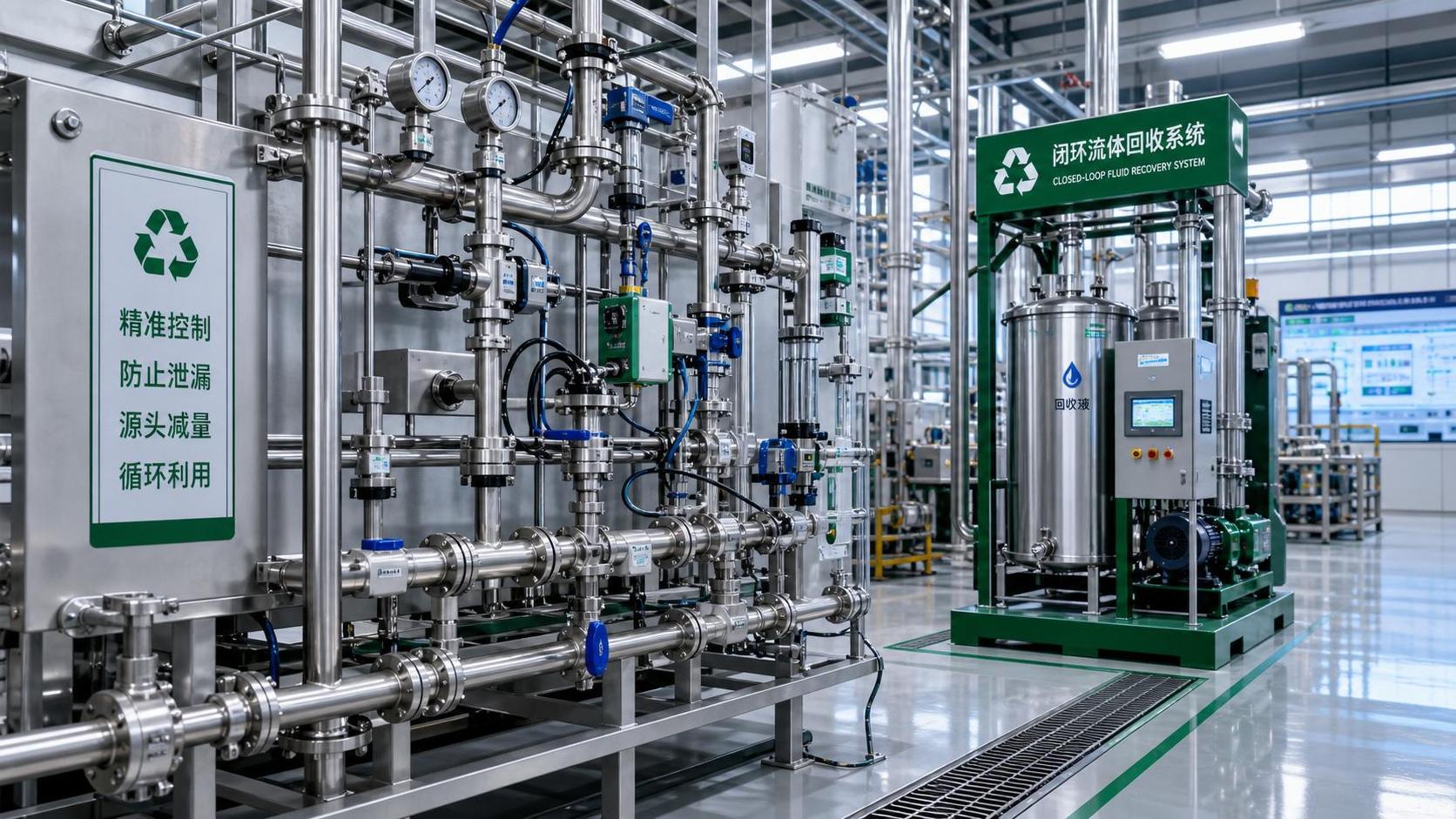
Why waste reduction is becoming a precision issue
Environmental Equipment News: 5 Waste Reduction Trends to Watch is no longer just a sustainability headline. It is increasingly a systems performance topic.
Across industrial operations, wasted material, wasted energy, and wasted process time now share the same root cause more often than expected: poor control.
That is why environmental equipment news for waste reduction matters well beyond recycling plants or municipal treatment projects.
It affects semiconductor lines, energy systems, chemical handling, advanced manufacturing, and any facility where leakage, contamination, drift, or unstable flow can create hidden losses.
The current shift is practical. Organizations are being asked to cut waste, maintain uptime, and meet tighter compliance targets without adding unnecessary complexity.
In that context, better waste reduction is not only about end-of-pipe capture. It starts much earlier, inside valves, seals, actuators, energy systems, and data logic.
What the market is really watching
The most relevant environmental equipment news for waste reduction now centers on operational integrity.
In simple terms, less waste comes from fewer escapes, fewer off-spec outputs, fewer maintenance surprises, and tighter response to process variation.
This is where a technical intelligence model such as G-PCS becomes useful.
Its focus on containment and flow reflects a broader industry reality: waste reduction depends on how precisely critical media are controlled under real operating stress.
That includes ultra-high pressure control, microwave and RF energy systems, extreme-environment seals, high-precision actuation, and advanced gasket materials.
When these components fail, waste rarely appears as a single visible incident. It usually shows up as yield loss, fluid loss, contamination risk, rework, or compliance exposure.
Five waste reduction trends worth tracking
1. Material recovery is moving closer to the process source
Older waste strategies often treated recovery as a downstream task. The new model pushes separation, capture, and recirculation much closer to the point of generation.
This reduces transport losses and improves recovery purity. It also makes equipment selection more sensitive to pressure stability, chemical compatibility, and seal performance.
In environmental equipment news for waste reduction, this trend is especially visible in closed-loop fluid systems and high-value material processes.
2. Precision flow control is replacing broad-tolerance operation
Waste is often created long before disposal. It begins when flow rates drift, dosing becomes inconsistent, or response times lag during process changes.
High-performance valves and responsive actuators help reduce those losses by keeping process windows tighter.
This matters in hydrogen systems, specialty chemicals, thermal processing, and high-frequency equipment where a small deviation can multiply downstream waste.
3. Sealing technology is being treated as a waste reduction lever
Leak prevention has always mattered, but the conversation is changing.
Mechanical seals, FFKM materials, and specialized composite gaskets are now evaluated not only for durability, but also for their role in emissions control and product preservation.
For harsh environments, a sealing decision can determine whether a system runs cleanly or generates recurring waste through fugitive loss, contamination, and premature shutdown.
4. Compliance and performance data are converging
Environmental reporting used to sit apart from equipment performance review. That separation is fading.
Today, waste reduction decisions increasingly depend on combined signals: maintenance records, leak history, energy draw, throughput variation, and standard-based qualification data.
Benchmarks linked to ISO, API, SEMI, and MIL-SPEC frameworks are becoming more useful because they connect technical choices with audit readiness.
5. Waste reduction projects are shifting from isolated upgrades to system architecture
One equipment replacement may solve a local problem, but sustained results usually come from integrated design logic.
That means matching valves, seals, actuators, energy delivery, and monitoring tools to a shared operating profile.
Environmental equipment news for waste reduction increasingly highlights this broader view because isolated fixes often fail under scale, pressure cycling, or mixed-media conditions.
Where these trends show up in practice
The same waste reduction logic appears across very different sectors, even when the equipment looks unrelated.
From an application viewpoint, waste reduction is no longer tied to one type of facility. It follows the path of containment, flow, and process stability.
How to evaluate equipment decisions more effectively
A useful reading of environmental equipment news for waste reduction starts with better questions, not faster purchasing.
- Identify where waste is physically created, not only where it is measured.
- Check whether failure modes involve leakage, drift, contamination, or delayed control response.
- Compare component ratings against actual pressure, temperature, media, and cycling conditions.
- Use standards as a qualification filter, not as a substitute for application review.
- Treat maintenance data and environmental performance data as part of the same decision record.
Usually, the strongest improvements come from reducing invisible losses. Those losses often sit in interfaces, transition points, and repeated micro-failures.
This is why detailed technical repositories matter. A benchmark is more useful when it reflects real containment risk, not only catalog specifications.
What deserves closer attention next
The most important lesson from current environmental equipment news for waste reduction is that efficiency and environmental control are becoming inseparable.
Better recovery systems will matter, but so will upstream precision. Better reporting will matter, but so will the physical integrity of the equipment network itself.
A practical next step is to map waste risk across the full operating chain, then review whether valves, seals, actuators, and energy systems are matched to actual conditions.
It also helps to compare current assets against recognized standards and application-specific benchmarks, especially in critical environments where small losses become strategic issues.
That approach turns environmental equipment news for waste reduction into something more valuable than trend watching. It becomes a framework for smarter technical decisions.
Industry Briefing
Get the top 5 industry headlines delivered to your inbox every morning.