Eco Innovation News: Which Equipment Trends Matter Most Now
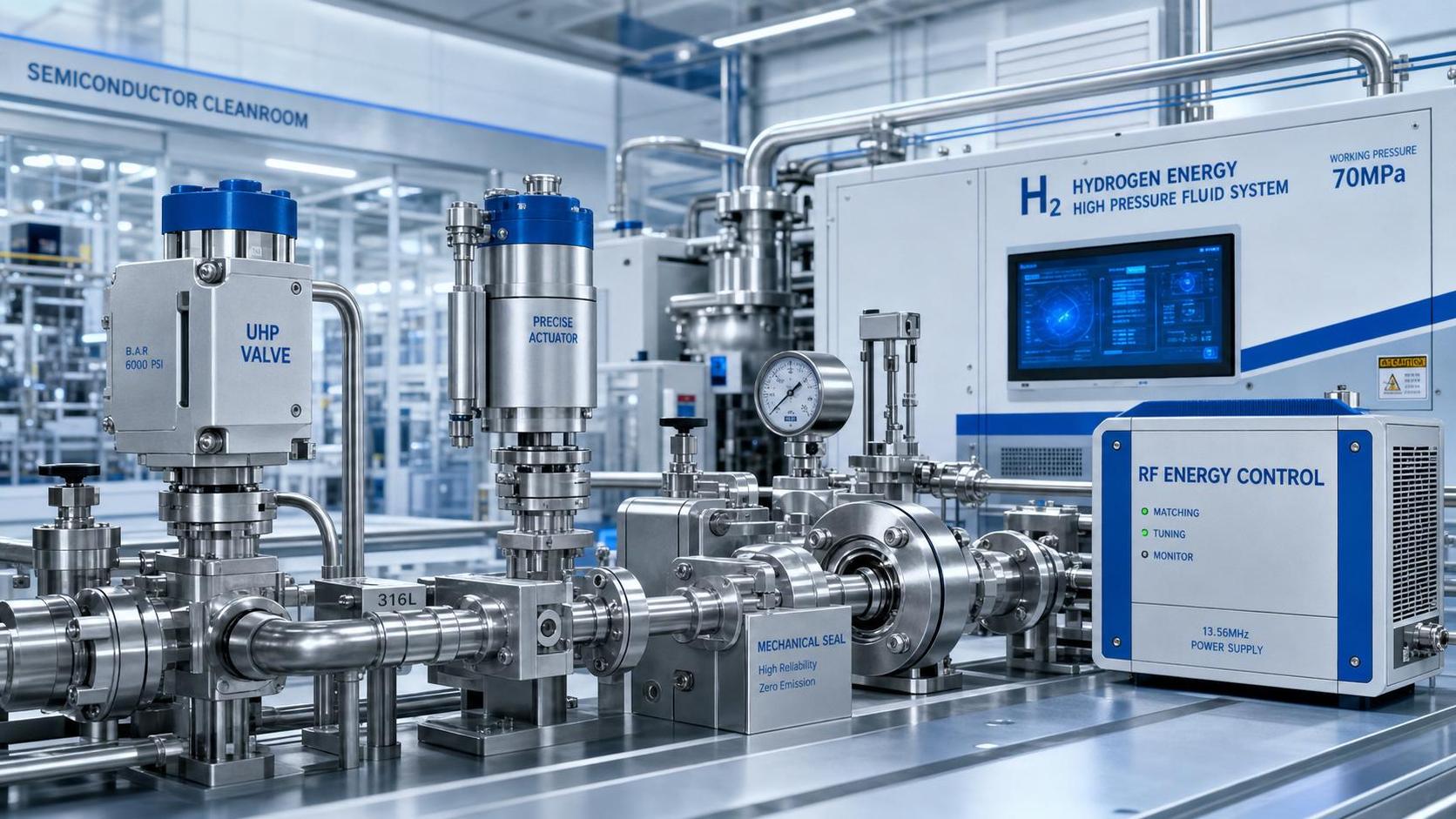
Why is environmental equipment news for eco innovation focusing on precision now?
Environmental equipment news for eco innovation used to highlight energy savings first. That is still relevant, but it is no longer enough.
The bigger shift is toward precision under pressure. Systems must control flow, contain media, and respond quickly without contamination, drift, or leakage.
That matters in hydrogen, semiconductor processing, advanced medical manufacturing, aerospace testing, and high-frequency energy applications.
In practical terms, the conversation has moved from “Is this efficient?” to “Will this remain stable in extreme duty cycles?”
This is where environmental equipment news for eco innovation becomes more technical. A small seal failure or valve lag can undermine safety, yield, and compliance.
The same pattern appears across the five equipment areas often tracked by G-PCS: UHP valves, RF energy systems, mechanical seals, precision actuators, and advanced gasket materials.
These categories may look separate, yet they share one logic: containment and flow must stay reliable even when conditions are unstable.
Which equipment trends actually matter more than the headlines suggest?
The most useful environmental equipment news for eco innovation is rarely about flashy launches. It is usually about performance thresholds that quietly change buying and engineering decisions.
Several trends stand out because they affect both sustainability outcomes and operational reliability.
- Higher pressure compatibility, especially for hydrogen and specialty gas control.
- Better sealing materials for aggressive chemicals, vacuum service, and thermal cycling.
- Faster actuator response for precision dosing, positioning, and automated correction.
- Improved RF and microwave stability for cleaner energy transfer and process repeatability.
- Stronger links between component design and standards such as ISO, API, SEMI, and MIL-SPEC.
What makes these trends important is not novelty alone. It is the ability to reduce waste events, unplanned downtime, media loss, and off-spec output.
For example, a hydrogen-compatible 700 bar valve is not just a stronger valve. It supports safer containment, tighter response behavior, and more predictable maintenance intervals.
Likewise, an FFKM seal is not only a premium material choice. In harsh environments, it can decide whether a system stays stable through chemical exposure and temperature swings.
How do you tell whether a trend is meaningful or just marketing noise?
A simple test is to ask whether the claimed improvement changes a real operating limit.
If the answer is yes, the trend deserves attention. If it only changes surface metrics, it may not matter much in deployment.
The table below offers a practical way to read environmental equipment news for eco innovation without getting distracted by broad claims.
A more grounded reading of environmental equipment news for eco innovation usually starts with test conditions, not promotional claims.
That is also why technical repositories such as G-PCS matter. They help compare components against standards and actual operating demands, not just brochure language.
Where are these equipment trends showing up first?
The earliest signals often appear in sectors where tiny deviations create expensive consequences.
Semiconductor environments are a clear example. Ultra-clean flow control, outgassing resistance, and precise actuator behavior directly affect process consistency.
Hydrogen systems are another strong case. Equipment must manage high pressure, embrittlement concerns, and strict leak expectations.
In aerospace and defense testing, seals and control components are judged by how they behave across thermal extremes and rapid pressure variation.
Industrial microwave and RF applications also deserve attention. Efficient energy transfer is important, but stable frequency behavior and controlled thermal loads often matter more.
This is why environmental equipment news for eco innovation increasingly overlaps with high-reliability engineering. The environmental outcome depends on the integrity of specialized components.
A useful rule is simple: the harsher the environment, the more valuable precise containment and flow logic become.
What mistakes do people make when reading environmental equipment news for eco innovation?
One common mistake is treating all “green” improvements as equal. In reality, not every efficiency claim improves total system performance.
Another mistake is focusing on one component in isolation. A better seal may still underperform if the actuator introduces instability or if valve dynamics create pressure spikes.
There is also a tendency to overlook lifecycle behavior. Initial performance can look excellent while long-cycle reliability remains unclear.
- Do not assume material upgrades solve geometry or installation issues.
- Do not compare test data without checking temperature, media, and duty cycle.
- Do not equate compliance labels with universal suitability.
- Do not ignore maintenance windows, replacement lead times, or calibration needs.
In actual projects, the better judgment method is to connect environmental equipment news for eco innovation to failure modes.
Ask what can leak, drift, overheat, contaminate, or lose accuracy. Then look at which equipment trend meaningfully reduces that risk.
How should the next step be evaluated before acting on these trends?
A sensible next step is not to chase every new development. It is to build a comparison framework tied to operating priorities.
Start with the application boundary. Pressure, media type, temperature range, cleanliness requirement, response speed, and compliance obligations should be explicit.
Then map those needs to the equipment categories appearing most often in environmental equipment news for eco innovation.
For some systems, the key issue will be UHP valve stability. For others, the real bottleneck may be gasket chemistry, RF control consistency, or piezoelectric positioning accuracy.
It also helps to separate short-term gains from structural improvements. Faster deployment is valuable, but long-term containment reliability often saves more time and cost.
Sources that benchmark against ISO, SEMI, API, and MIL-SPEC can make this process more disciplined because they reduce guesswork.
In the end, the most relevant environmental equipment news for eco innovation is the news that helps clarify fit, risk, and verification.
A practical way forward is to shortlist critical components, compare test conditions, review lifecycle limits, and confirm where precision truly affects environmental results.
That approach turns trend watching into informed selection instead of passive observation.
Industry Briefing
Get the top 5 industry headlines delivered to your inbox every morning.