Containment Technology Europe: 2026 Compliance and Investment Outlook
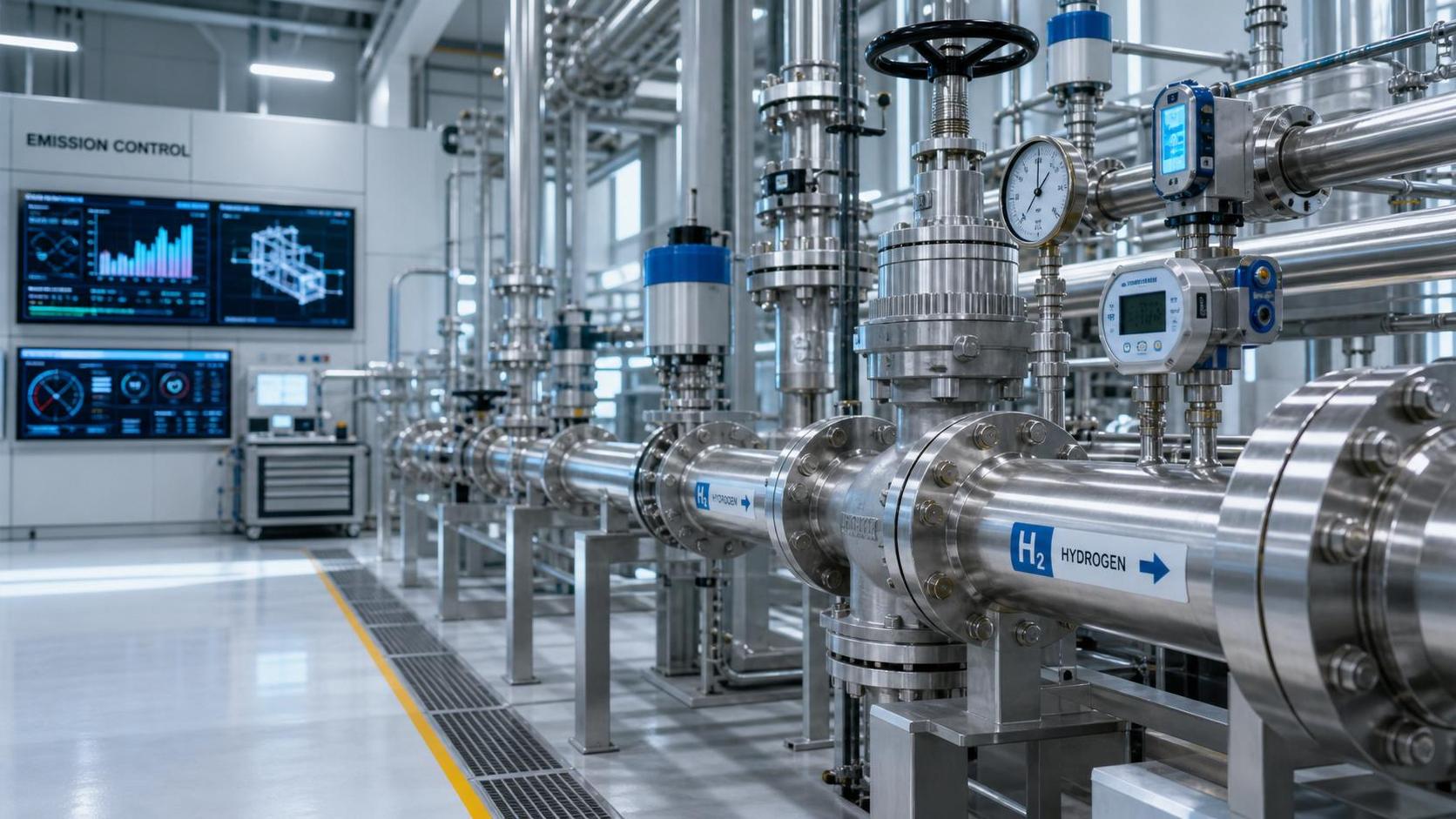
Containment technology Europe enters 2026 with a sharper strategic profile than many industrial executives expected even two years ago. Compliance pressure is rising, capital is being screened more aggressively, and system performance is now judged against uptime, emissions control, traceability, and failure tolerance at the same time.
That shift matters because containment is no longer a narrow engineering topic. In pharmaceuticals, semiconductors, hydrogen systems, advanced manufacturing, aerospace programs, and high-energy processing, containment integrity directly affects output quality, operator safety, asset life, and regulatory exposure.
For organizations tracking containment technology Europe, 2026 is less about buying isolated components and more about understanding how valves, seals, actuators, polymers, and monitoring logic work together inside a governed reliability framework.
Why the market has become more demanding
European industrial policy has been moving toward tighter process accountability for years. What changes in 2026 is the level of integration between environmental compliance, operational resilience, and procurement scrutiny.
A containment failure is rarely treated as a local maintenance issue anymore. It can trigger production stoppage, product loss, contamination review, warranty exposure, delayed qualification, or a broader audit of supplier controls.
This is particularly visible in facilities handling pressurized gases, corrosive media, sterile process lines, microwave energy systems, and precision vacuum environments. The tolerance for leakage, drift, vibration, and material incompatibility continues to narrow.
As a result, containment technology Europe is increasingly evaluated through three connected questions: can the system remain compliant, can it stay stable under stress, and can investment pay back through reduced operational volatility?
What containment means in practice
In practical terms, containment is the controlled separation of process media, energy, particles, pressure, or hazardous exposure from the surrounding environment. That sounds straightforward, but the engineering burden is rarely simple.
A robust containment architecture depends on matched performance across multiple layers. Mechanical seals must survive duty cycles. Valves must hold pressure and respond predictably. Gaskets must tolerate chemistry, heat, and deformation without early degradation.
Actuation also matters more than many investment models assume. Precision pneumatic and piezoelectric motion can determine whether a containment boundary behaves consistently at high speed, under micro-dosing conditions, or during sensitive switching events.
This is where intelligence platforms such as G-PCS add value. By linking component performance to ISO, SEMI, API, and MIL-SPEC references, they help frame containment technology Europe as a governed system of reliability rather than a catalog of parts.
The 2026 compliance picture
Compliance in 2026 is no longer limited to proving a component passed an initial certification. Buyers increasingly need evidence of material suitability, documented testing conditions, supplier traceability, and performance consistency across the operating lifecycle.
European expectations are especially strong where contamination control, fugitive emissions, worker exposure, or mission-critical uptime are involved. In those settings, qualification failures can be more expensive than the hardware itself.
Key areas under scrutiny
- Seal and gasket material compatibility with aggressive chemicals, temperature swings, and clean-process requirements.
- Valve leakage performance under high pressure, hydrogen service, or frequent cycling conditions.
- Documentation quality, including batch traceability, validation records, and test method transparency.
- System response precision where fast actuation affects process integrity or safety logic.
- Alignment with sector-specific standards and customer qualification protocols.
Containment technology Europe therefore sits at the intersection of engineering evidence and governance discipline. A low-cost component can become a high-cost decision when auditability, downtime, and replacement frequency are considered together.
Where investment is moving
Capital allocation across Europe is becoming more selective, not necessarily smaller. Investment still flows, but it favors containment systems that reduce hidden risk and support long-duration performance in regulated or high-consequence environments.
That favors suppliers and platforms able to connect component-level data with operational outcomes. Decision quality improves when procurement teams can compare not only price and lead time, but also pressure tolerance, material endurance, and certification depth.
The strongest spending themes in containment technology Europe now include hydrogen infrastructure, semiconductor process equipment, high-purity fluid handling, sterile production lines, and extreme-environment energy systems.
Five technical pillars shaping decisions
A useful way to read containment technology Europe is through the five industrial pillars that G-PCS tracks across the upper tier of the global supply chain. These pillars reflect where containment logic becomes commercially decisive.
Ultra-high pressure control and valves
Pressure containment remains central in hydrogen mobility, gas delivery, and advanced processing systems. Minor design differences in seat geometry, metallurgy, or cycle tolerance can materially change field reliability.
Industrial microwave and RF energy systems
Containment here extends beyond physical leakage. It includes energy confinement, thermal stability, insulation integrity, and repeatable performance under demanding duty cycles.
Extreme-environment mechanical seals
These components often define the practical limit of a system. Extreme heat, vacuum, corrosive media, or rotational stress can expose weaknesses long before a nominal rating suggests trouble.
High-precision actuation
Fast and repeatable motion matters wherever dosing, positioning, switching, or micro-adjustment affects process containment. The cost of inaccuracy can appear as yield loss, not as obvious mechanical failure.
Specialized polymer and composite gaskets
Materials such as FFKM are expensive, but their value becomes clear in long-life, chemically harsh, or contamination-sensitive operations. In containment technology Europe, material choice is often a strategic decision, not a consumable shortcut.
How to evaluate business value
The right investment case should not be built on acquisition cost alone. A stronger model compares the total cost of instability against the cost of a better containment architecture.
That means looking at unplanned shutdowns, contamination events, validation delays, spare consumption, maintenance intervals, and reputational risk tied to supplier underperformance. These factors often outweigh initial price differences.
Containment technology Europe also rewards standardization where possible. When plants rationalize critical sealing and control specifications across sites, they often gain better audit readiness and more consistent lifecycle economics.
Practical questions before committing capital
Before approving a program, it helps to test whether the containment strategy is genuinely fit for 2026 conditions or simply familiar from earlier projects.
- Are operating conditions documented at real duty levels, not nominal assumptions?
- Does supplier data include failure boundaries, not just best-case ratings?
- Can traceability and compliance records survive a customer or regulator audit?
- Have sealing materials been screened for both chemistry and cycle life?
- Is actuation accuracy treated as a containment variable where precision matters?
- Can the same specification support future capacity, tighter purity needs, or new process media?
These questions help separate compliant hardware from resilient infrastructure. That distinction is increasingly important across containment technology Europe, especially where long qualification cycles or mission-critical uptime are involved.
What deserves attention next
The 2026 outlook suggests that containment technology Europe will continue moving toward deeper technical validation, better supplier intelligence, and more disciplined lifecycle investment. The market is becoming harder to navigate with generic sourcing logic.
A sensible next step is to review critical assets by failure consequence, compliance burden, and replacement economics. From there, component choices can be benchmarked against recognized standards and application-specific operating realities.
Where the process environment is unforgiving, decision quality improves when containment is assessed as a connected system of pressure control, sealing performance, actuation precision, and material behavior. That is the level at which 2026 investment decisions are most likely to hold their value.
Industry Briefing
Get the top 5 industry headlines delivered to your inbox every morning.