2026 Industrial Environmental News Shaping Energy Compliance
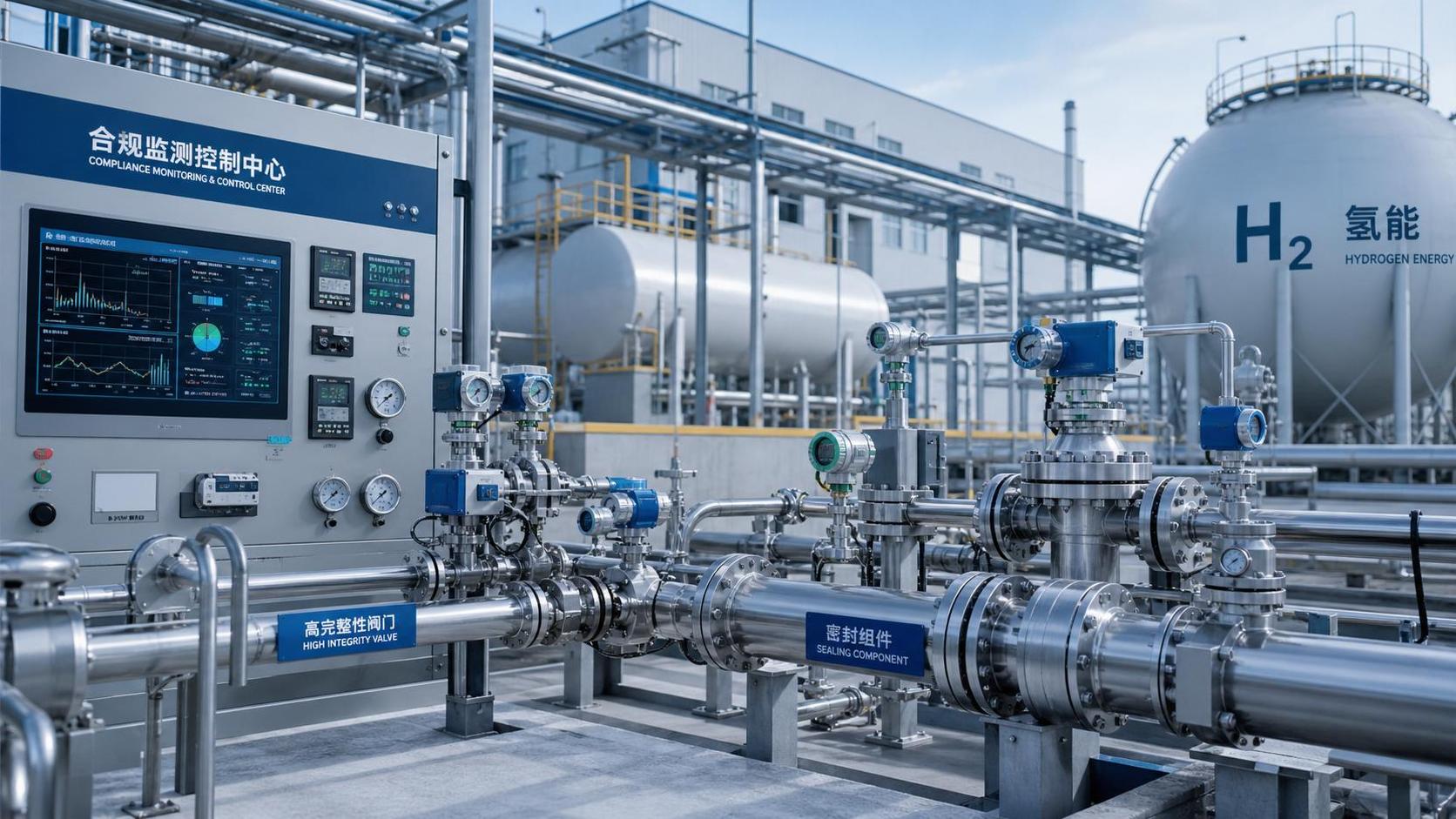
Why industrial environmental news for energy industry matters more in 2026
Industrial environmental news for energy industry has moved from periodic monitoring to daily strategic relevance.
In 2026, regulatory pressure is no longer isolated within power generation or oil and gas operations.
It now reaches advanced manufacturing, hydrogen systems, semiconductor utilities, RF energy platforms, and critical flow infrastructure.
The more important shift is convergence.
Compliance, emissions control, contamination prevention, and uptime reliability are increasingly evaluated together, not separately.
That changes how capital projects are screened, how component risk is priced, and how supply chains are qualified.
For organizations operating sensitive assets, the signal inside industrial environmental news for energy industry is clear.
Environmental performance is becoming a technical performance issue.
This is especially visible in systems where leakage, material degradation, thermal instability, or delayed actuation can trigger compliance exposure.
That is why high-integrity intelligence platforms such as G-PCS are gaining relevance.
They connect standards, component behavior, and operational risk across containment and flow decisions that were once treated as narrow engineering details.
The change is not louder policy. It is tighter operational accountability
A noticeable feature of industrial environmental news for energy industry in 2026 is the shift from announcement risk to execution risk.
Many businesses already understand decarbonization narratives.
What is changing now is the scrutiny applied to valves, seals, actuators, gaskets, and energy-handling subsystems.
Environmental reporting is becoming more granular.
Permitting expectations are becoming more traceable.
Insurance, financing, and project approval are also asking more detailed technical questions.
This affects mixed industrial portfolios the most.
A single enterprise may now face methane oversight, PFAS-related material concerns, hydrogen leakage scrutiny, and energy-efficiency benchmarks at the same time.
That creates a new kind of management burden.
The issue is not only understanding each rule.
It is understanding where environmental exposure intersects with component tolerances and process stability.
Where the pressure is building fastest
- Hydrogen and alternative fuels demand tighter sealing, embrittlement awareness, and verification under pressure cycling.
- Electrified thermal processes face stricter efficiency and off-gas monitoring requirements.
- Semiconductor-adjacent utilities face contamination thresholds that now overlap with environmental reporting expectations.
- Legacy plants face retrofit pressure because environmental nonconformance increasingly begins at component aging points.
Why these signals are appearing across different industrial segments
The drivers behind industrial environmental news for energy industry are broad, but they are not abstract.
They are rooted in technology transition, asset complexity, and lower tolerance for hidden reliability failures.
Energy systems are being redesigned around cleaner fuels, more electrified processes, and denser digital control architectures.
At the same time, operating windows are becoming narrower.
Temperature swings, pressure loads, media compatibility, and contamination control all matter more than they did in previous compliance cycles.
From a market perspective, the result is a more technical form of compliance competition.
The winners are not simply the lowest emitters on paper.
They are the operators that can prove environmental integrity under real operating stress.
Impact is spreading beyond the environmental team
Another key takeaway from industrial environmental news for energy industry is organizational spillover.
The consequences no longer stop with reporting functions or site compliance reviews.
They now shape engineering specifications, maintenance intervals, supplier acceptance criteria, and project sequencing.
In practical terms, a seal selection decision can affect emissions reporting.
An actuator response lag can affect safety and energy efficiency.
A valve material mismatch can trigger both downtime and environmental incident costs.
This is where the G-PCS perspective becomes useful.
Its five industrial pillars reflect how containment and flow decisions connect across sectors that often appear unrelated at first glance.
UHP valves, industrial magnetrons, FFKM sealing materials, piezoelectric positioning systems, and composite gaskets all sit inside this wider reliability logic.
The shared question is simple.
Can the system sustain environmental integrity under higher performance demands?
Three areas where risk now compounds
- Retrofit projects, where new compliance goals are imposed on aging component architectures.
- Critical-process lines, where contamination, leakage, and precision failure create overlapping losses.
- Cross-border sourcing, where standards interpretation and qualification evidence vary widely.
What deserves closer attention in the next planning cycle
The most useful response to industrial environmental news for energy industry is not broader monitoring alone.
It is sharper filtering.
Not every headline changes investment logic, but several signals should now be treated as decision-grade inputs.
- Track regulation at the component-performance level, not only at the facility level.
- Review failure modes linked to fugitive emissions, contamination ingress, and media incompatibility.
- Map high-risk assets against standards updates, especially ISO, API, SEMI, and MIL-SPEC references.
- Test whether qualification data still matches actual duty cycles after process changes.
- Reassess suppliers that cannot document long-duration integrity under aggressive operating conditions.
More companies are also moving from annual compliance review to staged technical review.
That approach makes sense.
Industrial environmental news for energy industry now evolves too quickly for static governance calendars.
A realistic reading of what comes next
The next phase will likely bring less tolerance for vague environmental claims and more demand for traceable operating evidence.
That means technical files, performance benchmarks, and materials data will matter more in strategic reviews.
It also means industrial environmental news for energy industry will increasingly influence board-level timing decisions.
Projects may still move forward, but assumptions will be tested harder.
The practical advantage goes to organizations that can connect market signals with component-level reliability evidence.
That is the deeper value of technical intelligence built around containment, flow, and environmental integrity.
Rather than reacting to each headline, a stronger approach is to build a staged response plan.
Start with the assets most exposed to leakage, contamination, pressure fluctuation, or thermal instability.
Then compare design assumptions against current regulations, operating media, and qualification standards.
From there, refine sourcing, retrofit timing, and validation priorities.
In 2026, industrial environmental news for energy industry is not just about policy direction.
It is a working map of where technical, environmental, and investment risk are beginning to overlap.
The smartest next step is to keep watching those overlap points, then turn them into structured engineering and planning decisions.
Industry Briefing
Get the top 5 industry headlines delivered to your inbox every morning.