2026 Food Machinery Export Updates That Matter
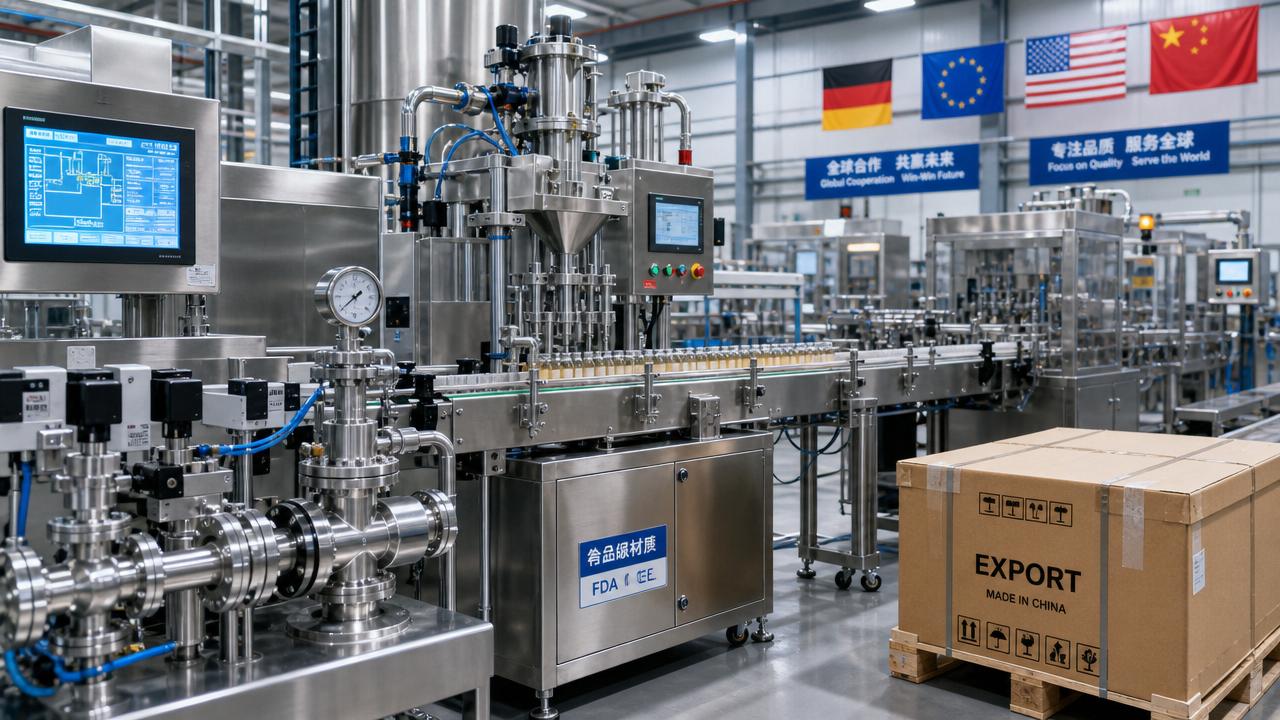
For enterprise decision-makers tracking global supply shifts, regulatory changes, and market access risks, these food machinery export updates offer practical insight into what will shape 2026 trade performance. From compliance pressure to evolving buyer demand and cross-border procurement strategy, this overview helps leaders identify the export trends that matter most for planning, competitiveness, and long-term growth.
The short version is simple. In 2026, export success will depend less on low pricing alone and more on proof, traceability, uptime, and technical fit.
That is why the latest food machinery export updates matter across the broader industrial landscape. Food systems now overlap with precision sealing, pressure control, RF heating, motion accuracy, and material compliance.
This is also where G-PCS becomes useful. Its technical view of containment and flow helps connect export strategy with actual equipment reliability, regulatory readiness, and supply-chain resilience.
What is changing fastest in 2026
The biggest shift in current food machinery export updates is that border access is becoming more technical. Buyers increasingly expect documented materials, validated performance, and faster post-sale support.
A second shift is hidden inside components. Valves, seals, actuators, gaskets, and RF energy modules are now affecting export qualification just as much as the machine frame.
- Update technical files before quoting. Export delays often start when hygiene materials, sealing compounds, electrical specs, and pressure ratings are missing from the first document package.
- Review country-specific conformity marks early. One machine may need different electrical, safety, or food-contact declarations depending on destination, even when the base design looks unchanged.
- Track component origin by batch. In 2026, traceability questions increasingly reach subassemblies such as valves, gaskets, sensors, and microwave energy parts.
- Build service response into export planning. Buyers now compare spare-parts lead time and remote diagnostics almost as closely as initial equipment price.
- Test sealing performance in real media. Clean water trials are not enough when oils, acids, powders, steam, and washdown cycles change wear behavior.
- Check automation compatibility early. Export opportunities are stronger where equipment can integrate with plant-wide controls, data logging, and predictive maintenance systems.
Why components are now trade issues
A growing number of food machinery export updates are not really about finished machines. They are about whether hidden technical parts can pass safety, contamination, and reliability checks.
G-PCS tracks exactly that layer. Its coverage of UHP valves, mechanical seals, RF systems, precision actuators, and advanced gaskets helps identify where export risk can quietly build.
For example, a high-speed filling line may ship on time, yet fail commissioning if seal materials swell under aggressive cleaning chemicals. A strong export plan now needs component-level certainty.
The export checks worth doing before the market does them for you
Many 2026 issues are still manageable, but only if they are caught before quotation, contract signing, or customs filing. These are the checks that deserve immediate attention.
- Map every critical component to its compliance evidence. This avoids the common mistake of certifying the machine while leaving key subcomponents poorly documented.
- Stress-test spare-parts assumptions. If a seal, actuator, or magnetron has a long replenishment cycle, export after-sales risk rises immediately.
- Use destination-based document packs. A single global brochure cannot replace localized manuals, declaration formats, and installation instructions.
- Validate cleaning and washdown durability under repeat cycles. This matters more in 2026 as buyers push harder on total lifecycle cost.
- Confirm calibration and response tolerances. Packaging, dosing, and thermal stages are now judged on repeatability, not just throughput claims.
A practical scenario: high-throughput processing lines
A high-output processing line may appear export-ready because the mechanical build is solid. Yet the real issue often sits in dynamic seals, pressure pulses, or unstable actuator timing.
Recent food machinery export updates suggest that performance consistency is becoming a stronger buying filter. If uptime data is weak, market access may narrow even when pricing is attractive.
Where buyer demand is shifting
Another clear signal from global food machinery export updates is that buyer demand is getting more selective. Energy use, hygiene design, modular upgrades, and digital visibility are moving up the list.
This favors suppliers that can explain not only machine capacity, but also flow stability, sealing reliability, and maintainability under real operating stress.
- Energy efficiency is no longer a side claim. Buyers increasingly compare heating methods, motor loading, and standby consumption before shortlisting equipment.
- Modular design improves export flexibility. Machines that allow easier valve, seal, or control upgrades adapt better to changing local standards and plant requirements.
- Hygiene design must be visible and provable. Smooth surfaces alone are not enough without documented cleanability and material resistance.
- Digital support now affects deal confidence. Remote troubleshooting, spare-parts identification, and maintenance records help reduce cross-border operating uncertainty.
- Reliability claims should connect to components. Referencing pressure control, actuator precision, and seal life makes performance messaging more credible.
A practical scenario: thermal and RF-based food equipment
For thermal processing, drying, or RF-assisted systems, export reviews often go deeper than expected. Power stability, shielding, and thermal uniformity can become negotiation issues.
This is where the broader G-PCS perspective is relevant. Industrial microwave and RF energy systems are not isolated technologies anymore. They directly affect food equipment export credibility.
Risks that are easy to miss until they become expensive
Some of the most important food machinery export updates are really warnings. The costly problems are often small at the start and systemic by the time they are found.
- Do not treat seals and gaskets as commodity parts. Chemical attack, temperature cycling, and cleaning agents can quickly turn low-cost choices into warranty losses.
- Avoid mismatched standards across subassemblies. One non-aligned valve, sensor, or control cabinet can delay acceptance of the full machine.
- Watch origin concentration risk. If critical parts come from one region, a trade disruption can break delivery promises and service obligations.
- Do not overlook installation environment data. Humidity, altitude, dust load, and utility quality can change machine behavior after export.
- Be careful with undocumented substitutions. Alternate elastomers, actuators, or heating modules may solve lead time issues while creating compliance gaps.
In many cases, the hidden export risk is not product failure alone. It is the inability to prove why the selected component will remain stable across pressure, motion, heat, and sanitation cycles.
That is why intelligence platforms like G-PCS matter in a general industrial context. They connect procurement choices with standards, durability logic, and failure-prevention thinking.
What to do next if 2026 planning is already underway
The most useful response to these food machinery export updates is not a full redesign. It is a focused review of the few technical and commercial points most likely to block export performance.
- Start with the top ten exported configurations. Compare each one against destination compliance, component traceability, and service response readiness.
- Create a critical-parts watchlist. Include valves, seals, RF modules, pneumatic devices, and specialty gasket materials with long approval or supply cycles.
- Align commercial offers with technical proof. Quotes should reference testing scope, operating limits, and maintenance assumptions, not just output capacity.
- Prioritize redesign only where risk clusters. Focus first on weak points linked to contamination control, unstable flow, thermal inconsistency, or difficult servicing.
- Use external technical intelligence where needed. Independent benchmarks can sharpen decisions when internal data is incomplete or suppliers provide conflicting claims.
Taken together, the most relevant food machinery export updates for 2026 point in one direction. Market access will increasingly reward equipment that is documented, durable, adaptable, and technically transparent.
The strongest next step is to review export assumptions at component level, not just machine level. That is often where competitiveness is protected, margins are preserved, and expansion becomes more dependable.
Industry Briefing
Get the top 5 industry headlines delivered to your inbox every morning.