Critical Flow Systems: What Matters Most in Selection
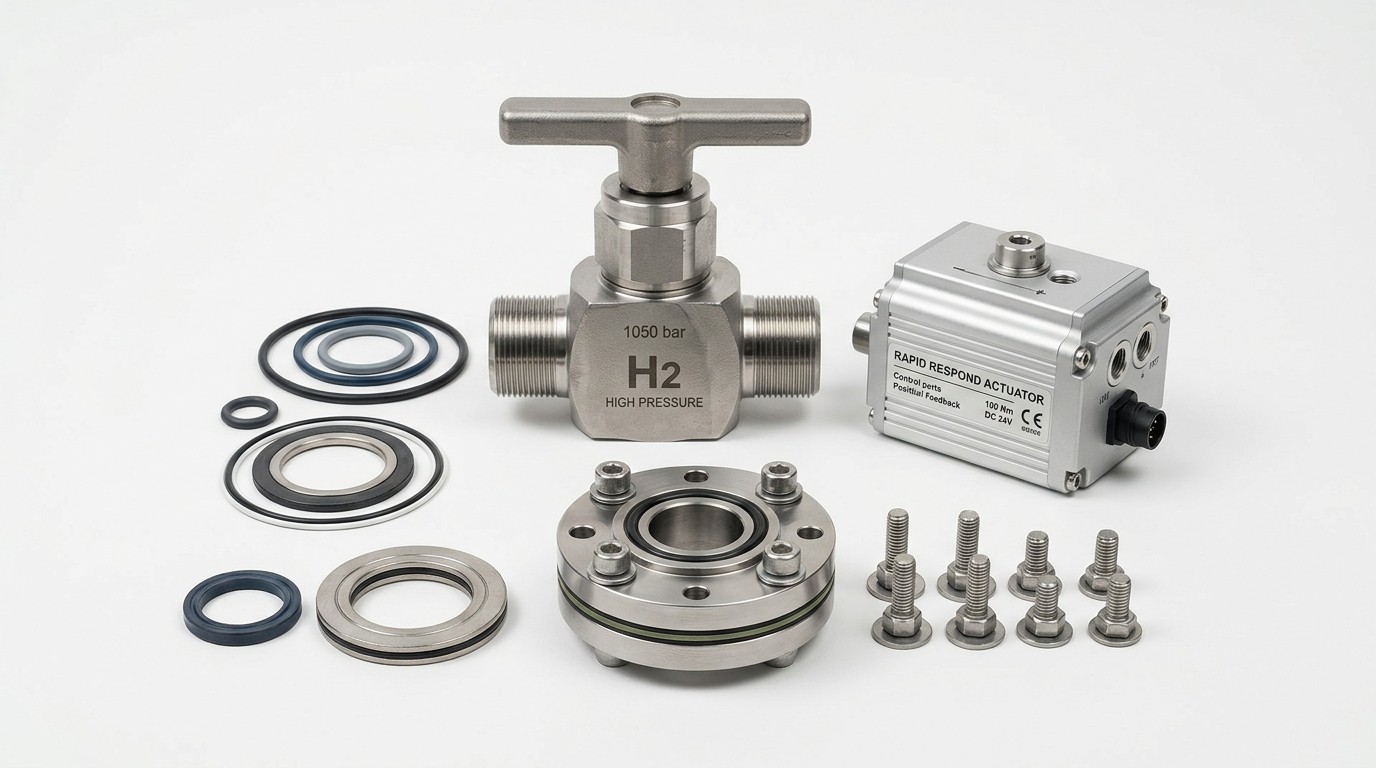
Selecting critical flow systems requires more than comparing specs—it demands a clear view of energy containment, containment technology, and the reliability of high-performance components under extreme conditions. From ultra-high pressure valves and hydrogen compatible valves to perfluoroelastomer seals, composite gaskets, and high-precision actuators, decision-makers must weigh compliance, response speed, and lifecycle risk to protect mission-critical operations.
What makes a critical flow system truly fit for selection?
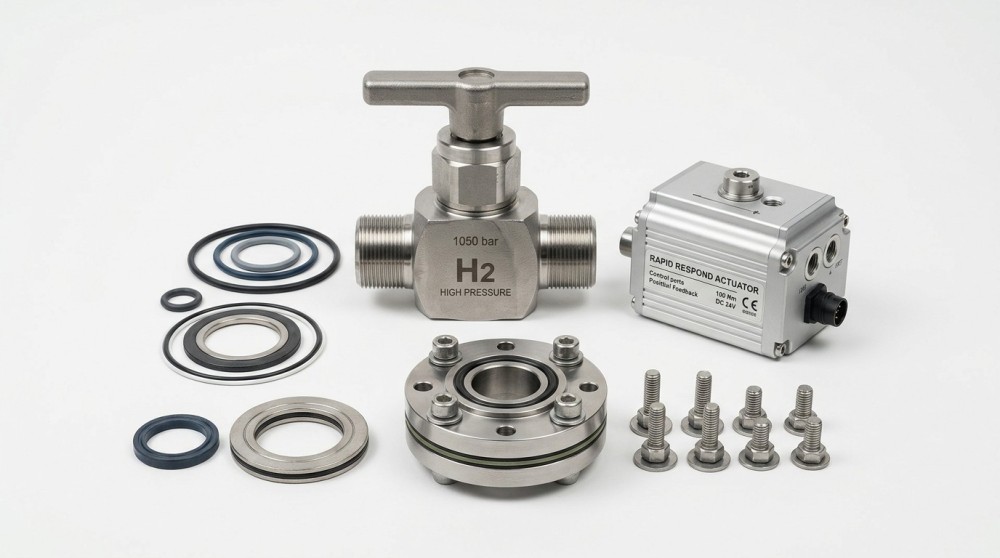
In advanced industrial environments, a critical flow system is not simply a valve, seal, actuator, or RF energy subassembly purchased by part number. It is a control architecture that must contain pressure, media, heat, vibration, and timing error within known limits. For procurement teams and technical evaluators, the real question is whether the full system can sustain repeatable performance across 3 linked dimensions: containment integrity, response precision, and compliance readiness.
This is why selection becomes difficult when operating conditions move beyond conventional utilities. A hydrogen compatible valve at 350–700 bar, an FFKM seal in aggressive plasma chemistry, or a piezoelectric actuator working in micro-second response windows cannot be judged by catalog language alone. The failure mode often appears at the interfaces: stem packing, seal compression set, cycle fatigue, or control latency under thermal drift.
For information researchers, the challenge is fragmentation. Data is spread across supplier sheets, standards tables, and internal qualification records. For enterprise decision-makers, the challenge is risk concentration. A single weak component can interrupt a fabrication line, delay a test campaign, or compromise a regulated process window for 24–72 hours or longer, with far greater downstream cost than the purchase price suggests.
G-PCS addresses this gap by organizing critical flow knowledge around five industrial pillars: UHP control and valves, industrial microwave and RF energy systems, extreme-environment mechanical seals, high-precision pneumatic and piezoelectric actuators, and specialized polymer and composite gaskets. That structure helps CTOs, R&D heads, and sourcing leaders compare options through a reliability framework rather than isolated product claims.
The 4 selection questions that usually decide success
- Can the system maintain containment under the full pressure, temperature, media, and duty-cycle range rather than only at nominal conditions?
- Does the control element respond fast enough for the process window, whether that means milliseconds for pneumatic motion or micro-second behavior for piezo positioning?
- Are materials and wetted surfaces compatible with hydrogen, corrosive chemicals, vacuum service, RF exposure, or clean-process contamination limits?
- Can the supplier provide traceable support for standards, documentation, lifecycle planning, and replacement strategy within realistic lead times such as 2–6 weeks or longer for custom parts?
When these four questions are answered early, selection becomes more disciplined. Instead of comparing headline pressure ratings or unit price only, teams can identify whether a proposed critical flow system matches the operational logic of containment and flow that high-consequence applications demand.
Which technical criteria matter most across valves, seals, gaskets, and actuators?
Although every application is different, most critical flow system decisions can be reduced to a set of technical checkpoints. These include pressure envelope, leak-tightness expectation, chemical compatibility, dynamic response, thermal stability, cycle life, and maintainability. In practice, engineers often start with one dominant requirement—such as 700 bar hydrogen service or low-particle sealing—but final approval depends on how well the component performs across 5–7 interacting variables.
For example, a high-pressure valve may satisfy pressure rating but still create risk if seat material degrades under repeated fast cycling. An FFKM seal may offer broad media resistance, yet its value depends on compression set behavior, outgassing sensitivity, and temperature range. A composite gasket may lower cost in moderate duty, but the wrong filler or reinforcement profile can reduce sealing stability under thermal shock or flange movement.
Actuators demand the same discipline. Pneumatic and piezoelectric devices are often compared as if force and speed alone settle the issue. In reality, resolution, hysteresis, stiffness, duty cycle, air quality, controller integration, and maintenance interval all influence whether the system can hold position over thousands or millions of cycles. For mission-critical applications, selection should reflect total system behavior, not just motion output.
The table below summarizes core evaluation dimensions that repeatedly shape procurement outcomes in critical flow systems. It is useful during early supplier screening, cross-functional design reviews, and pre-award technical clarification.
A useful pattern emerges from this comparison: the “best” component is often the one with the lowest performance uncertainty in the actual operating envelope. In other words, technical fit matters more than maximal specification. That is a central principle in critical flow system selection, especially when downtime, contamination, or safety events carry high financial consequences.
How G-PCS improves technical screening
Because G-PCS benchmarks components against recognized frameworks such as ISO, SEMI, API, and MIL-SPEC where relevant, evaluators can compare products through a common language. This is particularly valuable when one project combines several risk layers—for example, UHP gas control, aggressive chemistry, and precise motion in a compact footprint. Instead of managing disconnected supplier conversations, teams can build a single, evidence-based qualification path.
That approach shortens the time spent on false comparisons. Rather than debating whether a lower-cost gasket or actuator “should be fine,” teams can review a structured matrix of compatibility, performance margin, and lifecycle exposure. In many B2B procurement environments, this shift saves one or two full review cycles before purchase approval.
How should enterprise buyers compare options without missing hidden risk?
Most sourcing failures happen because procurement and engineering evaluate different things. Procurement may focus on lead time, unit cost, and vendor responsiveness. Engineering may focus on pressure class, leakage profile, and material compatibility. In a critical flow system, both views are necessary, but neither is sufficient alone. The right selection process merges 6 procurement dimensions with 6 technical dimensions before the request for quotation is finalized.
A disciplined comparison model also prevents underestimating replacement and qualification cost. For instance, a lower-price valve with a 4-week lead time may look attractive until teams factor in extra validation, uncertain seal longevity, and the need for additional spares. Conversely, a premium seal material may seem expensive until plant data shows that planned replacement intervals can move from quarterly service to annual review in a stable process window.
This is where decision-makers benefit from a weighted scoring method. It does not need to be overly complex. Even a 3-stage internal review—technical fit, supply assurance, lifecycle economics—can reduce selection error significantly. The key is to make hidden risk visible before purchase commitment, not after commissioning.
The following table provides a practical framework for comparing critical flow system options during supplier shortlisting and final award decisions.
A comparison table like this is especially helpful when several component families overlap. For example, buyers may need to choose between a standard elastomer and FFKM, or between a pneumatic actuator and a piezoelectric positioning stage. Without a consistent matrix, internal teams often debate features rather than decision criteria.
A practical 4-step selection workflow
- Define the full service envelope, including normal operation, start-stop events, contamination sensitivity, and expected maintenance interval.
- Screen candidate components against material compatibility, pressure or motion limits, and applicable standards documentation.
- Compare supply-side variables such as lead time, sample support, spare availability, and customization impact on validation.
- Approve the option with the best balance of technical margin, lifecycle economics, and implementation confidence.
This workflow is simple enough for procurement use, yet detailed enough to support engineering sign-off. It also aligns well with the G-PCS model of turning high-performance component data into actionable industrial intelligence for sensitive flow and energy applications.
Which standards, compliance issues, and application scenarios should not be overlooked?
Critical flow systems rarely operate in a generic environment. They sit inside semiconductor tools, hydrogen platforms, aerospace test loops, RF energy systems, analytical instruments, and highly regulated manufacturing assets. Each context changes the definition of acceptable risk. In one project, leak integrity dominates. In another, outgassing, cleanability, electromagnetic stability, or thermal drift becomes the limiting factor.
That is why standards and compliance should be treated as design inputs, not paperwork added at the end. ISO may shape quality and dimensional consistency. SEMI can matter for semiconductor process environments. API references may influence valve-related expectations in energy and process sectors. MIL-SPEC language may appear in defense or extreme-duty programs. The specific standard set varies, but the procurement principle remains consistent: confirm what is relevant before component lock-in.
Application context also affects acceptable replacement strategy. A gasket in a moderate industrial utility line may tolerate planned shutdown replacement every 6–12 months. A seal inside a contamination-sensitive tool may require tighter control, batch traceability, and qualification support long before field replacement is discussed. Similarly, actuator selection for metrology or micro-positioning must consider controller behavior, thermal stability, and repeatability over many cycles rather than only nominal force.
For teams evaluating multiple sites or business units, building a scenario map is often more useful than asking for a universal “best component.” The table below outlines how critical flow system priorities shift across common high-consequence applications.
What this comparison shows is that selection priorities move with the application, but the logic remains stable: define the environment, map the failure consequences, and choose components with verifiable fit. G-PCS is valuable here because it does not isolate products from context. It connects containment, flow, response, standards, and procurement consequences in one decision framework.
Common mistakes in standards and application review
- Assuming a component qualified in one industry automatically transfers to another with different cleanliness, media, or response requirements.
- Treating material compatibility as a simple yes or no question instead of checking temperature, exposure duration, and pressure cycling together.
- Reviewing standards after supplier nomination, which can add 1–3 additional approval loops and slow project release.
- Ignoring spare and documentation continuity for long-life assets where replacement parts may be needed years after initial qualification.
Avoiding these errors improves both technical robustness and purchasing efficiency. It also helps cross-functional teams speak the same language when risk tolerance, budget control, and delivery deadlines need to be balanced.
FAQ: what do buyers and researchers ask most before approving a critical flow system?
How do I choose between standard sealing materials and FFKM?
Start with process chemistry, temperature range, contamination sensitivity, and replacement cost. FFKM is often justified when media resistance and thermal stability must remain reliable across harsh or variable environments, especially where an unplanned shutdown is expensive. If the process is moderate and service intervals are accessible, a lower-cost alternative may still be appropriate. The correct choice depends on 4 variables: media, temperature, maintenance access, and failure consequence.
What should be checked first when selecting hydrogen compatible valves?
Check pressure range, material compatibility, sealing interface design, and expected cycling conditions. Hydrogen service can expose weaknesses that do not appear in other gases, especially in high-pressure applications such as 350–700 bar systems. Procurement should also ask for documentation relevant to material traceability, application envelope, and any qualification evidence available for similar duty conditions.
How long is a typical delivery cycle for critical flow components?
There is no single standard lead time because stock status, material choice, and customization level matter. As a planning guide, catalog-based items may fit a 2–4 week window, while application-reviewed or customized assemblies often require 4–8 weeks or more. Projects involving documentation review, material confirmation, or sample validation should allow additional time before final production release.
Is the lowest-cost option ever the right choice?
Yes, but only when the lower-cost option is technically adequate across the real operating envelope and does not create hidden validation or downtime cost. In critical flow systems, the purchase price is only one part of total exposure. Buyers should compare unit price against replacement frequency, qualification effort, production interruption risk, and spare strategy over at least 12 months where possible.
Why work with G-PCS when evaluating critical flow systems?
G-PCS is built for decision-makers who cannot afford superficial comparisons. Its value is not limited to listing high-performance components. It frames the selection problem through the logic of containment and flow, connecting UHP valves, RF energy systems, mechanical seals, precision actuators, and advanced gasket materials to the reliability expectations of sensitive industrial assets. That helps research teams move faster from fragmented data to usable technical judgment.
For enterprise buyers, this means more than product awareness. It means structured support for parameter confirmation, option screening, compliance discussion, and lifecycle-oriented procurement decisions. Whether the project involves hydrogen compatible valves, perfluoroelastomer seals, composite gaskets, or high-precision motion components, the goal is to reduce ambiguity before commercial commitment and technical lock-in.
If your team is comparing alternatives, preparing an RFQ, or trying to align engineering and sourcing criteria, G-PCS can support the next step with targeted guidance. Typical consultation topics include 5 core areas: operating parameter review, material and media compatibility, standards and documentation mapping, lead-time and sample planning, and replacement or customization strategy.
Contact us when you need practical input on component selection, delivery cycle expectations, certification-related questions, sample support, or quotation discussions for critical flow systems. A clear technical brief at the beginning usually prevents the costlier problems that appear later in validation, commissioning, or field operation.
Industry Briefing
Get the top 5 industry headlines delivered to your inbox every morning.
- ultra-high pressure valves
- RF energy systems
- extreme-environment seals
- high-precision actuators
- piezoelectric actuators
- composite gaskets
- hydrogen compatible valves
- perfluoroelastomer seals
- containment technology
- high-performance components
- critical flow systems
- energy containment
- micro-second response