Bellows Mechanical Seal Wholesale: Where Lower Cost Can Backfire
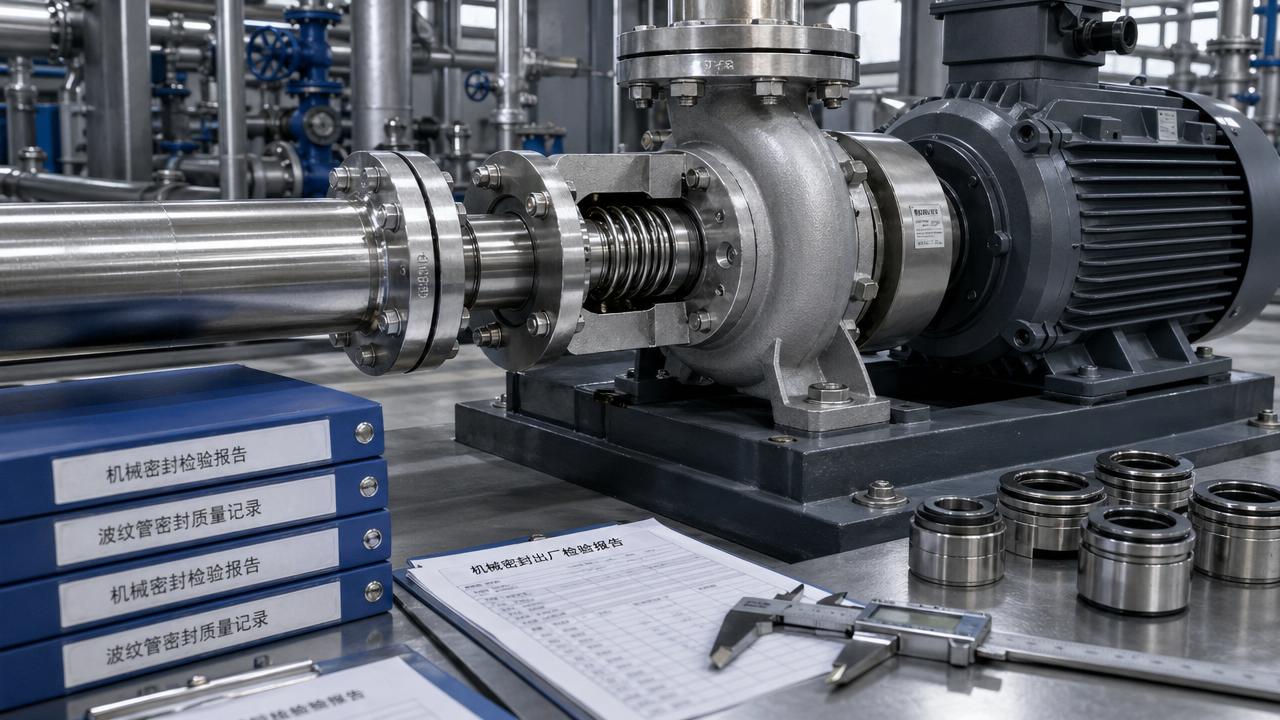
Bellows mechanical seal wholesale pricing can look attractive on a spreadsheet, but for financial decision-makers, the lowest unit cost often hides higher lifecycle risk. From unplanned downtime and leakage failures to compliance exposure and repeated replacement costs, a cheaper seal can quickly erode savings. This article explains where low-cost sourcing backfires and how to evaluate total value before approving a purchase.
Why the market around bellows mechanical seal wholesale is changing
The sourcing environment for industrial sealing components has changed more in the past few years than many finance teams expected. In earlier cycles, bellows mechanical seal wholesale decisions were often treated as standard MRO buying: compare unit prices, validate basic dimensions, approve the lowest acceptable bid, and move on. That logic is weakening. Across process industries, energy systems, specialty manufacturing, and high-integrity fluid handling, the cost of leakage, contamination, compliance failure, and downtime has increased faster than the cost of the seal itself.
This shift matters because bellows seals are no longer judged only as replaceable parts. They are increasingly evaluated as risk-control components tied to uptime, environmental exposure, maintenance labor, and asset reliability. For financial approvers, that means the purchasing question is changing from “How much can we save per piece?” to “What downstream cost volatility does this choice introduce?” In that context, low-price bellows mechanical seal wholesale offers can backfire when they are disconnected from application conditions, material traceability, and supplier consistency.
The trend is especially visible in operations running under tighter audit expectations, stricter emission controls, higher throughput requirements, or more aggressive service media. What looked like a simple component decision now touches budgeting, maintenance planning, production continuity, and even customer commitments.
The main signals behind this shift
Several practical signals explain why procurement patterns are moving away from purely price-led buying. None of them are theoretical. Each one directly affects the financial outcome of bellows mechanical seal wholesale sourcing.
For finance leaders, these signals point to one conclusion: the risk-adjusted cost of a seal is becoming more important than the invoice price of a seal. Bellows mechanical seal wholesale buying still has value, but only when supported by disciplined technical and commercial screening.
Where lower-cost wholesale sourcing most often backfires
The first failure point is specification drift. In many wholesale transactions, product descriptions appear equivalent on paper, yet important details differ: bellows material grade, secondary sealing elements, face combination, pressure rating, temperature tolerance, weld quality, or dimensional consistency. A seal that is “close enough” for a low-risk duty may become expensive in demanding service.
The second failure point is shortened service life. Lower-priced units can create repeat spending through early wear, instability under thermal cycling, or poor resistance to chemicals and particulates. Finance teams often see only the initial purchase order, while operations absorb the labor hours, lost output, and emergency replacement costs that follow. In these cases, bellows mechanical seal wholesale savings are not real savings; they are deferred expense.
The third failure point is batch inconsistency. One common hidden risk in lower-tier wholesale supply is that the first batch performs acceptably but later lots vary in finish quality, metallurgy, or assembly control. This creates unstable maintenance intervals and undermines forecast accuracy. For approval authorities concerned with budget reliability, inconsistent supplier performance is a financial risk even before it becomes a technical one.
The fourth failure point is documentation weakness. In more regulated or high-spec environments, inability to provide traceability, test records, or material verification can delay installation or trigger internal rejection. The component may have been cheap to buy, yet expensive to approve, inspect, quarantine, or replace. This is increasingly relevant where procurement works with engineering, quality, and EHS teams under stricter control frameworks.
Why this trend affects financial approvers more directly than before
Historically, finance could treat many spare-part purchases as relatively isolated cost events. That is less true now. In current operating models, a failed seal can disrupt interconnected production lines, service contracts, or delivery schedules. Because of that, the financial approver is increasingly the gatekeeper not only of spend, but of risk tolerance.
Bellows mechanical seal wholesale decisions are also crossing departmental boundaries. Maintenance may prefer a proven design. Engineering may insist on compatibility under actual service conditions. Procurement may focus on lead time and price. Quality may require documentation. Finance is the function forced to reconcile all of these priorities into one approval decision. A narrow cost lens can therefore create organization-wide friction later.
This is why more companies are shifting from “lowest bid approval” toward “fit-for-service approval.” The financial logic is simple: if a slightly higher-priced seal reduces failure probability, protects uptime, and stabilizes maintenance cycles, it improves predictability. Predictability itself has monetary value. It reduces emergency procurement, avoids premium freight, lowers maintenance overtime, and protects production planning.
The hidden cost categories that often get missed
When reviewing bellows mechanical seal wholesale proposals, financial teams often compare line-item price and overlook the cost categories that are not immediately visible in procurement software. These hidden categories are where low-cost sourcing most often loses its advantage.
- Unplanned downtime cost, including lost throughput and schedule disruption
- Maintenance labor for repeated replacement or troubleshooting
- Inventory inflation caused by uncertain service life and need for backup stock
- Quality and inspection cost tied to incoming verification and rejections
- Environmental or safety exposure resulting from leakage events
- Expedited freight and urgent sourcing when field failure occurs
- Asset damage if seal failure affects adjacent rotating or pumped equipment
In trend terms, the important change is that these hidden costs are becoming more measurable. More industrial buyers now track maintenance intervals, mean time between failures, and incident-driven spend. As data visibility improves, weak bellows mechanical seal wholesale decisions become harder to defend after the fact.
How different stakeholders are affected by low-cost sourcing choices
This stakeholder view shows why bellows mechanical seal wholesale choices should not be framed as a single-department cost reduction exercise. The more critical the application, the more the decision affects enterprise performance rather than just purchasing efficiency.
What stronger buyers are doing differently now
A noticeable market direction is the move toward segmented sourcing. Instead of applying one purchasing rule to every seal, stronger organizations classify applications by failure consequence. Non-critical service may still allow aggressive bellows mechanical seal wholesale buying based on cost. Critical service gets a higher threshold for validation, documentation, and supplier approval.
Another shift is pre-approval of technical equivalence. Rather than waiting for field problems, buyers align engineering, procurement, and finance before volume orders are placed. They ask whether the proposed wholesale source matches operating pressure, temperature, media compatibility, shaft movement, and installation tolerances. This reduces false economies created by part-number similarity without functional equivalence.
A third trend is broader use of total cost review. This does not require complex modeling. Even a simple decision screen that compares unit cost, expected service life, replacement labor, downtime exposure, and supplier reliability can reveal whether a low-price quotation is genuinely competitive. In many cases, the cheapest seal loses its advantage once these variables are included.
A practical decision framework before approving a wholesale order
For financial decision-makers, the goal is not to reject low-cost sourcing by default. It is to approve bellows mechanical seal wholesale purchases with clearer confidence. A useful framework is to test the quote against five questions.
- Is the application critical enough that failure cost outweighs unit price differences?
- Has technical equivalence been confirmed beyond basic dimensions?
- Can the supplier provide consistent batch quality and traceable documentation?
- What is the expected replacement cycle compared with the incumbent seal?
- What downstream costs would arise if the seal underperforms in service?
If the answers are weak or uncertain, apparent savings should be discounted. If the answers are strong, wholesale buying can remain a smart lever for cost control. The key is disciplined differentiation between commodity purchasing and reliability-sensitive purchasing.
What signals to watch over the next buying cycle
Looking ahead, several signals deserve ongoing attention. First, track whether operations are becoming more uptime-sensitive due to capacity pressure or customer delivery commitments. Second, monitor whether audit, safety, or emissions requirements are becoming stricter in your environment. Third, review whether maintenance is reporting shortened service intervals or more variability across suppliers. Fourth, observe whether procurement is sourcing from a broader wholesale base without stronger qualification processes.
These signals do not automatically mean bellows mechanical seal wholesale is risky. They mean the approval standard should evolve with operating reality. In higher-consequence environments, procurement discipline must rise in parallel with the cost of failure.
Conclusion: lower price is not the same as lower cost
The core trend is clear: industrial buyers are moving away from narrow piece-price logic and toward value-based containment decisions. In that environment, bellows mechanical seal wholesale remains relevant, but the cheapest offer is increasingly the most dangerous one to approve without context. Where leakage, downtime, compliance, or maintenance burden matter, low-cost sourcing can backfire quickly.
If your organization wants to judge the real value of a wholesale seal purchase, focus on three points before approval: failure consequence, technical equivalence, and supplier consistency. Those questions provide a more reliable basis for financial control than invoice price alone. For companies reviewing current sourcing strategy, the next step is simple: identify which seal applications are truly low-risk, which are operationally critical, and where total lifecycle value should override headline discount.
Industry Briefing
Get the top 5 industry headlines delivered to your inbox every morning.