Bellows Mechanical Seal Wholesale: Common Sizing Mistakes to Avoid
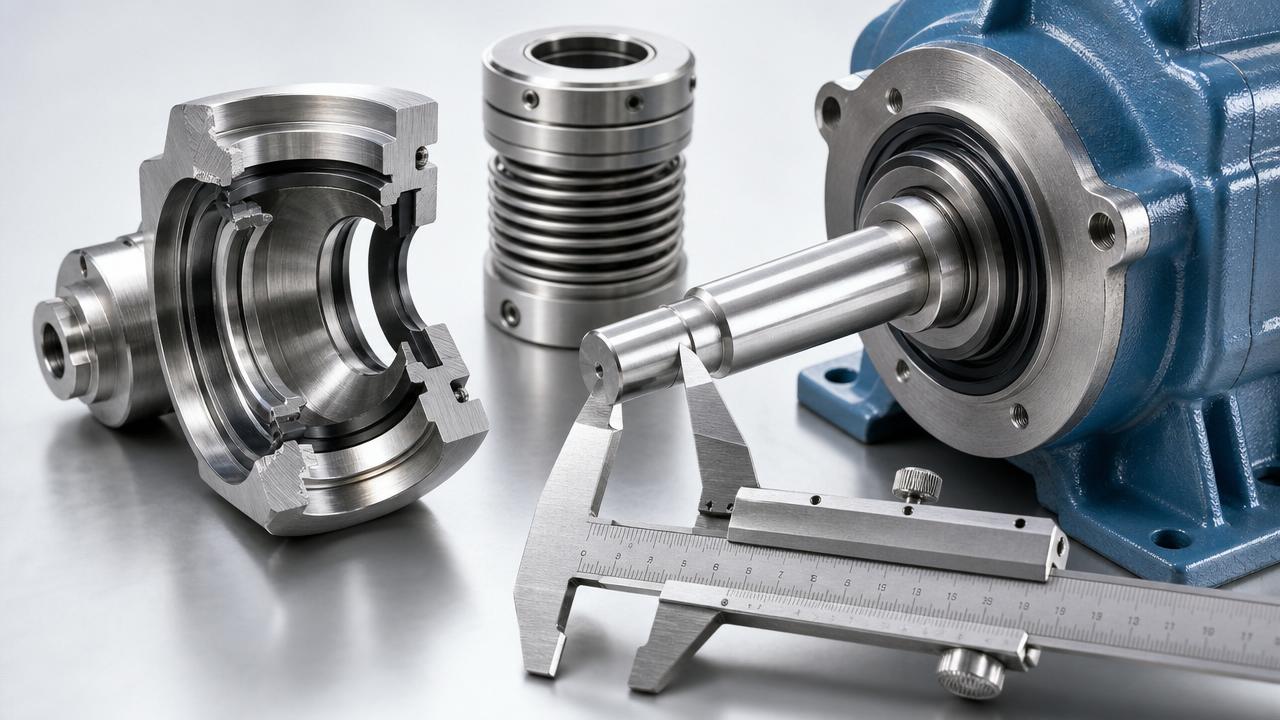
In bellows mechanical seal wholesale sourcing, even small sizing mistakes can lead to leakage, premature wear, and costly downtime for maintenance teams. Choosing the right seal means looking beyond basic dimensions to operating pressure, shaft movement, temperature, and media compatibility. This guide highlights the most common sizing errors and how after-sales maintenance personnel can avoid them to improve reliability and service life.
For after-sales maintenance personnel, seal replacement is rarely a simple part swap. A bellows seal that appears to match the shaft size can still fail within days or weeks if compression length, face loading, or material compatibility are misread during procurement.
In B2B environments such as pumps, mixers, compressors, and precision process systems, incorrect sizing affects not only leakage control but also service intervals, spare-part planning, and maintenance labor. In bellows mechanical seal wholesale buying, a disciplined sizing checklist reduces rework, emergency downtime, and avoidable inventory.
Why Sizing Accuracy Matters in Bellows Mechanical Seal Wholesale
Bellows mechanical seals are designed to maintain face contact under changing operating conditions. Unlike some conventional pusher seals, the bellows element can compensate for limited axial movement, but only within a defined working range, often measured in millimeters rather than centimeters.
A sizing error of just 1–2 mm in installed length, seat depth, or shaft fit may alter spring load, face pressure, and heat generation. In moderate-duty service, that can shorten seal life from 12 months to less than 3 months, especially where frequent starts and stops increase thermal stress.
What Maintenance Teams Commonly Overlook
- Assuming shaft diameter is the only critical dimension
- Ignoring gland space and installed working length
- Matching old seal markings without checking updated equipment tolerances
- Overlooking media temperature, flush conditions, and pressure cycling
- Using nominal inch and metric sizes interchangeably without verification
The table below shows how a single dimensioning mistake can affect seal behavior in service. This is especially useful in bellows mechanical seal wholesale evaluations where maintenance teams compare several suppliers under time pressure.
The main lesson is that seal sizing is a system fit issue, not a catalog-only issue. When procurement and after-sales teams validate dimensions together, returns and repeat failures usually drop faster than by changing material grades alone.
Why Wholesale Orders Increase the Risk
In single-piece purchases, a technician may physically compare the new seal with the removed unit. In wholesale orders of 20, 50, or 200 pieces, one data-entry mistake can replicate across an entire lot. That creates excess stock, delayed maintenance windows, and higher replacement handling costs.
This is particularly relevant in high-value industrial environments served by technical sourcing platforms like G-PCS, where reliability requirements may align with ISO, API, SEMI, or other controlled frameworks. A mismatch that seems minor in general service can become unacceptable in clean, hazardous, or precision-controlled systems.
Common Sizing Mistakes to Avoid
Most failures in bellows mechanical seal wholesale projects trace back to a short list of avoidable sizing errors. The challenge is that these mistakes often happen before the order is placed, not during installation.
Mistake 1: Measuring Only the Shaft Diameter
Shaft diameter is essential, but it is only one of several required dimensions. Maintenance teams also need seal chamber space, seat bore, seat depth, working length, and hardware clearance. A 25 mm shaft does not automatically mean every 25 mm bellows seal will fit.
When equipment has been rebuilt or modified, the original drawing may no longer match the current assembly. Even a shaft sleeve replacement can change tolerances enough to affect seal compression and concentricity.
Field Tip
Use a 6-point measurement record before ordering: shaft diameter, sleeve diameter if present, seal chamber bore, gland depth, seat recess, and available axial space. A single worksheet reduces confusion between maintenance, purchasing, and supplier teams.
Mistake 2: Confusing Free Length with Installed Working Length
Bellows seals are often listed with a free length, but installation performance depends on working length after compression. If the seal is compressed too little, face closing force can be too low. If compressed too much, friction and heat rise sharply.
In many industrial applications, the acceptable installed compression window may be only 1.5–3.0 mm. Exceeding that range can accelerate face wear during the first 50–100 operating hours, when failures are often misdiagnosed as material defects.
Mistake 3: Ignoring Axial and Radial Shaft Movement
After-sales teams frequently replace seals after pump vibration, bearing wear, or alignment corrections, yet still order to the old nominal size. Bellows seals can absorb some movement, but not unlimited shaft runout or end play.
If radial runout exceeds common limits such as 0.05–0.10 mm in precision service or if axial movement is greater than the bellows design allowance, the seal may wear unevenly even when all nominal dimensions appear correct.
Mistake 4: Overlooking Pressure and Temperature While Sizing
A seal that fits mechanically may still be undersized functionally. Bellows geometry, face combination, and elastomer or metal bellows material must match actual service conditions. For example, a seal selected for 6 bar continuous duty may struggle in a system that experiences 8–10 bar startup spikes.
Temperature has a similar effect. A unit operating at 80°C with occasional cleaning cycles at 120°C requires a different sizing and material review than one running at stable ambient conditions.
The following table helps maintenance personnel connect common sizing mistakes with the data they should confirm before placing a bellows mechanical seal wholesale order.
These checks are simple, but they prevent the most expensive procurement error: receiving the correct quantity of the wrong seal. For maintenance departments working with planned shutdowns of 8–24 hours, that distinction matters.
A Practical Sizing Workflow for After-Sales Maintenance Personnel
A reliable sourcing process should be repeatable across technicians, sites, and suppliers. The goal is to move from reactive replacement to controlled specification, especially when bellows mechanical seal wholesale purchasing supports multiple machines or regional service teams.
Step 1: Capture Current Operating Conditions
Record at least 5 operating inputs: fluid type, temperature range, normal pressure, peak pressure, and shaft speed. If available, also include start-stop frequency per day, flush plan, and whether dry-run events have occurred in the last 6 months.
Step 2: Inspect the Removed Seal for Wear Pattern Clues
A cracked face, uneven wear track, heat discoloration, or bellows distortion often points to more than material failure. These signs can indicate over-compression, misalignment, or pressure conditions outside the expected range.
Step 3: Standardize Measurement and Documentation
- Measure all critical dimensions with calibrated tools.
- Keep units consistent in mm or inch, not both.
- Photograph the assembly from 3 angles.
- Note whether the seal is balanced, unbalanced, cartridge, or component style.
- Record any shaft sleeve scoring or housing distortion.
Step 4: Validate with the Supplier Before Release
Before confirming a wholesale order, ask the supplier to review the dimensional stack-up, operating envelope, and material combination. For critical service, request a pre-shipment drawing confirmation and verify lead time, which may range from 7–15 days for standard sizes to 3–5 weeks for non-standard configurations.
Minimum Review Checklist
- Does the seal fit the actual installed axial space?
- Is the bellows type suitable for the fluid and temperature range?
- Can the face combination handle intermittent dry friction or solids?
- Are pressure peaks and rotation direction clearly stated?
- Is spare quantity aligned with maintenance cycle and equipment count?
How to Improve Procurement Results in Wholesale Orders
Good sizing discipline should also improve purchasing efficiency. In bellows mechanical seal wholesale transactions, the best outcomes usually come from combining technical verification with practical inventory planning.
Build a Small Approved Size Matrix
If your maintenance team supports multiple pump or mixer models, create an approved matrix of 10–20 repeat-use seal sizes and operating profiles. This reduces emergency buying and makes supplier communication faster and more accurate.
Separate Standard and Critical-Service Items
Not all seals should be stocked the same way. General utility service may allow broader interchangeability, while high-temperature, corrosive, hygienic, or precision-controlled applications should remain tightly specified. Mixing these categories often leads to wrong substitutions during urgent repairs.
Ask Better Questions During Supplier Review
Instead of asking only for price and delivery, ask for allowable compression range, shaft tolerance expectations, face material pairing, and the recommended installation checks. These questions reveal whether a supplier understands application risk or is simply matching a catalog code.
For organizations managing advanced flow-control and containment assets, that level of review supports stronger reliability decisions across maintenance, engineering, and procurement. It is also consistent with the disciplined sourcing culture expected in technically demanding industrial supply chains.
Final Guidance for Maintenance Teams
Bellows seal sizing errors usually begin with incomplete information, not poor intentions. When after-sales maintenance personnel verify dimensions, movement limits, pressure peaks, and media conditions before ordering, seal life becomes more predictable and replacement planning becomes easier.
In bellows mechanical seal wholesale projects, the smartest approach is to treat the seal as part of a complete operating system. Better measurement, clearer records, and pre-order technical review can reduce leakage risk, avoid premature failure, and support more efficient spare-part management.
If you need support comparing specifications, reviewing sizing data, or selecting the right seal configuration for demanding industrial environments, contact us now to get a tailored solution, discuss product details, and explore more precision sealing options.
Industry Briefing
Get the top 5 industry headlines delivered to your inbox every morning.