Where Polymer Gaskets Fit Best in Process Systems
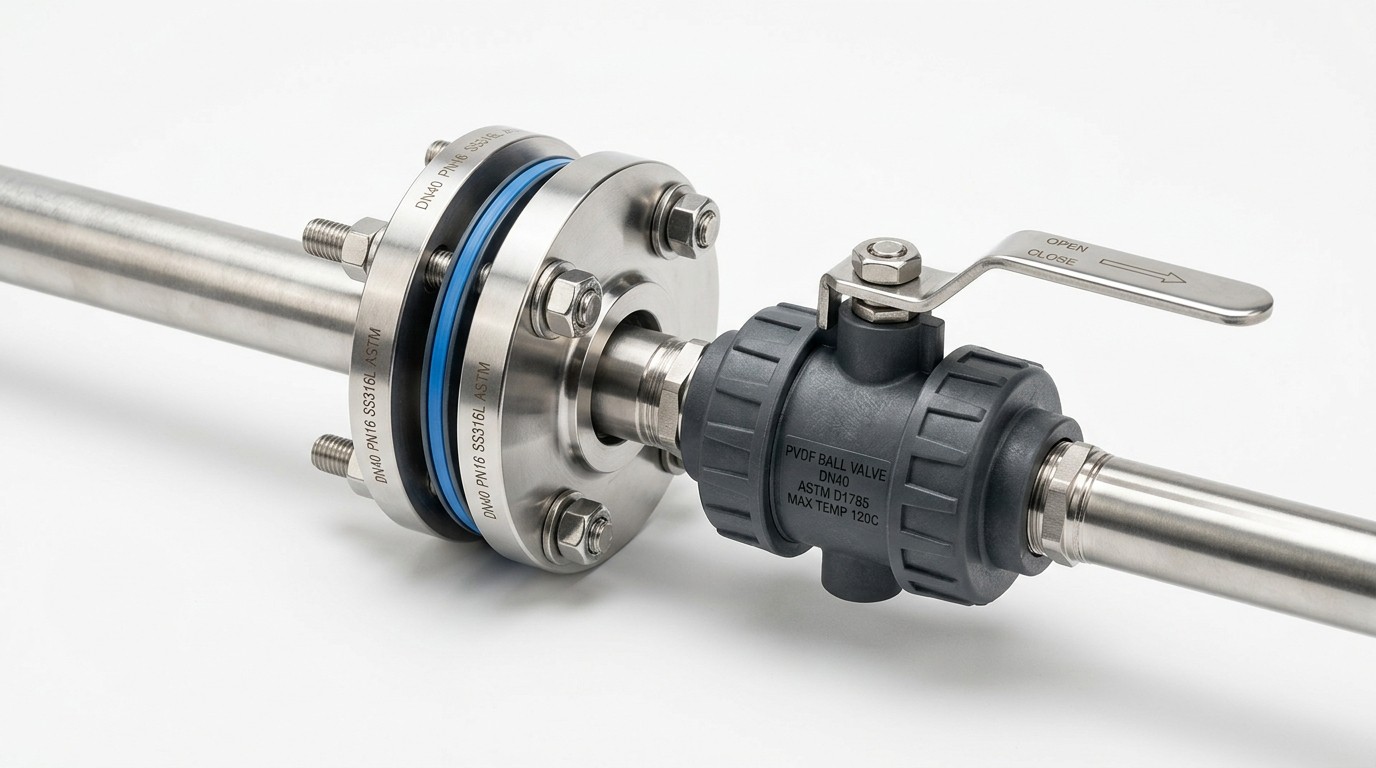
In critical flow systems, choosing the right sealing material directly affects energy containment, uptime, and compliance. Polymer gaskets fit best where chemical resistance, lightweight design, and cost-efficient performance matter, while composite gaskets and perfluoroelastomer seals address more extreme demands. For decision-makers evaluating high-performance components and containment technology, understanding these application boundaries is essential to building reliable, future-ready process systems.
Where do polymer gaskets create the most value in process systems?
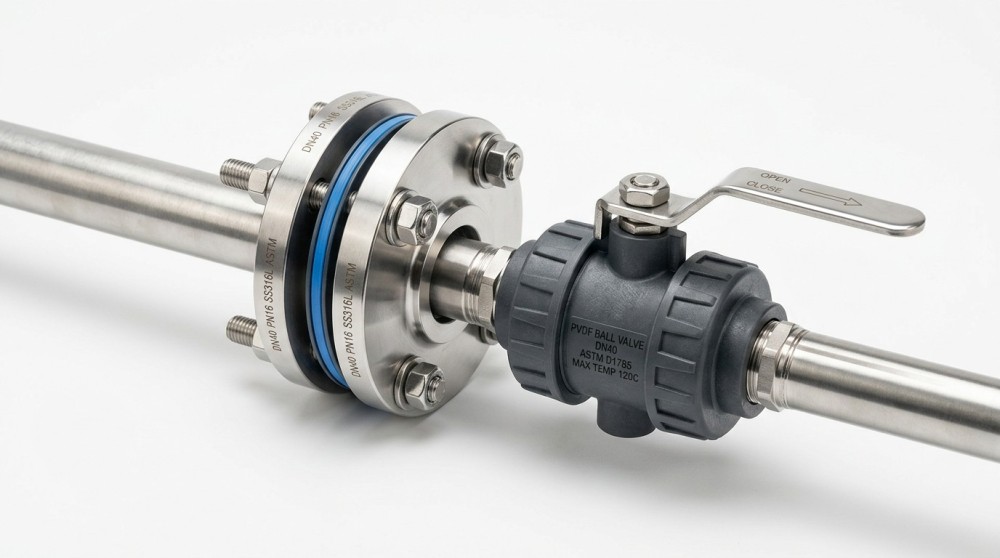
Polymer gaskets are most effective in process systems that need reliable sealing under moderate pressure, frequent chemical exposure, and tight cost control. In many industrial lines, they serve as the practical middle ground between low-performance elastomer sheets and premium sealing materials designed for extreme duty. For information researchers and enterprise buyers, the key question is not whether polymer gaskets are broadly useful, but where they fit best without overengineering the bill of materials.
Typical use cases include fluid transfer skids, dosing equipment, pump housings, valve covers, instrument enclosures, utility manifolds, and clean process connections where temperatures may sit in common ranges such as -20°C to 120°C or, with selected polymers, extend higher. In these zones, polymer gaskets can offer stable compression behavior, low moisture absorption, and practical resistance to acids, alkalis, solvents, or deionized water depending on the resin family chosen.
They are also valuable when weight matters. Compared with some metallic or multi-layer gasket constructions, engineered polymer gaskets can reduce assembly mass and simplify installation in modular systems, portable units, and compact automation packages. That matters in industries where maintenance windows are short, access space is limited, and replacement cycles may be planned every 6–24 months depending on media severity and thermal cycling.
At G-PCS, this question is analyzed through the broader logic of containment and flow. That means polymer gasket selection is not treated as an isolated component decision. It is linked to valve architecture, actuator precision, media compatibility, regulatory expectations, and total system reliability. This system-level view is especially relevant for CTOs, R&D teams, and procurement leaders responsible for high-value process assets.
Common environments where polymer gaskets are a strong fit
- Chemical handling lines with moderate bolt load and recurring media changes, where resistance to corrosion and flexible maintenance scheduling matter more than ultra-high pressure performance.
- Clean utility systems for water treatment, process gas distribution, and instrumentation where low contamination risk and stable sealing in repeated service cycles are important.
- OEM machinery and compact process modules that need lightweight parts, fast machining, and predictable lead times in low-volume to medium-volume procurement.
- Electronics, advanced manufacturing, and specialized industrial systems where designers need compatibility with ISO, SEMI, API, or internal validation frameworks without defaulting to the highest-cost seal design.
This does not mean polymer gaskets are universal. Their best-fit zone is defined by operating envelope, media chemistry, flange condition, torque control, and compliance requirements. Buyers who match material behavior to actual service conditions usually achieve better lifecycle economics than those who select only on unit price or headline temperature rating.
How polymer gaskets compare with composite gaskets and FFKM seals
For many procurement teams, confusion starts when polymer gaskets, composite gaskets, PTFE-based constructions, and perfluoroelastomer seals are treated as interchangeable. They are not. Each category serves a different risk profile. Polymer gaskets are generally selected for balanced performance and manufacturability. Composite gaskets are often chosen when mechanical strength, creep resistance, or layered barrier performance must be improved. FFKM seals are reserved for highly aggressive chemistry, elevated temperatures, and critical contamination control where failure cost is exceptionally high.
A clear comparison helps avoid two expensive mistakes: under-specifying a seal in a demanding process, or over-specifying it in a routine service line. The first raises leakage and downtime risk. The second inflates procurement cost, increases approval time, and can complicate sourcing. In real B2B environments, the right answer often depends on 3 core variables: media aggressiveness, operating envelope, and failure consequence.
The table below outlines where polymer gaskets fit best relative to adjacent sealing solutions used in critical process systems. It is intended as a screening tool before detailed engineering validation, not as a substitute for media testing, torque analysis, or flange review.
In procurement terms, polymer gaskets usually make the most sense when failure is manageable through preventive maintenance, the process is not at the edge of material capability, and replacement accessibility is acceptable. If the process involves severe thermal shock, plasma chemistry, ultra-pure aggressive media, or prolonged exposure beyond common polymer stability ranges, composite or FFKM options often become more appropriate despite the higher initial spend.
A practical decision rule for B2B buyers
Use polymer gaskets when the application sits in the broad center of the performance map. Escalate to composite constructions when mechanical integrity is the concern. Escalate to FFKM when chemistry, purity, and thermal severity drive the risk. This simple three-step logic reduces sourcing friction and supports faster technical-commercial alignment across engineering, quality, and purchasing teams.
Three questions to ask before upgrading material class
- Is the current gasket failing because of chemistry, temperature, pressure, or assembly practice? The root cause determines whether a material upgrade will actually solve the issue.
- What is the real cost of leakage or downtime over a 12-month to 36-month operating period? Lifecycle cost often tells a different story than purchase price.
- Do compliance, purity, or validation protocols require a more tightly controlled material family? In advanced manufacturing, qualification criteria can outweigh simple mechanical fit.
What technical factors should guide polymer gasket selection?
Selecting a polymer gasket begins with service conditions, but good decisions go deeper. Material compatibility with the process media is the first filter. After that come temperature range, pressure profile, flange finish, compressive load, exposure duration, maintenance interval, and contamination tolerance. In many systems, the gasket itself is not the weak link; mismatch between material and assembly conditions is.
For example, a gasket that performs well at ambient conditions may lose dimensional stability under repeated heat-up and cool-down cycles. Another may tolerate the media but creep under long-term bolt load. Others may survive chemically but create issues in clean systems because of extractables, particle generation, or surface wear. That is why material review should cover at least 5 checkpoints rather than relying on one published property value.
G-PCS approaches this analysis through standards-aware benchmarking. In critical industries, sealing performance cannot be separated from validation context. Engineers may need to consider ISO-based management requirements, SEMI-related clean manufacturing expectations, API-style pressure service references, or MIL-SPEC-aligned environmental demands depending on the application. Even when a polymer gasket appears simple, the qualification path rarely is.
Lead time is another technical-commercial factor. Standard cut gaskets can move through sourcing faster, while custom geometries, tight tolerance profiles, and specialized resin grades may stretch approval and production into 2–6 weeks or longer depending on material availability and inspection requirements. For projects with tight commissioning dates, that timeline must be addressed early.
Five key checks before approving a polymer gasket
- Verify chemical compatibility against the exact media concentration, not only the generic fluid family. Dilute acids, strong oxidizers, solvents, and mixed streams can affect polymers very differently.
- Confirm the full operating range, including start-up, shutdown, and upset conditions. Short excursions can be more damaging than steady-state service.
- Review flange surface quality and bolt load consistency. Even a well-chosen polymer gasket can leak if compression is uneven or the sealing face is damaged.
- Assess maintenance strategy. A gasket changed every 6 months may justify one material, while a target interval of 18–24 months may justify another.
- Check contamination sensitivity. In semiconductor-adjacent, RF, or high-purity systems, low extractables and clean handling may outweigh simple chemical resistance.
When these checks are documented in a selection workflow, technical teams reduce requalification loops and procurement teams gain clearer basis for supplier comparison. This is especially important when multiple business units source gaskets for different process environments but want one consistent decision framework.
Which application scenarios favor polymer gaskets, and where should you avoid them?
Application context is where theory becomes actionable. Polymer gaskets are often preferred in skidded process packages, analyzers, utility panels, and non-extreme chemical service because they support efficient fabrication and replacement. They are also widely considered where corrosion resistance must be maintained without introducing unnecessary metal content into wetted or adjacent sealing zones.
They are less suitable when the process includes very high pressure, intense thermal cycling, aggressive plasma, highly permeating gases, or severe flange movement. In those cases, material creep, compression loss, and long-term dimensional shift can become more important than initial sealing performance. This is why polymer gaskets should be positioned as precision-fit solutions for the right band of service, not as catch-all answers.
For enterprise decision-makers, the biggest operational risk is often hidden in boundary conditions. A process line may run safely for months, then fail during one upset event outside its normal 8-hour to 24-hour duty pattern. Understanding whether the gasket must survive routine operation, cleaning cycles, sterilization, standby vacuum, or intermittent pressure spikes changes the material decision significantly.
The matrix below helps translate application scenarios into practical selection boundaries. It is especially useful when cross-functional teams need a first-pass alignment before issuing drawings, RFQs, or sampling requests.
The most important insight is that polymer gaskets win where process demands are serious but not extreme. They offer a strong value proposition in broad industrial service, especially when procurement teams need repeatable sourcing, manageable qualification, and consistent maintenance planning. They should be avoided when process consequences are too severe to tolerate material drift or when the application clearly exceeds conventional polymer service behavior.
Signs you may be using the wrong gasket category
Operational warning indicators
- Leakage appears mainly after shutdown or restart, suggesting thermal recovery issues rather than simple installation error.
- Retorque frequency increases from annual service to quarterly intervention, indicating compression set or creep concerns.
- Seal life varies widely between identical lines, pointing to inconsistent media exposure, flange condition, or hidden process excursions.
- Validation teams reject otherwise functional parts because purity, documentation, or standards alignment is inadequate for the application class.
How should procurement teams evaluate cost, compliance, and supply risk?
In B2B purchasing, the lowest gasket price rarely equals the lowest ownership cost. Procurement teams should evaluate polymer gaskets across at least 4 dimensions: unit cost, service life, compliance burden, and supply continuity. A low-cost material that requires unplanned shutdowns or repeated qualification can become more expensive than a higher-grade option within one maintenance cycle.
Compliance matters as much as cost. Depending on the system, buyers may need traceable material declarations, dimensional inspection records, batch identification, media suitability data, or documentation aligned with internal QA procedures. In sectors influenced by ISO, SEMI, API, or MIL-SPEC expectations, documentation gaps can delay approval longer than manufacturing itself. For critical projects, documentation review should start during RFQ, not after PO release.
Supply risk is another overlooked factor. Custom-cut polymer gaskets may appear simple, yet actual lead time can be affected by resin availability, machining capacity, sample validation, and packaging controls. If the project supports a major commissioning event, buyers should map standard lead time, expedited lead time, and resupply risk over a 3-month to 12-month horizon rather than treating the part as a commodity.
For high-value process systems, supplier capability should include cross-domain understanding. A gasket supplier or technical partner that also understands UHP valves, RF energy systems, mechanical seals, and precision actuation can better anticipate interface problems. This is a practical advantage of the G-PCS model: containment is evaluated across the system architecture, not only within one part family.
A procurement checklist for polymer gasket sourcing
- Confirm service envelope: media, temperature range, pressure profile, cleaning method, and planned maintenance interval.
- Define documentation needs: material traceability, dimensional tolerance, inspection records, and any customer-specific compliance format.
- Assess commercial fit: sample availability, prototype batch size, standard production cycle, and expedited options.
- Review risk concentration: single-source exposure, custom tooling dependence, and replacement availability across regions.
- Align on escalation path: when a polymer gasket remains suitable and when the design should shift to composite or FFKM solutions.
Teams that use this checklist usually move faster from research to qualified sourcing. They also avoid a common problem in industrial procurement: approving a gasket based on drawing fit alone, then discovering late-stage issues in chemistry, cleanliness, or documentation. In complex process systems, those late changes can affect not just seals but flanges, valves, lead times, and commissioning dates.
FAQ: what decision-makers often ask about polymer gaskets
How do I know if a polymer gasket is enough for my application?
Start with 3 screens: chemical exposure, operating envelope, and failure consequence. If the system runs in a moderate range, the media is compatible, and maintenance access is realistic, a polymer gasket is often sufficient. If the line faces extreme heat, aggressive chemistry, high purity demands, or very high downtime cost, you should compare composite and FFKM options before finalizing the design.
What should buyers request during quotation?
At minimum, request material identification, dimensional tolerance information, recommended service range, documentation options, and lead time for both samples and production. For critical systems, also ask about batch traceability, inspection scope, packaging controls, and any known application limitations. A complete RFQ package reduces technical-commercial back-and-forth and shortens approval cycles by days or weeks.
Are polymer gaskets suitable for high-purity or advanced technology systems?
They can be, but suitability is conditional. High-purity and advanced technology environments often require tighter control over extractables, outgassing, particle generation, and documentation. In those systems, the material family alone is not enough; processing quality, handling, and validation matter. This is where system-level evaluation becomes critical, especially in sectors influenced by semiconductor, aerospace, RF, or precision fluid control requirements.
What is a common mistake in polymer gasket selection?
A frequent mistake is choosing only by nominal temperature or by the lowest unit cost. Real failures often come from mixed conditions: a chemical-cleaning step, a torque inconsistency, a pressure pulse, or a shutdown excursion outside normal service. Another mistake is ignoring lifecycle economics. A gasket that is 15% cheaper but requires twice the replacement frequency can be the more expensive option over 12–24 months.
Why work with G-PCS when defining polymer gasket strategy?
G-PCS is built for decision-makers who cannot afford fragmented component knowledge. In critical containment and flow systems, gasket decisions affect valve integrity, actuator response, seal compatibility, uptime planning, and compliance posture. Because G-PCS is structured around five industrial pillars including UHP control, RF energy systems, extreme-environment sealing, precision actuation, and specialized polymer and composite gaskets, it provides a broader technical reference than a single-category sourcing view.
This matters when your team needs more than a material suggestion. You may need to compare polymer gaskets against composite options, understand where FFKM becomes economically justified, align a sealing choice with ISO or SEMI-influenced expectations, or assess whether a 2–4 week lead time can support a commissioning milestone. G-PCS helps structure those decisions using a system-level, standards-aware approach.
If you are evaluating polymer gaskets for process systems, the most useful next step is a focused technical-commercial review. That review can cover parameter confirmation, media suitability, gasket category screening, delivery timing, documentation needs, and sample planning. For projects with multiple sealing points, it can also identify where standardization is practical and where application-specific upgrades are necessary.
Contact G-PCS to discuss polymer gasket selection, composite gasket alternatives, FFKM upgrade thresholds, drawing review, sample support, qualification documentation, expected delivery windows, and quotation planning. For procurement directors, R&D heads, and CTOs managing sensitive industrial systems, that level of early clarity can reduce sourcing risk, avoid material mismatch, and support more confident process-system decisions.
Industry Briefing
Get the top 5 industry headlines delivered to your inbox every morning.