Packaging Solutions for Low-Waste Industrial Operations
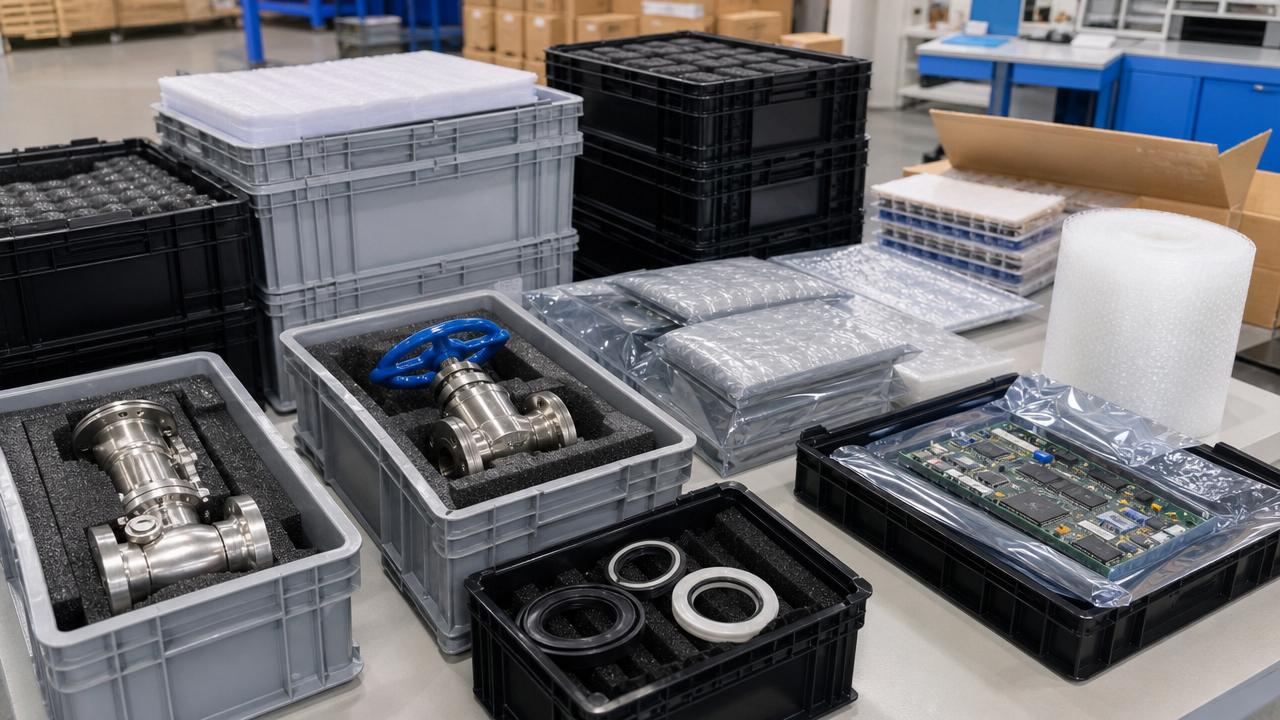
Why low-waste packaging solutions matter in precision-heavy operations
Low-waste industrial packaging is no longer just a sustainability topic. It now affects yield stability, transport risk, storage efficiency, and audit readiness.
That shift is clear in operations built around containment, flow control, and sensitive assemblies. A valve seat, RF component, or engineered gasket can fail before installation if packaging choices ignore contamination, shock, or humidity.
In practice, strong packaging solutions balance two goals at once. They reduce avoidable material waste while preserving the integrity of high-value parts across handling, warehousing, and transit.
This is especially relevant in environments aligned with the G-PCS view of industrial reliability, where ISO, SEMI, API, and MIL-SPEC expectations shape how protective systems are evaluated.
The real difference starts with the operating context
Not every low-waste strategy works across every industrial line. Packaging solutions must reflect how parts move, how long they wait, and what failure looks like once they arrive.
A cleanroom-ready seal kit and a rugged pressure-control assembly may both need reduced packaging waste. Yet the decision criteria differ because contamination tolerance, mechanical stress, and traceability demands are not the same.
More practical evaluations start with three questions:
- What can damage the product before use: dust, moisture, compression, vibration, or electrostatic discharge?
- How many handling steps occur between final inspection and point of use?
- Can the package be reduced, reused, or standardized without weakening compliance or performance protection?
Those questions often reveal where waste is structural and where it is simply habitual.
When contamination risk is higher, packaging solutions need tighter control
Components used in semiconductor support systems, high-frequency RF equipment, and specialty sealing applications usually face stricter contamination thresholds.
In these settings, low-waste packaging does not mean using less barrier protection by default. It means removing redundant layers while keeping particle control, clean opening, and batch traceability intact.
A common mistake is replacing multilayer protective packs with generic recyclable materials. That can reduce waste on paper while increasing particulate shedding, outgassing risk, or seal surface damage.
A better approach is to review material compatibility first. Films, liners, and inserts should be selected around contact sensitivity, storage duration, and environmental cleanliness, not only disposal targets.
Where the judgment usually changes
For FFKM seals, composite gaskets, and piezoelectric positioning elements, packaging solutions often need low-particle interiors, dimensional stability, and clear lot separation.
For industrial microwave assemblies, the focus may shift toward ESD protection, moisture control, and repeatable unpacking procedures during maintenance cycles.
Heavy-duty flow hardware creates a different low-waste challenge
The judgment changes again with UHP valves, actuator housings, and mechanical seal hardware used in harsh logistics chains. Here, overpackaging is common because damage costs are high.
Still, not all protective bulk is useful. Some packaging solutions add weight, freight cost, and disposal load without improving impact performance at the points that matter.
In actual operations, the better question is where shock energy concentrates. Corners, ports, threads, and calibrated faces often need targeted protection more than oversized outer volume.
That opens room for molded reusable inserts, collapsible transit frames, and standardized returnable crates. Waste drops because protection becomes more precise, not weaker.
Service and maintenance environments often expose hidden waste
One overlooked area is aftermarket support. Spare kits for seals, gaskets, and actuators are often packed for maximum caution, then partially opened, repacked badly, or discarded after one intervention.
That creates a different packaging solutions problem. The issue is not only transport protection but controlled access, identification speed, and minimizing waste after partial consumption.
More effective low-waste formats in this setting usually include smaller modular units, resealable clean barriers, and labels that link installation conditions to the exact part revision.
This matters when maintenance windows are short. If technicians must sort through excess material or unclear part groupings, packaging waste turns into downtime risk.
Why similar products still need different packaging solutions
A frequent misjudgment is treating similar components as if they share identical packaging needs. Two seals may have similar dimensions yet differ sharply in surface sensitivity, shelf-life behavior, or cleanliness requirements.
The same applies to pneumatic and piezoelectric actuators. One may tolerate standard industrial packaging. Another may require vibration isolation because calibration drift is more costly than visible cosmetic damage.
Low-waste decisions become stronger when packaging solutions are grouped by failure mode rather than product family alone. That usually produces better standardization.
- Group items by contamination sensitivity, not only shape.
- Separate one-way export packs from closed-loop regional packs.
- Define where reusable formats save cost and where they create cleaning burdens.
- Review disposal rules for mixed materials before standardizing globally.
What gets missed before rollout
Many packaging programs underperform because they focus on unit cost or recycled content alone. That is rarely enough in high-reliability industrial systems.
The more important checks usually sit upstream and downstream of procurement.
- Confirm whether packaging materials interact with lubricants, coatings, or polymer surfaces during storage.
- Measure actual drop, vibration, and humidity exposure instead of assuming standard transport conditions.
- Check whether labels remain readable after cold storage, cleanroom entry, or solvent wipe-down.
- Account for cleaning, return logistics, and inspection effort when reusable packaging is proposed.
In other words, effective packaging solutions are operational systems. They should be validated against the same discipline used for critical components and controlled flow paths.
A practical way to choose packaging solutions with less waste
A useful next step is to map packaging by application condition, not by supplier habit. That usually reveals where one format can be simplified and where another still needs engineered protection.
Start with the parts that carry the highest reliability consequence. Then compare transport path, storage duration, contamination limit, handling frequency, and return feasibility.
For organizations working across advanced valves, microwave energy systems, sealing platforms, and precision actuators, this approach creates a clearer standard for low-waste packaging decisions.
The goal is not the lightest pack in every case. It is the most appropriate packaging solution for each operational scenario, with waste reduced through better judgment rather than reduced protection.
From there, it becomes easier to compare cost, implementation effort, maintenance impact, and compliance exposure before scaling changes across sites.
Industry Briefing
Get the top 5 industry headlines delivered to your inbox every morning.