Dynamic vs Static Seal Friction: Why the Difference Matters
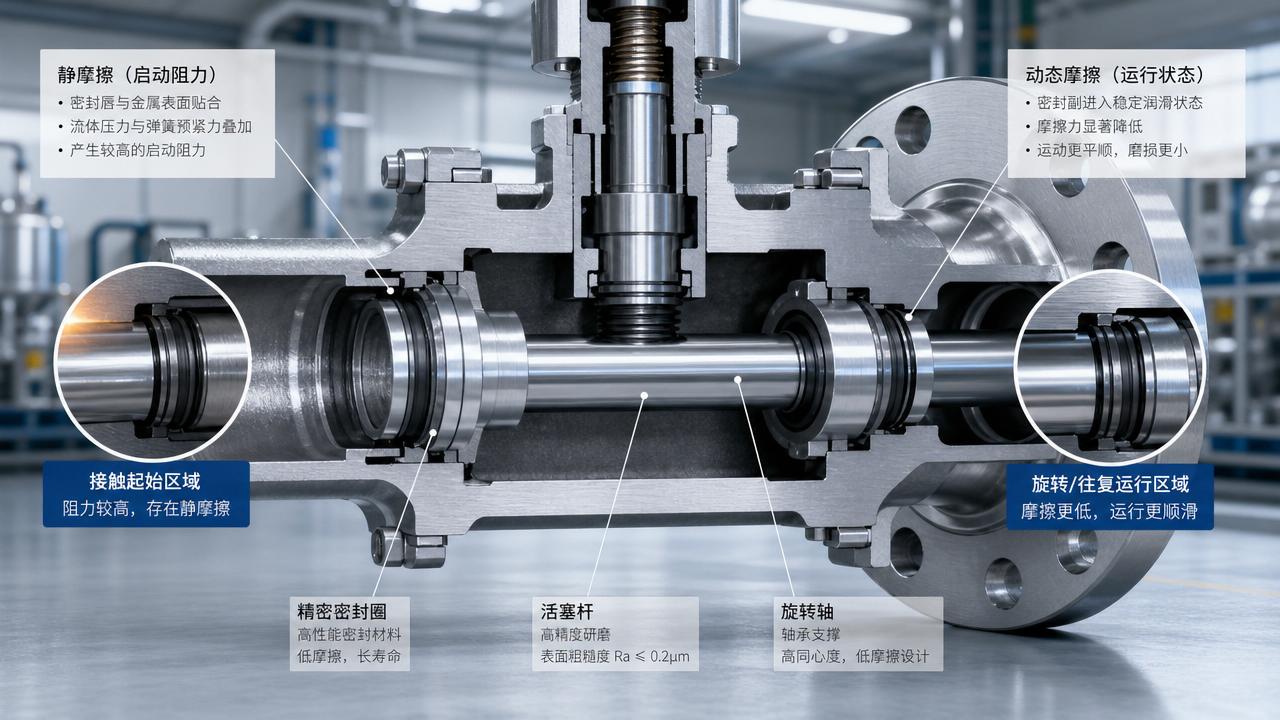
In sealing systems where reliability, response speed, and leakage control are non-negotiable, understanding dynamic vs static seal friction is more than a design detail. The difference directly affects wear, startup force, energy efficiency, and long-term system stability—making it a critical factor for engineers, buyers, and researchers evaluating high-performance industrial components.
What Dynamic vs Static Seal Friction Means
At a basic level, dynamic vs static seal friction describes two different resistance conditions in a sealing interface. Static friction is the force that must be overcome to initiate movement between contacting surfaces after they have been at rest. Dynamic friction, often called running friction, is the resistance experienced once motion has already begun. In sealing applications, that difference is not theoretical. It influences how a valve opens, how an actuator responds, how a piston starts moving, and how much force a motor or pneumatic system must deliver during operation.
Static seals are designed to prevent leakage between surfaces that do not move relative to one another, such as flange gaskets or housing seals. Dynamic seals operate where motion exists, including reciprocating rods, rotating shafts, and oscillating components. Even so, the phrase dynamic vs static seal friction is commonly used to compare the startup friction state with the moving friction state inside dynamic sealing systems. This distinction matters because many failures happen not during stable running, but at startup, low-speed movement, or stop-start cycling.
For organizations working in high-value industrial systems, including ultra-high pressure controls, microwave equipment, precision pneumatics, and extreme-environment sealing, this friction behavior becomes a system-level concern. It affects not only sealing performance but also control accuracy, cycle time, material life, and maintenance intervals.
Why Industry Pays Close Attention to the Difference
The reason dynamic vs static seal friction receives so much attention is simple: modern industrial equipment is expected to do more with less tolerance for deviation. Systems now operate at higher pressures, faster switching rates, cleaner process environments, and tighter energy budgets. In those conditions, a small mismatch between breakaway force and running force can create disproportionate problems.
In automated valves, high static friction may delay opening and produce inconsistent response. In pneumatic and piezo-assisted motion systems, friction spikes can reduce positioning precision or cause stick-slip behavior. In mechanical seals and polymer sealing interfaces exposed to aggressive media, the wrong friction profile can accelerate wear, increase heat generation, and shorten service life. In regulated sectors that benchmark against ISO, API, SEMI, or MIL-SPEC expectations, unstable friction can also create compliance and reliability concerns.
For information researchers and technical decision-makers, understanding this topic helps filter supplier claims, compare material options, and interpret test data more accurately. A seal that looks strong on pressure rating alone may still perform poorly if friction behavior is not aligned with the actual duty cycle.
Core Technical Factors Behind Seal Friction
Dynamic vs static seal friction is shaped by several interacting variables rather than one single property. Material selection is often the first factor. Elastomers, PTFE-based compounds, filled polymers, and composite sealing materials all generate different friction characteristics depending on hardness, surface energy, elasticity, and lubrication retention. A softer material may conform better for leakage control, yet produce more contact drag under compression. A low-friction compound may reduce running resistance but require more careful design to maintain sealing force.
Surface finish is equally important. Roughness, waviness, and machining direction can affect how the seal lip or contact face interacts with the mating surface. Too rough, and wear may increase. Too smooth, and lubrication retention may suffer. Contact pressure, installation squeeze, and groove geometry also influence both static and dynamic friction. Excess preload can improve sealing but raise startup force. Insufficient preload may reduce friction yet risk leakage or unstable sealing under pressure pulsation.
Environmental conditions further complicate the picture. Temperature changes alter material stiffness and expansion behavior. Chemical exposure can swell or embrittle seal materials. Pressure cycling changes contact stress, while dry running or insufficient lubrication can sharply increase friction and wear. In critical applications, friction behavior must therefore be evaluated as part of the full operating envelope, not under a single laboratory condition.
Industry Overview: Where the Friction Difference Has the Greatest Impact
The practical significance of dynamic vs static seal friction becomes clearer when viewed across representative industrial segments. The table below summarizes where this difference most directly affects performance and decision-making.
Business and Engineering Value of Understanding Dynamic vs Static Seal Friction
From an engineering perspective, understanding dynamic vs static seal friction helps teams design for predictable motion. Startup force can be sized correctly, actuators can be matched more realistically, and control loops can be tuned around actual resistance behavior rather than nominal assumptions. This is particularly important in systems where milliseconds of delay or small positioning errors have outsized effects on throughput, safety, or product quality.
From a business perspective, friction knowledge improves total-cost judgment. Lower friction does not always mean lower cost, and high sealing force does not always mean better reliability. The useful question is whether the friction profile supports the intended duty cycle over time. A seal that reduces startup spikes may extend component life, lower energy demand, and cut unplanned downtime. For procurement directors and technical sourcing teams, this changes evaluation criteria from simple unit pricing to lifecycle performance and application fit.
For research-oriented audiences, the topic also provides a more disciplined way to compare products. Material datasheets often mention coefficient of friction, but application relevance depends on test setup, speed, media, temperature, and contact geometry. Looking at dynamic vs static seal friction in context prevents overreliance on isolated numbers.
Typical Application Categories and Friction Priorities
Different sealing tasks place different priorities on friction behavior. In practice, decision-makers should not expect one seal concept to optimize every target at once.
Common Misunderstandings in Friction Evaluation
One common mistake is assuming that static seals have no friction relevance simply because there is no intended motion. In real assemblies, installation, thermal expansion, vibration, and micro-movement can still make interface friction important. Another misunderstanding is treating low friction as the universal goal. In some cases, extremely low contact resistance may compromise sealing stability, especially under pressure cycling or contamination exposure.
A third issue is relying on material-only comparisons. Dynamic vs static seal friction depends on the complete system: seal profile, hardware finish, lubrication state, pressure load, speed range, and environmental media. Two products made from the same polymer family may behave very differently once geometry and operating conditions change. Finally, buyers sometimes focus on initial force measurements without considering aging. Friction behavior can shift over time due to compression set, wear debris, surface polishing, or chemical interaction.
Practical Guidance for Evaluation and Selection
A sound evaluation process begins with the motion profile. Teams should define whether the seal will sit idle for long periods, cycle rapidly, move at very low speed, or face frequent starts and stops. That immediately shapes how important the gap between static and dynamic friction will be. Next, define the operating envelope in terms of pressure, temperature, media compatibility, cleanliness level, and expected service life.
It is also wise to request application-relevant test data rather than generic values. Useful questions include: What is the breakaway force after dwell time? How does running friction change across speed ranges? Was the test performed dry, lubricated, or in process media? What hardware finish was used? How does performance change after cycling or thermal aging? These questions make dynamic vs static seal friction measurable in a way that supports real selection decisions.
For strategic industrial users, especially those managing critical flow and energy assets, friction should be reviewed together with leakage performance, durability, and standards alignment. A technically credible supplier should be able to explain tradeoffs clearly and relate seal behavior to the actual system architecture rather than offering a one-size-fits-all claim.
Conclusion and Next-Step Perspective
Dynamic vs static seal friction is a foundational concept with direct implications for reliability, efficiency, controllability, and lifecycle cost. It matters because real systems do not operate under idealized steady conditions. They start, stop, rest, accelerate, heat up, and encounter contamination, pressure variation, and material aging. In all of those moments, the difference between static and dynamic friction shapes whether the seal supports the system or becomes a hidden source of instability.
For researchers, engineers, and sourcing teams, the most useful approach is to treat friction as a performance variable that must be matched to application intent. When reviewing seals for advanced valves, actuators, mechanical assemblies, or specialized gasket systems, use dynamic vs static seal friction as part of a broader technical framework that includes material science, environmental integrity, and operational precision. That is where better decisions begin—and where long-term sealing performance becomes more predictable.
Industry Briefing
Get the top 5 industry headlines delivered to your inbox every morning.