How to Compare Tungsten Carbide Seal Ring OEM Options
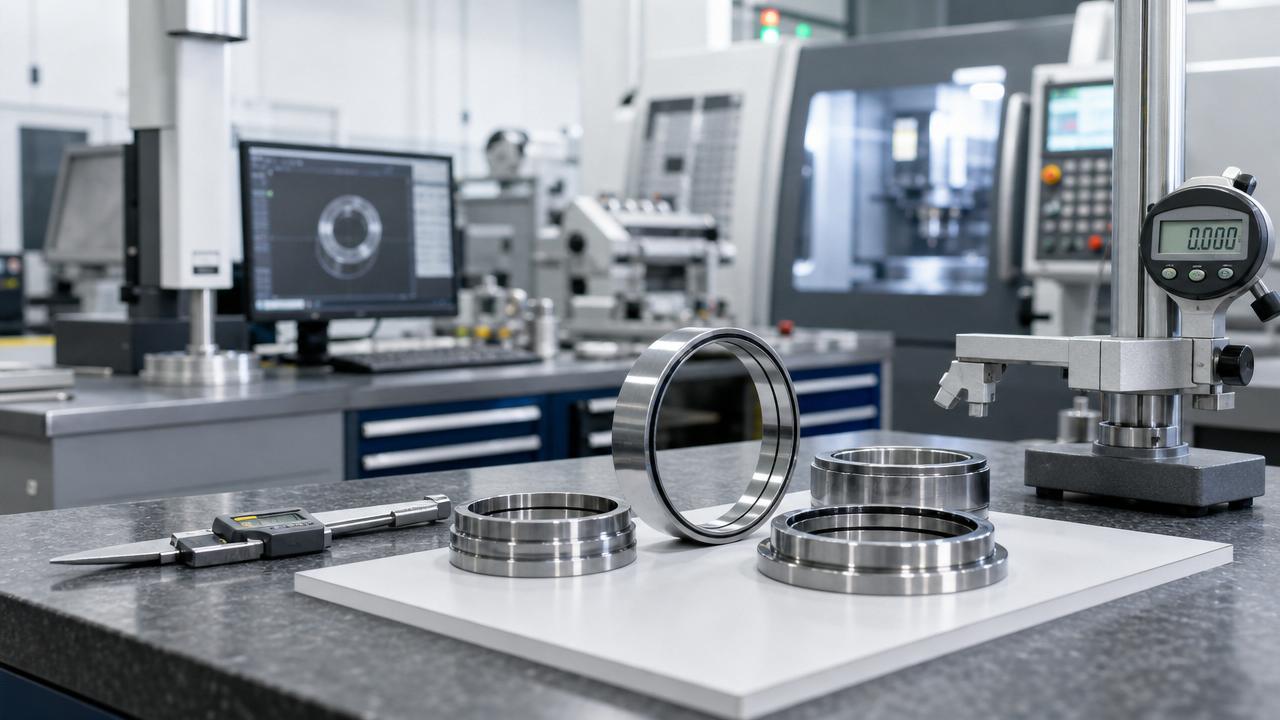
Choosing the right tungsten carbide seal ring OEM partner can directly affect equipment uptime, sealing reliability, and long-term procurement costs. For buyers evaluating suppliers, the challenge is not only price comparison, but also material consistency, machining precision, quality control, and application fit. This guide outlines the key criteria procurement teams should use to compare OEM options with greater confidence.
What procurement teams are really comparing when they evaluate a tungsten carbide seal ring OEM
When buyers search for how to compare tungsten carbide seal ring OEM options, the real goal is usually not to learn what a seal ring is. It is to reduce sourcing risk, avoid quality escapes, and choose a supplier that can deliver repeatable performance under actual operating conditions.
For procurement teams, the best OEM is rarely the one with the lowest unit price. In most industrial applications, a seal ring that fails early can create much higher downstream costs through unplanned downtime, maintenance labor, product loss, contamination, or warranty exposure. That is why supplier comparison should focus on total cost of ownership rather than quote price alone.
In practical terms, buyers are comparing five things at once: raw material quality, manufacturing capability, dimensional consistency, quality assurance systems, and commercial reliability. A supplier may look competitive on paper, but if one of those areas is weak, the long-term procurement result can still be poor.
Start with application fit, not catalog similarity
One of the most common sourcing mistakes is assuming that all tungsten carbide seal rings with similar dimensions are functionally interchangeable. They are not. The right OEM option depends on the specific operating environment, including pressure, media, temperature, speed, mating face material, lubrication conditions, and expected service life.
Before requesting quotations, procurement should align with engineering and maintenance teams on the core application details. For example, a ring used in aggressive chemical media may require different binder selection and corrosion resistance than one used in clean water service. A component in slurry service may need a different hardness-toughness balance than one used in dry-running conditions.
Suppliers that ask detailed application questions are often stronger OEM candidates than those that simply quote from a drawing. Their willingness to review operating conditions usually indicates deeper technical understanding and a lower risk of supplying a ring that is dimensionally correct but operationally mismatched.
A useful comparison question is this: can the supplier explain why a specific grade, finish, and tolerance strategy is suitable for your service conditions? If the answer is vague, that is a warning sign.
Compare material grade consistency, not just “tungsten carbide” as a label
Tungsten carbide is not a single universal material. Different grades vary by grain size, cobalt or nickel binder content, density, hardness, fracture resistance, and corrosion behavior. Two suppliers may both claim to offer tungsten carbide seal rings, yet the actual performance can differ significantly because the microstructure and sintering control are different.
For procurement, the key issue is not simply whether the material meets a generic description. It is whether the OEM can deliver stable, traceable material properties from batch to batch. In sealing applications, inconsistency in hardness, porosity, grain structure, or binder distribution can affect wear behavior, crack risk, and seal face integrity.
Ask for documented material specifications, test methods, and batch traceability. If possible, request data on density, hardness range, transverse rupture strength, and corrosion resistance where relevant. A credible OEM should be able to define its grade clearly rather than relying on broad marketing language.
It is also important to verify whether the supplier produces its own carbide blanks, controls sintering through qualified partners, or buys commodity material from the open market. This affects supply stability and quality repeatability. Vertically integrated suppliers may offer tighter control, but even non-integrated OEMs can perform well if they have strong incoming inspection and approved source management.
Machining precision often matters more than many buyers expect
Seal ring performance is highly sensitive to geometry. Even when the material grade is correct, poor machining can cause leakage, uneven wear, thermal distortion, or premature failure. This is why comparing OEMs on machining capability is essential.
Procurement should pay attention to flatness, parallelism, concentricity, edge integrity, surface finish, and tolerance control. For many mechanical seal applications, microscopic variation at the seal face can directly influence leakage rate and heat generation. A supplier that can achieve the required drawing dimensions but struggles with consistent surface quality may still be a poor choice.
Ask OEMs how they control grinding and lapping processes, what metrology equipment they use, and how they inspect critical dimensions. Request actual capability data if the seal ring is used in demanding service. A professional supplier should be able to explain how they manage distortion risk, chipping, and fine-finish consistency, especially on thin sections or complex geometries.
It is also useful to review whether the OEM has experience with your required ring size range. Small precision rings, large-diameter rings, and non-standard geometries each bring different process challenges. Past project relevance is often a better indicator than general manufacturing claims.
Quality systems should be judged by execution, not certificates alone
Many suppliers can present ISO certificates, but procurement should look beyond formal compliance. A certificate is a starting point, not proof of process discipline. The real question is how the OEM prevents defects, detects variation early, and handles nonconforming product.
Useful evaluation points include incoming raw material inspection, in-process control plans, final inspection records, traceability by lot, calibration discipline, and corrective action handling. If the supplier cannot show how quality data moves through production, there is a risk that the quality system exists mostly on paper.
For high-value or critical applications, buyers should ask whether the OEM can provide inspection reports, material certifications, and dimensional records with shipments. This is especially important when internal validation, regulatory review, or customer documentation requirements are strict.
Another practical check is to ask how the supplier deals with recurring issues such as chipping, lapping defects, or dimensional drift. Strong OEMs usually have a clear containment and root-cause process. Weak suppliers often respond reactively and depend too heavily on final inspection instead of process control.
Evaluate OEM engineering support and communication quality early
Procurement outcomes improve when suppliers can support technical clarification before orders are placed. This is particularly true for customized or application-specific seal rings. Good OEMs do more than manufacture to print; they help validate design assumptions, identify risk areas, and suggest practical improvements where needed.
From a buyer’s perspective, communication quality is a real sourcing criterion. Slow, incomplete, or inconsistent responses during supplier evaluation often predict future service problems during production, claims, or engineering changes. In contrast, suppliers that respond with structured technical feedback usually create less procurement friction later.
Compare OEMs on how they handle drawing review, tolerance feasibility, material recommendations, and sample validation. If a supplier can explain risks before production starts, that can save time and cost across the project lifecycle.
Engineering support also matters when replacing an incumbent supplier. Reverse engineering, equivalency review, and transitional qualification can all affect lead time and implementation risk. A capable OEM should be able to support these steps with documentation and measured reasoning rather than assumptions.
Lead time, scalability, and supply continuity deserve equal weight with quality
Even an excellent supplier can become a poor fit if it cannot support your delivery needs. Procurement should therefore compare OEMs on lead time realism, production capacity, inventory strategy, and responsiveness to demand swings.
Ask whether the quoted lead time reflects actual blank availability, machining load, and inspection throughput, or whether it is only a sales estimate. If the material requires long-cycle sintering or if the ring geometry is highly customized, the supplier should explain the production path clearly.
For repeat demand, investigate whether the OEM can support safety stock, scheduled releases, framework agreements, or forecast-based planning. These options can reduce the risk of stockouts and emergency purchases. They are especially valuable when the seal ring is tied to critical equipment uptime.
Supply continuity also depends on risk exposure. Buyers should assess whether the OEM relies on a single raw material source, a single plant, or a narrow set of key operators. If the application is strategically important, dual-sourcing or at least contingency planning may be necessary.
Price comparison should include hidden cost drivers
A low quoted price can be attractive, but it may not represent the best procurement result. When comparing tungsten carbide seal ring OEM options, buyers should account for the total landed and lifecycle cost of each supplier choice.
Relevant cost drivers include scrap risk, validation effort, shipping mode, packaging quality, documentation support, warranty handling, and expected service life. A cheaper ring that causes more frequent replacement or more incoming inspection burden can quickly become the more expensive option.
Procurement teams should also check whether quotations are truly equivalent. Differences in material grade, finish standard, inspection scope, tolerances, or packaging can distort price comparisons. If one quote excludes key quality controls, it may look cheaper simply because it offers less.
A structured cost model helps. Instead of comparing only unit price, compare the full sourcing package: technical compliance, expected failure risk, quality workload, lead time reliability, and operational impact. This makes internal supplier selection easier to justify to engineering, operations, and finance stakeholders.
Questions buyers should ask every shortlisted supplier
A consistent question set improves supplier comparison and prevents decisions based on incomplete information. Procurement teams can use a shortlist questionnaire to make OEM evaluation more objective.
Ask which tungsten carbide grades are recommended for the target application and why. Request material property ranges, traceability method, and certification availability. Confirm whether the supplier controls blank production directly or through approved external sources.
Ask about critical machining tolerances, lapping capability, and metrology methods. Request sample inspection reports or first article documentation if the part is customized. Clarify the typical defect modes they monitor and how they prevent face damage during processing and packaging.
Ask about production capacity, average lead time, minimum order quantities, and buffer stock options. Confirm how they handle urgent orders, design revisions, and nonconformance claims. Finally, ask for references or examples from similar industries or operating conditions when available.
The answers often reveal more than marketing materials do. Strong suppliers tend to provide specific, verifiable information. Weak ones rely on generic assurances.
Red flags that suggest an OEM may not be the right fit
Several warning signs can help procurement avoid expensive mistakes. One is the inability to define material grade beyond a broad tungsten carbide description. Another is quoting immediately without reviewing application conditions or drawing details.
Additional red flags include vague tolerance commitments, no inspection data support, inconsistent communication, or unrealistic lead times that do not match the complexity of the part. These issues often point to weak process control or limited technical depth.
Buyers should also be cautious if a supplier cannot explain failure analysis procedures or appears defensive when discussing quality problems. In B2B sourcing, transparency is often a better predictor of long-term partnership quality than polished sales language.
A practical framework for final supplier selection
To compare tungsten carbide seal ring OEM options effectively, procurement should use a weighted evaluation model. This prevents overemphasis on price and creates a repeatable sourcing process.
A practical scorecard may include technical fit, material control, machining precision, quality assurance, delivery performance, commercial terms, and service responsiveness. The weighting should reflect business priorities. For critical equipment, technical reliability and supply continuity may deserve more weight than unit cost.
Where risk is high, sample approval or pilot orders can be valuable before full production release. This allows the team to validate documentation quality, incoming inspection results, fit-up behavior, and supplier responsiveness under real conditions. In many cases, this step provides more useful evidence than extended sales presentations.
Cross-functional review is also important. Procurement should not evaluate in isolation. Engineering, quality, and maintenance teams can each identify risks that may not appear in a quote comparison. The best decision usually comes from combining commercial discipline with application knowledge.
Conclusion
Choosing the right OEM for tungsten carbide seal rings is ultimately a risk management decision. The most competitive supplier is not simply the one with the lowest price, but the one that can consistently deliver the right material, the right precision, and the right support for your application.
For procurement teams, the smartest approach is to compare suppliers through the lens of application fit, material consistency, machining capability, quality execution, delivery reliability, and total cost of ownership. When these factors are reviewed systematically, supplier selection becomes more defensible and far more likely to support long-term equipment reliability.
In short, a strong tungsten carbide seal ring OEM partner should reduce uncertainty, not add to it. If a supplier can provide technical clarity, documented control, and dependable execution, that is usually where the best purchasing value lies.
Industry Briefing
Get the top 5 industry headlines delivered to your inbox every morning.