Secondary Seal Swell Rate Metrics and Failure Risk
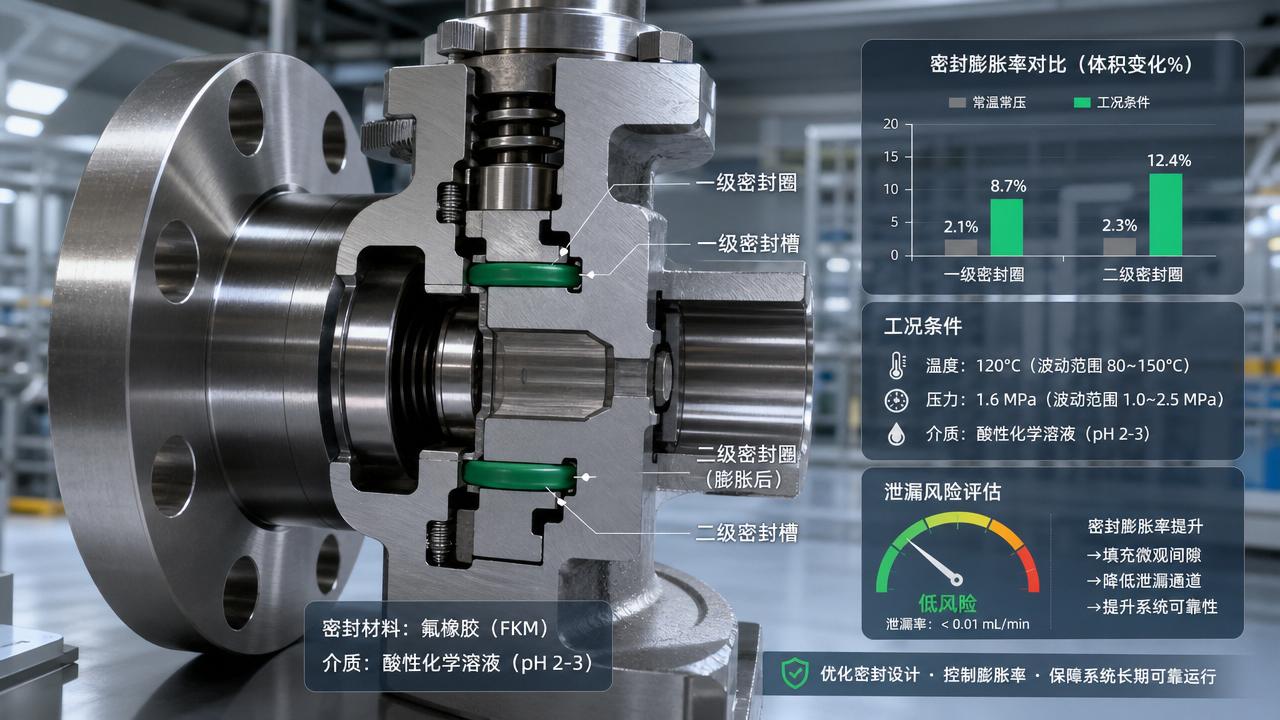
Secondary seal swell rate metrics are becoming a frontline reliability signal
For quality and safety teams, understanding secondary seal swell rate metrics is essential to predicting hidden degradation before it becomes a leak, compliance breach, or shutdown event.
This article explains how swell behavior affects sealing integrity, how to interpret critical performance data, and how better metric selection can reduce failure risk across demanding industrial systems.
Across the broader industrial landscape, sealing systems now face more aggressive media, wider temperature swings, and tighter uptime expectations.
In that environment, secondary seal swell rate metrics have shifted from a laboratory curiosity to a practical leading indicator of asset health.
The change matters because secondary seals often fail quietly.
Primary components may still appear stable while a secondary element absorbs fluid, softens, distorts, or loses dimensional control.
Why current operating conditions make swell behavior more consequential
Many systems once ran with narrow process windows.
Today, rapid cycling, mixed chemicals, low-permeation requirements, and stricter cleanliness demands are common.
That combination increases the value of secondary seal swell rate metrics in both design validation and field risk screening.
A small swell increase can raise friction, alter compression set behavior, or trigger extrusion risk under pressure pulses.
In clean process environments, even minor distortion can affect particle generation or outgassing stability.
In high-pressure or vacuum systems, geometry drift may compromise redundancy exactly when backup sealing is needed most.
Trend signals seen across industrial applications
- More media compatibility failures are traced to seal volume change, not immediate rupture.
- Qualification programs increasingly ask for time-based swelling curves, not only pass or fail results.
- Service intervals are being adjusted using predictive condition indicators, including secondary seal swell rate metrics.
- Cross-functional reviews now connect material data with compliance, maintenance, and process stability outcomes.
The key forces pushing secondary seal swell rate metrics into routine decision-making
Several forces explain why these measurements now influence qualification, maintenance, and risk models.
How to read secondary seal swell rate metrics without oversimplifying failure risk
Not all swelling is equally dangerous.
The useful question is whether measured swell changes sealing force, dimensional fit, chemical stability, or recovery performance under actual duty conditions.
Secondary seal swell rate metrics should be reviewed as a time-dependent behavior set, not a single percentage.
Metrics that deserve close attention
- Volume swell percentage after defined immersion periods
- Mass change linked to absorption or extraction effects
- Hardness shift before and after exposure
- Compression set after chemical and thermal aging
- Dimensional recovery after depressurization or drying
- Leak performance correlation at the same exposure interval
Common interpretation mistakes
- Using room-temperature immersion data to predict hot dynamic service
- Comparing compounds by swell percentage alone, without hardness or recovery context
- Ignoring short-term rapid swelling that occurs before equilibrium
- Assuming low swell always means low risk, despite potential embrittlement or shrinkage
When secondary seal swell rate metrics are linked with leakage, torque, or friction trends, they become much more predictive.
Where the operational impact appears first across business processes
The impact of poor swell control extends beyond the seal itself.
It affects engineering assumptions, maintenance timing, quality records, and the reliability of critical assets.
In high-consequence systems, the cost of missing a weak signal is usually greater than the cost of deeper qualification.
What deserves closer monitoring as metric expectations become stricter
As requirements mature, simple pass-fail chemistry checks are no longer enough.
The following points deserve priority attention.
- Use media-specific test panels instead of generic fluid families.
- Capture early-stage and equilibrium secondary seal swell rate metrics.
- Track swell alongside hardness, compression set, and leakage data.
- Review pressure, temperature, and dwell time interactions.
- Separate static and dynamic sealing risk in acceptance criteria.
- Watch for lot-to-lot variation in high-performance elastomers and composites.
- Document post-exposure recovery, not only exposed condition dimensions.
A practical path for reducing failure risk with better metric selection
A stronger approach starts by defining which swell outcomes actually matter to the application.
A low-pressure static gasket does not need the same screening logic as a high-cycle actuator or UHP valve backup seal.
Recommended decision steps
- Map the actual media, contaminants, and cleaning exposures.
- Define critical dimensions and allowable squeeze loss.
- Set time-based secondary seal swell rate metrics at realistic temperatures.
- Correlate those metrics with leak tests and post-aging mechanics.
- Build replacement or requalification thresholds from observed drift patterns.
This method improves comparability between materials and makes field failures easier to explain.
It also supports stronger communication between testing, quality review, and operational reliability functions.
The next smart move is to turn secondary seal swell rate metrics into an early-warning framework
The broader trend is clear.
As industrial systems become cleaner, faster, hotter, and more tightly regulated, secondary seal swell rate metrics will play a larger role in preventing hidden failure.
The best results come from treating these metrics as connected evidence, not isolated test values.
Review existing qualification data, identify gaps in time-based swelling behavior, and align test conditions with real service exposure.
That step can reveal preventable risk before it escalates into leakage, downtime, or a costly compliance event.
Industry Briefing
Get the top 5 industry headlines delivered to your inbox every morning.