How to Compare Chemical Resistance Seal Wholesale Options
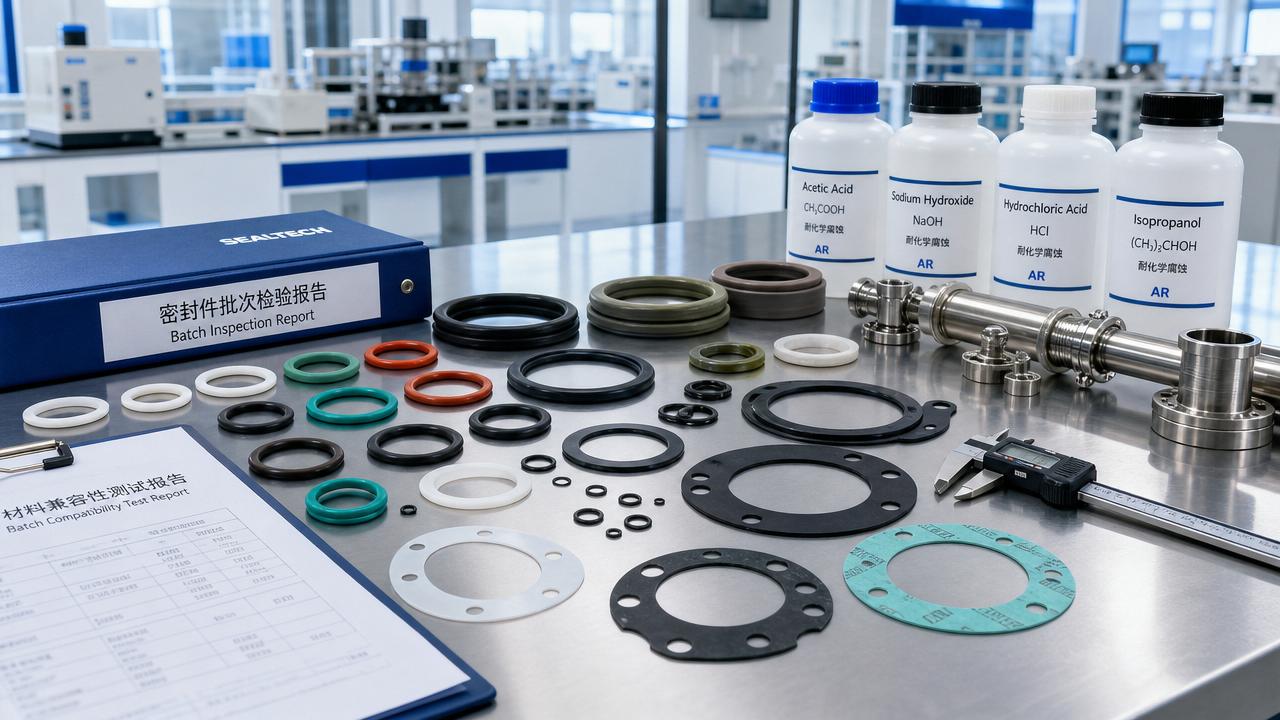
Choosing the right chemical resistance seal wholesale supplier is not just about price—it is about long-term reliability, compliance, and risk control.
In aggressive media, a low-cost seal can trigger leakage, downtime, contamination, and repeated maintenance.
A strong comparison process helps identify better material fit, tighter manufacturing control, and dependable technical support.
This guide explains how to compare chemical resistance seal wholesale options with a practical, question-based framework.
What does chemical resistance seal wholesale really include?
Chemical resistance seal wholesale usually covers bulk supply of seals designed for contact with acids, solvents, fuels, alkalis, and reactive process fluids.
These products may include O-rings, gasket profiles, lip seals, bonded seals, diaphragms, and custom containment components.
The term also implies more than volume pricing.
It often involves compound traceability, batch consistency, dimensional repeatability, and support for compliance documentation.
In technical sectors, chemical resistance seal wholesale sourcing must align with operating pressure, temperature range, media concentration, and cleaning cycles.
A supplier may appear competitive on quotation sheets, yet still underperform in material verification or production stability.
That is why comparison should begin with scope.
Are you buying standard catalog seals, modified compounds, or application-specific engineered sealing solutions?
Key categories often compared
- Elastomers such as FKM, EPDM, HNBR, FFKM, and PTFE-encapsulated designs
- Static versus dynamic sealing applications
- Standard dimensions versus custom-molded parts
- General industrial grades versus certified clean-process grades
How should material compatibility be compared first?
Material compatibility is the first filter in any chemical resistance seal wholesale review.
If the compound is wrong, every other advantage becomes irrelevant.
A proper comparison starts with the exact chemical environment.
That includes fluid type, concentration, exposure duration, temperature peaks, pressure cycling, and cleaning agents.
For example, EPDM may perform well in hot water and steam, but poorly in many hydrocarbons.
FKM often handles oils and fuels well, yet can struggle in certain amines or hot water service.
FFKM offers broad resistance, but its cost profile requires careful justification.
PTFE-based options resist many chemicals, though mechanical behavior differs from elastomeric seals.
Questions worth asking
- Is the compatibility data based on generic polymer families or the exact compound?
- Was testing done at real operating temperature and concentration?
- How does the seal behave under swelling, compression set, or permeation?
- Does the supplier provide immersion or aging data?
The strongest chemical resistance seal wholesale candidates usually provide application-specific recommendations, not only generic chemical charts.
Which certifications and quality controls matter most?
Certifications help verify process discipline, but they should be reviewed in context.
For chemical resistance seal wholesale projects, useful indicators often include ISO 9001, material traceability systems, and controlled inspection records.
Some applications may also require FDA, USP Class VI, REACH, RoHS, NSF, or industry-specific declarations.
In semiconductor, aerospace, energy, or high-purity environments, documentation rigor becomes even more important.
A supplier should be able to explain lot coding, raw material approval, cure control, and outgoing inspection methods.
Consistency is often more valuable than broad marketing claims.
Look beyond the certificate wall
A framed certification does not automatically prove stable seal performance.
Ask for measurable controls such as hardness tolerance, flash control, surface quality standards, and compression set data.
For long-term chemical resistance seal wholesale contracts, request sample inspection reports from recent batches.
How do lead time, MOQ, and pricing affect wholesale value?
Price comparison is necessary, but unit cost alone rarely shows total value.
In chemical resistance seal wholesale, stock availability, minimum order quantity, tooling cost, and replenishment speed all influence procurement efficiency.
A cheaper seal may create hidden costs through delayed deliveries, oversized inventory, or repeated replacement cycles.
This is especially true in operations with shutdown penalties or qualification burdens.
Compare total cost, not quote price
- Review annual consumption and forecast volatility.
- Check whether MOQ matches actual usage.
- Ask about emergency production capacity.
- Include scrap risk, downtime exposure, and requalification effort.
Suppliers with regional inventory or flexible batch production may outperform lower-cost offers from distant sources.
For critical assets, continuity can outweigh initial savings.
The best chemical resistance seal wholesale decision balances price, resilience, and operating risk.
What common mistakes distort seal supplier comparisons?
One frequent mistake is comparing materials by name only.
Two FKM compounds can behave differently because fillers, curing systems, and formulation details vary.
Another mistake is ignoring the actual sealing geometry.
A suitable material can still fail if groove design, compression ratio, or surface finish is wrong.
Short-term testing can also mislead decisions.
Some compounds pass initial exposure but degrade under thermal cycling or repeated cleaning.
Documentation gaps create another risk.
If a chemical resistance seal wholesale source cannot maintain stable records, future audits become difficult.
High-risk warning signs
- Vague answers about compound identity
- No recent testing data for target media
- Unclear batch labeling or packaging control
- Long lead times without backup stock strategy
- Pricing that changes sharply after sampling
How can a buyer build a reliable comparison checklist?
A structured checklist turns chemical resistance seal wholesale evaluation into a repeatable process.
It also helps align engineering, quality, and sourcing decisions around measurable criteria.
Start with operating conditions, then move through material evidence, production control, commercial terms, and support responsiveness.
This checklist helps compare chemical resistance seal wholesale sources using facts instead of assumptions.
It also supports stronger supplier conversations and cleaner qualification decisions.
What is the best next step before placing a wholesale order?
Before committing to chemical resistance seal wholesale volume, validate both the material and the supplier process.
A controlled sample run is often the safest path.
Use production-intent parts, not special hand-selected samples.
Check fit, leakage behavior, compression retention, and post-exposure condition under realistic service cycles.
At the same time, review packaging, labeling, documentation turnaround, and response time for technical questions.
These factors reveal whether the supplier can support long-term continuity.
For high-specification environments, a data-driven source with strong traceability and standards awareness can reduce qualification risk.
That is the real advantage in chemical resistance seal wholesale evaluation.
To move forward, define operating conditions clearly, request compound-level evidence, compare quality systems, and test under true service conditions.
A disciplined comparison method leads to better uptime, lower lifecycle cost, and more confident chemical resistance seal wholesale decisions.
Industry Briefing
Get the top 5 industry headlines delivered to your inbox every morning.