Pneumatic Actuators: Common Buying Mistakes to Avoid
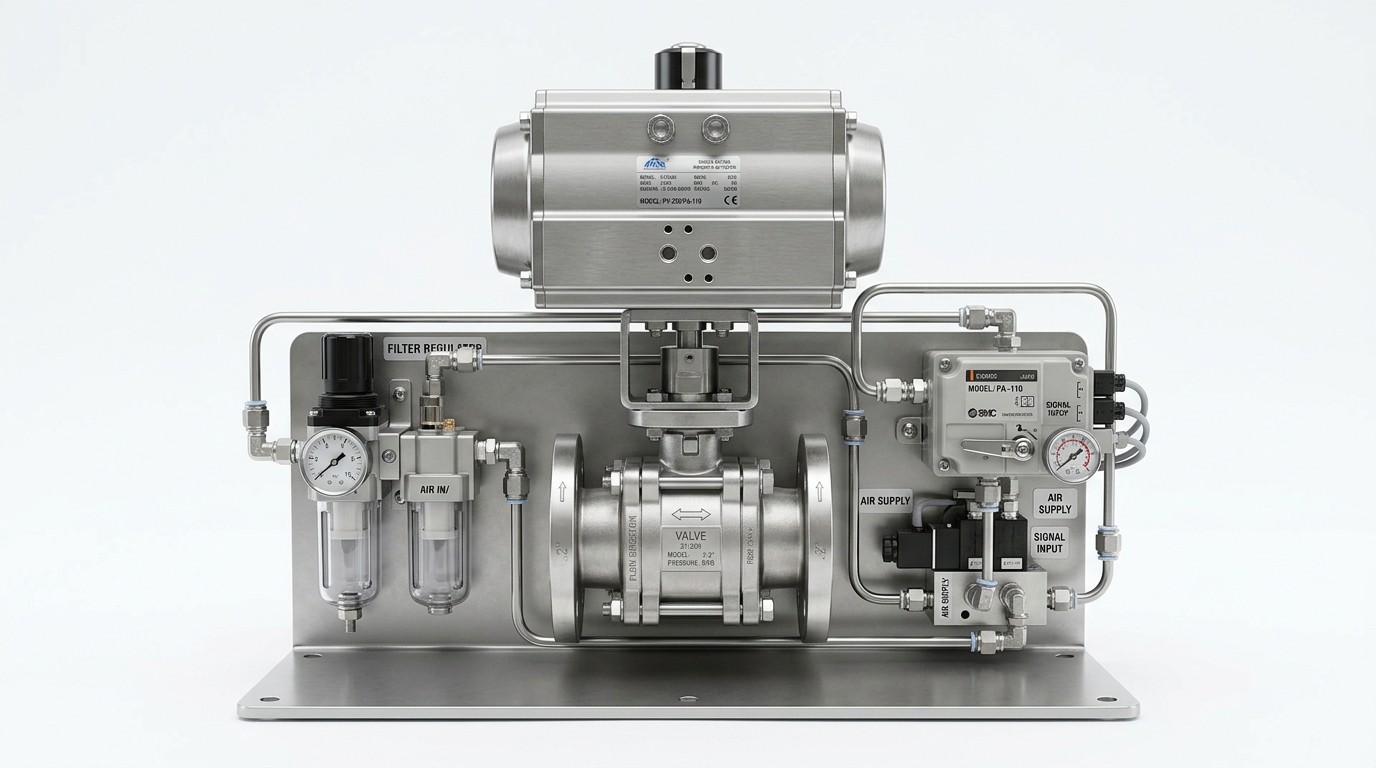
Buying pneumatic actuators for critical flow systems is more complex than comparing price tags or torque charts. In high-performance components and containment technology environments, small specification mistakes can trigger downtime, seal failure, and costly compliance risks. This guide outlines the most common buying errors decision-makers and researchers should avoid when selecting pneumatic actuators for demanding industrial applications.
For most buyers, the biggest mistake is not choosing the “wrong product” in a simple sense—it is buying an actuator that looks acceptable on paper but fails under the real operating conditions of the system. In practice, pneumatic actuator selection affects reliability, maintenance intervals, control accuracy, certification readiness, and total lifecycle cost far more than many procurement teams initially expect.
If you are evaluating pneumatic actuators for valves, positioning systems, or high-precision automated equipment, the safest approach is to assess them as part of the full application environment: air quality, cycle rate, load behavior, control response, sealing requirements, and failure consequences. That is where the real buying risks usually appear.
Why pneumatic actuator buying mistakes are so expensive in critical applications
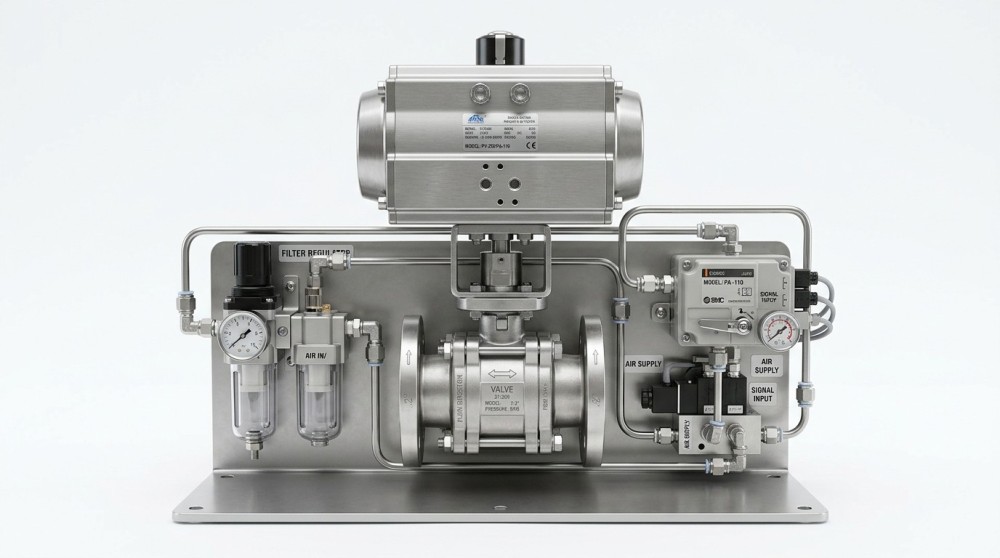
In general industrial environments, a slightly underspecified actuator may only reduce efficiency. In high-value or sensitive systems, however, the same error can cause much larger problems: unstable valve movement, process drift, premature seal wear, unplanned shutdowns, safety incidents, or audit and compliance exposure.
This matters especially in applications involving:
- critical flow control
- clean or controlled environments
- high-cycle automation
- precision positioning
- aggressive media isolation
- tight maintenance windows
For enterprise buyers and technical decision-makers, the question is not simply “What does the pneumatic actuator cost?” but rather “What risk does a poor actuator decision introduce into the system?” That shift in thinking leads to better sourcing decisions.
Common buying mistake #1: Choosing by catalog force or torque alone
One of the most common pneumatic actuator buying mistakes is selecting based only on nominal output force, torque, or bore size from a datasheet. These values are useful, but they are rarely enough to validate suitability.
Real-world actuator performance depends on factors such as:
- supply pressure variation
- friction in the valve or load mechanism
- breakaway torque requirements
- mounting geometry
- duty cycle
- dynamic shock or side loading
An actuator that appears adequately sized in a static calculation may struggle during startup, rapid cycling, or end-of-stroke loading. In valve automation, this often leads to incomplete opening or closing, poor repeatability, and accelerated wear.
Better buying approach: ask suppliers for application-based sizing support, not just product tables. Review safety margins under minimum air pressure, worst-case friction, and actual cycle conditions.
Common buying mistake #2: Ignoring the operating environment
Many buyers focus heavily on motion requirements but underestimate the influence of temperature, contamination, moisture, corrosion, washdown conditions, and hazardous-area constraints.
Pneumatic actuators used in harsh or sensitive environments must be evaluated for more than basic mechanical function. Material compatibility, enclosure design, seal chemistry, corrosion resistance, and environmental ingress protection can determine whether the actuator performs consistently over time.
Typical oversights include:
- using standard seals in chemically aggressive settings
- overlooking low-temperature or high-temperature performance limits
- ignoring condensation risk in compressed air systems
- failing to account for dust, fluid ingress, or outdoor exposure
- specifying a unit without the certifications required for the site
Buying takeaway: define the full environmental envelope before comparing suppliers. A lower upfront price can quickly become irrelevant if the actuator is not built for the actual plant conditions.
Common buying mistake #3: Underestimating air quality and supply stability
A pneumatic actuator is only as reliable as the compressed air system behind it. Buyers often assume plant air is “good enough,” but inconsistent pressure, poor filtration, oil carryover, or moisture contamination can severely affect response time and service life.
In precision or high-cycle applications, unstable air supply can create:
- slower actuation speed
- positioning inconsistency
- sticking or delayed response
- internal corrosion or seal degradation
- unpredictable maintenance frequency
This is especially important when the actuator is part of a system requiring fast response precision, repeatable cycling, or contamination control.
What smart buyers do: verify required air quality classes, minimum and maximum operating pressure, lubrication assumptions, and the actuator’s tolerance for real plant conditions. If the application is critical, review the air preparation package as part of the purchase decision.
Common buying mistake #4: Failing to match actuator design to duty cycle
Not all pneumatic actuators are intended for the same workload. A unit that performs acceptably in occasional on/off operation may fail early in a high-cycle automated process.
Duty cycle affects heat generation, wear patterns, seal life, cushioning performance, and long-term repeatability. Yet many buyers do not provide enough cycle-rate data during RFQ or specification review.
Important questions include:
- How many cycles per hour or per day will the actuator perform?
- Is the motion intermittent, continuous, or burst-based?
- Are there shock loads at end-of-stroke?
- What maintenance interval is acceptable?
- What happens if speed degrades over time?
Practical rule: buy for actual workload, not idealized operation. In critical systems, expected lifecycle performance matters more than initial bench performance.
Common buying mistake #5: Overlooking response time and control requirements
In many applications, pneumatic actuators are not just moving components—they are part of the control strategy. Buyers sometimes treat all actuation as simple open/close motion, even when the application demands specific response speed, damping behavior, or repeatability.
This creates problems in systems where timing accuracy affects throughput, product quality, or process safety. If the actuator response is too slow, too abrupt, or inconsistent, the entire process can become less stable.
Pay special attention to:
- stroke speed requirements
- position repeatability
- solenoid and control valve compatibility
- cushioning and shock control
- feedback integration for monitoring or automation
Better evaluation method: review the actuator as part of the total motion and control loop, not as an isolated mechanical item.
Common buying mistake #6: Treating sealing and materials as secondary details
In critical containment and flow systems, sealing performance is not a secondary feature. It is often central to the reliability and compliance profile of the assembly.
Buyers may pay attention to actuator size and output but spend too little time on internal seals, rod seals, housing materials, surface finish, and compatibility with cleaning agents or ambient contaminants. That is a costly oversight in high-purity, corrosive, or regulated environments.
Material and sealing choices influence:
- leak resistance
- contamination control
- maintenance frequency
- chemical compatibility
- temperature resilience
- long-term dimensional stability
Decision-makers should ask: what seal materials are used, what failure modes are most common, and how the actuator is designed to maintain performance over time in the target environment.
Common buying mistake #7: Choosing the cheapest option instead of the lowest-risk option
Price pressure often leads buyers toward the lowest quoted actuator. That may work for non-critical use cases, but in demanding industrial applications, the cheapest option is frequently the most expensive over the asset lifecycle.
Low upfront pricing can hide risks such as:
- shorter service life
- more frequent maintenance
- inconsistent quality control
- limited traceability
- weak documentation support
- poor spare parts availability
For procurement leaders, the better metric is total cost of ownership. That includes downtime risk, replacement frequency, engineering rework, and qualification effort.
Useful buying mindset: compare pneumatic actuators on lifecycle value, not just purchase price.
Common buying mistake #8: Not checking documentation, standards, and supplier support
For technical buyers in regulated or globally managed supply chains, documentation quality is often just as important as the actuator itself. Missing or weak documentation can slow approval, complicate audits, and increase qualification costs.
Before purchase, confirm whether the supplier can provide:
- performance data relevant to the application
- material and seal specifications
- dimensional consistency and tolerance data
- test reports or validation records
- applicable certifications and standards references
- after-sales engineering support
This is particularly important for buyers serving semiconductor, advanced manufacturing, energy, aerospace, and other high-consequence sectors where traceability and repeatability matter.
Best practice: treat documentation capability as part of supplier qualification, not as an afterthought after the PO is issued.
How to evaluate pneumatic actuators more effectively before buying
If you want to avoid the most common pneumatic actuator buying mistakes, build your evaluation process around application reality rather than generic specification matching.
A practical pre-purchase checklist should include:
- Define the exact load case — include breakaway force, dynamic load, cycle profile, and fail-state requirements.
- Map the operating environment — temperature, contamination, corrosion, washdown, cleanroom, or hazardous-area conditions.
- Review air system quality — filtration, dryness, pressure stability, and lubrication assumptions.
- Confirm control needs — speed, repeatability, feedback, cushioning, and valve interface.
- Examine sealing and materials — especially for aggressive, high-purity, or high-value applications.
- Compare lifecycle economics — maintenance, downtime risk, support, and spare part continuity.
- Validate supplier capability — engineering support, documentation depth, and consistency of quality.
This approach helps both information researchers and enterprise decision-makers move from product comparison to risk-informed selection.
Final takeaway for buyers and technical decision-makers
The most costly pneumatic actuator buying mistakes rarely come from complete neglect. They come from partial evaluation—looking at force but not environment, price but not lifecycle cost, or fitment but not control performance.
For critical industrial systems, the right pneumatic actuator is the one that matches the true application profile, supports stable long-term operation, and reduces operational risk across the full asset lifecycle. Buyers who evaluate pneumatic actuators through that lens make better sourcing decisions, avoid hidden failure modes, and protect both system performance and business continuity.
In short: do not buy a pneumatic actuator as a standalone component. Buy it as a reliability decision.
Industry Briefing
Get the top 5 industry headlines delivered to your inbox every morning.