When Do High-Speed Positioners Improve Valve Response?
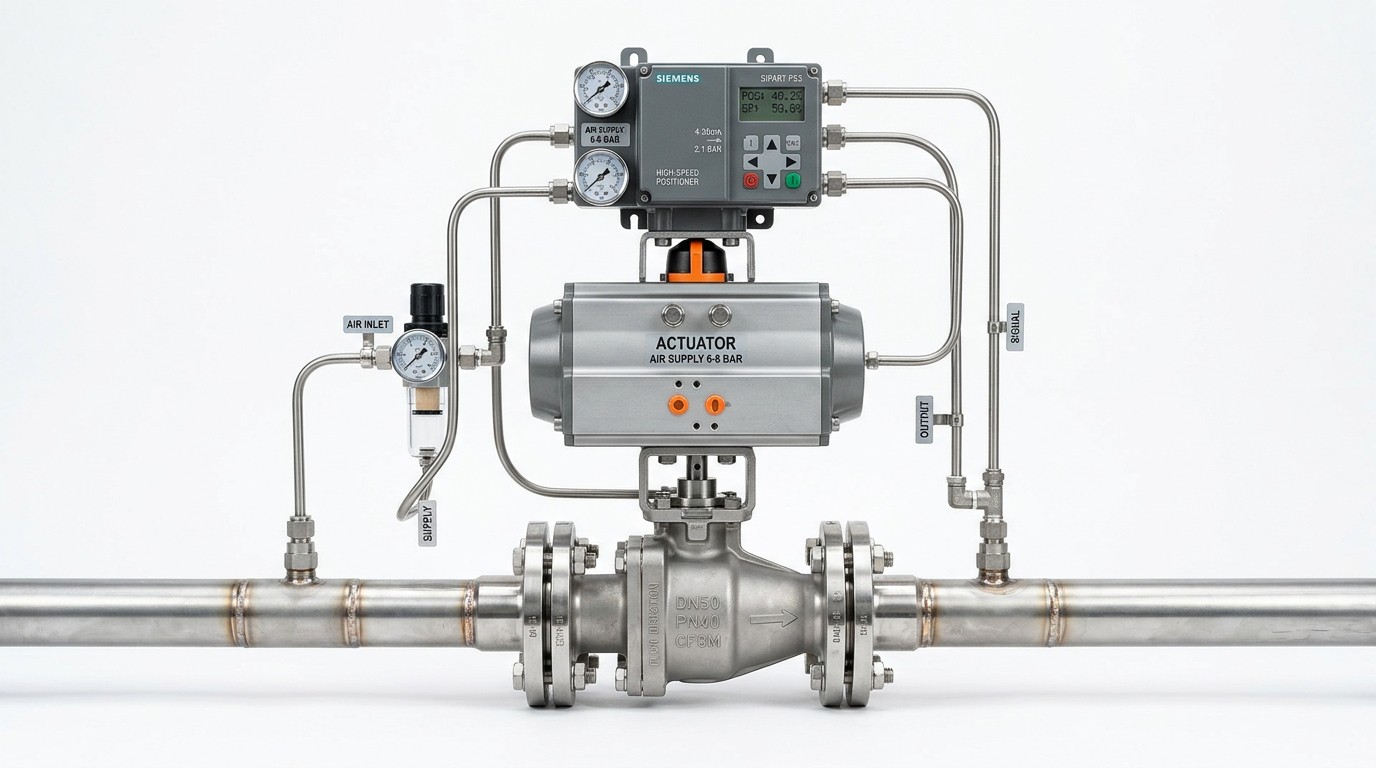
In critical flow systems, high-speed positioners can dramatically improve valve response when process stability, energy containment, and actuator precision must work together under tight tolerances. For engineers and decision-makers evaluating high-performance components—from ultra-high pressure valves and hydrogen compatible valves to pneumatic actuators and extreme-environment seals—understanding when faster positioning delivers real control value is essential to smarter containment technology decisions.
When does faster valve positioning create measurable control value?
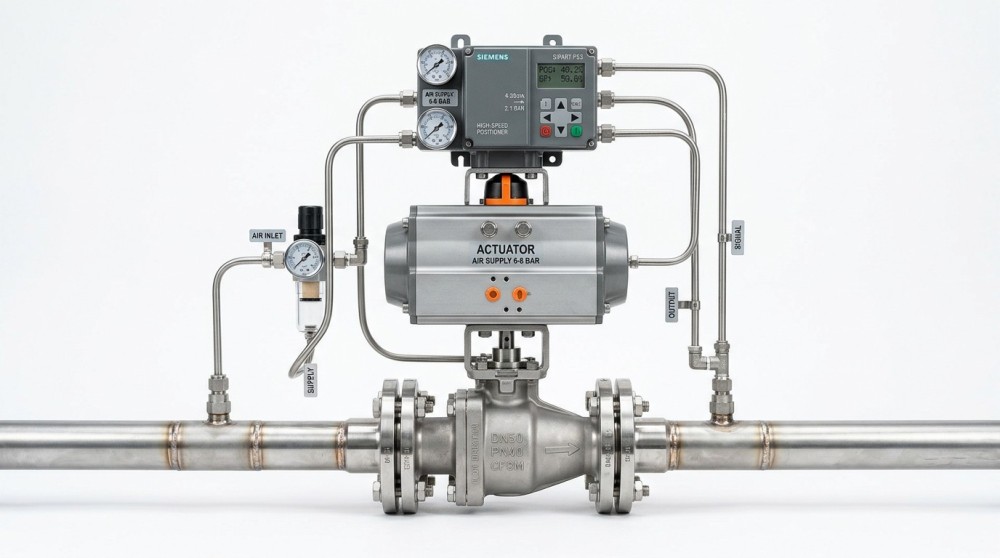
A high-speed positioner improves valve response when the control loop is limited by actuator travel, signal conversion, or air delivery rather than by process dead time alone. In practical terms, the benefit becomes visible in systems that demand rapid correction within milliseconds to a few seconds, especially where flow, pressure, vacuum, or thermal energy must remain within a narrow operating band.
This is common in integrated industrial environments where containment and flow reliability are inseparable. Semiconductor gas handling, hydrogen test platforms, high-frequency microwave thermal systems, precision chemical dosing, and UHP control skids often require a stable setpoint despite sudden upstream or downstream disturbance. In these applications, a slow positioner can turn a capable control valve into a delayed and oscillatory final element.
For information researchers and business decision-makers, the key question is not whether a positioner is fast, but whether faster response reduces process variation, safety risk, or batch loss. In many B2B evaluations, the real gain comes from cutting settling time from several seconds to under 1–2 seconds, limiting overshoot, and improving repeatability over thousands of cycles per day.
G-PCS approaches this question through the broader logic of containment and flow. That means judging valve response together with sealing integrity, actuator behavior, media compatibility, and compliance pathways such as ISO, API, SEMI, or MIL-SPEC referenced specifications. A high-speed positioner is valuable only if the full assembly can keep pace without sacrificing shutoff stability, leakage control, or long-cycle durability.
Typical signs that response speed is the limiting factor
Many plants blame unstable process control on valve sizing or poor tuning when the actual bottleneck is response latency. A positioner upgrade is worth investigating if the system shows one or more of the following symptoms during startup, load transitions, or frequent recipe changes.
- The valve consistently reaches the new setpoint 2–5 seconds after the controller output changes, while the process requires correction in less than 1 second.
- Pressure or flow oscillation persists even after PID retuning, especially in short-volume piping, gas panels, or compact thermal loops.
- The actuator has enough thrust or torque, but position feedback lags under rapid step changes or high-cycle modulation.
- Containment-critical service, such as hydrogen, corrosive gas, or vacuum transfer, requires reduced overshoot to protect seals, seats, and downstream instruments.
If two or more of these conditions are present, the response limitation often sits in the final control package rather than in the controller alone. That is where a high-speed pneumatic or electro-pneumatic positioner can materially improve loop behavior.
Which applications benefit most from high-speed positioners?
High-speed positioners are not automatically necessary for every valve. They produce the strongest return in services with fast disturbances, short process time constants, frequent cycling, or strict containment rules. In general industry, the value rises when process variability creates scrap, safety exposure, seal wear, or energy inefficiency.
This matters across the five industrial pillars that G-PCS tracks: UHP control and valves, industrial microwave and RF systems, extreme-environment seals, precision pneumatic and piezoelectric actuation, and specialized gasket materials. The common thread is that system reliability depends on more than actuation speed; it depends on how speed interacts with media, pressure class, temperature swing, and leak-tightness requirements.
The table below summarizes where faster position feedback and air management usually create operational value, and where a standard-speed positioner may still be sufficient. The purpose is not to force an upgrade, but to separate technically justified applications from cases where cost can be better allocated elsewhere.
A faster positioner is usually justified when disturbance frequency is high, process hold bands are narrow, or containment failure carries disproportionate operational cost. In slower thermal storage, utility balancing, or low-cycle isolation service, response speed may rank below corrosion resistance, seat life, or maintenance access.
Three application conditions that justify the upgrade
A procurement team can often screen candidates using three simple conditions before requesting detailed engineering review.
- The process variable shifts faster than the installed final element can correct, typically within 0.5–3 seconds after a disturbance.
- The cost of overshoot is high, such as product scrap, media loss, unsafe pressure excursion, or reduced seal life.
- The valve modulates frequently, often hundreds to thousands of cycles per shift, making repeatable positioning more important than simple open-close movement.
When all three apply, the case for high-speed positioners is typically strong. When only one applies, a broader valve package review is usually more prudent than a single-component upgrade.
What technical parameters matter more than speed alone?
Purchasers often compare high-speed positioners by stated response time alone, but that metric can mislead. Actual valve response depends on the entire chain: control signal, positioner electronics, pneumatic relay capacity, actuator volume, air supply quality, friction, valve packing load, trim characteristics, and installed piping dynamics. A nominally fast unit may perform poorly if any of those elements are mismatched.
For critical systems, at least five technical dimensions deserve equal attention: response time, steady-state accuracy, hysteresis, air consumption, and compatibility with the actuator and media environment. In compact pneumatic actuators, relay flow capacity and stroke sensitivity often matter as much as electronic processing speed. In piezo-assisted or hybrid precision systems, resolution and repeatability can dominate the selection decision.
G-PCS evaluates these parameters in the context of system-level risk. For example, a hydrogen-compatible valve package operating at elevated pressure can require a different positioner strategy than a low-pressure inert gas loop, because seal loading, leak pathways, and dynamic pressure release patterns differ substantially. The same is true when moving from ambient service into vacuum, corrosive chemistry, or high-frequency thermal cycling.
The parameter table below helps technical buyers separate useful specification data from brochure-level claims. It is particularly useful during early RFQ review, where teams need to narrow 3–5 candidate solutions before requesting a factory test scope or integration review.
The table shows why a high-speed positioner should never be bought in isolation. A system with poor air preparation, oversized actuator chambers, or excessive packing drag may need package optimization before any claimed response upgrade becomes real in the field.
Common engineering checkpoints
Before specification freeze
Teams should confirm at least 4 critical points: fail action, available air pressure range, expected cycle frequency, and operating temperature envelope. In many projects, the practical range may be 4–6 bar instrument air, ambient or elevated panel temperatures, and hundreds of modulation events per hour. These values shape whether a standard electro-pneumatic unit is sufficient or a faster relay architecture is needed.
During FAT or commissioning
Request a simple 3-stage review: static calibration, step-change response, and loaded process simulation. That sequence reveals whether the valve package performs only on a bench or also under realistic line pressure, seal friction, and process disturbance conditions.
How should buyers compare standard and high-speed positioner solutions?
The comparison should start with lifecycle fit, not unit price. A standard positioner usually lowers upfront cost and is often adequate for slow loops, infrequent adjustments, or noncritical utility service. A high-speed positioner usually costs more in hardware and sometimes in commissioning effort, but it can reduce process instability, startup loss, and component stress when control windows are tight.
For corporate buyers, the decision often depends on whether the valve sits inside a production bottleneck or a reliability-critical containment boundary. If one unstable control valve can interrupt a high-value line, create off-spec product, or expose sensitive seals to pressure spikes, the economic threshold for upgrading becomes much lower. This is especially true in integrated systems where valves, gaskets, and seals must perform as one containment architecture.
The matrix below provides a practical purchasing framework for technical sourcing, engineering, and operations teams. It compares the two approaches without assuming that faster is always better. This helps decision-makers align specification strategy with process criticality, not with marketing labels.
A useful rule is to compare the extra package cost against the cost of one unstable operating event over a month or quarter. In high-value production lines, one avoided upset can justify the upgrade. In low-risk service, standard positioning remains a rational choice.
Five checks before issuing a purchase order
- Confirm whether the control valve is modulating continuously, intermittently, or only during startup and shutdown.
- Check if existing instability comes from tuning, undersized trim, or poor air preparation rather than positioner speed.
- Review media compatibility, especially for hydrogen, corrosive gases, aggressive solvents, or high-purity applications.
- Align response expectations with realistic commissioning conditions, not only bench-test claims.
- Ask for a documented integration scope covering actuator type, fail mode, signal format, and compliance references.
These five checks typically prevent the most expensive error in procurement: buying a fast component to solve a slow system problem.
What standards, risks, and misconceptions should decision-makers keep in view?
In advanced containment systems, speed cannot be separated from compliance and reliability. Positioners used in process industries may need to align with broader project frameworks involving ISO documentation practice, API-related valve expectations, SEMI-driven purity or equipment considerations, and in some specialized environments, MIL-SPEC-oriented reliability references. The exact requirement depends on end use, region, and customer specification.
One common misconception is that faster valve response always improves control. In reality, excessive speed without proper tuning can increase hunting, amplify oscillation, or accelerate wear in seats, packing, and seals. Another misconception is that digital diagnostics alone guarantee dynamic performance. Diagnostics help, but they do not replace relay capacity, actuator match, or correct installation geometry.
Decision-makers should also recognize the hidden risk of incomplete system qualification. A valve package that responds well in a clean air bench test may behave differently after 3–6 months of real duty if condensate, particulate contamination, thermal cycling, or elastomer aging changes friction and stroke behavior. That is why containment-focused evaluation must extend beyond initial commissioning.
G-PCS is particularly relevant here because it connects valve dynamics with sealing technologies, actuator precision, and regulatory logic across multiple critical industries. That cross-domain view helps teams avoid narrow component decisions that later create leakage risk, unstable response, or qualification delays at the system level.
FAQ for researchers and procurement teams
How do I know if a high-speed positioner is necessary or optional?
Start with process dynamics. If disturbances occur within 0.5–3 seconds, the valve modulates frequently, and overshoot has a real operational cost, a high-speed positioner is often necessary. If the loop changes slowly over tens of seconds or minutes, it may be optional.
Can a faster positioner solve poor valve performance by itself?
Not always. Problems caused by incorrect valve sizing, poor trim selection, inadequate instrument air, high packing friction, or bad loop tuning will remain. The most reliable approach is to review the valve package in 3 layers: controller behavior, final element mechanics, and process dynamics.
What delivery and implementation timeline is typical?
For standard configurations, review and supply windows are often measured in 2–6 weeks depending on actuator match, documentation scope, and regional availability. If the package requires special materials, purity controls, or project-specific compliance review, the timeline may extend further.
Which documentation should buyers request?
Request datasheets, dimensional compatibility details, signal and air supply requirements, calibration and test information, materials compatibility notes, and any project-relevant conformity documents. For critical applications, also ask for guidance on commissioning checks and maintenance intervals.
Why consult G-PCS when evaluating high-speed positioners and valve response?
G-PCS is built for decision-makers who cannot treat valve response as a standalone catalog feature. In high-consequence systems, response speed must be judged together with containment logic, actuator architecture, seal compatibility, pressure class, and project compliance requirements. That integrated view is especially valuable when one specification decision affects multiple equipment boundaries.
Our technical intelligence framework supports CTOs, R&D leaders, sourcing teams, and plant engineers comparing UHP control valves, hydrogen-compatible valve assemblies, precision pneumatic actuators, piezoelectric positioning technologies, and specialized sealing materials. Instead of offering generic advice, we help teams narrow the field based on application dynamics, qualification expectations, and procurement risk.
You can contact G-PCS for practical support on 6 key topics: parameter confirmation, valve and actuator matching, positioner selection logic, delivery-cycle planning, compliance document review, and sample or quotation discussion for critical projects. This is particularly useful when your team must compare 2–4 technical routes under a short bidding or validation timeline.
If you are assessing whether high-speed positioners will improve valve response in your system, send the process medium, pressure range, response target, actuator type, and any ISO, API, SEMI, or customer-specific requirements. With those inputs, G-PCS can help clarify whether the gain should come from faster positioning, a different valve package, upgraded sealing, or a more robust containment strategy.
Industry Briefing
Get the top 5 industry headlines delivered to your inbox every morning.