High-Speed Positioners: When Faster Response Improves Valve Control
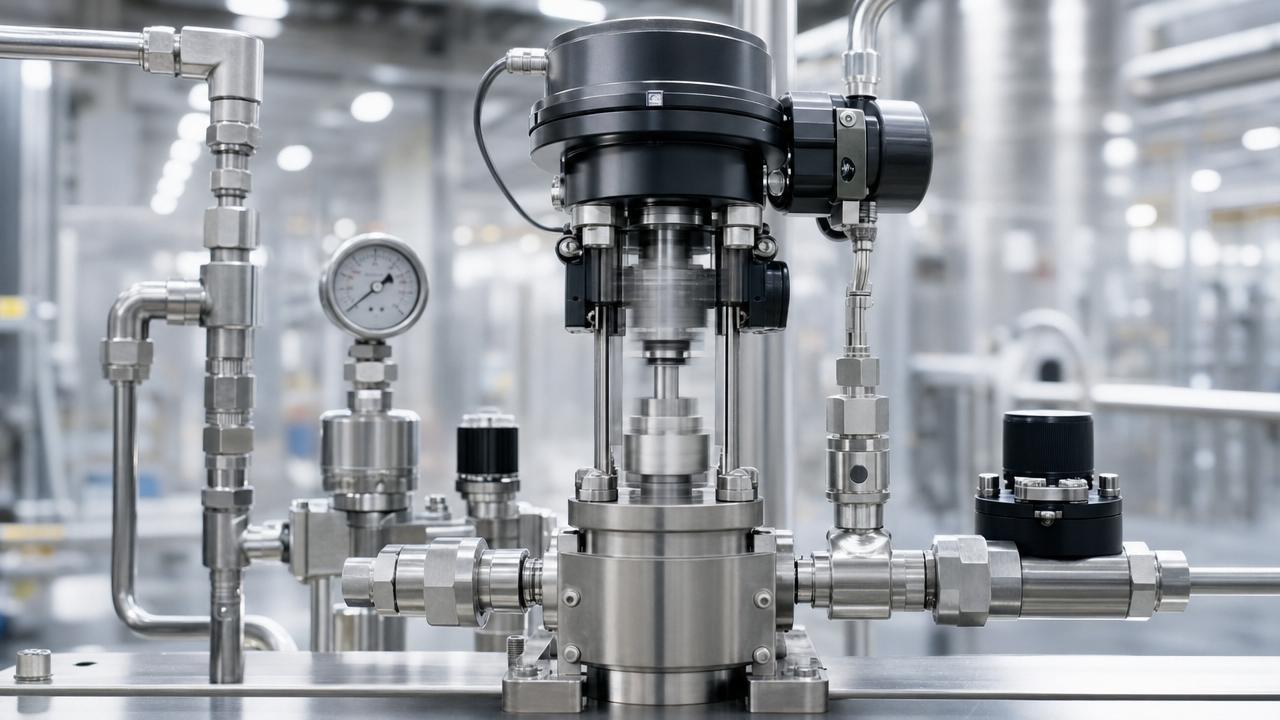
In demanding valve applications, response speed is more than a performance metric—it directly affects control accuracy, stability, and system safety. High-speed positioners help operators reduce lag, improve setpoint tracking, and maintain tighter process control under rapidly changing conditions. This article explores when faster response delivers measurable advantages and how to evaluate its impact in real-world valve control scenarios.
For operators working with pressure control skids, gas delivery lines, thermal processing tools, microwave energy systems, and precision pneumatic assemblies, the value of faster positioning is practical rather than theoretical. A valve that reaches the commanded position in 0.3 seconds instead of 1.2 seconds can reduce overshoot, stabilize downstream pressure sooner, and limit process drift during frequent load changes.
In advanced industrial environments, especially those influenced by ISO, API, SEMI, or MIL-SPEC expectations, the question is not whether high-speed positioners are impressive. The better question is when their speed creates measurable control benefits, and when it may add cost or tuning complexity without improving the result.
Why response speed matters in real valve control
A positioner converts a control signal into valve stem or actuator movement. In a stable process with slow load variation, a response time of 1 to 2 seconds may be acceptable. In dynamic service, however, even a 300 to 500 millisecond delay can cause cycling, off-spec output, or unnecessary wear on the actuator and trim.
High-speed positioners are especially relevant where the control loop updates quickly, often at 50 ms to 250 ms intervals, or where process disturbances occur several times per minute. In these cases, the valve is not just opening and closing. It is continuously correcting pressure, flow, vacuum level, or gas ratio against a moving target.
Key operating effects operators notice first
- Reduced lag between controller output and valve movement
- Better setpoint tracking during ramp-up, purge, or recipe changes
- Lower overshoot in pressure or flow transitions
- Faster recovery after disturbances such as upstream supply fluctuation
- Improved stability in short-cycle or batch operations
For example, in gas blending or UHP process delivery, a 2% to 4% overshoot can create more than a quality issue. It may affect yield, contaminate a chamber, or trigger a safety interlock. High-speed positioners help narrow the deviation window by reducing dead time and improving repeatability across repeated commands.
Speed alone does not guarantee better control
Operators should remember that faster movement is only useful when matched to the actuator, valve friction, air supply quality, and control loop tuning. A positioner capable of very fast stroke response can still perform poorly if the actuator is undersized, if stiction exceeds normal limits, or if signal filtering is too aggressive.
In practice, better control depends on a balanced system: low hysteresis, stable supply pressure, correct feedback calibration, and tuning that avoids hunting. This is why evaluating high-speed positioners always requires both component review and loop-level review.
Typical thresholds where speed becomes important
As a general rule, faster response becomes valuable when one or more of the following conditions exist: process changes occur in less than 2 seconds, the valve cycles more than 10 to 20 times per minute, the allowable control error is tighter than ±1%, or safety logic requires rapid correction after a process upset.
Where high-speed positioners deliver the most measurable benefit
Not every valve application needs the same dynamic performance. The most successful use of high-speed positioners comes from matching response capability to process risk, variability, and tolerance. The table below highlights common scenarios where faster response typically produces visible operational gains.
The common thread is not industry type alone, but the combination of tight tolerance and rapid disturbance. When process value changes faster than the valve can respond, the loop becomes reactive instead of controlled. High-speed positioners reduce that gap.
Batch, short-cycle, and recipe-driven operations
In many modern production lines, recipes change every 5 to 30 minutes and batch steps may last less than 60 seconds. Under these conditions, a valve that settles 1 second faster can improve step consistency over hundreds of cycles per shift. Operators often see the difference in reduced alarms, less manual correction, and more predictable startup behavior.
Safety-critical and containment-sensitive service
Fast correction also matters where containment and flow integrity are linked. In hydrogen, inert gas, corrosive media, or seal-sensitive systems, delayed valve movement can briefly push the process outside its safe envelope. Even a short excursion of 1 to 3 seconds may increase leak risk, thermal stress, or product quality loss.
When faster is not the main priority
If the process changes slowly, the valve is oversized, or the control signal is heavily filtered, a high-speed positioner may offer limited improvement. In those cases, operators may gain more by correcting valve sizing, air preparation, feedback calibration, or controller tuning before upgrading to a faster device.
How operators should evaluate high-speed positioners
A useful evaluation starts with measurable field conditions, not marketing claims. Instead of asking whether a positioner is “fast,” operators should compare required response time, travel accuracy, repeatability, and stability against real process behavior. The objective is to see whether the valve can correct errors before they become process deviations.
Four practical performance checks
- Measure step response: compare 10%, 25%, and 50% input changes to actual valve movement.
- Record settling time: note how long the valve takes to stay within ±1% or ±2% of target.
- Check repeatability over at least 20 to 30 cycles under the same conditions.
- Watch for hunting or oscillation after tuning changes or supply pressure variation.
These checks are simple but important. A positioner may show a fast initial movement yet still have poor final stability. For operators, the real win is not just speed to first movement, but speed to stable control.
Parameters worth comparing before selection
Before specifying high-speed positioners, compare the parameters below with your valve and process conditions. This reduces the chance of buying a device that is technically capable but poorly matched to the installed actuator or media service.
The strongest purchasing decision usually comes from matching these values to process expectations. If a loop must recover in less than 1 second, but the installed package takes 2 seconds to settle, the performance gap is already visible.
Questions operators should ask suppliers
- What is the tested response time with a comparable actuator volume?
- How does the unit behave under frequent 10% to 20% travel corrections?
- What supply pressure and air quality are required for rated performance?
- Can tuning be adjusted for fast loops without causing oscillation?
- What maintenance interval is typical in continuous duty service?
Implementation risks, tuning issues, and maintenance priorities
Installing high-speed positioners without system review can create new problems. A faster device may expose weaknesses that were hidden by slower movement, such as valve stiction, poor instrument air quality, excessive deadband, or unstable PID settings. Operators should expect commissioning to involve more than a simple replacement.
Common mistakes during upgrade projects
- Keeping the original tuning after reducing response time by 40% to 70%
- Ignoring actuator volume and air line restrictions
- Using a faster positioner on an oversized valve with poor low-travel control
- Assuming digital diagnostics replace mechanical inspection
- Skipping verification under actual process loads and only testing offline
A successful upgrade usually follows 3 stages: mechanical inspection, instrument setup, and live process validation. Depending on loop criticality, this can take from a few hours for a simple skid to 2 or 3 shifts for a tightly controlled production tool.
Maintenance practices that preserve fast response
High-speed positioners maintain their advantage only when the surrounding hardware remains clean and stable. Operators should inspect air filtration, tubing condition, linkage wear, and seal drag at regular intervals. In continuous service, many facilities review these points every 3 to 6 months, or sooner in dusty, humid, or chemically aggressive environments.
Diagnostic trends can also be useful. If command changes remain constant but travel time slowly increases, that often points to friction growth, air leakage, or contamination. Early correction is important because a 15% to 20% increase in travel delay can affect product consistency long before a hard failure occurs.
Balancing speed, reliability, and operating life
The best valve control package is not always the one with the shortest response specification. It is the one that maintains stable, repeatable movement over thousands of cycles while staying compatible with sealing materials, actuator load, and process cleanliness requirements. In precision applications, controlled speed with repeatable damping is often better than maximum raw speed.
Choosing the right solution for precision flow environments
For users and operators in precision flow environments, high-speed positioners are most valuable when the process has tight tolerances, rapid disturbances, or short operating windows. They are especially useful in advanced gas handling, high-purity control, RF-assisted process systems, and actuator packages where milliseconds affect quality or safety.
A sound decision should consider at least 4 factors: actual loop dynamics, valve sizing, actuator compatibility, and maintenance capability. If those elements align, faster response can improve control accuracy, reduce instability, and shorten recovery time after process changes. If they do not, performance gains may remain limited.
G-PCS focuses on these practical links between component behavior, containment integrity, and process reliability. If you are reviewing high-speed positioners for demanding valve control service, contact us to discuss application conditions, compare technical options, and obtain a more tailored solution for your operating environment.
Industry Briefing
Get the top 5 industry headlines delivered to your inbox every morning.