How Precision Control Systems Improve Wafer Process Stability
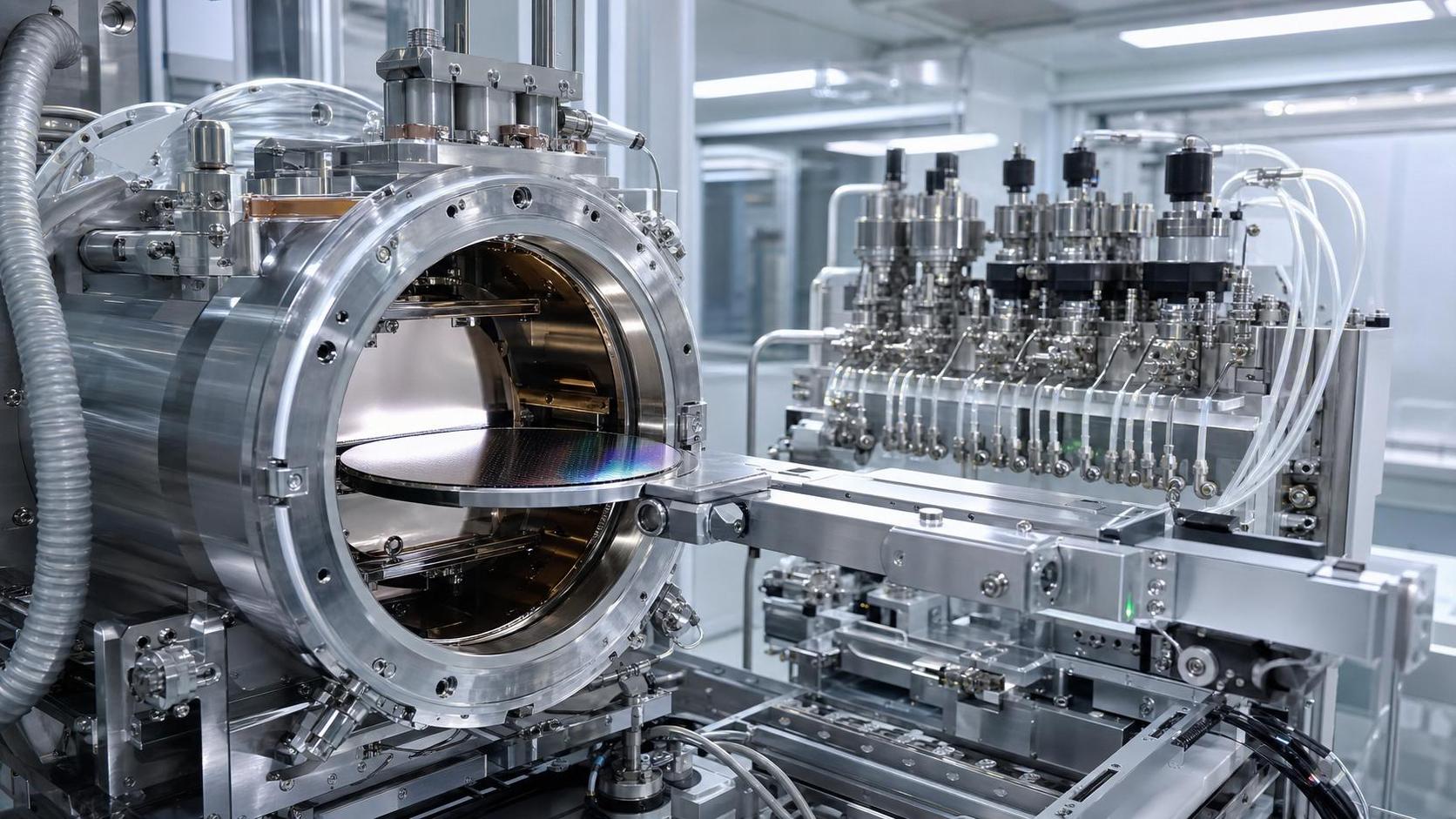
Why wafer stability now depends on tighter control loops
Wafer process stability is no longer shaped by one tool setting alone.
At advanced nodes, tiny shifts in gas flow, pressure response, motion accuracy, or seal integrity can accumulate into measurable yield loss.
That is why precision control systems for semiconductor manufacturing matter far beyond simple automation.
They create a stable operating envelope for processes that react within milliseconds, and sometimes within microseconds.
In real fabrication environments, stability means more than repeatable numbers on a screen.
It means keeping plasma behavior consistent, holding chamber pressure within narrow windows, and ensuring wafers see the same conditions from lot to lot.
This becomes especially important when contamination risk, thermal loading, and high cycle counts interact inside one production line.
Within that context, the Logic of Containment and Flow used by G-PCS is useful because it links component behavior to system reliability.
For semiconductor operations, that connection is practical rather than theoretical.
Different process areas do not fail for the same reasons
A common mistake is treating all wafer tools as if they need the same control architecture.
They do not.
Etch tools often react to pressure transients and gas switching speed.
Deposition tools may be more sensitive to flow uniformity, thermal drift, and valve repeatability over long runs.
CMP and wafer handling introduce another layer, where motion precision and vibration control directly affect process consistency.
The better way to evaluate precision control systems for semiconductor manufacturing is to start with process behavior.
Ask where variation enters the loop, how fast it propagates, and whether the system can correct it before the wafer sees the effect.
That is also why high-performance valves, piezo actuators, advanced seals, and clean-flow materials must be judged together.
A fast controller cannot compensate for slow mechanics or unstable sealing surfaces.
Where the control burden usually sits
This kind of comparison helps separate similar-looking tools that actually demand different control strategies.
In etch and deposition, flow control decides more than throughput
Etch and deposition often receive the most attention because their margins are visibly tight.
What matters in practice is not only setpoint accuracy, but also how the system behaves during transitions.
A chamber can look stable in steady state and still generate drift during recipe changes.
Precision control systems for semiconductor manufacturing reduce this problem by shortening settling time and limiting overshoot.
That improves wafer-to-wafer repeatability, especially in multi-step recipes with frequent gas switching.
Another point is containment.
Specialized sealing materials, including high-purity elastomers and composite gaskets, influence both leak stability and chemical compatibility.
If sealing performance drifts under heat or aggressive chemistries, the control loop starts chasing unstable physical conditions.
That is why a data-driven view, similar to G-PCS benchmarking across ISO, SEMI, API, and MIL-SPEC frameworks, is valuable.
It turns component selection into a process stability decision, not a catalog comparison.
Motion-sensitive steps need a different kind of precision
Not every stability issue begins with gas or pressure.
In lithography support functions, metrology stages, and wafer transfer modules, positioning quality becomes the dominant variable.
Here, high-precision pneumatic and piezoelectric actuators matter because they respond quickly without adding excessive mechanical disturbance.
The key judgment is whether the motion system remains consistent under changing payloads, ambient vibration, and thermal expansion.
A system may look precise in an isolated test but behave differently after repeated cycling.
This is where precision control systems for semiconductor manufacturing should be evaluated for hysteresis, response repeatability, and drift over time.
In actual deployment, the best configuration is often the one that balances speed with controllable damping.
Pushing only for faster motion can create settling errors that erase the expected gain.
What usually deserves closer review before implementation
- Response time under real load, not laboratory no-load conditions.
- Particle behavior at seals, bearings, and motion interfaces.
- Compatibility between controller resolution and actuator sensitivity.
- Maintenance intervals after repeated thermal and duty-cycle stress.
- Interface compliance with cleanroom and semiconductor equipment standards.
The hidden issue is often contamination, not raw control accuracy
Some fabs focus on control resolution and miss the stability impact of contamination pathways.
That is risky because stable readings do not guarantee stable surfaces.
Outgassing, seal degradation, trapped residues, or valve wear can gradually shift chamber conditions.
The resulting drift may appear as recipe instability, even when the real cause is material behavior.
This is one reason the semiconductor sector increasingly values integrated views of valves, actuators, seals, and polymer components.
Precision control systems for semiconductor manufacturing work best when contamination control is treated as part of loop design.
For example, FFKM seals may improve chemical resistance, but selection still depends on temperature cycling, plasma exposure, and compression set behavior.
In other words, similar materials do not create identical long-term results.
Where selection errors usually happen
Most selection errors are not dramatic.
They begin with reasonable assumptions that ignore context.
One example is choosing a valve by nominal flow range without checking transient behavior at low-volume pulses.
Another is accepting a seal based on chemical compatibility tables alone, while overlooking thermal aging inside the chamber cycle.
A similar mistake appears in actuator selection.
High-speed movement looks attractive, but if feedback tuning, fixture stiffness, and damping are weak, stability can worsen.
In practical terms, precision control systems for semiconductor manufacturing should be judged as assemblies, not isolated parts.
The more sensitive the wafer process, the less useful single-parameter comparisons become.
Common misjudgments worth avoiding
- Comparing purchase price without estimating drift-related yield impact.
- Assuming similar chamber tools need the same valve and seal package.
- Using clean steady-state data to represent transition-heavy recipes.
- Ignoring standards alignment when long-term reliability is critical.
- Treating maintenance access and replacement time as secondary issues.
A practical way to align systems with the process window
A useful next step is to map each critical wafer stage to its dominant instability source.
Some stages need faster response.
Others need cleaner sealing, lower hysteresis, or better long-cycle repeatability.
That mapping makes it easier to compare precision control systems for semiconductor manufacturing on real operating value.
It also supports more disciplined validation across flow control, actuation, sealing, and material selection.
In many cases, the most reliable choice is the one supported by cross-domain evidence.
That includes transient performance data, contamination behavior, maintenance history, and compliance with relevant standards.
A reference framework like G-PCS is useful here because semiconductor stability increasingly depends on how multiple containment and flow elements interact.
Before final selection, clarify the process window, confirm the failure modes, and test against real duty conditions rather than idealized specifications.
That approach usually reveals whether the control system will protect wafer stability over time, not just pass an initial benchmark.
Industry Briefing
Get the top 5 industry headlines delivered to your inbox every morning.