High-Speed Piezoelectric Positioners: Accuracy vs. Travel Range
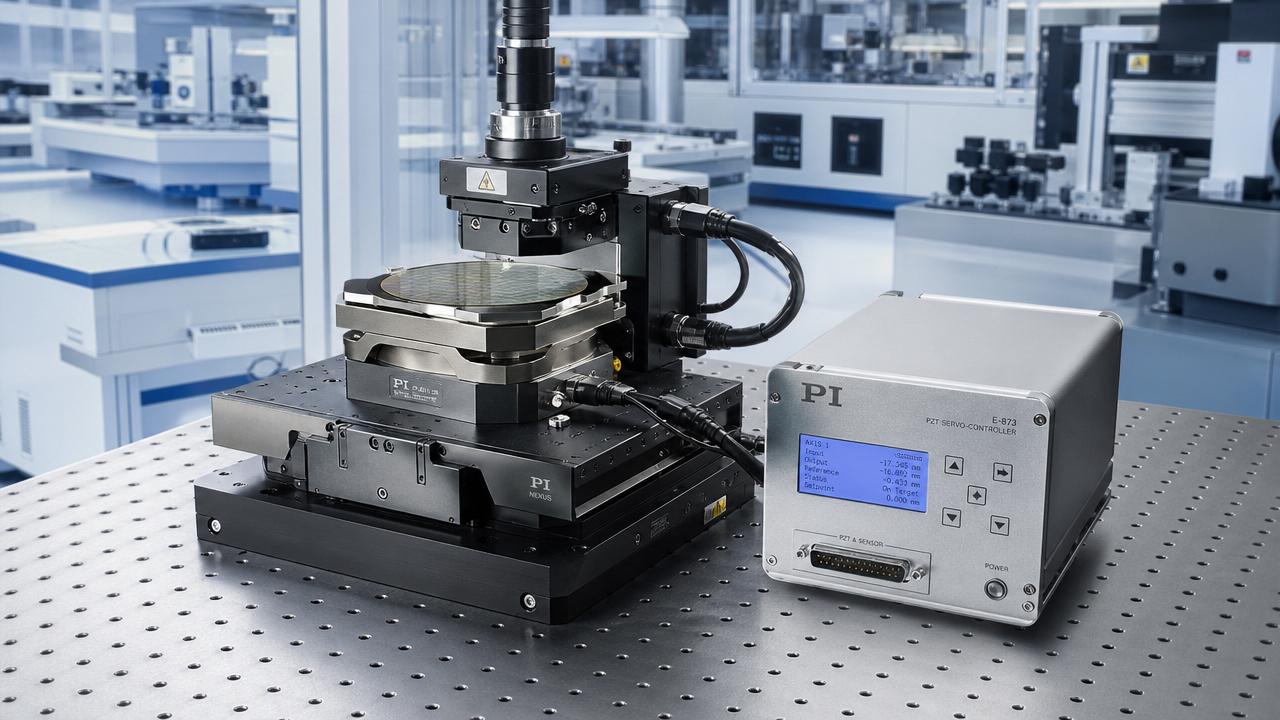
High-speed piezoelectric positioners are essential when operators need both rapid response and ultra-fine accuracy, but choosing the right balance between precision and travel range is rarely straightforward. This article explores the key performance trade-offs, application limits, and selection factors that help users match positioning speed, stability, and motion range to demanding industrial tasks.
Why the Accuracy vs. Travel Range Trade-Off Matters in Real Operation
When users search for high-speed piezoelectric positioners, they usually want a practical answer: which system delivers the motion they need without sacrificing stability, repeatability, or throughput.
The short answer is simple. As travel range increases, it becomes harder to maintain the same bandwidth, stiffness, settling speed, and nanometer-level positioning performance.
That does not mean long-travel piezo systems are inaccurate. It means operators must understand that every design choice shifts the balance among speed, stroke, load handling, and control behavior.
In production and laboratory environments, this trade-off affects more than specifications on paper. It influences scanning quality, cycle time, vibration sensitivity, alignment consistency, and even equipment uptime.
If your task involves tiny, extremely fast corrections, a short-stroke stage often performs best. If your process needs wider movement, the system may require compromises or multi-axis strategies.
For operators, the key is not chasing the highest published accuracy or the longest stroke. The real goal is selecting a positioner that stays accurate at the speed and load of actual use.
What Operators Usually Mean by “Accuracy” in Piezo Motion Systems
Many users treat accuracy as a single number, but in piezo positioning it includes several different performance characteristics that should never be confused during selection.
Resolution describes the smallest commanded motion the system can detect or produce. Repeatability refers to how closely the positioner returns to the same point over repeated cycles.
Absolute accuracy measures how close the actual position is to the target position. Linearity reflects how predictably motion follows the input signal across the full travel range.
Settling time is equally important in high-speed applications. A stage may reach the target quickly, yet still oscillate before stabilizing enough for measurement, bonding, inspection, or exposure tasks.
For operators, repeatability and settling behavior often matter more than idealized static accuracy. In scanning, pick-and-place, optics alignment, and semiconductor processes, stable usable motion is the real metric.
This is why closed-loop feedback systems are common in high-speed piezoelectric positioners. They reduce hysteresis and drift, making motion more predictable under changing temperatures and dynamic loads.
Why Travel Range Changes Performance So Much
Travel range is the maximum distance a positioner can move. In piezo systems, extending that range usually requires mechanical amplification, flexure redesign, or stacked actuator arrangements.
Those design changes can reduce stiffness, lower resonant frequency, and increase sensitivity to side loads or vibration. As a result, longer-travel systems often respond more slowly under real operating conditions.
Mechanical amplification is a common method for increasing stroke. It can be effective, but amplified designs may trade some force capacity and positioning bandwidth for added travel.
Longer stroke also means the controller has more motion to manage. That can increase overshoot risk, lengthen settling time, and complicate tuning, especially when payloads vary during operation.
In short, travel range is not just a geometric feature. It directly influences dynamic behavior, and dynamic behavior is what determines whether a fast process remains accurate in practice.
That is why datasheets should be read carefully. A positioner may list an impressive travel range, yet deliver reduced speed or precision once the payload and duty cycle are included.
How Speed, Bandwidth, and Stroke Interact
High speed in piezo motion is often linked to bandwidth, which describes how rapidly the system can follow changing commands while maintaining controlled and stable positioning behavior.
A short-stroke piezo stage typically has higher stiffness and higher resonant frequency. That allows faster response, shorter settling, and better tracking during repetitive or oscillatory motion.
As stroke increases, resonant frequency often decreases. This makes it harder to achieve the same dynamic performance, especially in high-acceleration applications such as laser steering or wafer inspection.
Operators should remember that top speed is not the same as useful speed. A positioner may move quickly, but if it cannot settle in time, total cycle performance still suffers.
This is especially relevant in scanning applications. A stage with modest travel but strong bandwidth can outperform a longer-travel unit because it spends less time correcting or stabilizing after each move.
Therefore, when comparing high-speed piezoelectric positioners, always ask how bandwidth changes with full stroke, mounted payload, and required motion profile rather than considering unloaded peak values alone.
Common Application Scenarios and the Best Balance for Each
Different tasks require different compromises. The best positioner for micro-optics alignment may be a poor choice for surface scanning, and vice versa.
In semiconductor and photonics alignment, users often prioritize ultra-fine control, fast settling, and thermal stability over long travel. Small corrections must be clean, repeatable, and fast.
In high-speed microscopy and precision scanning, travel range matters more because the system must cover a defined field. Even so, bandwidth and low distortion still remain critical.
In laser processing or beam steering, the required movement is often small but extremely fast. Here, a compact high-stiffness piezo stage usually offers the best operational performance.
In metrology or probing systems, operators may need a moderate travel range combined with closed-loop feedback to maintain measurement confidence across repeated cycles and environmental variation.
For active vibration compensation, the usable stroke may be limited, but the demand for rapid response is very high. This is a classic case where shorter travel supports better real-time correction.
Questions Operators Should Ask Before Choosing a Positioner
Selection errors usually happen when users focus on one headline specification and ignore the operating context. A better approach starts with the actual motion task.
First, define the required working stroke, not the maximum theoretical stroke. If the process only uses a small motion window, a shorter-travel stage may deliver better performance and lower control complexity.
Second, identify the payload clearly. Added mass changes resonant behavior, speed, and stability. A stage that performs well unloaded may behave very differently once tooling is mounted.
Third, specify whether the process demands point-to-point positioning, continuous scanning, or rapid compensation. Each motion mode stresses the positioner and controller in different ways.
Fourth, consider the environment. Temperature shifts, vibration, vacuum conditions, cleanroom requirements, and cable routing can all affect the practical behavior of piezo motion systems.
Fifth, ask for performance data under realistic conditions. Useful information includes loaded bandwidth, settling time, closed-loop repeatability, cross-axis error, and expected service life at duty cycle.
Closed-Loop vs. Open-Loop: Which Matters More for Accuracy?
Open-loop piezo systems are simple and can be very fast, but they are affected by hysteresis, creep, and environmental variation. That limits predictable absolute positioning.
Closed-loop high-speed piezoelectric positioners use feedback sensors to correct motion in real time. This improves linearity, repeatability, and confidence in target positioning over repeated cycles.
For operators handling demanding inspection, optical alignment, or automated production, closed-loop control is often the better choice despite higher cost and added system complexity.
However, not every application needs the same degree of feedback correction. If the motion is repetitive within a narrow band, an open-loop design may still be acceptable.
The right decision depends on how much drift, hysteresis, and position deviation the process can tolerate. If the answer is “very little,” closed-loop control should be strongly favored.
Users should also ask what sensor technology is used, how feedback affects bandwidth, and whether the controller has been optimized for fast and stable motion rather than static positioning only.
Hidden Limits That Often Reduce Real-World Performance
Even well-specified systems can underperform if practical constraints are ignored. One of the most common issues is improper mounting, which introduces unwanted compliance or vibration.
Side loading is another problem. Many piezo positioners are designed for precise axial or guided motion, and off-axis forces can reduce accuracy or shorten service life.
Cable stiffness can also disturb motion, especially in very small travel applications. This effect is easy to overlook but can meaningfully alter low-force precision movement.
Thermal drift matters too. Although piezo systems are valued for fine motion, surrounding structures may expand or shift enough to influence the final position during longer processes.
Controller tuning is equally important. Poorly tuned servo behavior can create overshoot, ringing, or sluggish correction, masking the true capability of the hardware.
Finally, duty cycle should not be ignored. Repeated high-speed operation generates practical limits in heat, wear of surrounding mechanics, and long-term control stability.
How to Read Vendor Specifications Without Being Misled
Datasheets are useful, but operators should treat headline numbers as starting points rather than final answers. The best value often lies in the test conditions behind the numbers.
Check whether travel range is measured open-loop or closed-loop, whether resolution is theoretical or sensor-limited, and whether bandwidth is reported with or without payload.
Look for settling time definitions. Some vendors measure to a wide error band, while your process may require much tighter stability before the next step can begin.
Ask whether repeatability is bidirectional and whether accuracy applies across the full stroke or only near a calibrated region. These details matter in precision production workflows.
If possible, request application-specific data or a demonstration using your payload and motion profile. For critical systems, this is far more informative than comparing generic brochure values.
The most reliable suppliers will discuss limitations openly. That transparency often indicates stronger engineering support and a better chance of achieving stable performance after installation.
Practical Selection Guidance for High-Speed Piezoelectric Positioners
If your process depends on maximum precision at very high speed, choose the shortest travel range that fully covers the real task. This usually improves stiffness, bandwidth, and settling behavior.
If your application needs wider travel, accept that dynamic performance may change and verify whether the controller, payload, and structure still support your throughput target.
When in doubt, prioritize stable usable performance over impressive nominal stroke. A positioner that moves less but settles faster can deliver better productivity and more reliable process results.
Closed-loop designs are generally safer for operators who need consistency across shifts, varying temperatures, and repeated cycles. Open-loop options fit narrower, more controlled motion tasks.
Also consider whether a hybrid architecture makes sense. In some systems, a coarse stage handles long travel while a fine piezo stage delivers rapid nanometer-level correction.
This layered approach often resolves the accuracy versus travel range conflict more effectively than forcing a single piezo axis to meet every requirement at once.
Conclusion: Match the Motion System to the Real Process, Not the Biggest Number
The central lesson is clear: in high-speed piezoelectric positioners, accuracy and travel range are tightly linked through stiffness, bandwidth, settling time, and load sensitivity.
Operators should not assume that longer travel automatically means better capability, or that the highest precision number guarantees better production performance.
The best choice depends on the real motion window, payload, speed requirement, feedback strategy, and environment. Once those factors are defined, the trade-offs become easier to manage.
For most demanding tasks, the winning system is the one that remains predictable at operating speed, not the one with the most aggressive marketing specification.
By evaluating dynamic behavior, control method, and application fit together, users can choose a positioner that supports faster cycles, steadier accuracy, and more dependable long-term results.
Industry Briefing
Get the top 5 industry headlines delivered to your inbox every morning.