Industrial Environmental News: IoT Applications to Watch in 2026
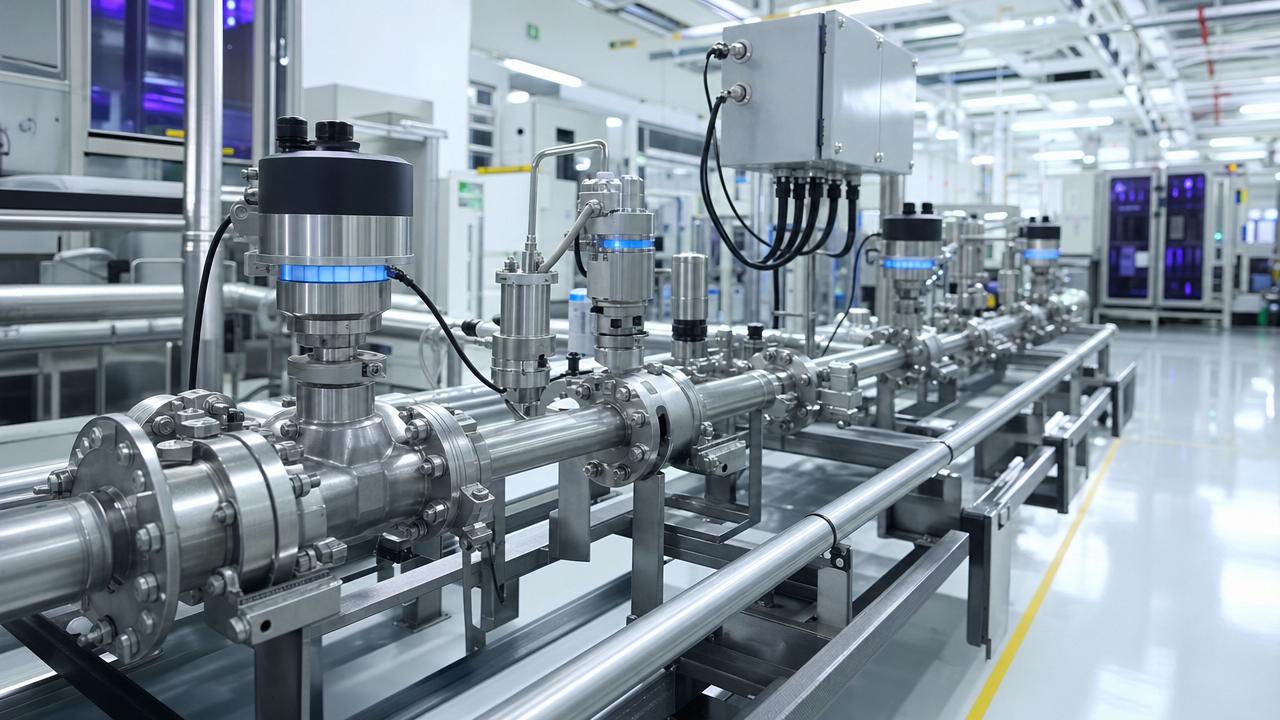
In 2026, Industrial Environmental News: IoT Applications to Watch in 2026 is less about adding more sensors and more about proving control under pressure. The most relevant industrial environmental news for IoT applications now centers on precision, containment, compliance, and resilience across systems where failure is expensive, visible, and often unacceptable.
That shift matters across a broad industrial landscape. Semiconductor tools, hydrogen infrastructure, RF energy platforms, advanced motion systems, and sealed process lines all depend on environmental integrity. In these settings, IoT value is no longer measured only by connectivity. It is judged by response speed, signal trustworthiness, and the ability to support reliable decisions.
Seen through the G-PCS perspective, the issue is practical. Data must reflect the logic of containment and flow, not just equipment status. This is why the next wave of industrial environmental news for IoT applications is closely tied to valves, seals, actuators, gaskets, microwave systems, and the standards that govern them.
Why IoT environmental signals are becoming more strategic
Industrial plants already collect massive operating data. What changes in 2026 is the quality threshold. More facilities want signals that are decision-grade, audit-ready, and linked to process risk rather than general monitoring dashboards.
This is especially visible in regulated and high-performance environments. A pressure fluctuation, seal degradation trend, RF thermal drift, or actuator response delay can signal a much larger containment problem. IoT platforms that capture these patterns early are moving from helpful tools to operational requirements.
Industrial environmental news for IoT applications therefore includes more than sustainability updates. It increasingly covers process integrity, leakage prevention, cleanroom exposure control, predictive maintenance, and cross-site traceability.
The applications gaining the most attention in 2026
1. Continuous leak and containment monitoring
Leak detection is evolving from alarm logic to pattern intelligence. Smart sensing around valves, seals, joints, and gasketed interfaces is being paired with analytics that identify small deviations before they become release events.
This is highly relevant in UHP gas delivery, chemical handling, hydrogen systems, and vacuum environments. The strongest deployments combine pressure, temperature, acoustic, and humidity data rather than relying on a single signal source.
2. Condition monitoring for extreme-environment sealing
Seals often fail gradually, while maintenance routines still treat them as binary components. In 2026, more IoT architectures will infer seal health from friction changes, temperature rise, media compatibility trends, and cycle history.
For operations using FFKM, composite gaskets, or specialized mechanical seals, this creates a stronger link between material selection and digital maintenance planning. It also reduces the blind spots between laboratory qualification and field reality.
3. Smart pressure and flow assurance in critical lines
Pressure and flow data are becoming more contextual. Instead of showing isolated readings, advanced IoT systems compare real-time values against valve position, media type, duty cycle, and expected dynamic response.
This matters in applications where 700bar-compatible components, ultra-clean media, or rapid switching sequences define process safety. Small instability in flow control can reveal upstream wear, contamination, or control lag.
4. RF and microwave environmental performance tracking
Industrial microwave and RF systems are becoming more instrumented at the environmental level. IoT now tracks thermal behavior, reflected power conditions, cooling stability, and enclosure integrity to protect both performance and uptime.
For sensitive energy systems, environmental monitoring is not separate from output control. It is part of the same reliability chain, especially where heat, contamination, or electromagnetic drift can affect process consistency.
5. Motion accuracy monitoring for pneumatic and piezoelectric systems
High-precision actuators depend on stable environmental conditions. Vibration, air quality, thermal variation, and micro-response delays all affect repeatability. IoT applications in 2026 will increasingly monitor these variables together.
This is particularly valuable in semiconductor, optics, life science automation, and advanced assembly lines, where the cost of slight positioning error can exceed the cost of the component itself.
What separates useful deployments from noisy ones
Not every connected device creates operational value. The most credible industrial environmental news for IoT applications highlights systems that improve action quality, not just data volume.
Several evaluation points tend to matter more in 2026 than they did a few years ago:
- Sensor placement reflects actual failure physics, not installation convenience.
- Sampling rates match the speed of the process event being monitored.
- Data models link environmental drift to component behavior and maintenance history.
- Outputs support ISO, API, SEMI, or MIL-SPEC documentation needs where relevant.
- Alerts are prioritized by risk severity, not by simple threshold count.
In practice, weak IoT projects often fail because they sit outside engineering logic. They detect symptoms but cannot explain what changed in the flow path, seal interface, or control loop.
Where industrial environmental news for IoT applications is most actionable
Some application areas stand out because environmental integrity directly shapes product quality, safety, or qualification outcomes. These are the areas where IoT investment decisions are becoming more selective.
Across these areas, the common thread is simple. IoT earns attention when it sharpens judgment around containment, response precision, and component life under real operating stress.
How to read 2026 signals with more technical discipline
Industrial environmental news for IoT applications can be noisy because many announcements emphasize platform scale over engineering depth. A more disciplined reading starts with the component and the failure mode.
For example, when reviewing a monitoring solution around a valve train or seal package, it helps to ask whether the system can detect degradation early enough to change a maintenance or process decision. If not, the data may be informative but not strategic.
A second filter is standards alignment. In critical sectors, digital visibility must coexist with established qualification rules. If the data model cannot support audit trails, performance verification, or cross-site benchmarking, adoption usually stalls.
This is where the G-PCS framework is useful. Its focus on UHP control, RF energy systems, sealing, actuation, and advanced gasket materials reflects the real components behind environmental reliability. Evaluating IoT through that lens reduces the gap between software promises and hardware constraints.
Practical priorities for the next review cycle
For 2026 planning, the strongest next step is not to scan for the widest platform. It is to map environmental risk points where response time, containment quality, and equipment precision intersect.
- Identify components whose failure develops gradually but carries major process consequences.
- Check whether current instrumentation reflects actual media, temperature, and pressure conditions.
- Compare IoT outputs against internal compliance, maintenance, and qualification workflows.
- Prioritize use cases where small signal improvements can prevent large operational losses.
- Track industrial environmental news for IoT applications that connects analytics with component-level reliability evidence.
That approach keeps attention on what matters. In 2026, the most important IoT applications will not be the most visible ones. They will be the systems that make containment, flow control, and environmental integrity easier to verify, defend, and improve over time.
Industry Briefing
Get the top 5 industry headlines delivered to your inbox every morning.