Industrial Magnetrons High Power: Key Specs That Matter Most
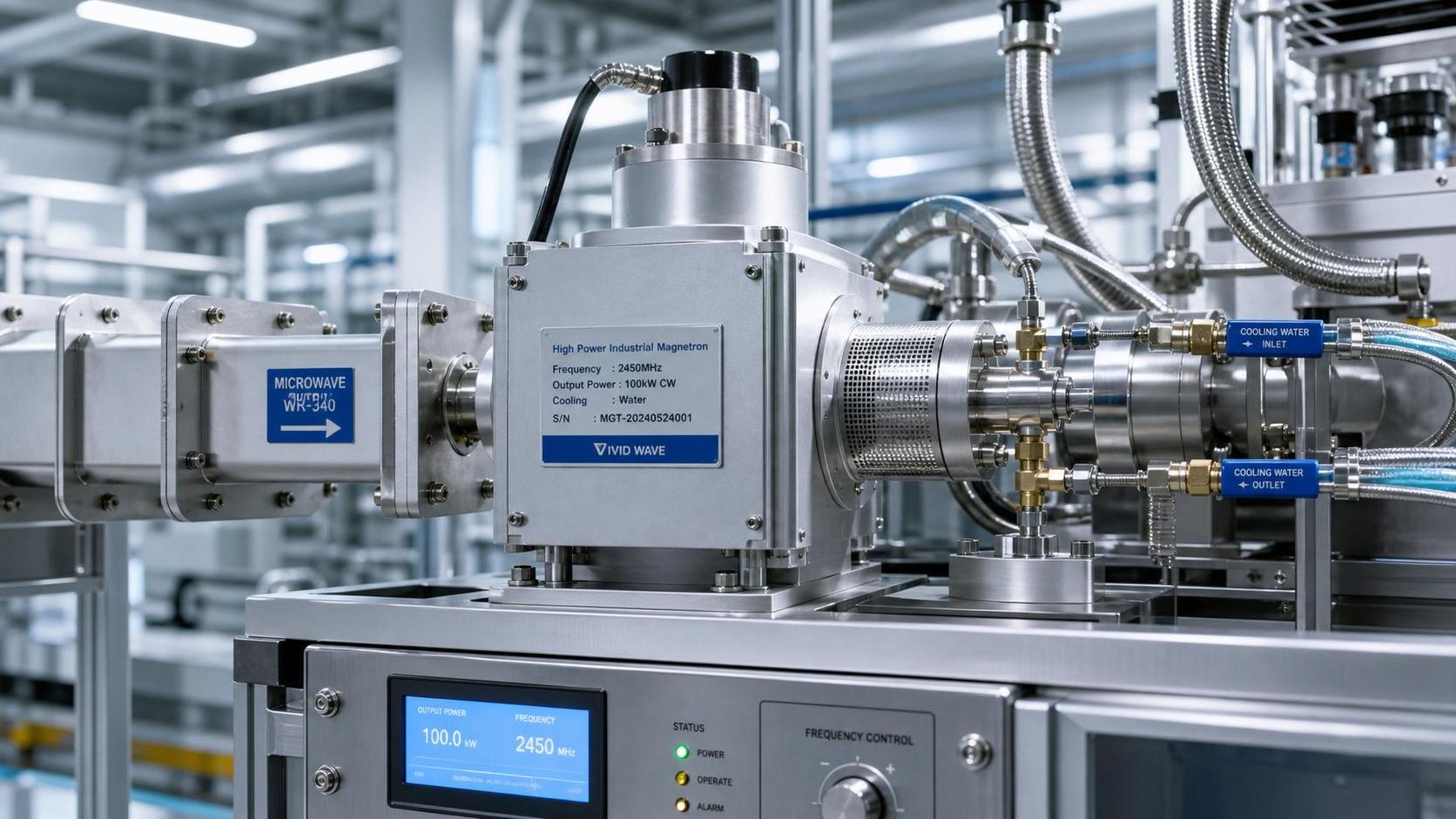
Industrial magnetrons high power systems sit at the center of many demanding microwave processes, yet headline wattage rarely tells the full story. In practice, selection quality depends on how stable that power remains, how tightly frequency is held, how heat is managed, and how well the tube fits the operating rhythm of the equipment around it.
That is why industrial magnetrons high power devices matter beyond RF engineering alone. They affect process consistency, seal integrity, cooling design, maintenance intervals, compliance documentation, and total asset reliability across a broad industrial chain.
Within the G-PCS view of containment and flow, magnetron performance is not isolated. It interacts with valves, thermal loops, housings, insulators, seals, and control architecture. A technically acceptable unit can still become a system risk if those surrounding conditions are misunderstood.
What High-Power Industrial Magnetrons Actually Do
An industrial magnetron converts electrical energy into microwave energy. High-power versions are used where strong, repeatable electromagnetic heating is required under production conditions.
Typical use cases include industrial drying, plasma generation, materials processing, semiconductor support equipment, food systems, ceramics, and specialized RF energy platforms. In each case, the core question is not only output level, but output behavior over time.
For industrial magnetrons high power applications, the device must survive more than a lab test. It has to perform through vibration, thermal cycling, airflow variation, load changes, and repeated start-stop sequences.
The Specifications That Deserve the Closest Attention
Several specifications usually separate a robust microwave source from one that looks acceptable only on paper. These are the parameters that most often influence field performance.
Output Power and Stability
Nominal power is the first filter, but stability is usually the more revealing metric. A magnetron that drifts under load can produce uneven heating, process variation, or off-spec product quality.
Look for data on power tolerance, warm-up behavior, and output repeatability across the intended operating window. Some systems can absorb variation. Others, especially precision tools, cannot.
Frequency Accuracy and Drift
Frequency affects how microwave energy couples with the load and the cavity. In tightly controlled systems, drift can reduce efficiency or force compensating changes elsewhere.
For industrial magnetrons high power installations, frequency stability matters most where process windows are narrow, reflected power is a concern, or regulatory constraints apply.
Thermal Load and Cooling Requirement
Heat removal is often underestimated during source evaluation. A magnetron may meet output requirements, yet fail early if the airflow path, water loop, or interface materials are not matched correctly.
The useful question is not simply whether cooling exists. It is whether the cooling design can hold stable junction and body temperatures at the highest real duty condition.
Duty Cycle and Pulse Behavior
Continuous wave and pulsed operation place different stresses on the source and power supply. Peak capability may look impressive, but repetition rate and average thermal burden decide whether the setup is sustainable.
If the application uses rapid cycling, pulse rise consistency and restart tolerance should be checked early. These factors can change maintenance expectations dramatically.
Service Life and Failure Pattern
Life rating needs context. Stated hours may reflect ideal conditions rather than actual industrial operation. More useful indicators include failure mode history, performance decay profile, and sensitivity to contamination or cooling variation.
In G-PCS benchmarking logic, service life is linked to the entire reliability chain. Tube life can be shortened by poor sealing, unstable pressure, inconsistent coolant quality, or weak control response.
Why These Specs Matter More Now
High-value industrial processes are becoming less tolerant of drift, contamination, and downtime. Semiconductor-adjacent equipment, advanced materials lines, and high-frequency energy systems all push tighter operational margins.
At the same time, documentation expectations are rising. Buyers increasingly want traceable technical evidence, compatibility with ISO or SEMI-driven environments, and clearer operating envelopes before approval.
That shift favors deeper evaluation of industrial magnetrons high power components. The cost of a mismatch is no longer confined to replacement parts. It can affect yield, uptime, audit readiness, and downstream equipment integrity.
Reading Magnetron Data in System Context
A specification sheet should never be read in isolation. Magnetron behavior is shaped by the cavity, power supply, waveguide design, cooling path, and environmental containment strategy.
This is especially relevant in systems where sealing and flow control are critical. A small coolant fluctuation or pressure instability may alter thermal balance enough to change RF performance and shorten component life.
When industrial magnetrons high power sources are compared this way, hidden tradeoffs become easier to spot. One unit may offer higher peak output, while another delivers stronger thermal margin and better operating stability.
Where Application Differences Change the Decision
Not every high-power microwave process values the same parameter equally. The operating environment changes what matters most.
Continuous Process Lines
In drying, curing, and thermal treatment lines, steady output and long service intervals usually outrank extreme peak performance. Small fluctuations can accumulate into visible process variation.
Precision Equipment and Semiconductor Support
Here, thermal behavior, frequency discipline, and contamination control become more important. Integration with high-purity flow systems and controlled sealing materials often matters as much as tube selection.
Harsh or Remote Installations
For systems exposed to vibration, remote service limits, or environmental stress, field replaceability and failure predictability can outweigh marginal gains in nominal power.
Practical Evaluation Points Before Approval
A disciplined review process usually reveals more than a broad specification comparison. The goal is to test suitability under realistic operating assumptions.
- Match rated output to the real load, not only the desired process target.
- Confirm frequency behavior during warm-up and at maximum thermal load.
- Review coolant, airflow, and sealing interfaces as one reliability package.
- Ask how life data was generated and under which duty assumptions.
- Check sensitivity to reflected power and transient operating conditions.
- Compare replacement logistics, interchangeability, and validation burden.
These steps are especially useful where industrial magnetrons high power units support regulated or mission-critical systems. In those cases, the approval process should connect performance claims to standards, traceability, and service evidence.
A Better Way to Compare Long-Term Value
Price alone is a weak selection tool for industrial magnetrons high power sourcing. A lower-cost source can become expensive if it drives cooling upgrades, shortens maintenance cycles, or increases process instability.
A stronger comparison model includes energy efficiency, usable life, downtime exposure, integration effort, and compatibility with existing containment and flow architecture. That broader view aligns more closely with how advanced industrial systems actually create value.
For organizations using G-PCS-style technical intelligence, the next step is usually to convert general specification review into a structured matrix. That matrix should rank output stability, thermal margin, duty fit, compliance alignment, and field service evidence against the real application window.
Once those criteria are clear, industrial magnetrons high power options become easier to judge with confidence. The most effective decision is rarely the one with the highest number on the datasheet. It is the one that holds performance, containment, and reliability together under actual operating conditions.
Industry Briefing
Get the top 5 industry headlines delivered to your inbox every morning.