What Seal Reliability in Nuclear Power News Really Signals
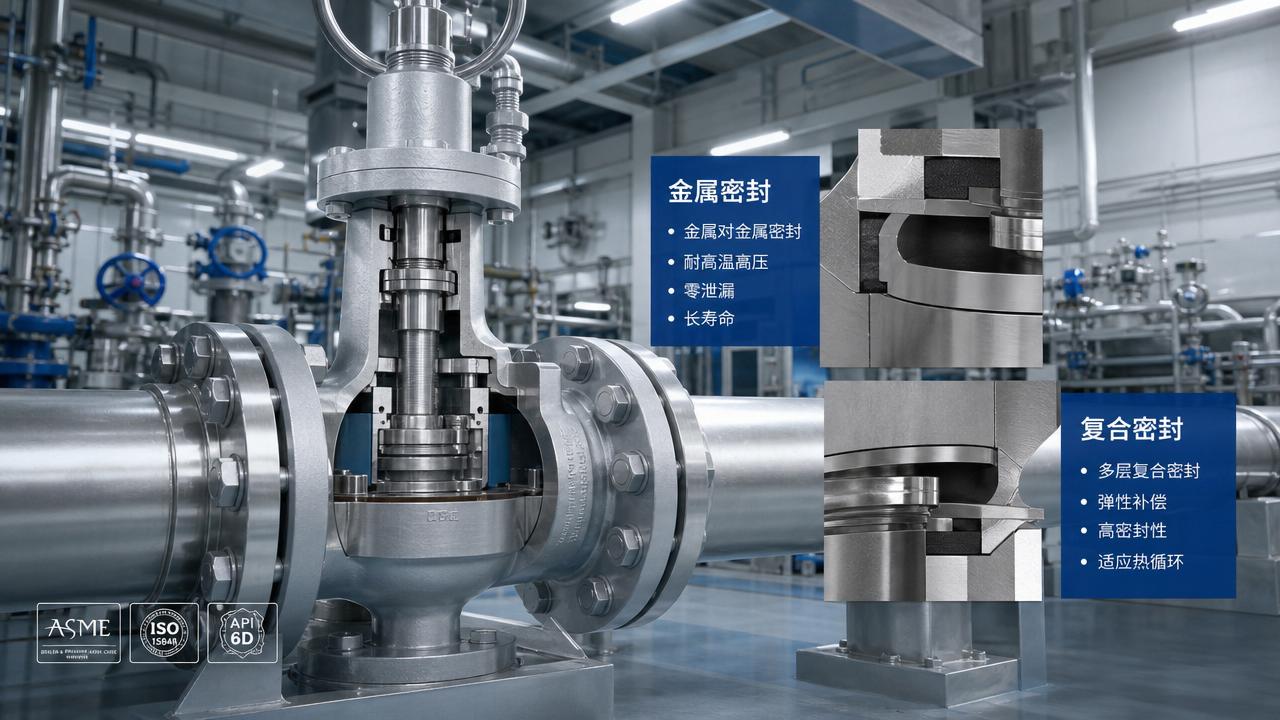
Behind every headline about seal reliability in nuclear power news lies a deeper signal for enterprise decision-makers: component integrity is no longer a maintenance detail, but a strategic measure of operational resilience, regulatory readiness, and supply chain trust. For leaders managing critical assets, understanding what these reliability indicators reveal can sharpen procurement choices, reduce risk exposure, and strengthen long-term system performance.
What the Topic Really Means in an Industrial Context
When business leaders encounter seal reliability in nuclear power news, the phrase should not be interpreted as a narrow technical footnote. In high-consequence systems, seals are part of the core containment architecture. They sit at the intersection of pressure control, thermal stability, chemical resistance, leakage prevention, and equipment availability. In nuclear environments, even a small sealing issue can affect operational continuity, inspection schedules, maintenance planning, public confidence, and regulatory scrutiny.
That is why the subject matters well beyond utilities. For advanced manufacturers, engineering groups, EPC firms, specialized material suppliers, and procurement leaders across critical industries, seal reliability in nuclear power news acts as a leading indicator. It shows how seriously the market is evaluating material science, qualification standards, traceability, and lifecycle performance under extreme operating conditions.
From the perspective of G-PCS, the “Logic of Containment and Flow” is a strategic discipline. Whether the application is a reactor support system, a hydrogen valve platform, a semiconductor vacuum line, or a microwave energy assembly, the same principle applies: system reliability often depends on the weakest sealing interface. News signals around nuclear seal performance therefore deserve attention from any enterprise that operates in high-integrity environments.
Why Industry Attention Keeps Rising
The growing visibility of seal reliability in nuclear power news reflects several structural shifts in global industry. First, infrastructure operators are under pressure to extend asset life while maintaining strict safety margins. Second, regulators increasingly expect documented evidence of component qualification, failure analysis, and maintenance discipline. Third, supply chains have become more complex, making material consistency and vendor capability more difficult to verify.
At the same time, the engineering tolerance for uncertainty is shrinking. Modern facilities rely on better sensors, more predictive analytics, and stronger root-cause methodologies. This means sealing performance is no longer judged only after a failure event. It is being assessed through leakage trends, thermal cycling behavior, compatibility data, installation repeatability, and long-term degradation patterns. As a result, seal reliability in nuclear power news increasingly signals how mature an organization is in reliability engineering.
For enterprise decision-makers, this attention is highly relevant. A seal event can trigger downtime costs, replacement complexity, contractual exposure, and reputational consequences disproportionate to the component’s size or unit price. In strategic terms, seals are low-visibility components with high system leverage.
How Seal Reliability Connects to Broader Business Risk
A useful way to read seal reliability in nuclear power news is to see it as a proxy for four broader risk domains: operational risk, compliance risk, supply chain risk, and capital efficiency risk. Operationally, seal degradation can drive leakage, contamination, unstable pressure behavior, and unplanned maintenance. From a compliance standpoint, inadequate documentation or poor qualification history can complicate audits and safety reviews.
On the supply chain side, seal reliability depends not only on design, but also on compound consistency, manufacturing precision, testing discipline, and storage control. A nominally equivalent part from a weak supplier may produce very different outcomes under radiation, steam, aggressive chemistry, or thermal shock. Finally, from a capital perspective, underperforming seals can shorten maintenance intervals, reduce asset utilization, and force premature replacement or redesign.
This is why technically informed organizations do not treat sealing components as generic consumables. They evaluate them as reliability-critical assets linked to system uptime and governance quality.
A Practical Industry Overview
The table below summarizes how signals from seal reliability in nuclear power news can be interpreted by enterprise leaders across industrial settings.
Where the Value Extends Beyond Nuclear Power
Although the keyword centers on nuclear, the lessons from seal reliability in nuclear power news apply to many advanced sectors. Industries operating under extreme pressure, temperature, vacuum, radiation, corrosive media, or strict cleanliness requirements face similar containment challenges. This includes hydrogen systems, semiconductor fabrication, aerospace propulsion, pharmaceutical processing, high-purity gas management, and industrial RF or microwave energy equipment.
In each case, the technical question is not simply whether a seal fits. The real question is whether it can maintain predictable performance across the specific duty cycle, media exposure, and failure consequences of the application. That is why organizations using FFKM compounds, composite gaskets, metal seals, or extreme-environment mechanical seals are increasingly borrowing reliability frameworks from nuclear-grade thinking.
For the Global Top 500 supply chain, this is particularly important. Procurement, R&D, quality, and operations teams must align on a common reliability language. News about nuclear sealing reliability serves as a benchmark because it highlights the highest expectations for containment assurance and accountability.
Typical Areas Decision-Makers Should Examine
To translate seal reliability in nuclear power news into action, executives should focus on the technical and governance factors that shape real-world outcomes.
Material compatibility
Seal performance depends heavily on compatibility with temperature ranges, chemicals, radiation exposure, steam, pressure cycling, and mechanical motion. A material that performs well in one environment may fail early in another. Qualification data should therefore be application-specific rather than generic.
Design and geometry
Reliability is influenced by groove design, compression set behavior, surface finish, mating tolerances, and dynamic versus static duty. Even premium materials can underperform if seal geometry is poorly matched to real service conditions.
Manufacturing consistency
Batch stability, dimensional control, cure precision, contamination management, and post-processing discipline all matter. Decision-makers should verify whether suppliers can demonstrate repeatability over time, not just one-time test success.
Traceability and documentation
As seen repeatedly in seal reliability in nuclear power news, traceability often becomes critical when failures are investigated. Material lot records, test certificates, process controls, and maintenance history help organizations respond quickly and credibly under scrutiny.
Application Categories That Benefit Most from High-Reliability Sealing Insight
Practical Guidance for Enterprise Teams
For leaders who want to use insights from seal reliability in nuclear power news effectively, the best approach is balanced: technical depth where needed, management clarity where possible. Start by identifying which assets in your organization are containment-critical, failure-sensitive, or difficult to service. Then map those assets to their actual sealing risks, not just their bill-of-material descriptions.
Next, review whether supplier qualification reflects operating reality. Many organizations rely on broad specifications while overlooking installation quality, thermal transients, media impurities, or maintenance variation. A stronger framework includes field feedback, failure mode analysis, standard alignment, and lifecycle tracking. Benchmarks tied to ISO, API, SEMI, or other relevant standards can strengthen consistency across business units.
It is also wise to connect engineering, sourcing, and reliability teams earlier in the decision cycle. Sealing problems often arise when one function optimizes for unit cost, another for fit, and another for uptime. Integrated review helps enterprises avoid false economies and improve total cost of ownership.
Strategic Takeaway for Decision-Makers
The most important message behind seal reliability in nuclear power news is that critical containment is becoming a board-level quality signal, not just an engineering concern. It reflects how well an organization understands component behavior, manages risk, qualifies suppliers, and protects system continuity under demanding conditions.
For enterprises navigating high-performance industrial environments, the lesson is clear: sealing reliability should be treated as a strategic intelligence domain. Organizations that build stronger data, standards alignment, and supplier scrutiny around containment components will be better positioned to reduce failure exposure, defend compliance posture, and sustain long-term asset performance.
If your team is evaluating extreme-environment seals, specialized gaskets, UHP control interfaces, or other high-integrity flow components, using the signals behind seal reliability in nuclear power news as a decision framework can improve both technical confidence and business resilience.
Industry Briefing
Get the top 5 industry headlines delivered to your inbox every morning.