Seal Quench System Efficiency: Key Signs of Energy Loss
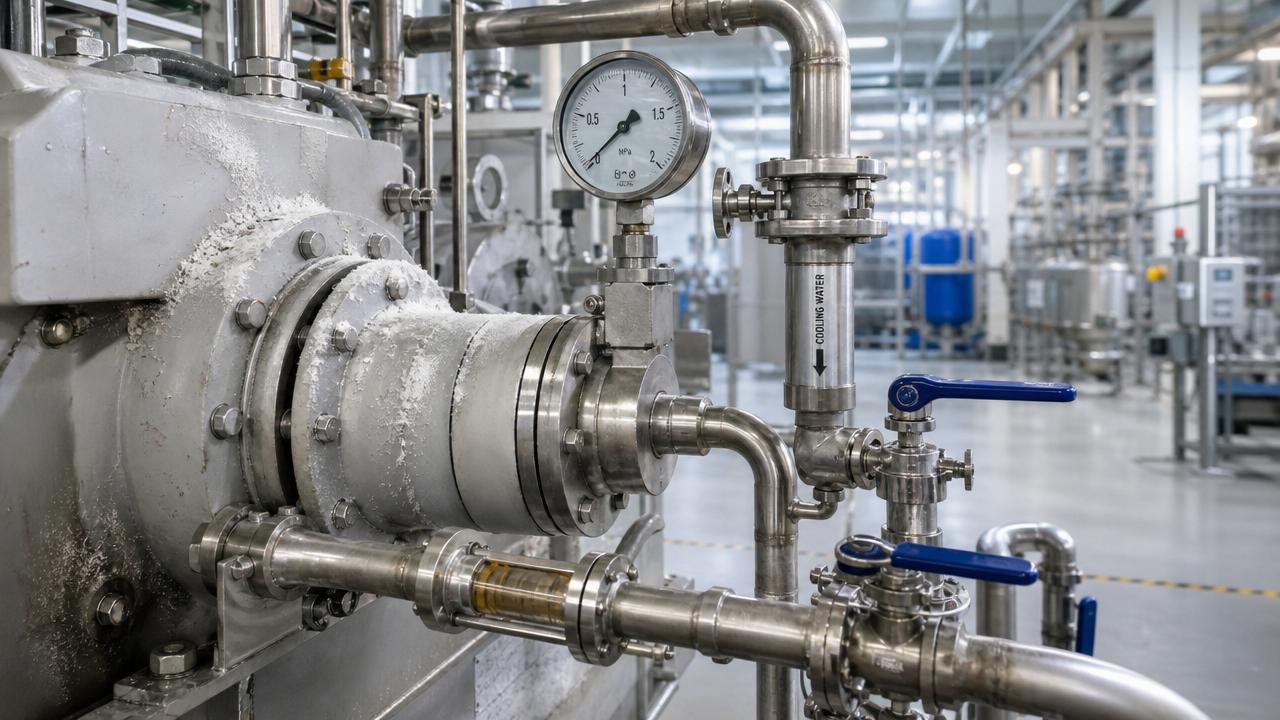
When seal quench system efficiency begins to decline, the warning signs often appear long before a shutdown or seal failure occurs. For after-sales maintenance teams, spotting unusual temperature shifts, rising fluid consumption, pressure instability, or residue buildup early can prevent energy waste and costly downtime. This article highlights the key indicators of loss and helps you assess system performance with greater confidence.
Why does seal quench system efficiency matter so much in maintenance work?
In high-value industrial assets, a quench system is not a secondary accessory. It directly affects seal temperature control, vapor management, contamination prevention, and service life stability. When seal quench system efficiency drops, the result is often hidden energy loss rather than an immediate mechanical alarm.
For after-sales maintenance personnel, this creates a familiar problem. The equipment may still run, but cooling media usage climbs, housekeeping worsens, operating margins shrink, and the root cause is difficult to prove without a structured inspection method.
In sectors linked to precision flow control, extreme-environment sealing, microwave energy systems, and high-integrity process lines, even a modest loss in seal quench system efficiency can create wider effects across utilities, downtime planning, and spare-parts consumption.
- Higher quench fluid consumption increases operating cost and may indicate leakage, misadjustment, or poor thermal balance.
- Unstable pressure or flow around the seal chamber can accelerate wear on faces, elastomers, and adjacent hardware.
- Localized overheating may not stop production immediately, but it often shortens seal life and raises the probability of emergency intervention.
- Deposits or residue can signal compatibility issues, poor flush quality, or insufficient heat removal from the quench circuit.
This is where a data-driven technical reference becomes valuable. G-PCS supports maintenance decision-makers by linking sealing behavior, flow logic, and material performance to practical operating evidence, especially where reliability frameworks must align with ISO, API, SEMI, or MIL-SPEC influenced environments.
What are the earliest signs of seal quench system efficiency loss?
The first signs rarely appear as catastrophic leakage. More often, maintenance teams notice a pattern of small deviations. Reading those deviations correctly is the fastest way to protect seal quench system efficiency before the unit enters a high-cost failure mode.
1. Temperature drift around the seal support zone
A gradual rise in gland temperature, seal housing temperature, or nearby piping temperature often means the quench medium is not absorbing or carrying away heat as intended. The cause may be restricted flow, fouling, low supply pressure, or wrong fluid properties.
2. Rising quench fluid usage without process change
If the process load, seal type, and operating profile remain stable but fluid consumption rises, the system is likely compensating for inefficiency. That may come from evaporation, leakage, overfeeding, poor regulation, or loss of thermal control.
3. Pressure fluctuation or inconsistent flow indication
A healthy quench arrangement should show repeatable behavior. Oscillating pressure gauges, inconsistent flow readings, or unstable control valve response suggest blockage, entrained gas, poor instrument placement, or mismatch between support system and seal duty.
4. Visible residue, discoloration, or crystallization
Residue near drain points, seal covers, or external piping should never be dismissed as normal dirt. It can indicate media degradation, product ingress, poor compatibility, or a thermal condition that is driving solids out of solution.
5. Shorter maintenance intervals than historical baseline
If seal support checks, cleaning work, or seal replacements are occurring more often than before, the issue may not be the seal design alone. Declining seal quench system efficiency often shifts wear patterns in subtle ways that only become obvious when maintenance history is reviewed as a trend.
The table below helps maintenance teams distinguish between normal operating variation and credible warning signs that require action to restore seal quench system efficiency.
A key point is that these symptoms usually overlap. One rising temperature event may be acceptable, but when higher temperature, unstable pressure, and residue appear together, seal quench system efficiency is already being compromised in a measurable way.
How should after-sales maintenance teams inspect the system?
An efficient inspection routine should be fast enough for field use but detailed enough to support repair decisions, parts requests, and customer reporting. Maintenance personnel often face limited shutdown windows, so inspection logic matters as much as technical depth.
Recommended field sequence
- Record baseline process conditions, including product temperature, shaft speed, ambient temperature, and recent duty changes.
- Measure quench supply pressure, return condition, and any visible variation across the operating cycle.
- Check fluid consumption versus historical data instead of relying only on instant readings.
- Inspect tubing, fittings, valves, and drain paths for restriction, leakage, or contamination deposits.
- Verify fluid type, cleanliness, and compatibility with seal materials and process exposure risk.
- Compare findings against seal arrangement requirements and site operating standards.
Maintenance teams that skip trend review often miss the real story. Instant temperature and pressure values can look acceptable, while the month-to-month profile shows a clear decline in seal quench system efficiency.
G-PCS is especially useful in this phase because maintenance teams often need more than a part number. They need technical context: material compatibility, support-plan logic, flow path sensitivity, and how a sealing issue interacts with adjacent control, valve, or actuator systems.
Which performance parameters deserve the closest attention?
Not every parameter carries the same diagnostic value. For practical maintenance planning, focus on the variables that reveal whether seal quench system efficiency is being lost through thermal imbalance, hydraulic instability, or media mismatch.
The table below summarizes the most useful parameters and how they support field-level judgments.
These parameters are useful because they connect observable field conditions with purchasing and planning choices. If seal quench system efficiency repeatedly drops under a certain duty, the solution may involve support-system redesign, not just replacing the seal again.
What mistakes commonly reduce seal quench system efficiency?
Many avoidable losses come from decisions made during replacement, commissioning, or routine service. After-sales teams often inherit systems that look complete on paper but are poorly matched to real operating conditions.
- Using a quench fluid selected for availability rather than compatibility with temperature, contamination sensitivity, and seal materials.
- Assuming more flow always improves cooling, when excessive flow may waste utility media and disturb stable thermal behavior.
- Ignoring piping layout details such as dead legs, poor venting, or unnecessary restrictions that trap gas or solids.
- Replacing the seal without checking whether instrumentation drift or control-valve instability is the actual source of inefficient operation.
- Treating residue as cosmetic contamination instead of a signal that the support environment is changing.
In advanced industrial settings, maintenance teams must think across system boundaries. A seal issue may link back to valve behavior, actuator repeatability, pressure pulsation, or material compatibility under aggressive media exposure. That cross-functional view is part of the value provided by G-PCS.
How to evaluate replacement parts or system upgrades?
When seal quench system efficiency becomes a recurring issue, the correct action may be component replacement, support-plan adjustment, or a broader redesign. Maintenance teams should avoid buying only on nominal fit. The better approach is to evaluate performance, reliability, compliance, and service practicality together.
Procurement checklist for maintenance teams
- Confirm process media, temperature envelope, pressure range, and contamination sensitivity before selecting replacement components.
- Review whether seal-face materials, elastomers, and support fluid are compatible under upset conditions, not just normal load.
- Check maintainability: access to fittings, vent points, instrumentation, and cleaning paths should support real field work.
- Assess whether site requirements call for alignment with API practices, ISO quality expectations, SEMI cleanliness concerns, or MIL-SPEC influenced environmental rigor.
- Ask whether the supplier can support parameter confirmation, application review, and failure-analysis feedback instead of offering only a catalog substitution.
For organizations handling high-pressure valves, microwave energy systems, extreme-environment seals, precision actuators, or specialized polymer gaskets, the cost of an incorrect maintenance decision often exceeds the price of the part itself. Downtime, contamination risk, and qualification delays can dominate total ownership cost.
How do standards and compliance affect maintenance decisions?
Seal quench system efficiency is not only an operational issue. In many industrial environments, support-system behavior also influences compliance, documentation quality, and customer acceptance. Maintenance teams may be asked to justify changes in materials, service intervals, or support fluids.
A practical compliance review should consider whether the sealing arrangement, materials, and support practices remain consistent with the expectations of the relevant application. API-oriented rotating equipment, ISO-governed quality systems, SEMI-sensitive clean process environments, and MIL-SPEC influenced extreme-duty applications all emphasize controlled, repeatable performance.
That does not mean every site requires the same documentation depth. It does mean maintenance decisions should be traceable. If seal quench system efficiency is falling, the service record should show what was observed, what was changed, and how the outcome was verified.
FAQ: what do maintenance teams ask most often?
How can I tell whether the issue is the seal or the quench system?
Start with trend evidence. If repeated seal replacements do not stabilize temperature, fluid usage, or residue patterns, the support system likely contributes to the loss. Compare operating data before and after service, inspect flow behavior, and confirm fluid condition before concluding that the seal alone is at fault.
Which sites are most sensitive to seal quench system efficiency loss?
Sites handling hazardous media, contamination-sensitive production, high thermal loads, or strict uptime targets are usually the most sensitive. This includes precision manufacturing lines, high-pressure process systems, advanced energy equipment, and applications where small thermal changes can damage adjacent components.
Is high fluid consumption always a sign of poor seal quench system efficiency?
Not always. A temporary increase may reflect a real operating change such as startup load, ambient temperature shift, or modified process duty. It becomes a warning sign when consumption rises without corresponding process change, or when it appears together with hotter running, unstable pressure, or deposit formation.
What should be documented after corrective action?
Record the original symptoms, baseline operating data, replaced parts, fluid type, setting changes, cleaning actions, and post-service readings. This documentation helps verify whether seal quench system efficiency truly improved and supports future procurement or redesign decisions.
Why choose us for technical guidance and next-step decisions?
G-PCS supports maintenance and procurement teams that need more than a generic recommendation. Our strength lies in connecting sealing performance, containment logic, flow control behavior, and standards-aware evaluation across demanding industrial applications.
If your team is investigating seal quench system efficiency loss, you can consult us on practical topics such as parameter confirmation, replacement part selection, fluid compatibility review, support-plan comparison, service interval optimization, and documentation expectations linked to ISO, API, SEMI, or MIL-SPEC influenced projects.
We can also support discussions around delivery timing, sample evaluation, custom sealing or support-scheme matching, quotation preparation, and risk review for extreme-environment or high-integrity systems. That is especially relevant when maintenance decisions affect uptime, compliance, and total lifecycle cost at the same time.
If you are seeing repeated heat rise, unstable flow, unexpected media use, or residue around critical seal support points, this is the right time to review the system in a structured way. A targeted technical consultation can reduce guesswork and help restore seal quench system efficiency before the next shutdown becomes unavoidable.
Industry Briefing
Get the top 5 industry headlines delivered to your inbox every morning.