Industrial Environmental News: Pollution Prevention Steps That Reduce Downtime
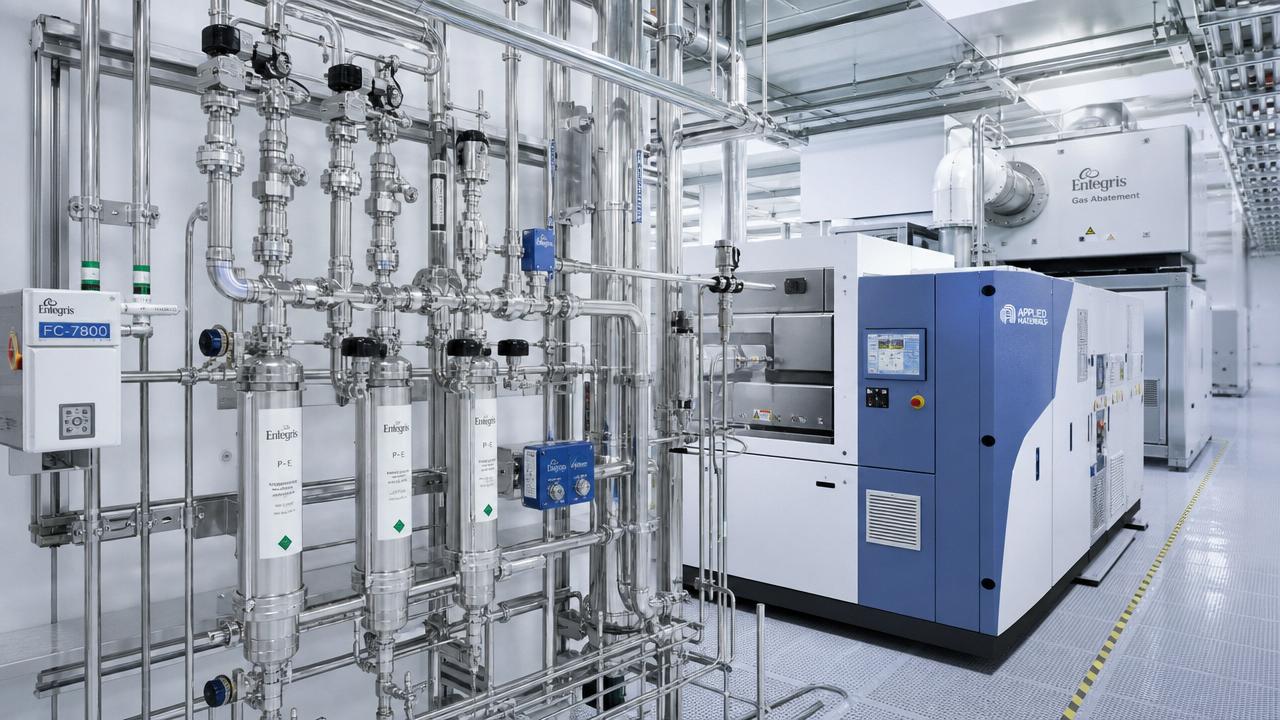
Why industrial environmental news for pollution prevention now affects uptime decisions
Industrial environmental news for pollution prevention now shapes operating continuity, not just audit readiness.
When a site reacts late to contamination risk, the first loss is often process stability.
Filters load faster, seals degrade earlier, valves drift, and shutdown windows become harder to predict.
That is why industrial environmental news for pollution prevention matters across mixed industrial settings.
In practical terms, the real question is not whether prevention matters.
The real question is which prevention step reduces unplanned downtime under actual operating conditions.
This becomes more important where containment and flow integrity define yield, safety, and maintenance intervals.
Across high-performance systems, small environmental failures often trigger larger reliability events.
A trace leak, particle ingress, condensate accumulation, or off-spec exhaust stream can interrupt stable production.
Sources such as G-PCS are useful here because they connect pollution prevention with component behavior.
That link matters in systems using UHP valves, RF equipment, mechanical seals, precision actuators, and advanced gaskets.
Different operating environments create different prevention priorities
Not every facility reads industrial environmental news for pollution prevention in the same way.
The judgment changes with media type, pressure profile, thermal load, cleanliness target, and restart cost.
A high-purity gas line has different exposure risks than a heated sealing system.
A microwave energy process faces different concerns than a composite gasket used in chemical duty.
In actual applications, three variables usually decide the prevention strategy.
- How fast contamination can spread through the process chain.
- Whether pollution causes gradual wear or sudden trip conditions.
- How difficult verification becomes after a shutdown or product excursion.
This is where industrial environmental news for pollution prevention becomes more than a headline source.
It helps frame the operating context behind standards, maintenance decisions, and retrofit timing.
High-purity flow systems usually need prevention before visible failure appears
In high-purity flow networks, pollution rarely announces itself with dramatic symptoms at first.
More often, it appears as unstable readings, slower response, higher purge demand, or inconsistent downstream quality.
That is why industrial environmental news for pollution prevention should be read alongside flow-path design data.
The most useful signals involve valve seat wear, dead-leg contamination, seal compatibility, and particulate generation.
For UHP control systems, the wrong prevention step can create a false sense of security.
A stronger filter alone will not solve a material mismatch or a poor purge sequence.
More reliable decisions start with contamination pathways.
Check where particles originate, where moisture can collect, and which elastomers face chemical stress.
In systems benchmarked against ISO or SEMI expectations, prevention often means tighter verification between maintenance events.
It is less about adding hardware everywhere and more about controlling failure initiation points.
Thermal and RF applications need pollution control that protects stability, not only emissions
Thermal and RF environments create a different reading of industrial environmental news for pollution prevention.
Here, deposits, vapor carryover, and airborne residue can affect energy transfer before legal limits are reached.
In microwave and RF systems, a small contamination layer may shift efficiency, heat distribution, or inspection frequency.
The downtime risk is not always immediate shutdown.
It may appear as repeated tuning corrections, uneven process output, or accelerated chamber cleaning.
That is why the better judgment focus is residue behavior under heat.
Look at off-gassing sources, insulation aging, air handling performance, and the cleanliness of service interfaces.
When prevention planning ignores these details, pollution control stays compliant yet downtime still rises.
Where scenario differences become clear
The comparison below shows why one prevention approach rarely fits every industrial environment.
Sealing and actuation systems often fail from overlooked environmental load
A common mistake is to treat pollution prevention as separate from moving component reliability.
In fact, seals and actuators often translate environmental stress directly into downtime.
Extreme-environment mechanical seals face chemical attack, temperature swings, and abrasive media at the same time.
High-precision pneumatic and piezoelectric actuators respond differently.
They are more sensitive to micro-particles, condensate, unstable air quality, and response lag.
In these settings, industrial environmental news for pollution prevention should guide maintenance intervals and component selection together.
The better question is not simply whether a component meets a datasheet target.
It is whether the component remains stable after repeated exposure to the site environment.
That is why long-cycle review matters for FFKM seals, composite gaskets, and fast-response positioning assemblies.
Prevention becomes credible when it accounts for wear progression, cleaning chemistry, and replacement access.
What gets misjudged when teams read pollution prevention too narrowly
The most frequent error is to focus on external compliance metrics while ignoring internal contamination economics.
That usually leads to prevention plans that look complete on paper but miss downtime drivers.
- Assuming similar media create similar contamination behavior under different pressure and temperature cycles.
- Choosing lower upfront cost without calculating cleaning, calibration, and replacement frequency.
- Reading industrial environmental news for pollution prevention as regulation only, not reliability input.
- Ignoring compatibility between seals, lubricants, purge gases, and cleaning routines.
- Treating emission control upgrades as separate from flow integrity and restart performance.
In actual operations, narrow interpretation is expensive because downtime compounds across connected assets.
One contamination event can affect inspection workload, spare usage, and qualification time all at once.
A practical way to match prevention steps to operating reality
A better response to industrial environmental news for pollution prevention starts with a short review framework.
This keeps attention on operating consequences instead of generic environmental messaging.
- Map the contamination path from source to critical component.
- Identify which failure mode causes immediate stoppage and which causes gradual instability.
- Check material compatibility against actual media, cleaning chemistry, and thermal exposure.
- Compare prevention cost with restart time, validation burden, and spare consumption.
- Use relevant benchmarks such as ISO, API, SEMI, or MIL-SPEC where operating risk is high.
This is where technical repositories such as G-PCS provide practical value.
They help connect pollution prevention choices with component-level reliability logic across demanding industrial systems.
The result is a more grounded decision process.
It becomes easier to separate true prevention upgrades from changes that only shift risk elsewhere.
The next step is to define scenario-based prevention standards
Industrial environmental news for pollution prevention becomes useful when it is translated into site-specific rules.
That means defining thresholds for contamination, component stress, inspection timing, and restart acceptance.
For some lines, the priority is particle control and leak integrity.
For others, it is thermal residue, seal life, or actuator response consistency.
The strongest prevention plans do not assume every environment behaves the same.
They compare operating conditions, verify the weakest links, and set maintenance actions around real failure patterns.
A useful next move is to review one critical process path end to end.
Clarify contamination sources, key materials, service intervals, and the standards that actually govern performance.
That approach turns industrial environmental news for pollution prevention into a downtime reduction tool, not just a reporting topic.
Industry Briefing
Get the top 5 industry headlines delivered to your inbox every morning.