Containment Technology Mistakes That Raise Leak Risk
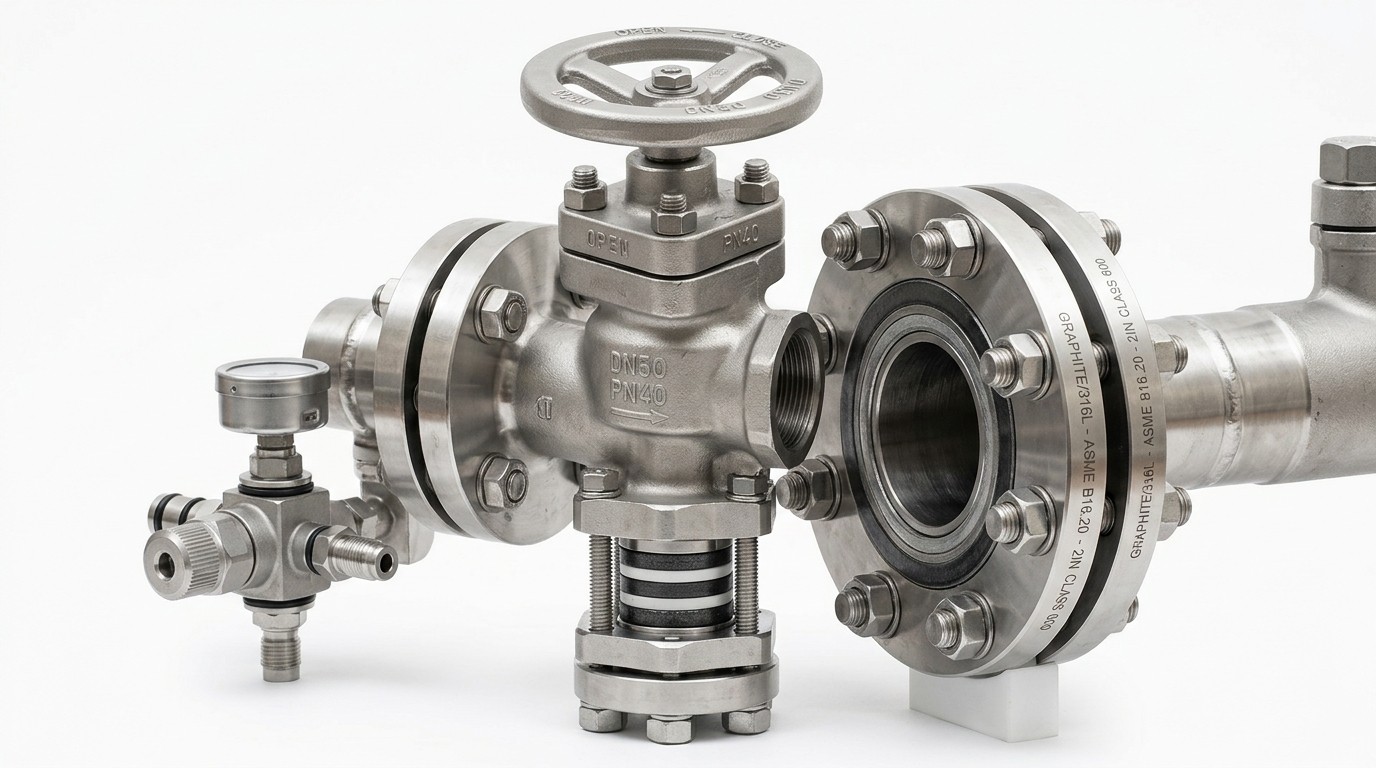
Containment technology failures rarely begin with a catastrophic event—they usually start with preventable decisions made early in design, sourcing, integration, or validation. For technical evaluators and business decision-makers, the biggest leak risks typically come from using the wrong sealing material for the media, underestimating pressure and temperature interaction, treating components as interchangeable, and relying on insufficient testing before deployment. In high-consequence systems, reducing leak risk is less about buying the “best” part in isolation and more about aligning valves, seals, gaskets, actuators, and validation methods with the actual operating envelope.
For organizations managing critical flow and energy systems, the practical question is not simply “What causes leaks?” but “Which mistakes are most likely to expose us to downtime, safety incidents, compliance issues, and premature replacement costs?” The answer usually lies in a small set of repeatable containment technology mistakes that can be identified and corrected before they become field failures.
Which containment technology mistakes most often raise leak risk?
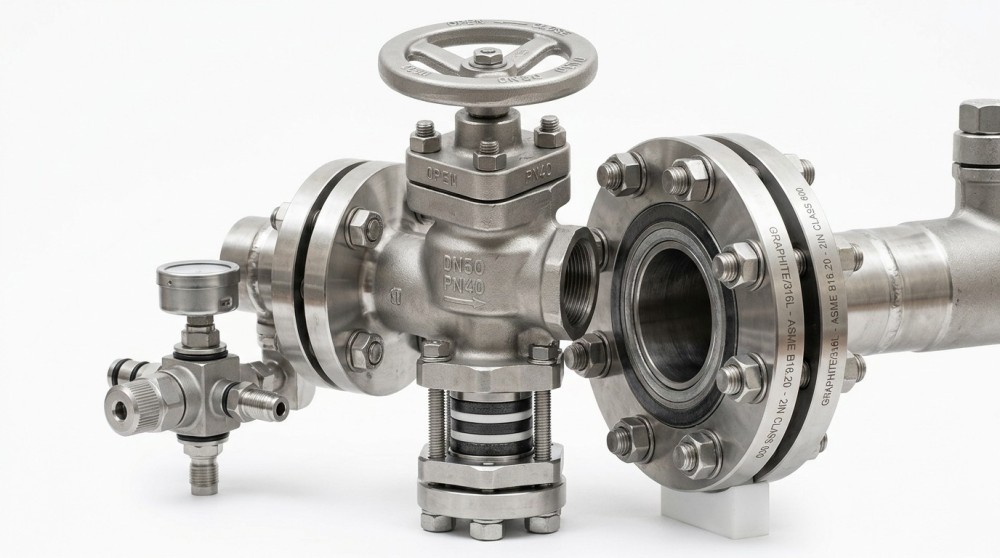
The highest-impact mistakes are rarely exotic. They are usually the result of incomplete operating assumptions, weak component matching, and poor validation discipline. In complex industrial environments—especially those involving ultra-high pressure control, aggressive chemicals, thermal cycling, vacuum integrity, or precision actuation—the following issues account for a large share of avoidable leak events:
- Specifying for nominal conditions instead of real operating extremes
- Selecting sealing materials that are chemically compatible on paper but unstable in actual duty cycles
- Ignoring interface design between valves, seals, gaskets, housings, and actuators
- Assuming high-performance components are interchangeable across suppliers
- Underinvesting in leak testing, life-cycle testing, and installation control
For buyers and engineering leaders, this matters because leak risk is cumulative. A system may pass initial inspection while still carrying design weaknesses that emerge only under vibration, pressure spikes, rapid response cycles, media changes, or maintenance events. The real business risk is not just leakage itself, but unstable process control, product loss, contamination, compliance exposure, and unplanned shutdowns.
Are you designing for the real operating envelope—or for an idealized one?
One of the most common containment technology mistakes is designing around static or average conditions instead of actual field behavior. Many systems are specified using clean pressure and temperature values, yet leak risk often appears during transition states: startup, shutdown, pressure pulsation, thermal shock, vacuum-to-pressure shifts, or repeated micro-motion at sealing interfaces.
This is especially important in systems using ultra-high pressure valves, specialized polymer seals, and composite gaskets. A valve rated for a pressure class may still underperform if the sealing geometry, actuation speed, or media purity profile changes over time. Similarly, a seal that performs well in steady-state conditions may degrade quickly when exposed to rapid temperature cycling or trace chemical attack.
Decision-makers should ask:
- What are the maximum, minimum, and transient pressures the system will actually see?
- Are there pressure spikes, pulsing loads, or decompression events?
- Will thermal expansion alter compression set, sealing force, or alignment?
- Does maintenance, cleaning, or media switching create non-obvious exposure conditions?
If these questions are not addressed early, leak risk is often built into the system long before commissioning.
Why does component mismatch create hidden leak paths?
Containment performance depends on the full assembly, not individual component excellence. A frequent mistake is choosing a high-end seal, gasket, or control valve while overlooking how it interacts with adjacent surfaces, tolerances, load distribution, and actuator behavior. This is where many leak paths originate.
For example, perfluoroelastomer seals may offer excellent chemical resistance, but if groove design, compression levels, or mating surface quality are wrong, the material advantage is wasted. Composite gaskets may appear mechanically robust, yet poor flange loading or uneven bolt stress can still allow leakage. In high-precision pneumatic or piezoelectric systems, even slight misalignment or uncontrolled motion can compromise sealing consistency over time.
From a procurement and engineering review standpoint, the key issue is integration compatibility, not just datasheet performance. Helpful evaluation criteria include:
- Dimensional tolerance compatibility across mating components
- Surface finish requirements for reliable sealing
- Compression and recovery behavior under actual loads
- Actuation dynamics that may introduce vibration or side loading
- Material interaction between process media, seal compounds, and housing materials
When teams source components separately without a containment-level integration review, leak risk increases even when every purchased part is nominally “high performance.”
Are material selection decisions based on true service conditions?
Material mismatch remains one of the most expensive and underestimated causes of leakage. The problem is not always obvious incompatibility. In many cases, materials pass initial checks but fail under combined stressors such as aggressive media, elevated temperature, pressure cycling, outgassing requirements, or long-term compression set.
In critical containment applications, specialized polymer and composite gasket materials must be evaluated in context. A material may resist one chemical but lose mechanical integrity after repeated thermal cycling. Another may maintain sealing force but suffer permeability that becomes unacceptable in high-purity, vacuum, hydrogen-compatible, or hazardous-gas environments.
For decision-makers, the best question is not “Is this material compatible?” but “How does this material behave over time in our exact process conditions?” That includes:
- Chemical exposure profile, including trace contaminants and cleaning agents
- Short-term and long-term temperature exposure
- Compression set and recovery under repeated duty
- Permeation and outgassing behavior
- Regulatory or standards alignment, such as ISO, API, SEMI, or application-specific requirements
This is particularly relevant for organizations operating sensitive manufacturing, high-pressure gas handling, industrial microwave systems, or extreme-environment mechanical sealing applications, where a small leak can have system-wide consequences.
How much leak risk comes from weak validation and testing?
A significant amount. Many containment failures occur not because teams skipped testing entirely, but because they relied on tests that did not represent real service conditions. Passing a basic leak test at room temperature and static pressure does not guarantee long-term containment integrity in a dynamic industrial environment.
Common validation gaps include:
- Testing only new parts rather than aged or cycled assemblies
- Ignoring thermal cycling, vibration, or pressure pulsation
- Using media substitutes that do not reflect actual permeation or chemical behavior
- Failing to test assembled systems after integration and installation
- Not defining acceptable leak-rate criteria by application criticality
For enterprise buyers and technical leaders, better validation reduces both operational and commercial risk. It improves supplier comparison, shortens root-cause analysis later, and lowers the chance of hidden warranty, maintenance, or downtime costs. In high-value containment systems, validation should include not only component qualification but also assembly-level and duty-cycle-specific verification.
What should buyers and technical leaders check before approving a containment solution?
For information researchers and enterprise decision-makers, the most useful approach is a structured pre-approval review. Instead of focusing only on unit price or nominal specification, evaluate containment solutions through a risk-based lens.
A practical checklist includes:
- Operating envelope clarity: Have all real-world pressure, temperature, media, and cycling conditions been defined?
- Material suitability: Is selection based on full service exposure, not just a simplified compatibility chart?
- Interface integrity: Are sealing surfaces, tolerances, flange loads, and actuation effects validated as a system?
- Standards alignment: Does the solution meet relevant ISO, SEMI, API, MIL-SPEC, or sector-specific expectations?
- Validation depth: Has testing reflected real duty cycles, leak thresholds, and end-use criticality?
- Supplier technical transparency: Can the supplier explain failure modes, limitations, and application boundaries clearly?
- Lifecycle economics: Have maintenance intervals, replacement frequency, downtime exposure, and total cost been assessed?
This framework helps separate commodity thinking from true containment engineering. In critical environments, the lowest upfront cost option can become the highest total-risk option if it increases leak probability or shortens service life.
How can companies reduce leak risk without overengineering every system?
The answer is prioritization. Not every application requires the same level of sealing sophistication, but every application does require a clear match between risk level and containment strategy. Overengineering raises cost; underengineering raises leak exposure. The right balance comes from ranking systems by consequence of failure.
For higher-risk applications, stronger investment should go toward advanced sealing materials, higher-integrity valve designs, robust actuation control, and more rigorous validation. For moderate-risk systems, the biggest gains may come from improved installation controls, better supplier qualification, and tighter specification discipline rather than premium materials alone.
In practice, companies reduce leak risk most effectively when they:
- Define containment as a system responsibility, not a single-part responsibility
- Use application-specific qualification criteria
- Involve engineering, sourcing, and reliability teams early
- Track field failure data to refine future specifications
- Standardize review of seals, gaskets, valves, and actuator interfaces in critical assets
These actions improve reliability without automatically driving unnecessary design complexity across the full asset base.
Final takeaway: leak risk usually starts with ordinary decisions, not extraordinary failures
The most damaging containment technology mistakes are often simple: incomplete operating assumptions, poor material matching, weak interface design, and unrealistic testing. For decision-makers responsible for critical flow systems, containment reliability should be judged as a whole-system outcome shaped by design logic, component compatibility, and validation quality.
If your organization is evaluating ultra-high pressure valves, specialized seals, composite gaskets, or precision actuation systems, the most effective way to reduce leak risk is to ask better questions before approval: What are the real service conditions? How do components behave together? What failure modes have actually been tested? And what is the cost of getting containment wrong?
Those questions lead to better procurement decisions, more reliable operations, and stronger long-term control over safety, compliance, and lifecycle cost.
Industry Briefing
Get the top 5 industry headlines delivered to your inbox every morning.