Seal Technology in Carbon Capture: Key Fit Risks
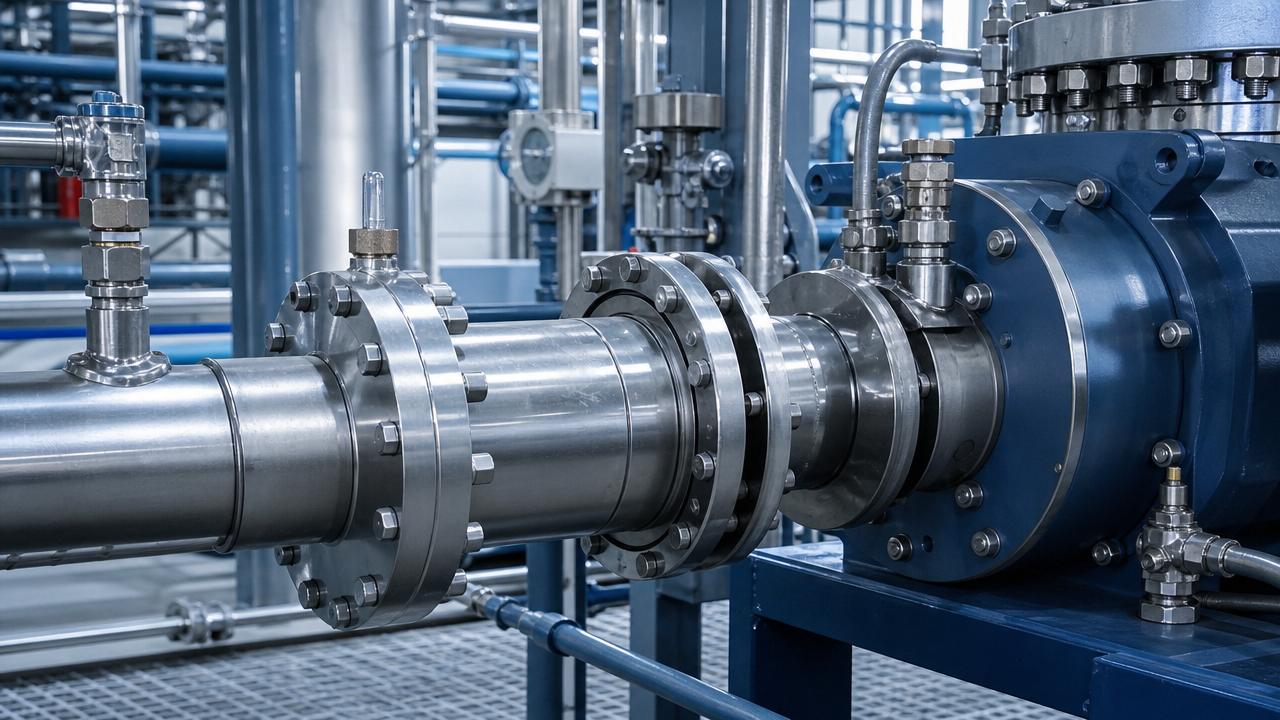
Seal technology in carbon capture plays a decisive role in system safety, leakage control, and lifecycle cost. For technical evaluators, understanding fit risks across pressure, temperature, chemical exposure, and material compatibility is essential before specifying components. This article outlines the key failure points and selection logic needed to improve containment reliability in demanding carbon capture environments.
Why seal technology in carbon capture becomes a high-risk evaluation point
Carbon capture systems do not fail only because of compressors, absorbers, or control logic. In many projects, sealing interfaces become the earliest source of leakage, maintenance escalation, and regulatory concern.
For technical evaluators, the challenge is not simply choosing a gasket or mechanical seal by temperature and pressure class. The real issue is fit risk: whether the sealing system remains stable when exposed to wet CO2, amines, contaminants, cyclic duty, and transient shutdown conditions.
This is where a data-driven approach matters. G-PCS applies the same containment logic used in high-integrity flow systems across UHP valves, extreme-environment mechanical seals, and specialized polymer gaskets to help teams assess whether a seal selection is merely acceptable on paper or robust in service.
- CO2 capture units often combine corrosive media, pressure variation, and thermal cycling in one service envelope.
- Minor leakage can trigger emission concerns, solvent loss, unplanned downtime, or safety reviews.
- A seal that performs well in static dry service may degrade quickly in dynamic, chemically active carbon capture duty.
Which carbon capture conditions create the biggest fit risks?
Pressure profile is more important than nameplate pressure alone
Many evaluations focus on maximum operating pressure, but seal technology in carbon capture must also be checked against pressure ramp rate, pulsation, vacuum exposure during startup, and decompression frequency. Rapid gas decompression can damage elastomeric elements even if nominal pressure seems manageable.
Temperature swings alter compression set and leakage behavior
Capture, compression, dehydration, and transport stages may each present a different thermal window. A sealing material that holds force at steady temperature can lose resilience during repeated heating and cooling cycles, especially at flange interfaces or valve stems.
Chemical exposure is rarely limited to CO2 itself
The medium may include water, amines, sulfur compounds, oxygen, degradation byproducts, or trace particulates. These increase swelling, embrittlement, corrosion, or face wear. Technical evaluators should assess full media chemistry rather than specifying against pure CO2 assumptions.
Surface quality and hardware geometry can override material quality
Even advanced sealing materials underperform if gland fill, flange flatness, face finish, shaft runout, or bolt load distribution is poorly controlled. Seal technology in carbon capture must be treated as a system interface, not a standalone part.
Fit-risk map for seal technology in carbon capture
The table below helps technical evaluators identify where seal technology in carbon capture is most likely to drift from design intent. It can support early screening before deeper supplier review or validation testing.
A useful pattern emerges from this risk map: most failures are multi-variable. Evaluators should resist single-parameter selection, especially when suppliers claim suitability based on generic pressure-temperature charts without chemical and cycling data.
How to compare sealing options across carbon capture stages
Seal technology in carbon capture changes with process stage. Static flanges, valve stems, pump shafts, compressor interfaces, and sampling points do not require the same design logic. The comparison below supports more precise specification work.
The comparison shows why blanket substitution is risky. A material that appears chemically robust may still be a poor choice in dynamic compression service, while a strong mechanical seal concept may be oversized for low-load instrumentation connections.
What technical evaluators should ask before approving a seal specification
Start with service reality, not catalog language
Ask whether the supplier’s recommendation is based on actual carbon capture media conditions, including water content, solvent chemistry, and impurity range. “CO2 compatible” is not a sufficient technical statement by itself.
Check the interface design around the seal
Seal technology in carbon capture must be evaluated together with hardware tolerance stack-up. Request gland dimensions, compression targets, shaft dynamics, flange finish requirements, and installation limits.
Review lifecycle cost instead of unit price alone
A lower-cost seal may increase solvent loss, leak inspection frequency, or shutdown exposure. For B2B buyers, the true cost driver is often maintenance interval and system availability rather than initial component price.
- Define the full operating envelope, including startup, upset, standby, and shutdown conditions.
- Segment static, semi-dynamic, and dynamic sealing points instead of using one standard across the skid.
- Request evidence of material compatibility, pressure cycling suitability, and assembly sensitivity.
- Confirm whether the seal design aligns with relevant ISO, API, or fugitive emission expectations for the equipment class.
Common specification mistakes in seal technology in carbon capture
- Selecting by temperature and pressure only, while ignoring solvent chemistry, water content, and contaminant variation.
- Assuming one polymer family is universally suitable for every sealing point in the capture train.
- Treating valve packing, flange gaskets, and compressor seals as interchangeable evaluation categories.
- Approving a material without verifying decompression resistance or thermal-cycle behavior.
- Ignoring assembly variables such as torque, alignment, cleanliness, and surface finish, then attributing failure only to material grade.
These mistakes are common when teams are under schedule pressure. G-PCS reduces this risk by connecting seal selection with containment logic, equipment duty, and standards-based review rather than isolated part sourcing.
How G-PCS supports higher-confidence selection and procurement
Cross-pillar technical intelligence
Carbon capture sits at the intersection of pressure control, chemical containment, valve reliability, and specialized sealing. G-PCS is structured for exactly this type of cross-functional evaluation, drawing from UHP control, mechanical sealing, and advanced gasket disciplines.
Standards-aware assessment
Technical evaluators often need more than material claims. They need a review path grounded in common frameworks such as ISO, API, SEMI, or MIL-SPEC where relevant to design rigor, leakage control, and qualification logic.
Decision support for procurement and engineering teams
G-PCS helps bridge the gap between engineering intent and purchasing action. That includes clarifying fit-risk assumptions, comparing candidate seal approaches, highlighting likely failure mechanisms, and identifying where custom verification is justified before order release.
FAQ: practical questions about seal technology in carbon capture
How should seal technology in carbon capture be evaluated for wet CO2 service?
Start with the full fluid composition, not just CO2 concentration. Water, oxygen, sulfur species, and solvent carryover can significantly change compatibility and corrosion behavior. Then assess temperature window, pressure cycling, and whether the seal point is static or dynamic.
Which sealing points usually deserve the most scrutiny during procurement?
Compression stages, valve stems, pump seals, and major flange interfaces usually deserve priority because they combine higher leak consequence with more complex duty. Small instrumentation connections also need attention because repeated minor leaks can undermine system integrity.
Is a higher-cost sealing material always the safer choice?
No. More expensive materials may still fail if decompression resistance, contact stress, hardware fit, or motion profile are not aligned with the application. Material grade improves the margin only when the sealing design and installation method are also correct.
What should buyers request from suppliers before final approval?
Request media compatibility rationale, operating envelope limits, recommended hardware conditions, maintenance assumptions, and any applicable standards alignment. If the service is severe, ask what verification data or field-relevant testing supports the recommendation.
Why technical teams contact G-PCS before finalizing the sealing package
When seal technology in carbon capture becomes a bottleneck, teams usually need fast clarity on parameter confirmation, material fit, leakage risk, and acceptable alternatives. G-PCS supports that evaluation with a containment-first methodology built for critical industrial systems.
You can contact G-PCS to discuss operating parameters, sealing point classification, candidate material logic, delivery timing, custom solution pathways, standards-related concerns, sample support, and quotation planning for carbon capture applications with demanding reliability targets.
For technical evaluators, the value is straightforward: fewer blind spots during selection, better alignment between engineering and procurement, and a more defensible decision when containment performance matters over the full lifecycle.
Industry Briefing
Get the top 5 industry headlines delivered to your inbox every morning.