How Vibration Affects Seal Integrity in Continuous Operation
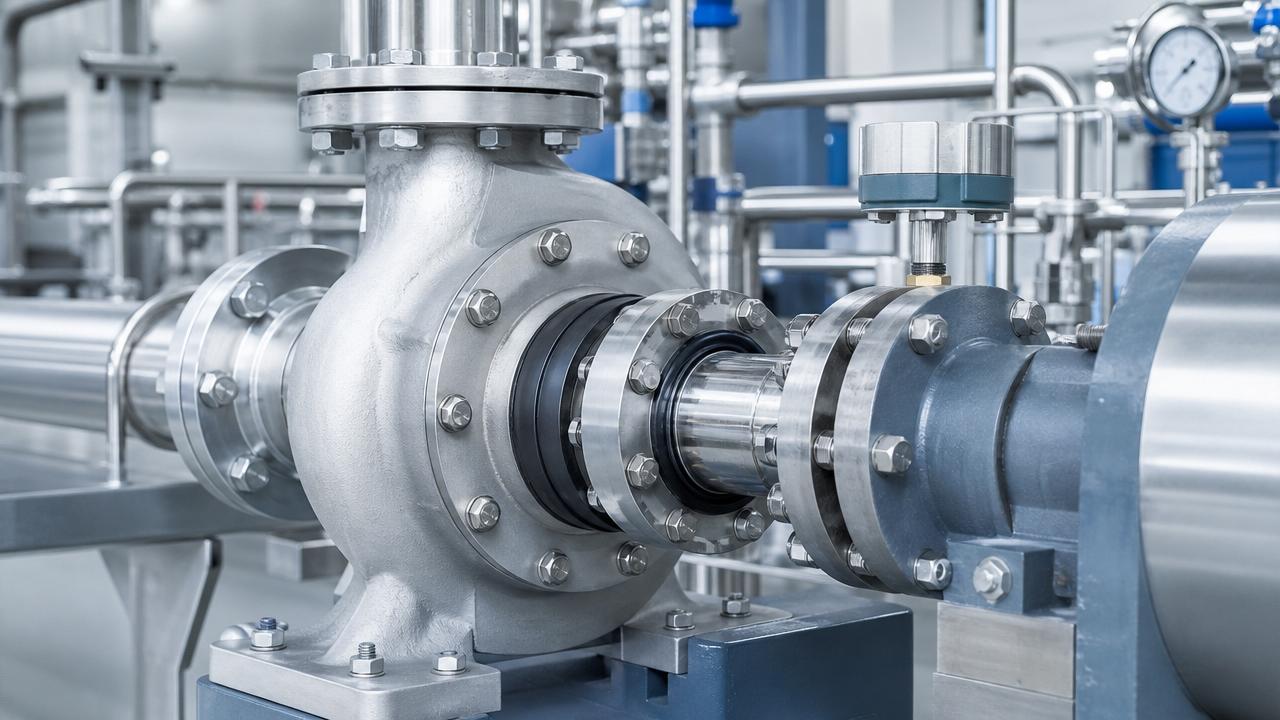
In continuous-duty systems, even minor vibration can trigger progressive leakage, accelerated wear, and costly unplanned downtime. Understanding the vibration effect on seal integrity is essential for long-term reliability, compliance, and lifecycle cost control.
Across valves, pumps, actuators, RF assemblies, and pressure control modules, vibration rarely acts alone. It combines with heat, pressure cycling, media chemistry, and installation error to weaken sealing performance over time.
This article answers the most practical questions about the vibration effect on seal integrity. It focuses on mechanisms, warning signs, material choices, validation methods, and cost-aware engineering actions.
What does the vibration effect on seal integrity actually mean?
The vibration effect on seal integrity refers to how repeated motion disrupts the contact conditions that keep fluids, gases, or vacuum boundaries contained.
A seal works by maintaining stable compression, surface conformity, and material resilience. Vibration disturbs all three, especially during continuous operation.
In static seals, vibration can loosen bolted joints, reduce clamp load, and create micro-gaps. In dynamic seals, it can amplify shaft runout, frictional heating, and lip instability.
The result is not always immediate leakage. Often, the vibration effect on seal integrity appears first as rising wear debris, changing torque, pressure decay, or contamination risk.
This matters in sectors where containment is non-negotiable. Examples include hydrogen systems, semiconductor process tools, microwave equipment, aerospace hardware, and high-purity fluid circuits.
Why continuous operation makes the problem worse
Continuous duty removes recovery time. Materials cannot relax, cool, or re-seat fully between cycles, so tiny disturbances accumulate into permanent damage.
- Higher cumulative fatigue at sealing interfaces
- Greater risk of fretting and compression loss
- More heat buildup in dynamic contact zones
- Faster degradation under chemical exposure
How does vibration cause leakage, wear, and seal failure?
The vibration effect on seal integrity usually follows several linked failure mechanisms. Understanding them helps separate root causes from symptoms.
1. Micro-movement and fretting
Small oscillatory motion between sealing faces or flanges can wear away surface finishes. Once fretting starts, the seal loses its stable contact geometry.
2. Compression set acceleration
Elastomer seals depend on elastic recovery. Vibration plus heat can accelerate compression set, leaving the seal unable to maintain contact pressure.
3. Shaft runout amplification
In rotating equipment, imbalance and misalignment increase shaft motion. The seal lip or face must chase that movement, causing uneven loading and wear.
4. Fastener relaxation
Static gasketed joints can lose preload under repeated vibration. Reduced clamp force directly lowers sealing stress and raises leakage probability.
5. Resonance-driven damage
If excitation frequency matches a component’s natural frequency, motion amplitude rises sharply. That can rapidly magnify the vibration effect on seal integrity.
Which systems are most vulnerable to the vibration effect on seal integrity?
Any system with pressure, motion, or tight environmental control can be vulnerable. Risk increases when leakage has safety, purity, or performance consequences.
Common high-risk applications include:
- High-pressure valve assemblies
- Mechanical seals in pumps and mixers
- Pneumatic and piezoelectric actuator housings
- RF and microwave chamber seals
- Vacuum flanges and semiconductor gas panels
- Hydrogen and ultra-high purity process lines
Sensitivity also depends on leakage tolerance. A minor seep in a utility line differs greatly from a micro-leak in a corrosive gas, sterile fluid, or vacuum system.
Static versus dynamic sealing under vibration
Static seals mainly suffer from preload loss, fretting, and flange distortion. Dynamic seals face those issues plus friction, speed, runout, and lubrication challenges.
That is why dynamic interfaces often show a stronger vibration effect on seal integrity, especially in high-speed or temperature-sensitive equipment.
How can you recognize early warning signs before failure becomes critical?
Early detection is more valuable than post-failure analysis. Many seal issues announce themselves through small changes long before visible leakage appears.
Monitoring should combine mechanical data with leak testing. Vibration spectra alone cannot prove sealing health, but they often reveal the conditions driving degradation.
What design and material choices reduce the vibration effect on seal integrity?
No single material solves every problem. The best solution balances media compatibility, temperature range, motion profile, pressure, and vibration environment.
Material selection considerations
- FFKM for aggressive chemicals and thermal stability
- PTFE-based compounds for low friction and media resistance
- Engineered elastomers for resilience and compression recovery
- Composite gaskets for flange stress retention
Design choices that matter
Seal groove geometry should control movement without over-compressing the material. Too little squeeze invites leakage, while too much squeeze increases heat and wear.
Surface finish must match seal type. Roughness that is acceptable for one gasket can destroy another under vibration and repeated pressure fluctuations.
Joint stiffness also matters. If adjacent hardware flexes excessively, even premium seal materials may fail because the interface itself is unstable.
For rotating systems, reducing runout and improving balance often delivers more benefit than changing seal material alone. Mechanics and materials must be evaluated together.
How should systems be tested and evaluated for long-term sealing stability?
Laboratory qualification should reflect real operating stress. A static bench test may miss the true vibration effect on seal integrity in field conditions.
Useful validation methods
- Combined vibration and pressure cycling tests
- Thermal aging followed by leak-rate measurement
- Torque retention and bolt preload verification
- Runout and alignment assessment during operation
- Media exposure testing with post-test dimensional checks
International standards are helpful baselines, but application-specific validation is still necessary. Frequency range, amplitude, dwell time, and leak criteria must fit the actual duty profile.
When comparing candidate sealing solutions, focus on retained sealing force, wear pattern stability, and repeatability after extended excitation, not only initial leak performance.
What common mistakes increase cost and shorten seal life?
Many failures come from avoidable assumptions. The vibration effect on seal integrity is often underestimated because the first installation seems to pass basic tests.
- Treating leakage as only a material issue
- Ignoring alignment, resonance, or support stiffness
- Using chemical compatibility alone to choose seals
- Applying uniform torque without preload verification
- Skipping long-duration testing under realistic vibration
Short-term savings can become expensive through scrap, contamination events, safety incidents, or unscheduled maintenance windows. Reliability decisions should consider total cost of ownership.
Quick decision guide
The vibration effect on seal integrity is never just a maintenance detail. It is a system-level reliability issue shaped by mechanics, materials, assembly quality, and operating profile.
A practical next step is to review one critical sealing interface against four factors: vibration source, contact stability, material recovery, and validation realism. That simple framework often exposes hidden risk early.
Where containment, purity, or uptime carry high consequences, sealing decisions should be supported by application-specific testing and cross-functional engineering review. That is the most dependable path to stable continuous operation.
Industry Briefing
Get the top 5 industry headlines delivered to your inbox every morning.