How Diamond-Coated Seals Improve Aerospace System Reliability
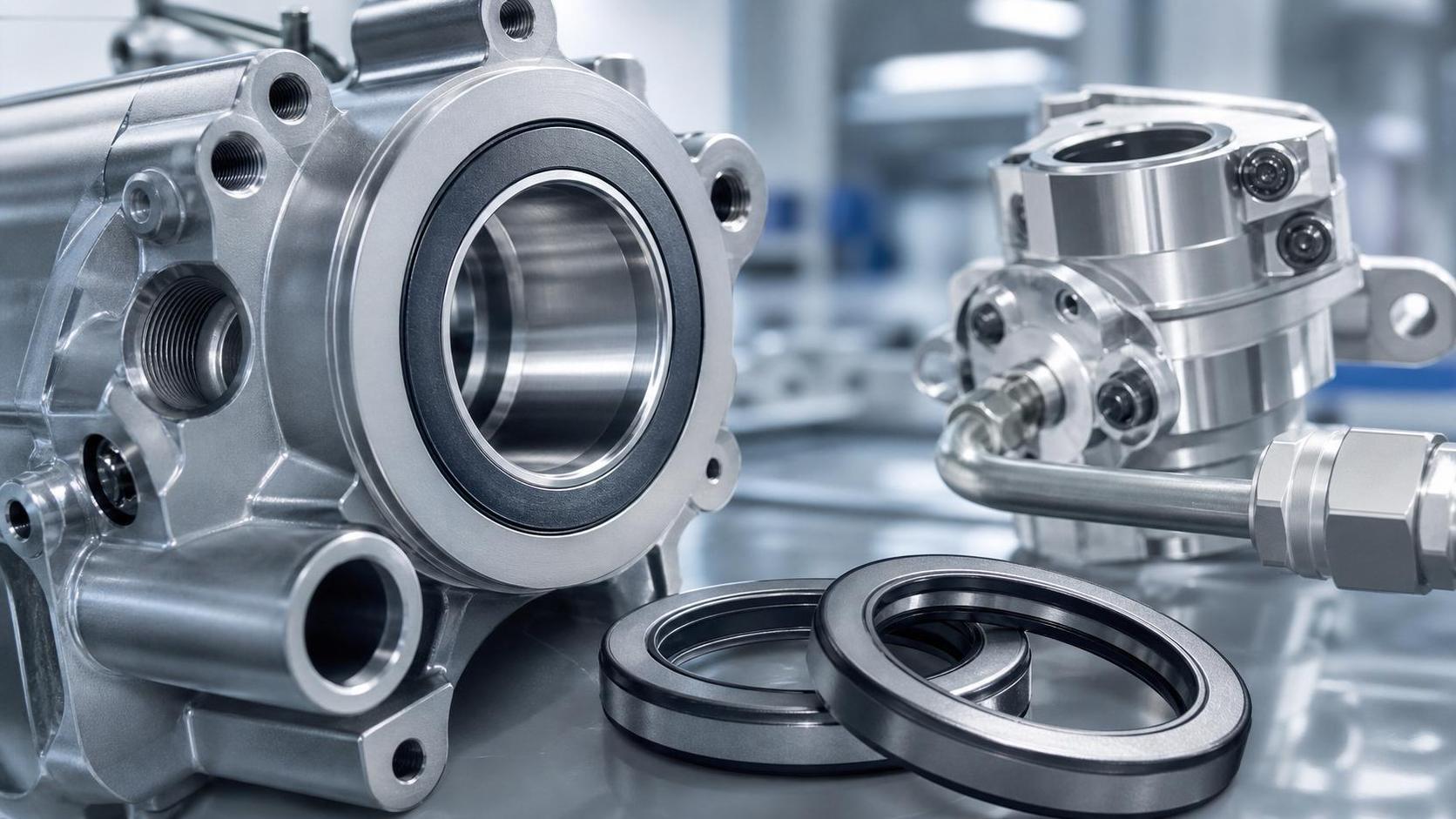
Diamond-coated seals for aerospace applications are moving from niche components to reliability-critical design elements. In flight systems, seal failure rarely stays local. It can affect pressure stability, thermal control, lubrication integrity, sensor accuracy, and maintenance intervals.
That shift matters because aerospace platforms now operate under tighter margins. Higher temperatures, rapid pressure cycling, vibration, aggressive media, and contamination sensitivity all raise the cost of small sealing weaknesses. A harder, lower-friction interface changes that equation.
Within the broader logic of containment and flow, this is why advanced sealing deserves closer evaluation. It connects material science, system architecture, regulatory compliance, and lifecycle risk rather than sitting as a minor hardware choice.
Why diamond-coated sealing has gained attention
Aerospace reliability programs increasingly focus on interfaces where motion, pressure, and exposure meet. Seals in pumps, valves, actuators, fuel systems, environmental control assemblies, and rotating equipment often face the most punishing combinations.
Conventional sealing materials still have an essential role. Yet in severe duty cycles, they may suffer from wear, stick-slip behavior, thermal degradation, or particle generation. Those issues can trigger leakage, torque changes, unstable response, or premature overhaul.
Diamond-coated seals for aerospace applications attract attention because the coating surface can deliver very high hardness, low friction, chemical inertness, and improved resistance to abrasion. In practice, that can translate into more predictable sealing behavior across longer operating windows.
This aligns with the evaluation approach used by G-PCS. High-performance components are judged not only by immediate function, but by how they support reliability frameworks shaped by ISO, API, MIL-SPEC, and other industry benchmarks.
What the coating changes at the sealing interface
The value of a diamond-coated seal is not simply that it is “harder.” The real improvement comes from how surface properties influence contact mechanics over time. That is especially important in dynamic aerospace assemblies.
Lower friction under demanding motion profiles
Low friction can reduce start-up resistance and running torque. In actuation systems, that supports more stable motion control. In valves and rotary interfaces, it helps limit energy loss and erratic sealing response.
Higher wear resistance
A harder surface better resists scratching and abrasive damage. When foreign particles or marginal lubrication are present, the coating can slow the wear process that would otherwise change seal geometry and leakage performance.
Reduced particle generation
Particle shedding is often overlooked until it threatens a sensitive system. In aerospace, generated debris may affect valves, bearings, sensors, or precision flow paths. Better surface durability helps reduce that risk.
More stable chemical behavior
Many aerospace environments expose seals to fuels, hydraulic fluids, oxidizing conditions, or cleaning media. Coating stability can help preserve interface performance where chemical attack would accelerate degradation.
How reliability improves at the system level
Aerospace system reliability is rarely improved by one component alone. It improves when several failure drivers are reduced at once. Diamond-coated seals for aerospace applications are relevant because they act on multiple drivers simultaneously.
In other words, the improvement is cumulative. Less friction can mean less heat. Less wear can mean fewer particles. Fewer particles can mean lower downstream damage. Reliability grows through that chain.
Where these seals matter most
Not every aerospace seal needs a diamond-coated surface. The strongest business case appears in systems where downtime, access difficulty, safety exposure, or precision loss creates disproportionate cost.
- Propulsion-related assemblies with high thermal stress and aggressive media exposure.
- Fluid-control valves that must cycle repeatedly without drift in sealing force.
- Actuation systems where friction consistency affects response speed and position repeatability.
- Environmental control and pressurization equipment exposed to pressure swings.
- Rotating interfaces where abrasive wear or marginal lubrication can shorten maintenance intervals.
From a cross-industry view, these applications also resemble high-integrity environments outside aerospace. Hydrogen valves, microwave systems, extreme-environment seals, and high-speed actuators all depend on stable containment under stress.
That is one reason the topic fits a broader industrial intelligence perspective. The same material logic that protects aerospace reliability also informs critical decisions across adjacent high-tech supply chains.
What to examine before specifying diamond-coated seals
Performance claims should be tested against operating reality. Diamond-coated seals for aerospace applications are not interchangeable commodities, and coating success depends on the entire interface design.
Substrate and counterface compatibility
The coating works in combination with the base material and the mating surface. Hardness mismatch, poor adhesion, or unsuitable counterface roughness can reduce the expected benefit.
Operating envelope
Temperature range, pressure profile, media chemistry, sliding speed, and duty cycle should be mapped early. A coating that performs well in one regime may not respond the same way in another.
Failure mode alignment
If the primary risk is elastomer swelling, misalignment, or housing distortion, surface coating alone may not solve the problem. The best results appear when wear and friction are major failure drivers.
Qualification evidence
Look for test data that reflects the intended duty profile, not only generic hardness values. Useful evidence includes leakage stability, friction trends, cycle endurance, debris behavior, and environmental resistance.
How to interpret supplier and test data
A common mistake is treating coating data as if it were enough on its own. In aerospace evaluation, numbers need context. A low friction coefficient matters only when the test conditions match the service conditions.
It is also worth checking whether the data covers repeated thermal cycling, vibration exposure, fluid compatibility, and contamination sensitivity. Sealing reliability depends on stability under accumulated stress, not just initial performance.
This is where a reference framework like G-PCS becomes useful. By comparing component behavior against recognized standards and adjacent high-performance sectors, it becomes easier to separate robust engineering evidence from broad marketing language.
- Check coating adhesion and thickness consistency across the production lot.
- Review wear data under representative loads and sliding conditions.
- Confirm compatibility with fuels, hydraulic fluids, and cleaning processes.
- Assess whether qualification follows ISO, API, or MIL-SPEC expectations where relevant.
Business value beyond component durability
The strongest case for diamond-coated seals for aerospace applications is not limited to longer seal life. The larger value often appears in lower maintenance uncertainty, fewer unscheduled interventions, and tighter system performance consistency.
In regulated and mission-sensitive environments, predictability carries strategic value. A seal that degrades slowly and consistently is easier to validate, easier to monitor, and easier to integrate into reliability-centered maintenance planning.
That makes coating selection relevant to procurement, qualification, and lifecycle costing at the same time. The question is not only whether the seal lasts longer, but whether it reduces uncertainty in the full operating model.
A practical next step for evaluation
A useful starting point is to identify sealing locations where friction drift, wear debris, or leakage instability already influence reliability. Those points usually reveal whether diamond-coated seals for aerospace applications deserve deeper review.
Then compare candidate designs against actual duty cycles, material pairings, and qualification evidence. A focused matrix covering media, pressure, temperature, motion, and maintenance impact will usually expose the most credible options.
For organizations managing high-consequence flow systems, the decision is less about adopting a premium surface treatment and more about improving containment logic where failure costs are highest. That is the right context for judging long-term aerospace reliability.
Industry Briefing
Get the top 5 industry headlines delivered to your inbox every morning.