Dry Gas Seal Failure Risks in Extreme Environments
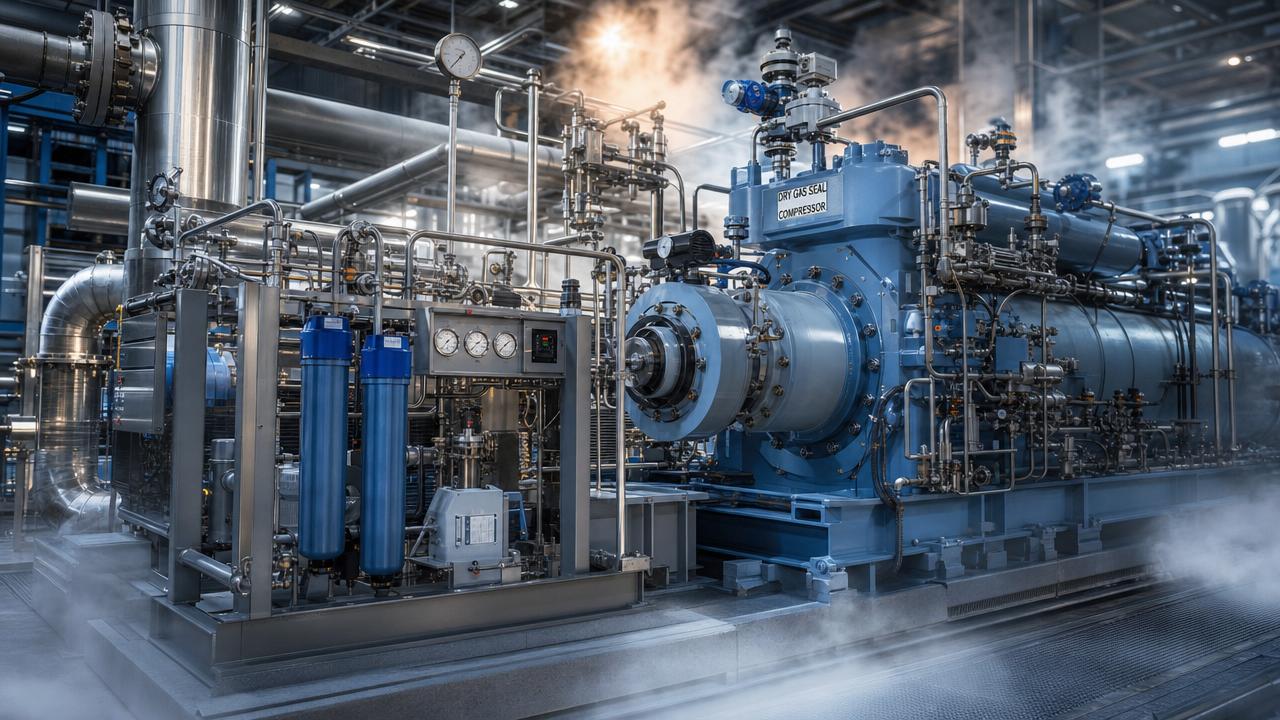
Dry gas seal failures in harsh operating conditions can escalate from minor leakage to full asset interruption within minutes. In critical systems, extreme-environment mechanical seals must withstand pressure instability, thermal shock, contamination, vibration, and unstable gas quality without losing film control.
Across energy, chemical processing, aerospace support systems, and advanced manufacturing, failure risk is never uniform. The real challenge is matching seal design, operating envelope, and monitoring strategy to the actual environment rather than to nameplate conditions.
This article examines where dry gas seals fail first, how warning signs differ by scenario, and what control priorities improve reliability for extreme-environment mechanical seals in demanding industrial service.
Why scenario-based judgment matters for dry gas seal reliability
A dry gas seal does not fail only because of one bad component. Failure usually develops when the operating scene changes faster than the seal system can respond.
Extreme-environment mechanical seals face different stress combinations in offshore compression, cryogenic gas service, desert installations, and high-speed process units. The same seal architecture may succeed in one setting and degrade quickly in another.
Scenario-based evaluation helps identify three questions early:
- Is the seal gas clean, dry, and stable enough to maintain a non-contacting film?
- Will thermal and pressure transients exceed the face material’s tolerance?
- Can support systems detect instability before face damage becomes irreversible?
These questions are especially important for extreme-environment mechanical seals used in systems governed by ISO, API, SEMI, or mission-critical internal specifications.
Scenario 1: Pressure-swing compression systems create hidden film collapse risk
Gas compressors operating under surge events, rapid load changes, or intermittent duty often expose the dry gas seal to unstable differential pressure. Film thickness can collapse before standard alarms react.
In this scenario, extreme-environment mechanical seals are vulnerable when seal gas supply pressure lags process pressure movement. Reverse pressure episodes, short-duration contact, and heat spots may follow.
Core judgment points
- Frequent compressor turndown or recycle operation
- Seal supply regulators with slow response characteristics
- High rotor speed with fluctuating axial movement
- Repeated alarms tied to differential pressure excursions
A rising trend in leakage, face temperature, or seal gas consumption often appears before major failure. These are not isolated maintenance indicators. They are operating-scene warnings.
Scenario 2: Thermal shock in cryogenic or hot-start service damages seal faces fast
Thermal shock is one of the least forgiven conditions in dry gas seal service. Sudden transitions between standby, purge, startup, and process temperature can distort faces and alter running clearances.
For extreme-environment mechanical seals, thermal mismatch between rotating and stationary elements is critical. Distortion may remain invisible during inspection but still destroy gas-film stability under load.
Where this scenario appears
- LNG and low-temperature gas handling equipment
- Hot gas compression after emergency shutdowns
- Systems with aggressive steam-out or rapid purge changes
- High-altitude or remote sites with large ambient variation
Common symptoms include unstable startup leakage, repeated face wear after short service life, and unexplained vibration increase during thermal transitions rather than at full steady load.
Scenario 3: Contaminated seal gas turns non-contact operation into abrasive contact
Dry gas seals depend on a clean gas barrier. When particles, condensate, oil mist, or process carryover enter the seal cavity, the seal can move from controlled separation to scoring and wear.
This is a major reliability issue for extreme-environment mechanical seals in dusty outdoor installations, wet gas compression, or systems with inadequate filtration and heating control.
High-risk contamination sources
- Improperly maintained coalescing filters
- Cold spots that cause moisture or hydrocarbon condensation
- Startup purge errors that pull process material inward
- Oil contamination from adjacent bearing systems
Once contamination begins, leakage may increase slowly at first. Then face scoring, secondary seal degradation, and heat generation accelerate the failure path.
Scenario 4: Vibration and rotor movement overload otherwise sound seal designs
In high-speed rotating equipment, dry gas seals do not operate in isolation. Rotor orbit, misalignment, thrust changes, and structural resonance can upset face tracking performance.
Extreme-environment mechanical seals used near equipment limits are especially sensitive when vibration is treated as a machine issue only. Seal damage may occur long before rotor alarms cross shutdown thresholds.
Typical warning signs
- Leakage changes that correlate with speed bands
- Intermittent temperature spikes during transient operation
- Uneven face wear patterns after teardown
- Recurring trips after coupling or balance work
This scenario is common in compressor trains, turboexpanders, and precision process systems where shaft behavior shifts under changing load profiles.
How failure risks differ across operating scenes
Scenario-fit recommendations for extreme-environment mechanical seals
Improving reliability starts with matching control measures to actual exposure. Generic maintenance intervals are not enough for extreme-environment mechanical seals.
- Verify transient pressure maps, not only steady-state design pressure.
- Track seal gas cleanliness, moisture, and temperature near the seal, not just upstream.
- Review startup and shutdown sequencing for thermal shock exposure.
- Link vibration analysis with leakage and temperature trend data.
- Use material selection and face geometry validated for the real gas composition.
- Test support system response time under upset conditions.
In high-consequence service, a structured design review should compare operating events, environmental conditions, and seal support behavior against API guidance and internal reliability criteria.
Common misjudgments that increase failure probability
Several recurring errors undermine dry gas seal performance even when the hardware is high quality.
- Assuming clean utility gas remains clean at the seal location
- Treating startup events as too short to matter
- Relying on average vibration values instead of transient peaks
- Focusing on seal replacement without investigating support system dynamics
- Using standard seal assumptions in extreme-environment mechanical seals applications
Another frequent oversight is separating seal review from the broader containment strategy. In advanced industrial systems, seal integrity depends on process control, gas conditioning, rotor behavior, and maintenance discipline together.
What to do next to reduce dry gas seal failure risk
Start with a scenario audit. Document actual pressure excursions, temperature transitions, contamination pathways, and vibration behavior across a full operating cycle.
Then compare those findings with the intended envelope for extreme-environment mechanical seals, including face materials, gas quality requirements, and support system response limits.
Where gaps appear, prioritize actions that protect the gas film first. In most cases, that means better seal gas conditioning, improved transient control, tighter thermal procedures, and integrated machine-seal monitoring.
Dry gas seal reliability in severe service is not achieved by stronger parts alone. It comes from recognizing the operating scene early and aligning design, controls, and inspection with real environmental stress.
Industry Briefing
Get the top 5 industry headlines delivered to your inbox every morning.