Wholesale Mechanical Seals: Price Breaks vs Failure Risk
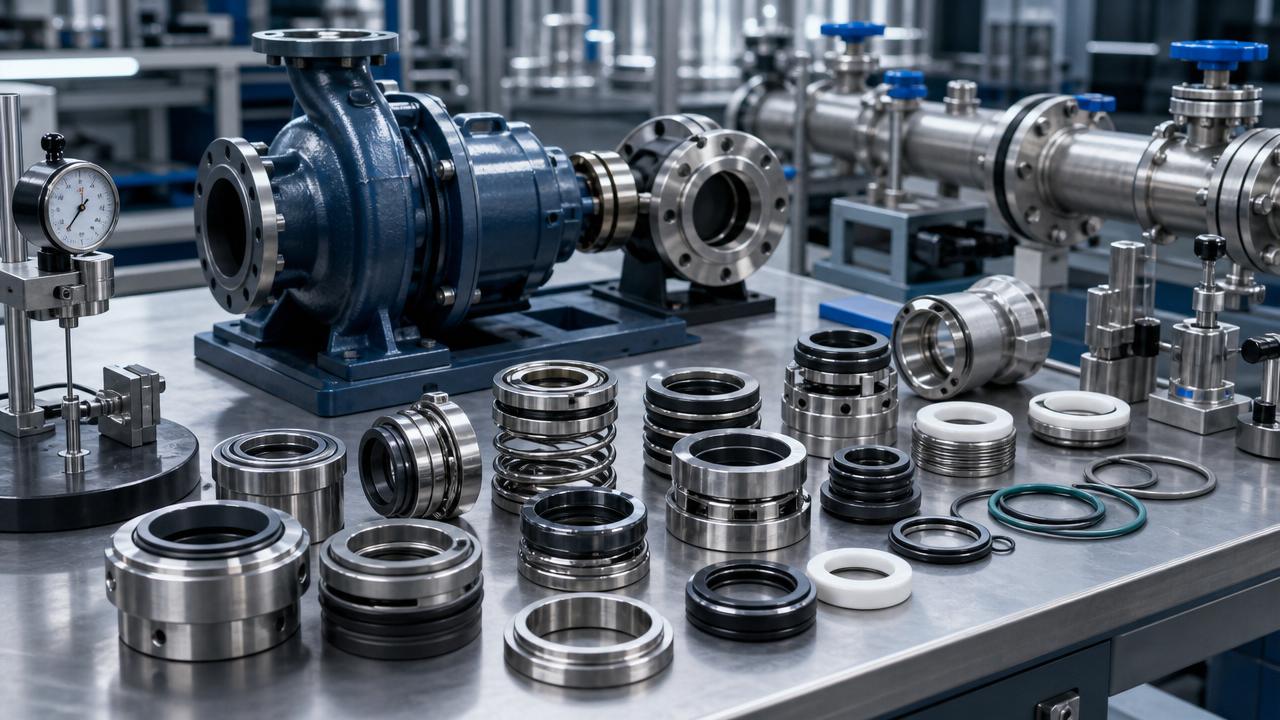
Wholesale mechanical seals can expand margin, accelerate catalog growth, and improve supply continuity across industrial channels. Yet the current market is shifting: lower entry pricing is no longer a reliable signal of good value. In sealing applications tied to pumps, mixers, compressors, chemical handling, water treatment, food processing, energy systems, and precision equipment, a cheap seal that fails early can erase every unit-cost advantage through downtime, leakage events, claims, and brand damage. For businesses evaluating wholesale mechanical seals, the real question is not how low the price can go, but how confidently performance can be verified across batches, operating media, and service life.
Why wholesale mechanical seals are entering a higher-risk, higher-scrutiny phase
Across the broader industrial market, demand for wholesale mechanical seals is being pulled in two directions at once. On one side, buyers want lower landed cost, shorter lead times, and wider interchangeability with legacy designs. On the other, end-use systems are becoming less forgiving. Higher shaft speeds, more aggressive chemicals, dry-run exposure, variable-frequency drive behavior, stricter emissions control, and tighter maintenance windows all increase the penalty for material inconsistency or weak face-pair matching.
This creates a structural tension in the wholesale mechanical seals market. Price breaks remain attractive, especially in replacement-heavy sectors, but failure risk now carries a larger financial multiplier than before. A seal that performs acceptably in a benign water pump may fail rapidly in hot hydrocarbons, abrasive slurry, vacuum duty, or thermal cycling. As a result, channel growth increasingly depends on technical validation, not just sourcing leverage.
The strongest trend signals are coming from reliability data, not list prices
Several market signals show why wholesale mechanical seals can no longer be evaluated as a commodity alone. Returns and hidden support costs are becoming a decisive margin factor. In many industrial portfolios, the cheapest seal is often the most expensive SKU after field failures, emergency shipment replacement, labor reimbursement, and lost account confidence are included.
- Greater use of mixed-media systems where chemical compatibility errors appear faster.
- More aggressive operating envelopes, including heat shock, pressure spikes, and intermittent dry running.
- Expansion of private-label and cross-reference programs, increasing the need for traceable equivalence.
- Higher customer sensitivity to leakage, contamination, and environmental compliance.
- Growing expectation for documentation, test evidence, and repeatable batch quality.
For wholesale mechanical seals, this means that catalog breadth alone is no longer enough. Technical credibility now influences conversion rate, repeat business, and the ability to participate in higher-value applications.
What is driving the gap between price breaks and failure risk
The widening gap between low purchase price and real lifecycle value comes from a combination of material, manufacturing, and application factors. In wholesale mechanical seals, seemingly similar dimensions can mask major differences in carbon grade, silicon carbide quality, elastomer formulation, spring metallurgy, face flatness, and secondary sealing stability.
The impact reaches far beyond the seal itself
When wholesale mechanical seals underperform, the consequences spread across multiple business layers. Immediate effects include replacement cost, service calls, and shipment expense. Secondary effects are often larger: reduced confidence in a private-label line, pressure to discount future orders, slower adoption of adjacent products, and reluctance to specify the same source into sensitive applications.
There is also a portfolio effect. Low-end wholesale mechanical seals may work in general utility service, but if the same sourcing logic is applied to chemical process pumps, hygienic systems, refinery support equipment, or high-duty rotating assets, failure severity rises sharply. This is why reliability segmentation has become essential. Not every account needs premium designs, but every application needs a documented risk boundary.
- General service: price sensitivity is high, but consistency still matters for repeat sales.
- Chemical and aggressive media: material verification becomes non-negotiable.
- Food, beverage, and pharmaceutical support systems: leakage and contamination risk raise compliance exposure.
- Energy and high-duty equipment: downtime cost can exceed seal price by several orders of magnitude.
What to examine first before expanding a wholesale mechanical seals line
A stronger wholesale mechanical seals strategy starts with a qualification framework that goes deeper than drawings and nominal interchange references. The goal is to verify whether the supplier can reproduce sealing performance, not merely shape and fit.
- Confirm face material grades, not just generic labels such as carbon or SiC.
- Request elastomer identification tied to fluid, temperature, and compliance requirements.
- Review dimensional tolerances, face flatness data, and surface finish control.
- Verify lot traceability for rotating face, stationary face, metal parts, and elastomers.
- Ask for test protocols related to leakage, pressure, runout tolerance, and thermal behavior.
- Map part families by application severity rather than by price band alone.
For wholesale mechanical seals, documentation quality is often a stronger predictor of long-term stability than the initial quote sheet. A supplier that cannot explain materials, production controls, and failure modes in clear technical terms is difficult to trust at scale.
How to balance low unit cost with lifecycle reliability
The most effective approach is not to reject low-cost wholesale mechanical seals outright, but to place them inside a structured decision model. Different applications justify different risk tolerance. A disciplined portfolio can preserve margin while protecting performance where it matters most.
The next market advantage will come from transparency and qualification speed
The competitive edge in wholesale mechanical seals is moving toward faster technical qualification, cleaner traceability, and clearer application boundaries. This is especially true in sectors influenced by ISO, API, SEMI, hygiene controls, emissions expectations, and internal reliability standards. As industrial systems become more specialized, buyers increasingly favor sources that can explain why a seal should work, not just confirm that it ships quickly.
A practical response is to build a compact evidence package for each high-volume or high-risk seal family. This can include material declarations, operating window guidance, cross-reference limits, installation notes, lot traceability, and known exclusion cases. In the wholesale mechanical seals business, this kind of transparency reduces disputes and improves conversion in technically demanding accounts.
A practical path forward for scaling wholesale mechanical seals profitably
The best next step is to audit the current sealing portfolio by failure impact, not just sales volume. Separate utility-grade products from mission-critical applications. Review the top return causes, identify which SKUs lack material clarity, and compare low-price winners against actual field performance after 3, 6, and 12 months. That analysis usually reveals where wholesale mechanical seals are truly delivering margin and where low pricing is hiding future cost.
From there, tighten supplier qualification, create application-based product tiers, and standardize technical evidence for every important seal family. Wholesale mechanical seals remain a strong growth category, but the market increasingly rewards disciplined sourcing over aggressive price chasing. The right balance is clear: lower unit cost where risk is controlled, stronger validation where failure consequences are high, and full transparency wherever long-term trust matters most.
Industry Briefing
Get the top 5 industry headlines delivered to your inbox every morning.