Wholesale Mechanical Seals: How to Avoid Mixed-Quality Supply
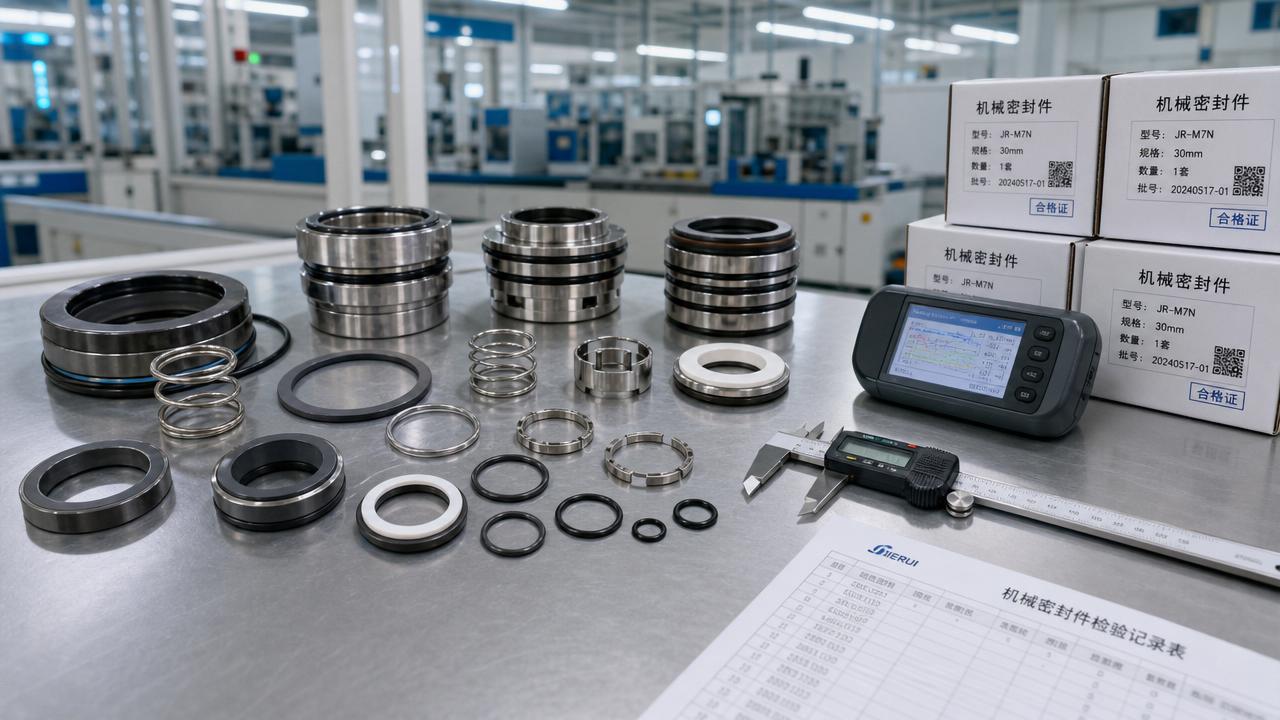
Sourcing wholesale mechanical seals can quickly become risky when inconsistent materials, uneven machining, and unclear compliance standards enter the supply chain. For distributors, agents, and resellers, avoiding mixed-quality supply is essential to protect margins, reputation, and long-term client trust. This guide outlines how to evaluate seal suppliers with greater precision and build a more reliable procurement strategy.
Why is mixed-quality supply such a serious problem in wholesale mechanical seals?
In wholesale mechanical seals, the biggest risk is not always obvious failure at the time of delivery. The more damaging issue is inconsistency across batches. A seal may look acceptable during incoming inspection, but if face flatness, elastomer grade, spring metallurgy, or secondary sealing dimensions vary from one shipment to another, distributors inherit hidden liability. End users then experience leakage, short service life, vibration-related wear, or unexpected shutdowns, and the reseller becomes the first party blamed.
This matters across a wide range of industrial sectors because mechanical seals operate at the boundary between containment and motion. When they fail, they can affect pump uptime, safety compliance, maintenance schedules, and fluid purity. For channel partners handling wholesale mechanical seals, mixed-quality supply also creates internal cost: more inspection time, more warranty disputes, more technical support pressure, and weaker forecasting accuracy.
Another challenge is that quality variation often comes from upstream substitution rather than complete process failure. A supplier may quietly change carbon grade, silicon carbide source, O-ring compound, lapping standard, or heat treatment process to protect its own margin. The product code remains the same, but field performance changes. That is why experienced buyers of wholesale mechanical seals do not rely on appearance alone; they build a verification system around materials, traceability, dimensional control, and process discipline.
What should distributors, agents, and resellers check first when evaluating a supplier?
The first step is to confirm whether the supplier can control repeatability, not just produce a sample. Many buyers are impressed by a single prototype or a low opening quote, but wholesale performance depends on whether the supplier can deliver the same seal quality over time, across specifications, and under changing raw material conditions.
Start with five core checkpoints:
- Material verification: Ask for declared grades for seal faces, elastomers, metal parts, and springs. Generic descriptions such as “high-quality rubber” or “stainless steel” are not enough.
- Dimensional capability: Review tolerance control, face lapping process, and critical fit dimensions, especially for replacement seals intended for OEM compatibility.
- Batch traceability: Every lot of wholesale mechanical seals should be traceable to material source, process date, operator, and inspection record.
- Testing discipline: Confirm what is tested routinely versus only on request. Balance tests, leak simulation, hardness checks, and face finish verification should not be optional in critical applications.
- Change control: Ask whether any material or process substitution requires customer notification and approval.
A supplier that answers these questions clearly is usually more dependable than one that only emphasizes price, lead time, or broad product range. For channel businesses, the right supplier is not the one with the largest catalog, but the one that makes quality variation visible and manageable.
How can you tell whether low pricing in wholesale mechanical seals is a genuine advantage or a warning sign?
Low pricing is not automatically a problem. Some manufacturers are efficient because they specialize in standard cartridge seals, common pump models, or large-batch production. However, if a quote is significantly below market range, buyers should investigate what was removed from the value chain. In wholesale mechanical seals, aggressive pricing often hides one of four issues: downgraded materials, loose tolerance control, limited inspection, or unstable subcontracting.
A practical approach is to compare quotations on a normalized basis. Do not compare only part numbers. Compare the exact face materials, elastomer family, spring alloy, operating limits, documentation package, packaging standard, and warranty terms. A low-cost seal made with different carbon density or lower-grade elastomer is not a true equivalent, even if the dimensions match.
You should also ask about scrap rate, process capability, and sample retention. Suppliers with disciplined manufacturing can usually discuss these confidently. If the seller avoids technical discussion and pushes only commercial urgency, that is often a sign that the wholesale mechanical seals program is being managed as a trading exercise rather than a controlled production system.
Which documents and technical evidence matter most before placing repeat orders?
Documentation is one of the most effective tools for preventing mixed-quality supply. It creates a stable definition of what you are buying and limits silent substitutions later. For wholesale mechanical seals, the most useful documents are not always the most impressive-looking certificates. What matters is whether the documentation ties directly to actual product control.
Key evidence usually includes material certificates for critical components, dimensional inspection reports, surface finish records for seal faces, elastomer compound identification, and lot traceability sheets. If the seals are used in regulated or demanding sectors, buyers may also need ISO-based quality system records, pressure or leak test data, and conformity declarations linked to the relevant application environment.
For distributors serving advanced industrial customers, it is also wise to request a controlled drawing or approved data sheet for each recurring SKU. That file becomes the reference point for future complaints or incoming inspection. Without such a reference, the phrase “same as last time” becomes dangerous because no one can prove what “same” means.
Quick supplier evaluation table for wholesale mechanical seals
What are the most common mistakes buyers make with wholesale mechanical seals?
The first mistake is buying by drawing appearance alone. Two seals can look nearly identical but differ greatly in operating reliability because of face material quality, secondary seal chemistry, spring corrosion resistance, or lapped surface condition. Visual similarity is a poor proxy for lifecycle performance.
The second mistake is overvaluing sample approval. A sample only proves that a supplier can make one acceptable part. It does not prove lot consistency, packaging discipline, or long-term process control. Buyers of wholesale mechanical seals should validate first article quality and then separately validate production stability.
The third mistake is treating all applications as equal. Seals for water pumps, chemical transfer, hydrocarbon service, abrasive media, and clean-process systems should not be sourced under the same assumptions. Temperature, pressure, shaft speed, fluid chemistry, and run-dry sensitivity all affect what quality controls matter most.
Another frequent error is failing to align commercial policy with technical risk. If your customers depend on dependable wholesale mechanical seals for critical equipment, then your purchasing agreement should include batch approval rules, return procedures, nonconformance reporting, and agreed lead times for urgent replacement. Technical procurement without commercial safeguards leaves too much exposed.
How can resellers build a procurement strategy that reduces risk over the long term?
A strong strategy starts with segmentation. Do not source every product from a single logic. Separate standard, high-volume wholesale mechanical seals from specialized or high-risk seals. For standard lines, focus on repeatability, stock discipline, and cost competitiveness. For application-sensitive lines, prioritize engineering support, material transparency, and validation records.
Next, create an approved supplier framework with entry and retention criteria. New suppliers should pass sample review, factory capability checks, document review, and trial-order monitoring. Existing suppliers should be scored quarterly on defect rate, on-time delivery, complaint response, and consistency across lots. This turns supplier management from a reactive task into a measurable process.
It is also smart to define your own internal specification library. Many distributors rely too heavily on manufacturer naming conventions, which vary by region and supplier. By maintaining internal standards for materials, tolerances, and acceptable substitutions, you protect your wholesale mechanical seals program from confusion when vendors change codes or product families.
Finally, establish a feedback loop from the field. Warranty claims, installation complaints, and unusual wear patterns are not just service issues; they are sourcing intelligence. The best channel businesses use field data to refine approved lists, adjust inspection priorities, and identify weak product lines before failures become widespread.
How much inspection is enough when receiving wholesale mechanical seals?
The answer depends on customer criticality, order size, and supplier maturity. For a new supplier, enhanced incoming inspection is justified. This may include dimensional sampling, material verification where practical, face condition checks, packaging review, and lot marking confirmation. Once a supplier has demonstrated consistent performance, inspection can move toward risk-based sampling rather than full scrutiny on every shipment.
However, some checks should remain routine regardless of supplier relationship. Confirm labeling accuracy, quantity, visible damage, and traceability records on every receipt. If your business serves demanding OEM or industrial maintenance customers, it is also worth preserving sample parts from each lot of wholesale mechanical seals for comparison in the event of later field failure.
Inspection should not be isolated from supplier development. If repeated issues appear, the goal is not only to reject goods but to identify whether the root cause is material variation, packing method, process drift, or drawing ambiguity. That level of diagnosis helps preserve supply continuity while improving quality control.
What questions should you ask before requesting a quote or starting a supplier relationship?
Before moving forward, buyers should clarify the application and the control framework, not just the unit price. Ask what media the seal will handle, what shaft size and operating conditions apply, whether OEM interchangeability is required, and which material combinations are mandatory or prohibited. Then ask how the supplier controls these variables in actual production.
For wholesale mechanical seals, useful pre-quote questions include: What are your standard face material pairings? Which elastomer options are available by fluid and temperature range? How do you handle batch traceability? What tests are included in standard production? What documentation can accompany each shipment? What is your policy on process or material changes? Can you support emergency replenishment without switching raw material sources?
These questions help reveal whether the supplier is positioned as a true manufacturing partner or simply a low-visibility source. For distributors, agents, and resellers, that distinction has a direct impact on reputation, profitability, and customer retention.
Final takeaway: how do you avoid mixed-quality supply in practice?
Avoiding mixed-quality supply in wholesale mechanical seals is less about finding a perfect vendor and more about building a purchasing system that makes inconsistency difficult to hide. Define technical baselines, verify materials, require traceability, compare quotes on true equivalence, and monitor field performance by batch. A lower price only creates value when quality remains stable over repeat orders.
If you need to confirm a practical sourcing plan, a shortlist of approved materials, suitable inspection depth, lead time expectations, or cooperation terms for specific customer segments, the best next step is to discuss application conditions, target performance, documentation needs, batch control rules, and after-sales response procedures before locking in a long-term supply arrangement for wholesale mechanical seals.
Industry Briefing
Get the top 5 industry headlines delivered to your inbox every morning.