Split Seal Wholesale: Where Fast Replacement Really Pays Off
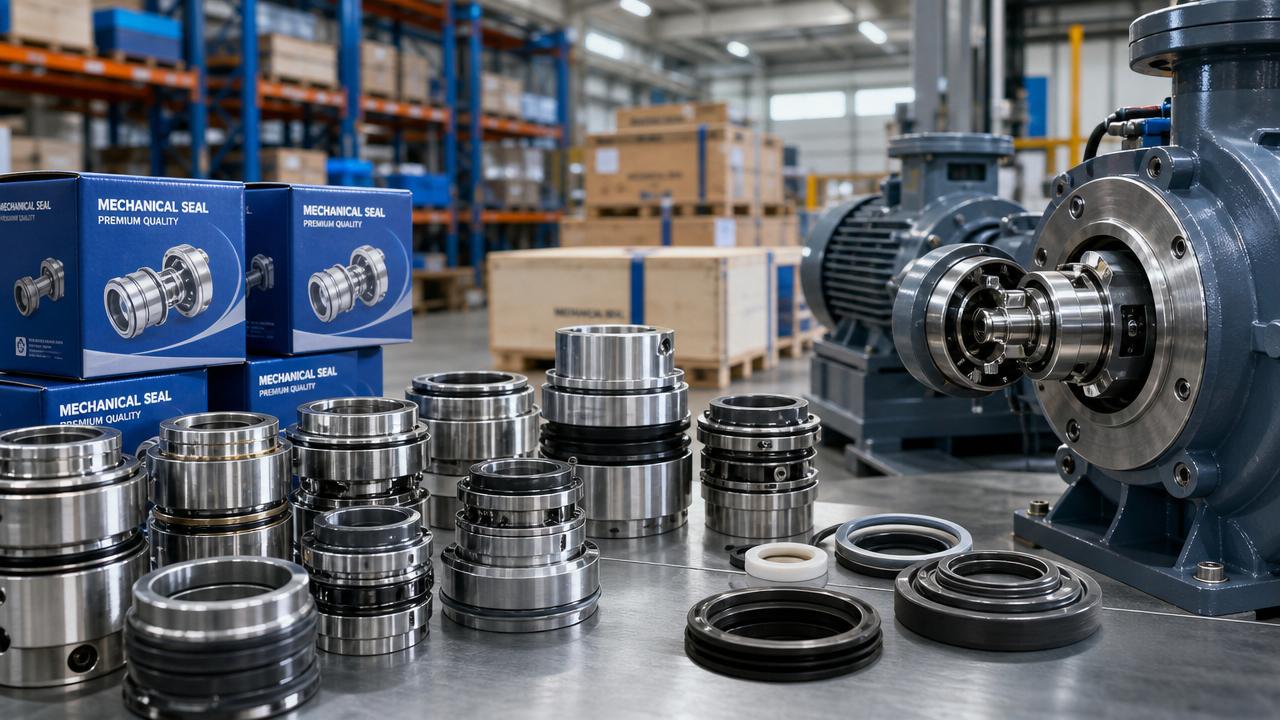
In industrial distribution, split seal wholesale is more than a pricing strategy—it is a speed advantage that reduces downtime, simplifies inventory planning, and strengthens customer retention. For distributors, agents, and resellers serving high-performance sectors, fast replacement capability can directly translate into repeat business, lower operational risk, and a stronger position in demanding maintenance and procurement cycles.
Why a checklist approach works best for split seal wholesale
For distributors, split seal wholesale decisions are rarely just about unit cost. They affect emergency replacement speed, aftermarket service quality, warehouse turnover, and the credibility of your supply promise. A checklist-based approach helps teams avoid the most common mistake in sealing distribution: buying for catalog convenience instead of replacement performance.
This matters even more in industrial environments where maintenance teams cannot afford long disassembly windows. Split seals are often selected because they can be installed without removing major equipment, shafts, or connected assemblies. That service advantage becomes commercially powerful only when wholesale partners can deliver the right specification quickly, consistently, and with enough technical clarity to reduce field errors.
For resellers working across sectors such as process manufacturing, energy systems, rotating equipment maintenance, specialized machinery, and precision industrial operations, the right split seal wholesale strategy should answer five practical questions first: What moves fastest? What fails most critically? What technical data must be confirmed before shipment? What stock creates unnecessary carrying cost? And what service model makes customers reorder from you instead of shopping by price alone?
First-check priorities before committing to a split seal wholesale program
Before expanding your split seal wholesale portfolio, verify whether your target market is driven by planned maintenance, unplanned shutdowns, OEM replacement, retrofit work, or regional service contracts. The same product family can perform very differently from a business standpoint depending on how customers buy and why they need the seal.
- Confirm the replacement scenario. Emergency maintenance buyers prioritize immediate availability, while project buyers may focus more on documentation, price breaks, and qualification history.
- Map the shaft sizes and material combinations that dominate your account base. Broad stocking without demand concentration usually weakens margins.
- Check medium compatibility. Chemical exposure, temperature, pressure, and particulate conditions directly influence split seal suitability and return risk.
- Assess installation expectations. If your customers lack experienced maintenance technicians, support documents and installation guidance become part of the product value.
- Review lead-time sensitivity. A split seal wholesale program delivers the greatest payoff where downtime cost is high and replacement speed has visible financial impact.
These initial checks prevent a common wholesale error: treating all split seals as generic substitutes. In reality, stocking logic should be tied to field urgency, compatibility confidence, and serviceability.
Core evaluation checklist: what distributors must verify
When building or comparing a split seal wholesale supply option, use the following evaluation points as your baseline. This is where margin protection and customer satisfaction are usually won or lost.
1. Dimensional and installation fit
Always verify shaft diameter, equipment envelope, gland dimensions, and any retrofit constraints. A split seal may be attractive because it avoids full teardown, but that benefit disappears if the unit does not fit the installed space or requires unexpected modification.
2. Operating condition range
Check pressure, temperature, rotational speed, runout tolerance, fluid chemistry, and duty cycle. For advanced industrial buyers, split seal wholesale success depends on reducing application mismatch, not just shipping fast.
3. Material and face combination options
Distributors should know which elastomers, metals, and sealing face materials are available and how they align with real applications. Buyers in demanding sectors may ask about corrosion resistance, abrasive service, thermal stability, or compliance with recognized industrial standards.
4. Packaging of technical documentation
A reliable split seal wholesale source should provide dimensional drawings, installation instructions, material specifications, and clear product coding. Missing documents slow procurement approval and increase installation mistakes.
5. Lead time, batch consistency, and reorder stability
Fast replacement only pays off when repeat orders are predictable. Ask whether the supplier can maintain stable product configuration, traceability, and replenishment reliability over time.
Practical comparison table for split seal wholesale decisions
Use this quick comparison framework when screening suppliers or deciding which split seal wholesale line deserves priority in your product offering.
What different channel partners should focus on
Not every buyer in the channel should evaluate split seal wholesale the same way. The best decisions come from aligning the stocking model with your role in the market.
For regional distributors
Regional distributors should prioritize local response time, breadth across common equipment sizes, and technical responsiveness. Your advantage is not being the biggest catalog source, but being the fastest reliable replacement partner when local maintenance teams need immediate action.
For agents and authorized representatives
Agents should focus on brand credibility, exclusivity terms, and qualification support. If you are representing a technical line to industrial end users, split seal wholesale should be backed by application clarity and a consistent commercial policy.
For resellers serving maintenance contractors
This group benefits most from simplified product coding, ready technical sheets, and dependable stock on fast-moving sizes. Contractors often buy under time pressure, so any friction in identification or installation can push them toward another supplier.
Commonly overlooked risks in split seal wholesale
Even experienced channel partners can miss issues that reduce the value of a split seal wholesale program. These risks usually appear after orders start flowing, which makes them more expensive to correct.
- Overstocking low-frequency variants. Too many slow-moving SKUs tie up capital and obscure the true winners in your portfolio.
- Underestimating application support. Fast shipment is helpful, but wrong shipment under emergency conditions damages trust much faster.
- Ignoring installation error rates. Split seals are chosen for convenience, yet improper installation can still trigger leakage, callbacks, and warranty disputes.
- Treating price as the only differentiator. In downtime-sensitive markets, buyers often value certainty, availability, and technical backup more than a small price gap.
- Failing to define substitution rules. If equivalent products are not clearly approved, internal sales teams may make risky replacements during urgent orders.
Execution checklist: how to make fast replacement actually pay off
To turn split seal wholesale into a real commercial advantage, distributors need an operating model, not just inventory. The following actions are practical and measurable.
- Build an A-B-C stock matrix based on replacement frequency, downtime cost, and order predictability.
- Create a short application intake form covering medium, temperature, pressure, shaft size, speed, and failure history.
- Prepare cross-reference tools so internal sales teams can respond quickly to legacy part numbers or field descriptions.
- Bundle split seal wholesale offers with installation support notes, not just price sheets.
- Track return reasons and leakage complaints by application segment to improve future stock decisions.
- Align replenishment agreements with realistic service expectations, especially for emergency-response accounts.
For organizations serving highly engineered industrial systems, this execution discipline matters. Buyers operating in precision process environments, advanced equipment platforms, or regulated technical industries often expect the same level of rigor from replacement component sourcing as they do from original equipment procurement.
Questions to answer before expanding your offering
If you are evaluating whether to deepen your split seal wholesale business, start by answering these internal questions:
- Which customer segments generate the highest downtime-sensitive demand?
- Which seal sizes and material combinations account for most urgent replacements?
- Do we have enough technical data collection discipline to avoid misapplication?
- Can our supplier support both standard stock and special requirements without long uncertainty?
- Are we selling a product, or a replacement-speed promise backed by process?
The strongest channel players usually win because they answer these questions early. They know where split seal wholesale creates margin, where it creates service leverage, and where it is better to stay selective.
FAQ for distributors evaluating split seal wholesale
Is split seal wholesale mainly about getting lower prices?
No. Lower pricing helps, but the bigger value usually comes from faster replacement, reduced customer downtime, and stronger repeat-order behavior. In many industrial accounts, speed and confidence outperform minor price differences.
What is the most important technical factor to confirm?
Application compatibility is the first priority. Shaft size alone is not enough. You should confirm medium, pressure, temperature, speed, and any installation constraints before recommending a part.
How much inventory should a distributor carry?
Carry the smallest range that covers the largest share of urgent demand. A focused stock strategy is usually better than broad speculative inventory, especially when customer needs are concentrated in a known equipment base.
When does split seal wholesale generate the best return?
It delivers the highest return when customers face costly downtime, limited maintenance windows, or difficult equipment disassembly. In these cases, replacement speed becomes a tangible business value.
Final action guide for channel partners
A strong split seal wholesale strategy is not built by stocking everything. It is built by identifying the replacement scenarios where speed matters most, confirming the technical checks that prevent field failure, and structuring your inventory around real demand rather than broad assumption. For distributors, agents, and resellers, that is where fast replacement truly pays off.
If you want to move forward, prepare five inputs before discussing supply options with a manufacturing or technical source: target industries served, common shaft sizes, operating media and temperature ranges, expected order frequency, and desired lead-time commitments. Once those points are clear, it becomes much easier to evaluate product fit, stocking strategy, pricing structure, and cooperation model with confidence.
Industry Briefing
Get the top 5 industry headlines delivered to your inbox every morning.