Seal Quench System Efficiency: What Actually Improves Performance
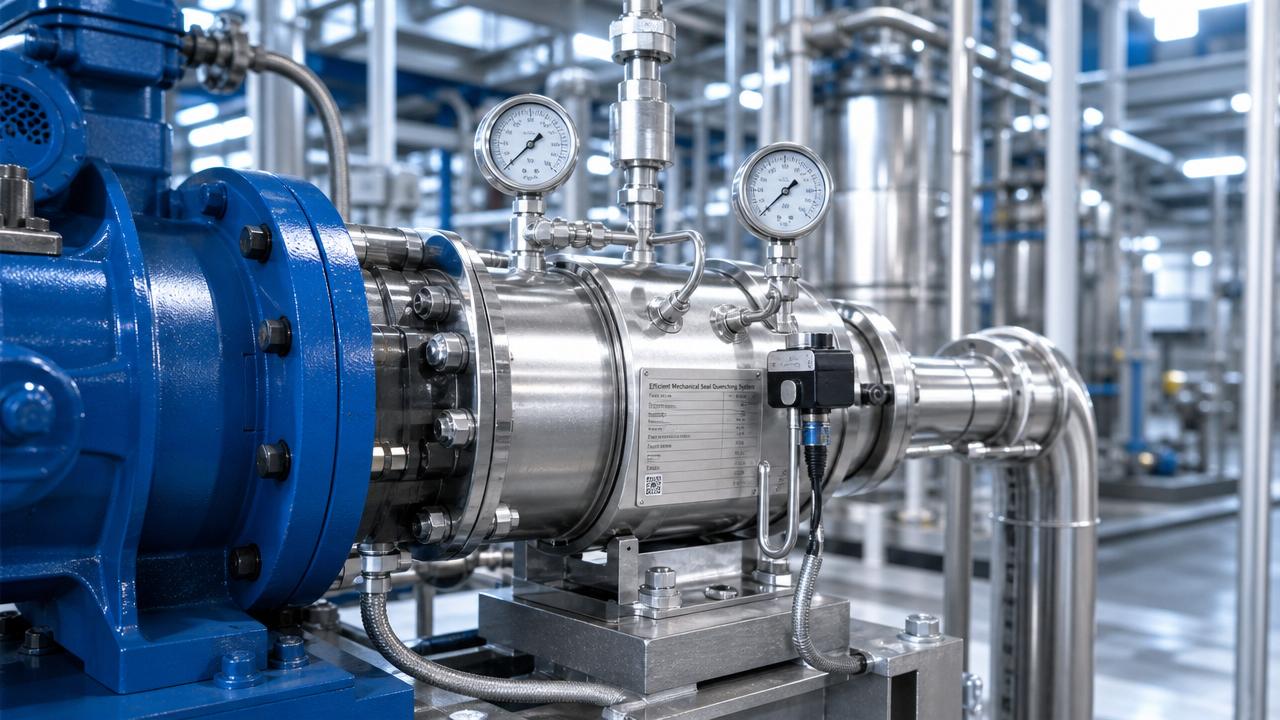
Seal quench system efficiency is rarely improved by a single upgrade. For technical evaluators, real performance gains come from balancing fluid selection, pressure stability, heat removal, seal compatibility, and instrumentation visibility. This article explains which factors actually reduce leakage risk, extend seal life, and improve system reliability in demanding industrial environments.
In high-value process assets, a quench arrangement is not just an accessory around a mechanical seal. It is part of the containment strategy that protects seal faces, controls temperature, limits crystallization, and reduces the probability of dry running or secondary seal damage. For technical teams reviewing capital equipment, retrofit options, or reliability upgrades, the central question is practical: what actually improves seal quench system efficiency in real operating conditions, not just in design brochures?
That question matters across refineries, chemical processing, advanced materials production, pharmaceutical systems, water treatment, and precision manufacturing environments where leakage tolerance is low and downtime costs can escalate within hours. In many cases, a 5°C to 15°C improvement in temperature control, a more stable quench pressure margin, or better instrumentation can make a larger difference than replacing the seal itself.
What Seal Quench System Efficiency Really Means
Seal quench system efficiency should be evaluated as a combined measure of thermal control, fluid coverage, contamination prevention, and operating stability. It is not only about reducing quench fluid consumption. A low-flow system that allows solids buildup, vapor flashing, or face overheating is inefficient even if it appears economical in the short term.
For technical evaluators, the most useful performance indicators usually fall into 4 categories: seal life extension, leakage reduction, maintenance interval length, and operating consistency during load or temperature swings. In many industrial settings, extending seal maintenance cycles from 6 months to 12 months can justify a system redesign even when fluid usage remains unchanged.
Core functions of a quench arrangement
- Remove heat from atmospheric-side seal components
- Prevent coking, salt crystallization, or product buildup around the seal area
- Provide a stable external environment for elastomers, faces, and metal parts
- Support emissions control and housekeeping in services where minor leakage must be managed
The table below helps distinguish between a quench system that only appears functional and one that delivers measurable seal quench system efficiency under demanding duty cycles.
The key takeaway is that efficiency must be tied to seal reliability outcomes. A technically sound quench design often reduces hidden costs such as labor hours, flush circuit troubleshooting, contamination events, and repeated startup instability.
Why single-parameter optimization often fails
Many upgrade projects focus on one variable only: more flow, colder fluid, or higher pressure. That approach can backfire. Increasing flow by 20% without confirming seal face tolerance or drain path capacity can cause splashing, aeration, or poor thermal uniformity. Raising quench pressure too aggressively may also force fluid into areas where it accelerates contamination or secondary seal wear.
A better method is to evaluate the system as a small control loop. The quench fluid, line routing, pressure regulator, orifice sizing, vent management, and instrumentation should work together. In high-spec applications, even a 1 to 2 bar mismatch between intended and actual local pressure can alter system behavior enough to shorten seal life.
The 5 Factors That Most Improve Performance
When teams ask how to improve seal quench system efficiency, the answer almost always comes back to 5 technical factors. These are fluid selection, pressure stability, heat removal, material compatibility, and visibility through instrumentation. Each one affects the others, and weakness in one area can cancel gains elsewhere.
1. Quench fluid selection must match the process risk
The best fluid is not automatically the coolest or the least expensive. It must fit the thermal load, contamination sensitivity, seal materials, and environmental conditions. Water-based media may work well in some ambient-temperature services, but they can create corrosion, scaling, or freezing issues below 0°C or in poor water-quality environments. Light oils may improve boundary protection but can increase residue in high-heat applications.
Technical evaluators should review at least 6 checks before approving a fluid: viscosity range, vapor pressure, specific heat behavior, residue tendency, elastomer compatibility, and disposal requirements. In regulated plants, the compliance aspect can be as important as thermal performance.
2. Stable pressure matters more than peak pressure
A stable pressure differential usually improves seal quench system efficiency more than simply increasing line pressure. The goal is to maintain enough force to keep fluid present at the required interface without introducing pulsation or intermittent starvation. In practice, many systems operate better with tightly controlled moderate pressure than with a nominally higher but fluctuating supply.
Pressure instability often comes from undersized regulators, long tubing runs, trapped air pockets, or poor drain routing. Where operating conditions cycle rapidly, the instrumentation should detect excursions in real time rather than relying on manual monthly inspection.
3. Heat removal must be linked to actual load
Heat removal is one of the most misunderstood variables. More cooling capacity does not guarantee better performance if the quench fluid does not contact the right region or if the heat source is driven by misalignment, vibration, or dry contact. For many services, the target is not maximum cooling but controlled temperature moderation that keeps deposits and elastomer degradation below critical thresholds.
As a screening rule, evaluators should compare startup, steady-state, and upset conditions across at least 3 thermal states. A system that behaves well at nominal load may still fail during the first 30 minutes after startup, when viscosity, product volatility, or seal face friction are outside steady-state norms.
4. Material compatibility prevents hidden failure modes
Material fit extends beyond the seal faces. O-rings, gland hardware, tubing, fittings, and reservoir internals all influence seal quench system efficiency. FFKM, PTFE, fluoroelastomers, stainless alloys, and engineered composites each solve different problems, but wrong combinations can produce swelling, extraction, embrittlement, or galvanic issues over 3 to 12 months.
This matters especially in advanced process industries where fluid purity, high-frequency thermal cycling, or aggressive cleaning chemistry create cumulative damage that is not visible during initial commissioning.
5. Instrumentation converts assumptions into control
Without visibility, teams often confuse symptom and cause. A basic system may operate with only local pressure indication, but critical assets benefit from 4 minimum observation points: supply pressure, return condition, temperature, and fluid level or flow confirmation. In higher-risk duties, adding alarm thresholds or trend logging reduces troubleshooting time and improves maintenance planning.
Instrumentation does not need to be excessive to improve seal quench system efficiency. The value comes from placing the right sensors where decisions can be made faster, especially when evaluating repeated seal distress or unexplained leakage patterns.
Selection Criteria for Technical Evaluators
A structured evaluation framework helps procurement, maintenance, and engineering teams compare options on equal terms. This is particularly important when reviewing OEM proposals, retrofit packages, or site-standard designs across multiple process units.
A practical comparison model
The matrix below organizes the main selection criteria that influence seal quench system efficiency in B2B purchasing decisions. It is designed for technical evaluators who need to balance reliability, operability, and lifecycle cost rather than lowest upfront price alone.
This type of review helps shift discussion from component cost to performance logic. In many cases, the lower-cost option creates 2 to 3 times more maintenance interaction over a year, which changes the total value calculation significantly.
Questions evaluators should ask suppliers
- What pressure and temperature range was the quench circuit designed to handle continuously?
- How does the design prevent trapped gas, dead legs, or unstable return flow?
- Which seal materials and quench fluids have been validated as compatible combinations?
- What minimum instrumentation package is recommended for critical versus noncritical service?
- What maintenance checkpoints are expected at 30 days, 90 days, and 12 months?
These questions are valuable because they test application understanding rather than catalog completeness. A technically mature supplier should be able to explain tradeoffs clearly, including where a simpler system is sufficient and where added control is justified.
Implementation Mistakes That Reduce Efficiency
Even a well-specified design can underperform after installation. Seal quench system efficiency is highly sensitive to execution quality, and many failures originate from ordinary details rather than advanced engineering flaws.
Common field errors
- Routing lines with unnecessary elevation changes that trap air or vapor
- Using fittings or valves that create avoidable pressure drop
- Installing instruments where they read line condition instead of seal-adjacent condition
- Failing to flush debris after assembly, leading to restriction within the first 7 to 30 days
- Commissioning without verifying actual flow path under hot operating conditions
One frequent issue is assuming that room-temperature checkout proves full readiness. In reality, thermal expansion, product viscosity changes, and gas release can alter the system once the unit reaches operating temperature. That is why a staged commissioning review across cold, warm, and steady-state conditions is often more revealing than a single startup observation.
Why maintenance feedback should shape redesign
Maintenance history provides some of the best clues for improving seal quench system efficiency. If technicians repeatedly find the same deposit pattern, the same elastomer damage, or the same low-level leakage signature, those observations should feed directly into design changes. Reliability improvement usually accelerates when engineering and maintenance classify failures by mode rather than by asset number alone.
A practical review cycle may include 3 data layers: visual inspection findings, operating trend data, and replaced-part condition. When those layers agree, the root cause becomes much easier to confirm and the next upgrade becomes more defensible.
How to Build a Higher-Value Upgrade Plan
For most plants, the best improvement path is incremental rather than disruptive. Technical evaluators should prioritize upgrades that improve control and diagnosis first, then address hardware changes where evidence supports them. This approach lowers implementation risk and preserves comparability between old and new operating data.
Recommended 5-step improvement sequence
- Document current pressure, temperature, fluid type, and maintenance interval
- Identify whether the primary problem is thermal, chemical, hydraulic, or observational
- Correct routing, venting, and instrumentation gaps before major component replacement
- Revalidate material compatibility for the actual process and cleaning conditions
- Track results over at least 1 to 3 maintenance cycles before standardizing the design
This sequence is effective because it aligns technical effort with evidence. In many plants, the first 2 steps reveal that the real bottleneck is not the seal model but unstable operating support around it. Once that is corrected, seal quench system efficiency improves in a measurable and repeatable way.
Where specialized technical intelligence adds value
In complex environments, evaluators often need more than product data sheets. They need cross-reference insight on materials, standards, system behavior, and failure patterns across different process conditions. That is where a technical intelligence resource such as G-PCS becomes useful: not as a generic parts directory, but as a decision support layer connecting containment logic, flow control, and reliability requirements.
For organizations managing sensitive flow and energy assets, that broader perspective helps compare alternatives more intelligently, especially when balancing seal design, quench arrangement, and compliance expectations under ISO, API, SEMI, or MIL-spec influenced environments.
Improving seal quench system efficiency depends on integrated decisions, not isolated upgrades. Fluid suitability, pressure stability, heat removal, material compatibility, and instrumentation visibility all shape the final result. For technical evaluators, the strongest purchasing and engineering decisions come from matching these variables to real operating conditions and verifying performance over time.
If you are comparing quench configurations, reviewing seal support risks, or planning a reliability-focused retrofit, G-PCS can help you assess the technical logic behind each option. Contact us to discuss application details, obtain a tailored evaluation framework, or explore more solutions for critical sealing and flow-control systems.
Industry Briefing
Get the top 5 industry headlines delivered to your inbox every morning.