Seal Face Flatness Benchmarks: How Much Precision Is Enough
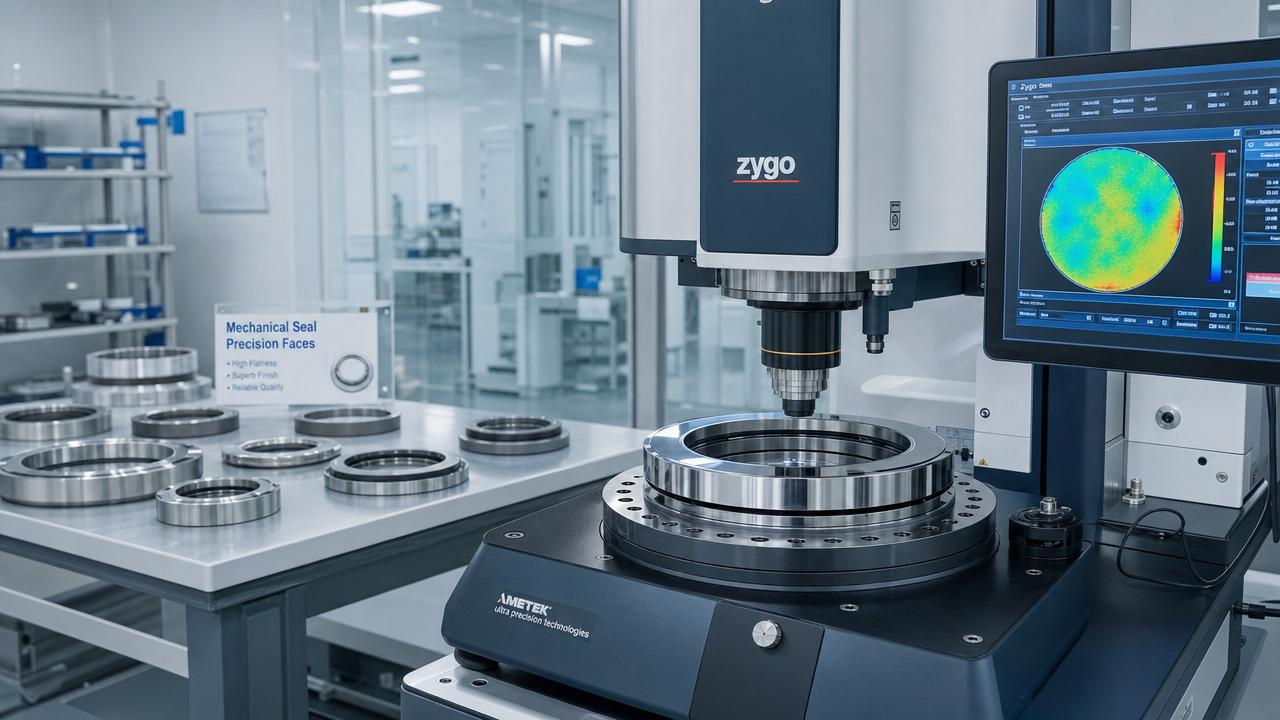
For technical evaluators, defining seal face flatness benchmarks is less about chasing the lowest possible number and more about matching precision to pressure, media, speed, and service life. In high-performance sealing systems, excessive flatness can inflate cost, while insufficient flatness risks leakage, wear, and instability. This article examines how much precision is truly enough for reliable, standards-aligned decision-making.
What seal face flatness benchmarks actually mean
In mechanical sealing, seal face flatness benchmarks define how closely a sealing surface approaches an ideal plane. The concept sounds simple, but in practice it sits at the center of containment performance. A seal face may look smooth under normal inspection and still fail under pressure, thermal cycling, vacuum conditions, or high shaft speed if the topography is not controlled within the correct tolerance band.
For technical evaluators, flatness is not the same as roughness, parallelism, or surface finish. Roughness describes fine texture. Parallelism describes the relationship between two planes. Flatness describes how much a single surface deviates from a true plane. In a dynamic seal or specialized containment assembly, these parameters interact, but they are not interchangeable. A face can be polished yet not flat enough for stable fluid film control.
The most useful way to interpret seal face flatness benchmarks is as a functional requirement rather than a cosmetic one. The benchmark should support controlled leakage, thermal stability, face loading, startup behavior, and wear rate over the intended operating cycle. In advanced sectors such as semiconductor tools, hydrogen systems, RF energy equipment, aerospace platforms, and chemical processing assets, the acceptable benchmark is determined by risk, not by preference.
Why the industry pays close attention to flatness
Across the broader precision-control and specialized-sealing landscape, the industry focuses on seal face flatness benchmarks because modern systems operate with narrower reliability margins than in the past. Higher pressures, more aggressive media, tighter emissions targets, and longer maintenance intervals all increase the penalty of getting the benchmark wrong.
In extreme-environment mechanical seals, a flatness error that seems small on a drawing can distort the real contact condition once thermal growth, pressure distortion, and assembly stress are added. In ultra-high pressure valve internals, an over-relaxed benchmark may allow micro-leakage paths. In vacuum or gas applications, poor face geometry can destabilize the sealing film and produce unpredictable leakage. In critical energy and flow systems, that may affect safety, contamination control, uptime, or regulatory compliance.
At the same time, over-specifying seal face flatness benchmarks creates its own problem. Ultra-tight tolerances require more lapping time, more inspection, more scrap risk, and higher production cost. They can also drive unrealistic supplier qualification criteria if the benchmark is detached from actual service conditions. For procurement directors and engineering teams, the real objective is to buy and qualify precision that adds measurable reliability, not precision for its own sake.
A practical baseline for evaluating precision needs
There is no universal number that answers every application. Seal face flatness benchmarks should be evaluated through the combined effect of operating pressure, media lubricity, temperature range, face diameter, material pair, speed, and allowable leakage. A benchmark that is entirely adequate for a water service cartridge seal may be unacceptable for dry gas sealing or corrosive chemical duty.
Technical evaluators should start by asking three questions. First, what sealing mechanism is being used: contact, mixed-film, non-contacting, or static compression? Second, what failure mode matters most: visible leakage, invisible permeation, heat generation, contamination, or premature wear? Third, what operating condition creates peak distortion: pressure loading, transient startup, thermal shock, or assembly preload? The answer to these questions usually matters more than simply demanding a flatter face.
Industry overview table for seal face flatness benchmarks
The table below summarizes how seal face flatness benchmarks are commonly interpreted in representative industrial contexts. The ranges are directional reference points for evaluation logic, not a substitute for product-specific engineering validation.
Where flatness creates the most business value
The business value of appropriate seal face flatness benchmarks appears in four places. First, they reduce avoidable leakage and field failure. Second, they support more stable lifecycle cost by preventing both premature wear and needless over-processing. Third, they improve comparability across suppliers by turning a vague quality claim into a measurable criterion. Fourth, they help align technical and procurement teams on what level of precision genuinely supports the asset.
This matters especially in organizations managing critical flow and energy assets across multiple factories or regions. Without clear seal face flatness benchmarks, one supplier may quote an aggressive tolerance, another may use a looser internal standard, and a third may report measurement results using a different method entirely. The result is false equivalence during sourcing and weak root-cause analysis during failure review.
For technical intelligence platforms such as G-PCS, the key value lies in connecting benchmark numbers with system logic. A flatness callout only becomes meaningful when linked to application severity, international standards context, material compatibility, and the reliability framework expected by high-consequence industries.
Typical application categories and what “enough precision” looks like
A useful evaluation model is to classify seals by operating severity and then assign seal face flatness benchmarks accordingly. This avoids the common mistake of applying a single premium tolerance to every component family.
In other words, enough precision is reached when further tightening the seal face flatness benchmarks no longer produces a meaningful reliability gain in the actual duty cycle. That threshold varies sharply by application category. Evaluators should seek that inflection point rather than the most impressive tolerance statement.
Measurement method matters as much as the number
Many disagreements about seal face flatness benchmarks arise not from the tolerance itself but from how it is measured and reported. Optical flats, monochromatic light inspection, interferometry, contact metrology, and coordinate measurement systems can all produce useful data, but not always in directly comparable form. Datum choice, environmental control, filtering method, and reporting convention can shift the interpretation.
Technical evaluators should therefore request more than a single pass-fail statement. A robust specification package should define the measurement method, acceptance condition, inspection stage, part support condition, and whether the value refers to total indicator reading, peak-to-valley deviation, light bands, or another equivalent framework. This is especially important in global supply chains where suppliers may use different metrology traditions.
If the benchmark is tied to international standards or customer-specific quality plans, the traceability path should be documented. For high-performance systems, repeatability of measurement often determines procurement confidence more than the nominal flatness claim itself.
Common evaluation mistakes to avoid
One common mistake is treating seal face flatness benchmarks as an isolated attribute. In reality, flatness must be reviewed together with face finish, waviness, hardness, material deformation behavior, spring loading, and assembly alignment. A very flat face made from the wrong material pair may still run hot or wear quickly.
A second mistake is ignoring the difference between as-manufactured and as-installed performance. Distortion from clamping, thermal growth, and pressure can shift the effective face geometry. Benchmarks should be chosen with this conversion in mind, especially for large diameters, brittle materials, and thin cross-section components.
A third mistake is using seal face flatness benchmarks copied from another industry without checking whether the duty profile is comparable. Semiconductor vacuum hardware, refinery process pumps, medical analyzers, and aerospace actuators may all use precision sealing, but they do not define “enough” in the same way.
Practical guidance for technical evaluators
A sound evaluation process begins with application mapping. Define pressure, temperature, media, speed, cycling, cleanliness requirement, leakage allowance, and target maintenance interval. Then review likely distortion drivers and failure modes. Only after that should the team set seal face flatness benchmarks.
Next, compare supplier capability against process need. Ask whether the supplier can repeatedly manufacture and verify the benchmark at production scale, not just in prototype batches. Review metrology method, scrap rate, historical consistency, and corrective action records. Precision that cannot be reproduced is not a true benchmark.
Finally, connect the benchmark to total cost of ownership. If tightening flatness by one level raises cost significantly but does not improve leakage stability, wear pattern, or maintenance interval in validated trials, the tighter benchmark may be unjustified. The strongest decisions are evidence-based and lifecycle-based.
Frequently raised questions in benchmark setting
Does flatter always mean better? No. Better means more suitable for the operating condition. Excessively tight seal face flatness benchmarks can increase cost without improving functional sealing.
Can one benchmark cover all seal materials? Rarely. Carbon, silicon carbide, tungsten carbide, ceramics, and polymer-based interfaces respond differently to load, heat, and deformation.
Should flatness be specified without a measurement method? It should not. Without method clarity, comparison across suppliers and plants becomes unreliable.
When is a tighter benchmark justified? Usually when the application has low lubricity, high pressure, strict emissions limits, contamination sensitivity, or severe failure consequences.
From benchmark numbers to better decisions
The most effective seal face flatness benchmarks are not the lowest numbers available; they are the numbers that fit the service condition, measurement reality, and reliability objective. For technical evaluators, the task is to translate sealing physics into a usable benchmark that suppliers can meet, inspectors can verify, and operators can trust.
In complex industrial environments, that means moving beyond generic tolerance language and toward benchmark frameworks tied to risk, standards context, and application class. When seal face flatness benchmarks are defined this way, organizations gain better sourcing clarity, stronger quality control, and more dependable containment performance. If your team is reviewing critical sealing components across pressure, purity, or extreme-environment applications, the right next step is to validate the benchmark against real operating demands rather than assuming maximum precision is automatically the right answer.
Industry Briefing
Get the top 5 industry headlines delivered to your inbox every morning.