Modular Seal System Trends and Where They Fit Best
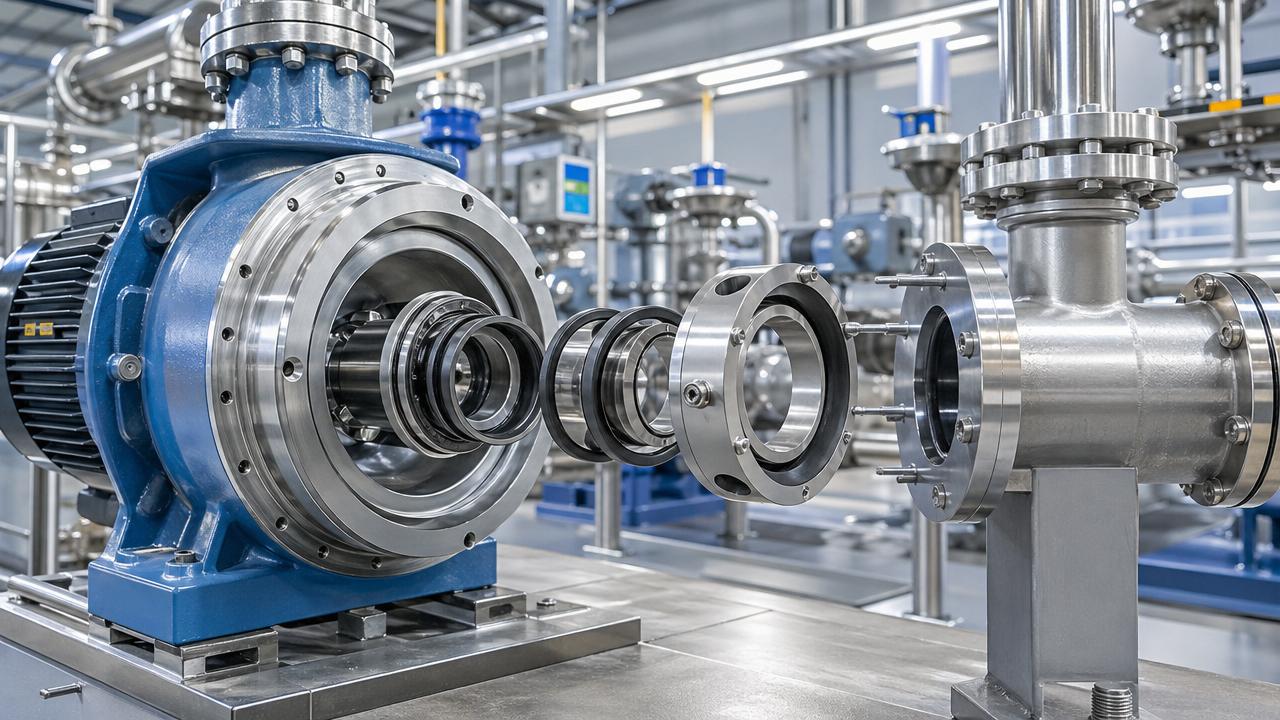
As industries demand faster maintenance, tighter compliance, and higher reliability, modular seal system trends are reshaping how critical equipment is specified across sectors. For enterprise decision-makers, understanding where these systems fit best is essential to balancing uptime, safety, lifecycle cost, and performance in increasingly complex operating environments.
What are modular seal system trends, and why are buyers paying more attention now?
In practical terms, modular seal system trends refer to the shift from single-piece, hard-to-service sealing arrangements toward configurable sealing architectures made from standardized elements. These systems may combine segmented seal faces, cartridge-style assemblies, interchangeable elastomers, polymer backup rings, metallic carriers, and monitoring-ready housings. The appeal is not just engineering elegance. It is business control: shorter maintenance windows, easier replacement planning, more predictable compliance documentation, and lower exposure to unplanned failure.
This shift is being accelerated by several cross-industry forces. First, equipment owners are under pressure to reduce downtime in high-value assets such as pumps, valves, mixers, vacuum systems, thermal process lines, and high-purity production tools. Second, ESG, safety, and leakage standards are becoming more demanding, especially where hazardous media, clean processing, or pressure integrity are involved. Third, global supply chains remain volatile, pushing procurement teams to favor systems that can be sourced, stocked, and serviced with less disruption.
For decision-makers, the real significance of modular seal system trends is that sealing is no longer treated as a minor consumable issue. It is now a strategic reliability topic connected to asset utilization, audit readiness, operating risk, and total cost of ownership.
Where do modular seal systems fit best, and where do they create the strongest value?
Modular seal systems fit best in operations where maintenance access is difficult, process interruption is expensive, or media compatibility is critical. They are especially valuable in facilities that run multiple equipment families and want to standardize spare parts across sites. In these environments, the ability to replace or reconfigure seal modules without redesigning the full assembly can materially improve uptime.
Typical high-fit applications include chemical processing, semiconductor support systems, food and beverage production, water treatment skids, pharmaceutical utilities, energy equipment, industrial microwave or RF systems requiring environmental isolation, and high-pressure control assemblies. In each of these sectors, the common business driver is the same: failures are costly not only because of the part itself, but because of process shutdown, contamination risk, or safety response.
They are also well suited to organizations managing mixed operating conditions. For example, one facility may need different sealing materials for aggressive solvents, steam, cryogenic cycling, or vacuum exposure, while still wanting a common hardware platform. A modular approach supports that flexibility better than fully custom one-off seals.
That said, not every application automatically benefits. In ultra-stable, low-variation, low-service environments, a simpler conventional seal may remain the most economical choice. The best fit appears when adaptability and service efficiency create measurable operational value.
How do modular seal system trends compare with conventional sealing designs?
The main difference is architectural philosophy. Conventional sealing designs are often selected as fixed solutions for a narrow operating window. When process conditions change, the entire sealing arrangement may need replacement or requalification. By contrast, modular seal systems are designed around configurable interfaces. This allows teams to change materials, secondary sealing elements, or support components while preserving the broader assembly concept.
From an engineering standpoint, modular systems can support faster maintenance and easier field servicing. From a procurement standpoint, they can reduce SKU complexity when deployed thoughtfully. From a compliance standpoint, they can simplify validation because standardized modules are easier to document across product lines or operating regions.
However, modular seal system trends should not be interpreted as a universal replacement strategy. Modularity adds interfaces, and interfaces must be engineered carefully. Poor tolerance control, incompatible materials, or oversimplified retrofit assumptions can undermine the benefits.
What should enterprise buyers evaluate before selecting a modular seal system?
The first question is not “Which seal is best?” but “What failure mode are we trying to prevent?” Leakage, wear, thermal distortion, chemical attack, pressure cycling, contamination ingress, and installation error each require different responses. Buyers who skip this step often compare products on price rather than operational fit.
A strong evaluation should cover at least five dimensions. One is media and environment compatibility: pressure, temperature, chemical exposure, vacuum level, cleanliness class, and abrasion profile. Another is mechanical integration: shaft movement, housing tolerances, alignment stability, and service access. A third is regulatory context, especially where ISO, API, SEMI, FDA-related hygiene requirements, or customer-specific validation rules apply. Fourth is lifecycle economics, including spare stocking, maintenance labor, replacement frequency, and lost production risk. Fifth is supplier capability, because modular designs only deliver value when the vendor can provide technical support, traceability, and configuration discipline.
For strategic sourcing teams, modular seal system trends also raise an internal governance question: should the company standardize one platform globally, or allow regional variants? The answer depends on operating diversity, local compliance needs, and how much engineering control the organization can maintain across sites.
A quick buyer checklist
- Define the dominant failure mechanism before comparing quotes.
- Confirm chemical, thermal, and pressure compatibility at real operating extremes, not nominal conditions.
- Review whether modular replacement reduces downtime enough to justify the transition.
- Ask how traceability, validation, and spare part consistency will be managed.
- Evaluate whether the supplier understands both component design and system-level reliability.
What are the most common mistakes companies make when following modular seal system trends?
A frequent mistake is assuming modular means universally interchangeable. In reality, compatibility depends on geometry, tolerances, media exposure, surface finish, compression behavior, and dynamic load conditions. A module that works well in one pump, actuator, or valve family may underperform in another if the operating envelope shifts.
Another mistake is focusing only on maintenance convenience while underestimating process sensitivity. In high-purity, high-frequency, ultra-high-pressure, or extreme-temperature systems, seal design must protect not just against leakage but against outgassing, particle generation, dielectric instability, thermal shock, or permeation. This is where technical intelligence matters more than catalog simplicity.
Companies also misjudge cost by comparing purchase price without modeling failure consequence. A lower-cost conventional seal may appear attractive until one leakage event causes contamination, safety review, line stoppage, or product scrap. Conversely, some organizations over-engineer modular systems for assets that do not need them, creating complexity without meaningful return.
Finally, teams sometimes neglect implementation discipline. Even the best modular seal system trends will not deliver results without installation procedures, torque control, staff training, spare governance, and periodic review of field performance data.
How do cost, lead time, and ROI usually work in modular seal system decisions?
Upfront cost can be higher for modular solutions, especially when the design includes premium polymers, advanced composites, cartridge integration, or sensor-compatible features. But decision-makers should evaluate ROI across the full operating cycle. The largest gains usually come from reduced downtime, lower maintenance labor, fewer emergency purchases, and improved process continuity.
Lead time can improve when standardized modules are already qualified and stocked, but it can worsen if the organization selects highly customized variants without a long-term platform strategy. This is why many sophisticated buyers use modularity not as endless customization, but as structured standardization. They define a limited family of approved modules that can cover most operating cases with controlled variation.
ROI is strongest where downtime costs are high, service labor is scarce, and reliability incidents carry compliance or safety impact. In low-duty applications with easy access and low replacement consequence, the economic case may be weaker. The best procurement decisions therefore combine engineering review with operational finance, not one or the other in isolation.
How can executives tell whether modular seal system trends are relevant to their sector right now?
A useful way to judge relevance is to ask whether sealing performance has become a limiting factor in uptime, compliance, cleanliness, safety, or service productivity. If the answer is yes, modular seal system trends deserve immediate attention. This is particularly true for companies scaling advanced manufacturing, modernizing utilities, operating harsh process environments, or consolidating global maintenance practices.
Executives should also look for organizational signals: too many unique spare parts, repeated leakage investigations, frequent seal-related shutdowns, inconsistent regional specifications, or long supplier response times. These symptoms often indicate that sealing has been managed tactically rather than strategically.
For enterprises serving highly sensitive technical markets, a more disciplined approach is essential. This is where a data-driven intelligence framework such as G-PCS adds value: not by promoting one generic product concept, but by comparing materials, architectures, standards alignment, and operating risk across real-world high-performance systems.
FAQ summary: what should decision-makers remember most?
The most important takeaway is that modular seal system trends are not simply about convenience. They reflect a broader market move toward maintainable, traceable, adaptable sealing strategies that support business resilience. Their best fit is in operations where failure is expensive, service speed matters, and environmental integrity cannot be compromised.
Before moving forward, companies should confirm four things: the dominant failure mode, the real operating envelope, the internal standardization goal, and the supplier’s ability to support qualification and lifecycle performance. If those points are clear, modular solutions can become a strong lever for reliability improvement and supply-chain simplification.
If you need to confirm a specific direction, parameters, timeline, quotation basis, or cooperation model, the most productive first discussion usually covers application media, pressure and temperature range, maintenance intervals, compliance requirements, current failure history, and the level of part standardization you want across sites. Those answers will quickly show where modular seal system trends fit best for your business and where a more conventional sealing strategy remains the smarter choice.
Industry Briefing
Get the top 5 industry headlines delivered to your inbox every morning.