Modular Seal System Trends: What Cuts Downtime in 2026
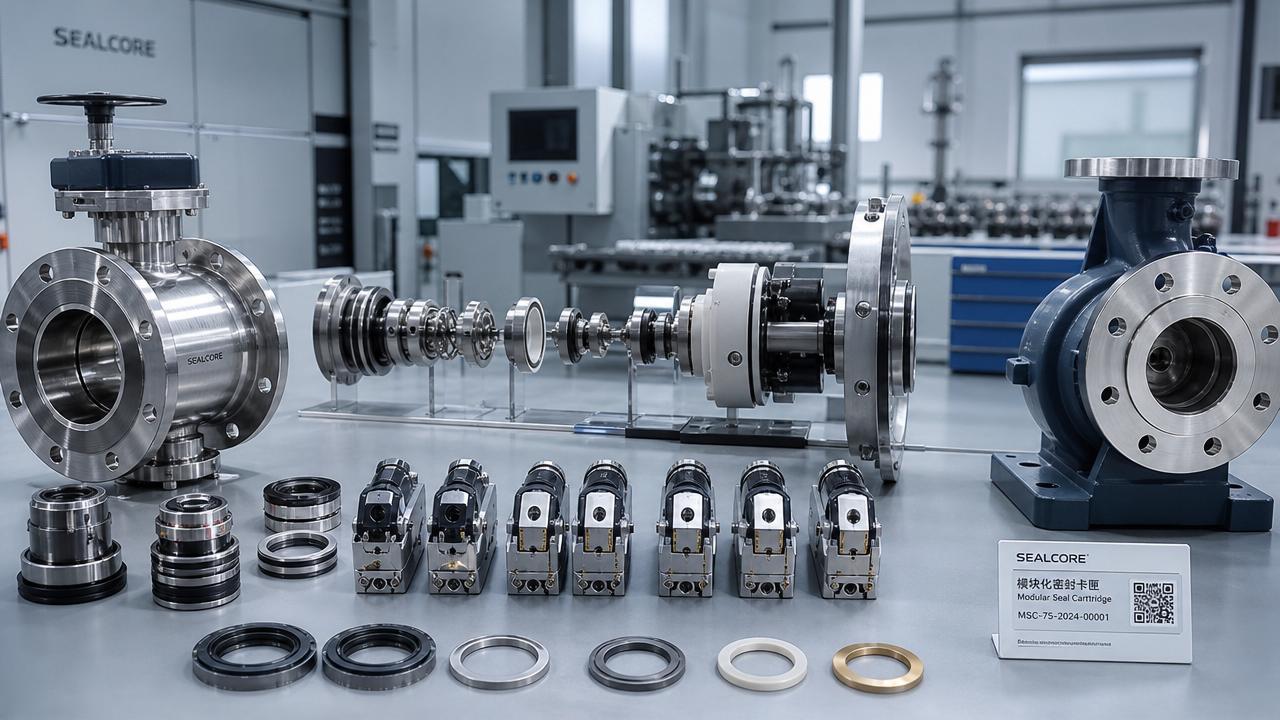
As uptime becomes a board-level KPI, modular seal system trends are reshaping maintenance strategy across advanced industrial assets.
In 2026, the strongest designs are not only leak-resistant. They also shorten service windows, simplify replacement, and support predictive reliability programs.
Across energy, semiconductor, aerospace, RF systems, and precision automation, downtime now carries regulatory, revenue, and reputational consequences.
That is why modular seal system trends matter beyond component engineering. They influence lifecycle cost, spare planning, qualification speed, and operational continuity.
Definition and Scope of Modular Seal System Trends
Modular seal systems use standardized, replaceable sealing elements assembled into a repeatable architecture.
Instead of redesigning an entire interface, teams can swap cartridges, sleeves, gaskets, or segmented assemblies with controlled fit and performance.
The most important modular seal system trends in 2026 center on maintainability, compatibility, and verification.
This includes faster field changeouts, fewer alignment variables, digital traceability, and materials qualified for harsher duty cycles.
In practical terms, modularity reduces dependence on custom emergency fabrication and lowers the chance of installation error during high-pressure shutdowns.
For integrated systems, sealing is no longer a passive part. It is an active reliability layer.
Core attributes seen in 2026 designs
- Cartridge-based replacement with reduced disassembly steps
- Standardized interfaces across multiple equipment families
- Material sets matched to media, pressure, temperature, and cleanliness
- Serialized traceability for compliance and root-cause analysis
- Sensor-ready geometry for wear or leakage monitoring
Industry Signals Driving Modular Seal System Trends
Several market signals explain why modular seal system trends are accelerating across the broader industrial landscape.
First, equipment is running under tighter tolerances and more aggressive media profiles.
Second, labor constraints make long, expert-dependent rebuilds increasingly expensive.
Third, sustainability targets favor longer service life and lower scrap from full assembly replacement.
These shifts make modular seal system trends relevant in both heavy industry and high-tech process environments.
The common objective is simple: contain flow reliably while minimizing intervention time.
What Actually Cuts Downtime in 2026
Not every innovation reduces shutdown duration. The most effective modular seal system trends share a direct path to faster recovery.
1. Cartridge-style replacement
Preassembled modules reduce manual fitting, orientation errors, and onsite adjustment.
When replacement becomes a controlled swap, restart time becomes more predictable.
2. Cross-platform standardization
A common seal footprint across valves, actuators, pumps, or microwave subsystems simplifies spare stocking.
It also reduces qualification delays when one line needs urgent component substitution.
3. Predictive compatibility mapping
Leading programs now assess chemical exposure, pressure spikes, thermal cycling, and cleaning chemistry before failure occurs.
This changes modular seal system trends from reactive maintenance to prequalified operating windows.
4. Embedded identification and traceability
Serialized components support installation accuracy, service history review, and faster containment of recurring defects.
Traceability shortens diagnosis time, which is often overlooked in downtime calculations.
5. Material modularity
The hardware remains constant, while elastomer, composite, or face materials change by application.
That approach supports rapid adaptation without introducing full design revalidation.
Operational Value Across Complex Systems
The business value of modular seal system trends is strongest where reliability events interrupt larger process chains.
A small leak or seal rebuild delay can idle upstream and downstream assets simultaneously.
In that context, modular designs improve more than maintenance speed.
- Lower mean time to repair through simpler service procedures
- Reduced spare complexity with shared modular components
- More stable quality outcomes across global facilities
- Better compliance evidence for audited sectors
- Higher confidence in restart after maintenance events
For highly regulated or precision environments, restart confidence may be as valuable as raw service speed.
Uncertain requalification can extend downtime even after the mechanical task is finished.
Typical Application Paths by System Type
The same modular seal system trends appear differently depending on process demands.
This classification helps connect modular seal system trends to real maintenance and qualification constraints.
Implementation Considerations and Risk Controls
Adopting modular seal system trends without a framework can create hidden risk.
A faster replacement method still fails if tolerances, media compatibility, or service procedures remain inconsistent.
Recommended evaluation points
- Map failure modes by pressure, temperature, chemistry, and duty cycle.
- Separate true module standardization from cosmetic product families.
- Verify installation repeatability with documented torque and alignment controls.
- Require traceability linked to lot, material, and service history.
- Align qualification with ISO, API, SEMI, or MIL-SPEC where relevant.
- Model spare inventory benefits before broad rollout.
Another critical point is data discipline. Predictive maintenance only works when seal performance information is collected consistently.
Without usable field data, advanced modular seal system trends become little more than catalog language.
Action Path for 2026 Planning
The best next step is to review where downtime is driven by seal replacement complexity, not only by seal failure itself.
That distinction reveals whether modular seal system trends can deliver measurable uptime gains.
Start with high-consequence assets, compare service procedures, and identify interfaces suitable for cartridge or standardized module conversion.
Then align materials, traceability, and qualification evidence into one reliability roadmap.
In 2026, downtime reduction will come less from isolated component upgrades and more from disciplined sealing architecture choices.
That is the real significance of modular seal system trends for complex industrial systems.
Industry Briefing
Get the top 5 industry headlines delivered to your inbox every morning.