Modular Seal System Trends Reshaping Maintenance Planning
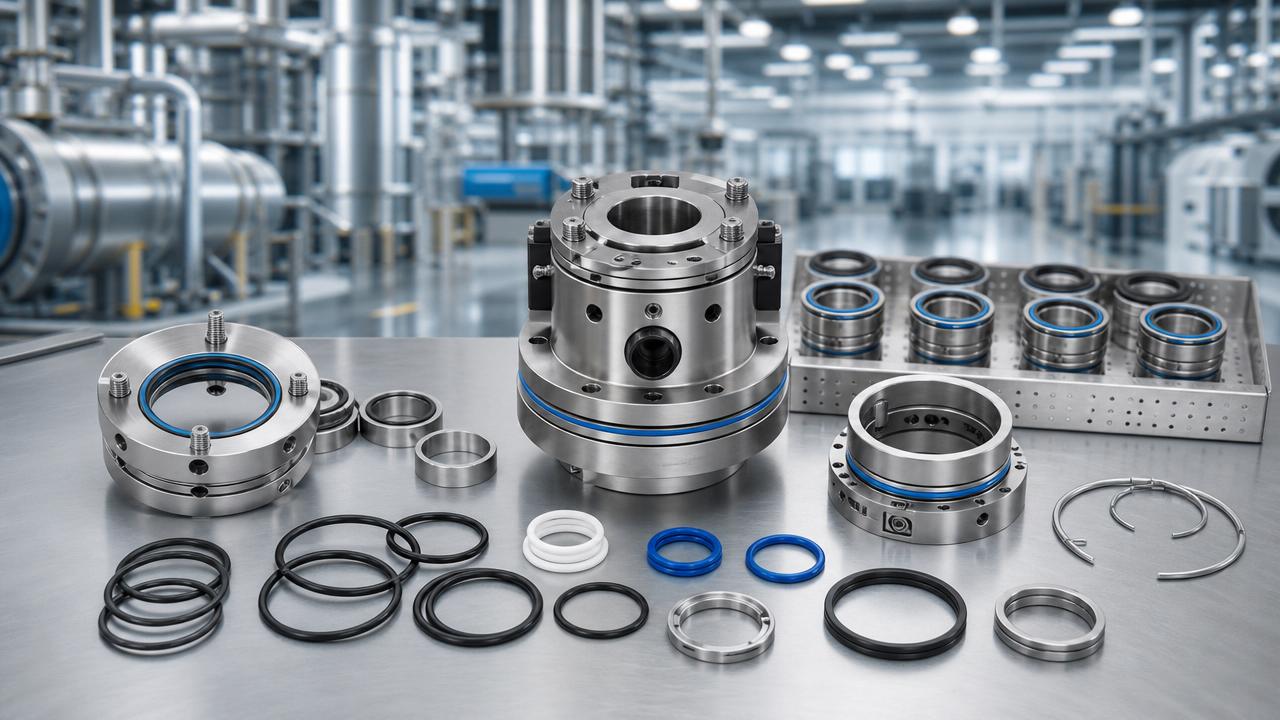
Modular seal system trends are no longer just a design topic for OEMs. For aftermarket maintenance teams, they directly affect how fast a unit can be serviced, how many spare parts must be stocked, and how confidently leaks can be prevented after restart. In practical terms, the shift toward modular sealing means shorter interventions, better repeatability, and more predictable maintenance planning—if teams know how to evaluate the systems correctly.
For service and maintenance personnel, the core question is not whether modularity is fashionable. It is whether a modular seal architecture can reduce downtime without introducing new failure points. In most high-performance industrial environments, the answer is yes, but only when the seal system is matched to process conditions, installation capability, and the site’s spare parts strategy.
This article examines the modular seal system trends that matter most to aftermarket maintenance teams. It focuses on what helps in the field: inspection planning, shutdown preparation, replacement workflow, inventory control, training needs, and risk reduction. Rather than treating modularity as a broad concept, the discussion centers on how maintenance planners and technicians can use it to improve uptime and control lifecycle cost.
Why modular seal system trends matter more to maintenance teams than ever
Across processing, energy, semiconductor support systems, advanced manufacturing, and other reliability-driven sectors, maintenance expectations have changed. Plants are under pressure to reduce unplanned outages, tighten emissions control, and document service quality more rigorously. At the same time, many systems are becoming more compact, more automated, and less forgiving of minor leakage or assembly error.
That is why modular seal system trends are gaining attention. A modular sealing approach separates the sealing function into replaceable or standardized subcomponents that can be inspected, swapped, or configured with less disruption than traditional integrated assemblies. For maintenance teams, this can simplify repair events and reduce the uncertainty that often surrounds complex sealing work.
The biggest practical advantage is not simply faster replacement. It is planning visibility. When seal elements are modular, teams can define which parts are wear items, which interfaces are reusable, which dimensions must be checked during shutdown, and which failure signatures point to a specific subcomponent. That clarity improves work packs, spare kits, and troubleshooting speed.
In demanding service environments, this matters because downtime cost is rarely limited to the seal itself. A small sealing problem can trigger contamination, safety risk, pressure loss, product quality issues, and extended restart validation. A maintenance-friendly modular design can reduce the knock-on impact of what would otherwise be a minor component failure.
What aftermarket maintenance personnel actually want to know before adoption
When maintenance readers search for information on modular seal system trends, they are usually not looking for abstract market forecasts. They want answers to direct operational questions. Will this reduce replacement time? Will it lower leak recurrence? Will technicians need special tools? Can the site stock fewer part numbers? And will the system remain reliable under real service conditions rather than clean test conditions?
These concerns are valid because a modular system can either simplify maintenance or create extra interface complexity. A design with well-controlled tolerances, clear assembly orientation, and robust material compatibility can be a major improvement. A poorly chosen modular arrangement may increase the number of potential leak paths or create confusion during installation.
For that reason, maintenance teams should evaluate modularity through five practical filters: intervention time, skill dependency, spare part rationalization, fault isolation, and post-maintenance reliability. If a modular seal system improves at least four of these areas without weakening the fifth, it is likely to support better maintenance planning.
Another key question is whether the modular architecture supports standard maintenance documentation. Service personnel benefit when each seal module has identifiable wear limits, inspection criteria, torque values, and replacement intervals. Without this documentation, the modular concept may look attractive on paper but still perform like a custom repair problem in the field.
Shorter shutdowns are the clearest maintenance benefit
The most visible impact of modular seal system trends is the reduction of shutdown labor time. Traditional sealing arrangements often require partial disassembly of adjacent components, careful extraction of bonded or integrated elements, and time-consuming cleaning before reassembly. Modular systems can reduce these steps by using cartridge-style assemblies, segmented sealing sets, or pre-configured replacement kits.
For maintenance planning, shorter service windows mean more than labor savings. They allow planners to align sealing work with tighter production schedules and reduce the risk that one difficult seal replacement will delay an entire outage. In facilities where maintenance windows are shrinking, this is one of the strongest arguments for modularization.
Field teams also benefit from more repeatable work. If the seal module is designed for controlled installation depth, orientation, and compression, the quality of the repair depends less on individual technician interpretation. That reduces variability between shifts, contractors, and sites. It also helps less experienced technicians perform to a higher standard after proper training.
However, teams should confirm that “quick replacement” is real in practice. Ask whether the module can be replaced with standard site access, whether line removal is required, whether alignment checks are still needed, and whether contamination control steps increase handling time. A fast bench procedure does not always translate into a fast in-situ repair.
Spare parts strategy is shifting from component stockpiling to kit-based readiness
One of the most important modular seal system trends is the move toward smarter spare parts planning. In many facilities, seal-related inventory grows over time because teams retain multiple variants for different machines, revisions, and emergency substitutions. This ties up capital and often still fails to guarantee that the correct configuration is available during an outage.
Modular systems can help by standardizing interfaces while allowing only selected sealing elements to vary by duty, chemistry, or temperature class. Instead of stocking complete assemblies for every scenario, maintenance stores may carry a smaller number of common housings or carriers plus application-specific seal modules. This can improve inventory efficiency without increasing service risk.
For aftermarket teams, the value lies in better readiness. A kit-based approach lets planners stage exactly what is needed for a shutdown: primary seal modules, secondary containment elements, fasteners, lubricants, and inspection gauges where relevant. This reduces the common problem of having “most of the parts” but still losing hours because one seal ring, insert, or compatible O-ring is missing.
That said, inventory simplification should not be assumed. Maintenance managers need a bill-of-material comparison between legacy and modular designs, including revision control rules. They should also verify shelf life, packaging requirements, contamination sensitivity, and traceability labeling. If these basics are weak, the inventory benefits of modularity may not be realized consistently.
Fault isolation becomes faster when seal systems are designed as serviceable modules
Another reason modular seal system trends matter is that they improve diagnosis. In conventional assemblies, leak sources may be difficult to separate from adjacent wear, distortion, or assembly damage. A modular design can isolate functional zones, making it easier to identify whether failure originated in a primary sealing face, a secondary elastomer element, a backing support, or an interface surface.
For maintenance teams, faster fault isolation means less trial-and-error replacement. Instead of changing an entire assembly and hoping the problem disappears, technicians can inspect module-specific damage patterns and match them to operating history. This improves root cause analysis and helps prevent repeat failures.
Modularity also supports clearer condition records. If a maintenance system tracks which specific module failed, under what hours, temperature range, pressure cycling profile, and media exposure, the organization can build better reliability models. Over time, that data supports more accurate preventive intervals and more informed procurement decisions.
The real maintenance gain appears when modular diagnosis is paired with structured failure coding. Teams should classify causes such as thermal degradation, extrusion, chemical swelling, compression set, face wear, particulate damage, or installation error. Once the module and failure mode are both known, planning becomes more predictive rather than reactive.
Material and interface compatibility still determine whether modularity succeeds
It is easy to focus on replacement convenience and overlook the fundamentals. Yet the most important truth behind current modular seal system trends is that modularity does not override the physics of sealing. A system that is easy to service but poorly matched to pressure, fluid chemistry, thermal cycling, shaft movement, or surface finish will still fail.
Maintenance teams should therefore pay close attention to material pairing and interface control. In high-performance environments, small differences in elastomer grade, composite reinforcement, spring material, or surface energy can significantly affect sealing life. Modular systems often offer mix-and-match flexibility, but that flexibility must be governed by clear engineering rules.
From a maintenance planning perspective, this means spare part substitutions should be tightly controlled. A visually similar module may not have equivalent permeation resistance, compression behavior, or low-temperature response. If service teams rely on modularity to improvise without material validation, leak risk can increase rather than decrease.
The best modular solutions are those with strong compatibility matrices, validated operating envelopes, and unambiguous part identification. Maintenance staff should insist on these tools because they reduce the chance of selection error during urgent repairs. In critical service, clarity is part of reliability.
Training requirements are changing from craft experience to standardized procedure control
Many maintenance leaders assume modular systems require less skill. In one sense, that is true: they can reduce the dependence on highly individualized fitting techniques. But they do not eliminate the need for discipline. Instead, they shift skill requirements toward procedural accuracy, cleanliness control, inspection judgment, and proper documentation.
For service technicians, this is often a positive development. A well-designed modular seal system usually comes with defined assembly sequences, go/no-go inspection points, specified compression settings, and standardized acceptance checks. This allows teams to train faster and maintain more consistent repair quality across personnel changes.
Maintenance planning should adapt accordingly. Training programs need to cover module identification, handling precautions, storage conditions, damage recognition, and post-installation verification. If the system uses specialized retainers, alignment features, or preloaded elements, technicians must understand not only how to install them but also how to recognize when surrounding hardware makes reuse unsafe.
In other words, modularity reduces some traditional craft variability but increases the importance of process discipline. Organizations that support this shift with visual work instructions, digital checklists, and failure photo libraries tend to see the greatest reliability benefits.
How to decide if a modular seal system is right for your maintenance plan
Not every application should be converted immediately. Maintenance teams need a practical screening method. Start with assets that combine high downtime cost, recurring seal replacements, difficult access, or significant leak consequences. These are the environments where modular seal system trends can deliver the most visible return.
Next, review the maintenance history. Look for repeat failure patterns, excessive mean time to repair, too many unique spare part numbers, or frequent uncertainty during troubleshooting. If these problems are present, modularity may solve not only the seal issue but also the planning inefficiency surrounding it.
Then assess implementation risk. Ask whether the modular design has proven service data in comparable pressure, temperature, and media conditions. Confirm whether dimensional changes affect adjacent components. Check whether maintenance documentation, training support, and spare part logistics are mature enough for field deployment.
A simple decision framework can help. Score the candidate system against six factors: repair time reduction, leak-risk reduction, spare stock simplification, compatibility confidence, training burden, and total installed cost. If the combined operational value is strong and reliability risk remains low, modular adoption is justified.
What maintenance teams should track after implementation
Successful adoption does not end with installation. To understand whether modular seal system trends are truly improving maintenance outcomes, teams should track a focused set of performance indicators. The most useful metrics include mean time to repair, repeat leak rate, seal-related downtime hours, spare part consumption by module type, and post-maintenance defect findings.
It is also helpful to compare planned versus actual shutdown performance. Did the modular system reduce intervention time as expected? Were any additional tools, cleaning steps, or alignment checks required? Did technicians report fewer installation difficulties? These details reveal whether the service model is working as intended.
Reliability tracking should include failure mode quality, not just event count. If leaks become less frequent but more severe, the design or maintenance process still needs attention. Likewise, if replacement becomes faster but module selection errors increase, documentation and training may need improvement.
Over time, this data allows organizations to move from one-time product substitution to a more strategic maintenance model. The modular seal becomes part of a broader reliability framework involving outage planning, inventory policy, technician standardization, and root cause feedback.
Conclusion: modularity is most valuable when it improves planning, not just replacement speed
Among today’s modular seal system trends, the most important shift for aftermarket maintenance personnel is the move from component-focused repair to system-focused service planning. Modular sealing solutions can shorten shutdowns, improve fault isolation, simplify inventory, and support more repeatable maintenance execution. But these benefits depend on proper material selection, interface validation, technician training, and disciplined documentation.
For maintenance teams, the best way to evaluate modularity is to ask a practical question: does this design make the next outage easier to plan, safer to execute, and less likely to repeat? If the answer is yes—supported by real service data and clear maintenance procedures—then modular sealing is not just a product trend. It is a meaningful reliability tool.
In increasingly demanding industrial environments, that distinction matters. The strongest modular seal strategies are those that turn sealing from a recurring maintenance uncertainty into a controlled, predictable part of asset uptime management.
Industry Briefing
Get the top 5 industry headlines delivered to your inbox every morning.