Innovations in Diamond-Coated Seals for Abrasive Service
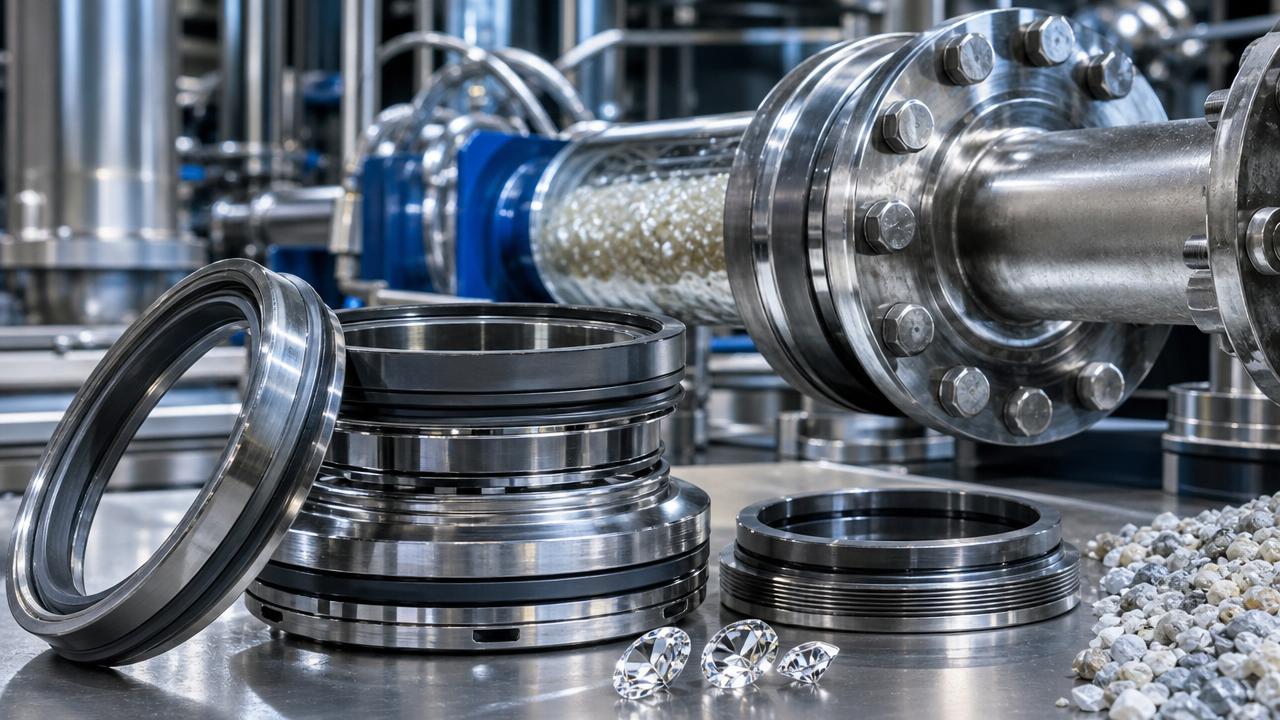
Abrasive media can destroy conventional sealing surfaces long before systems reach their designed service life. That is why innovations in diamond-coated seals are drawing attention from engineering and industrial decision environments focused on wear resistance, leakage control, and stable operation under severe duty cycles. In abrasive slurry pumps, dry gas seals, mixers, chemical transfer lines, mineral processing systems, and high-purity equipment, seal failure rarely comes from one factor alone. It is usually the result of friction, particle attack, thermal instability, material mismatch, and poor face design acting together. This article examines the most important innovations in diamond-coated seals, how they work, where they fit best, and what should be checked before implementation.
What are diamond-coated seals, and why are they different in abrasive service?
Diamond-coated seals are sealing components whose critical contact surfaces are enhanced with a thin diamond or diamond-like carbon based layer to improve hardness, reduce wear, and stabilize friction behavior. In abrasive service, these coatings protect the seal face from the cutting and plowing action of suspended particles that would quickly scar softer materials. The core value of innovations in diamond-coated seals is not simply extreme hardness. It is the ability to combine hardness with controlled surface finish, chemical resistance, and low-friction behavior in a practical industrial package.
Traditional hard face combinations such as silicon carbide versus carbon still perform well in many applications, but they can suffer when particle loading is high, lubrication is unstable, or intermittent dry running occurs. Diamond-coated surfaces offer a more durable barrier against abrasive attack, especially when coating adhesion, substrate preparation, and counterface compatibility are engineered as a system. That system-level approach defines the latest innovations in diamond-coated seals across multiple industries.
Another difference is consistency over time. In severe service, a seal may appear acceptable during startup yet degrade rapidly after micro-scratches alter the fluid film. Diamond-coated faces help preserve the original sealing geometry longer, reducing leakage drift and extending maintenance intervals. For high-value assets where uptime and environmental containment are critical, that stability can be more important than raw hardness alone.
Which innovations in diamond-coated seals are driving current performance gains?
The most significant innovations in diamond-coated seals are coming from coating science, deposition control, and interface engineering. Earlier coating approaches often struggled with adhesion, thickness variation, residual stress, or cracking under thermal shock. Newer processes have improved these weaknesses and widened the practical operating window.
1. Advanced deposition methods
Chemical vapor deposition and refined physical vapor deposition techniques now produce more uniform coatings with stronger bonding to substrates such as silicon carbide, tungsten carbide, and selected engineered metals. Better control of grain structure and layer density improves both wear resistance and surface integrity. This is a major reason innovations in diamond-coated seals are moving from niche use into broader industrial adoption.
2. Multilayer and gradient architectures
Instead of relying on a single hard layer, many designs use transition layers that gradually bridge the mechanical differences between substrate and top coating. These gradient structures reduce stress concentration and improve adhesion during pressure cycling and thermal fluctuation. In abrasive service, that means fewer coating delamination events and better long-term reliability.
3. Surface texturing and fluid-film optimization
Some of the latest innovations in diamond-coated seals integrate engineered micro-textures to manage lubrication at the seal interface. Proper texturing can support film formation, lower friction peaks at startup, and reduce direct asperity contact. This is especially valuable in mixed lubrication regimes where abrasion and heat generation interact.
4. Application-specific material pairing
High performance does not come from coating one face and hoping for the best. It depends on pairing the coated face with a compatible counterface, secondary seal material, spring metallurgy, and flush plan. Modern development focuses on full seal system compatibility, including chemical exposure, shaft dynamics, pressure reversals, and contamination behavior.
Where do innovations in diamond-coated seals deliver the most value?
The strongest use cases involve abrasive particles, high cycle counts, unstable lubrication, or strict leakage limits. These conditions appear across the comprehensive industrial landscape, from heavy process sectors to advanced technology systems requiring precise containment and clean operation.
In mining and mineral processing, slurry pumps and agitators expose seals to continuous particle erosion. Here, innovations in diamond-coated seals help maintain face flatness and reduce rapid groove formation. In chemical processing, particles may be combined with corrosive fluids, making coating chemistry and substrate selection equally important. In wastewater and pulp operations, fibrous and abrasive contaminants can create irregular contact conditions that benefit from low-friction, hard-face designs.
High-tech sectors also benefit. Precision flow systems, specialized valves, and extreme-environment mechanical seals often require stable sealing performance in compact footprints. In these applications, even minor wear can change leakage behavior, contaminate process streams, or disrupt calibration. The appeal of innovations in diamond-coated seals is that they support both durability and dimensional stability where tolerance windows are narrow.
They are also valuable in equipment that experiences frequent starts and stops. During transient conditions, fluid films are less stable and contact wear can accelerate. A properly engineered diamond-coated interface can reduce startup scuffing and preserve performance between maintenance cycles.
How should diamond-coated seals be evaluated and selected?
Selection should begin with failure mode analysis rather than coating preference alone. Not every abrasive service needs a diamond-coated solution, and not every diamond-coated product is suitable for every fluid or machine. The best results come from defining the dominant stressors and then checking whether the proposed design addresses them directly.
- Particle size, hardness, concentration, and shape
- Pressure, temperature, speed, and cycling profile
- Dry-run probability or lubrication interruption risk
- Chemical compatibility with substrate, coating, and elastomers
- Shaft movement, vibration, and alignment condition
- Required leakage performance and service interval target
When reviewing innovations in diamond-coated seals, coating thickness alone should not be used as the main indicator of quality. Adhesion strength, residual stress control, face finish, and counterface design often matter more. Test evidence under realistic abrasive conditions is especially valuable. Bench friction data can be useful, but operating data from slurry, contaminated fluid, or cyclic duty is more relevant for practical decision-making.
What risks or misconceptions should be avoided?
One common misconception is that diamond-coated surfaces are universally superior. In reality, innovations in diamond-coated seals are highly effective only when the coating, substrate, geometry, and operating environment are aligned. A poorly matched seal can fail despite having a premium coating.
Another risk is focusing only on abrasive wear while ignoring thermal behavior. If flash temperatures rise due to poor lubrication or unstable contact, coating damage can still occur. Installation quality also matters. Misalignment, shaft runout, and contaminated assembly can quickly reduce the benefit of advanced seal faces.
There is also a cost misconception. The purchase price of diamond-coated components is usually higher than conventional options, but total lifecycle cost may be lower when downtime, leakage loss, environmental exposure, and replacement labor are considered. However, that economic advantage must be validated with service data, not assumed automatically.
How do cost, lead time, and implementation planning affect adoption?
The business case for innovations in diamond-coated seals depends on failure frequency, asset criticality, and maintenance economics. In systems where seal replacement is easy and inexpensive, a conventional solution may remain acceptable. In high-value equipment, hazardous media service, or remote operations, the cost of failure can far exceed the component premium.
Lead time can vary because advanced coatings may require specialized production, substrate preparation, and quality checks. Implementation is smoother when technical requirements are defined early: fluid properties, solids profile, pressure balance, face dimensions, test expectations, and compliance standards. Documentation should also include startup procedures and flush or barrier fluid recommendations, since operating practice strongly influences final results.
For retrofit projects, a staged validation approach is often the most practical path. Start with the most failure-prone duty point, compare wear trend and leakage behavior against the current design, and review the result over a realistic operating window. That method produces decision-grade evidence and helps determine whether broader deployment of innovations in diamond-coated seals is justified.
Quick FAQ table: common questions about innovations in diamond-coated seals
In summary, innovations in diamond-coated seals are reshaping abrasive service reliability by combining advanced coating methods, better adhesion strategies, optimized face design, and tighter application matching. The most successful deployments treat the seal as an engineered containment system rather than a standalone wear part. The next practical step is to review current seal failure modes, identify whether abrasion is the dominant cause, and compare candidate diamond-coated configurations using real operating data, compatibility checks, and lifecycle cost criteria.
Industry Briefing
Get the top 5 industry headlines delivered to your inbox every morning.