Industrial Seal Investment Insights for 2026 Planning
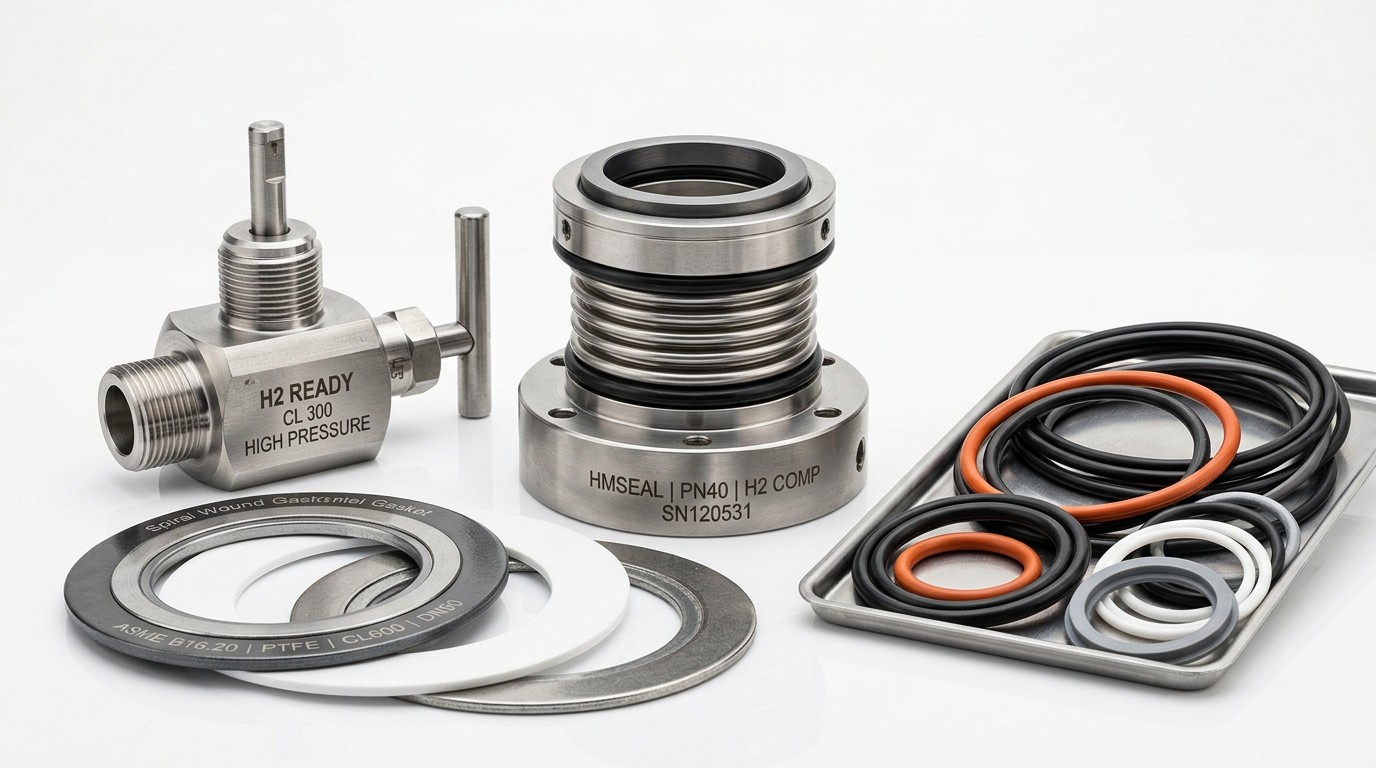
As 2026 planning accelerates, industrial seal investment insights are becoming essential for leaders managing energy containment and critical flow systems. From extreme-environment seals and perfluoroelastomer seals to hydrogen compatible valves, composite gaskets, and smart seal monitoring technology, buyers need a clearer view of reliability, regulation, and supply-chain risk. The core search intent behind this topic is practical: decision-makers want to know where to invest, what to avoid, and how to balance cost, uptime, compliance, and supply resilience in high-performance containment technology. For most enterprise readers, the real question is not whether seals matter, but which sealing technologies and sourcing strategies will reduce lifecycle risk and support 2026 operating goals.
For information researchers and business decision-makers, the highest-value analysis is not a generic market overview. What matters most is understanding which technical and commercial signals should shape capital allocation, supplier selection, qualification plans, and replacement strategies. In practice, that means focusing on total cost of ownership, reliability under extreme conditions, materials compatibility, regulatory pressure, predictive monitoring, and global supply-chain exposure. This article prioritizes those decision factors so readers can build a more defensible 2026 seal investment plan.
What should industrial buyers prioritize in seal investment planning for 2026?
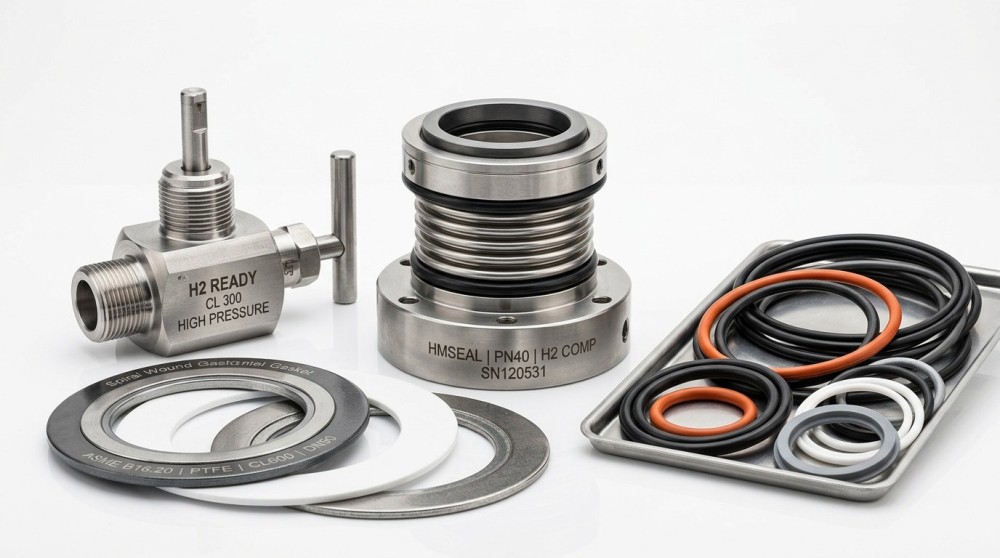
The strongest investment logic for 2026 is clear: prioritize seal technologies and supplier partnerships that lower unplanned downtime, improve compatibility with harsher operating environments, and reduce qualification and compliance risk across the asset lifecycle. In many sectors, seals are still treated as small line items, yet they often govern failure rates, maintenance intervals, contamination control, pressure retention, and equipment integrity. That makes them strategic components rather than consumables.
For senior buyers and planners, three priorities stand out. First, reliability is becoming more valuable than lowest upfront unit cost. Facilities working with hydrogen, aggressive chemicals, vacuum environments, semiconductor process media, RF systems, and ultra-high-pressure flow paths face rising costs from leakage events, shutdowns, and quality drift. Second, material compatibility is gaining importance as applications diversify and operating envelopes become more extreme. Third, vendor capability now matters as much as product specification, especially where traceability, international standards compliance, and application engineering support are required.
In short, 2026 planning should shift from price-led procurement to risk-adjusted investment. Buyers that evaluate industrial seals through lifecycle economics will usually make better decisions than those comparing only purchase price.
Why are industrial seals becoming a bigger strategic issue across advanced industries?
Several structural trends are increasing the strategic importance of sealing systems. One is the expansion of high-performance industrial processes that leave little tolerance for leakage, contamination, thermal instability, or mechanical wear. Semiconductor manufacturing, hydrogen infrastructure, advanced energy systems, aerospace platforms, pharmaceutical processing, and precision chemical operations all require more stable containment performance than conventional industrial environments.
Another factor is the rise of stricter compliance and documentation requirements. Procurement teams increasingly need proof of material performance, clean-process suitability, pressure ratings, outgassing behavior, and standards alignment. In this environment, seals are not just mechanical parts; they are compliance-relevant components tied to system qualification and audit readiness.
There is also a financial reason. Seal failure rarely creates only a replacement cost. It may trigger production loss, safety incidents, environmental penalties, scrap, warranty claims, or damage to higher-value adjacent equipment. For decision-makers planning 2026 budgets, the strategic issue is therefore straightforward: the cost of underinvesting in the wrong seal architecture can far exceed the savings from lower procurement spend.
Which technologies are most likely to shape seal investment decisions in 2026?
The most important technologies are those tied to extreme environments, chemical resistance, real-time condition visibility, and evolving energy systems. Extreme-environment mechanical seals will remain central where high temperature, pressure cycling, corrosive media, or vacuum integrity are critical. Their value comes from stable performance under conditions where standard sealing solutions lose efficiency or degrade too quickly.
Perfluoroelastomer seals, often referenced in high-purity and aggressive chemical applications, are likely to remain a premium investment area because they support demanding cleanliness, thermal, and chemical compatibility requirements. For buyers, the key issue is not simply whether FFKM-class materials are expensive, but whether they materially reduce process risk and replacement frequency in critical applications.
Hydrogen compatible valves and related sealing interfaces are another major planning category. As hydrogen systems expand, buyers must account for permeation, embrittlement-related system constraints, pressure performance, and long-term sealing stability. Not every existing seal design is appropriate for hydrogen service, which means 2026 budgets may need to include requalification, testing, and upgraded materials.
Composite gaskets also deserve attention, especially where flange integrity, chemical exposure, and temperature variation create performance trade-offs. In parallel, smart seal monitoring technology is becoming more relevant for plants trying to reduce unplanned maintenance. While not every operation needs sensor-enabled sealing systems, high-value and failure-sensitive environments may gain from earlier leak detection, wear monitoring, and maintenance forecasting.
How should executives evaluate ROI instead of looking only at purchase price?
The most useful framework is total cost of ownership. A seal that costs more upfront may still produce a better return if it extends maintenance intervals, lowers contamination incidents, avoids emergency stoppages, or simplifies regulatory compliance. This is especially true in critical flow systems where downtime costs are high and restart procedures are complex.
Executives should evaluate at least five ROI dimensions. The first is service life under actual operating conditions, not laboratory assumptions alone. The second is downtime impact, including mean time between failure and mean time to repair. The third is process quality risk, especially in applications where leaks or outgassing affect product yield. The fourth is maintenance labor and inventory burden. The fifth is supplier support, including engineering guidance, quality documentation, and lead-time reliability.
A practical investment question is this: if a higher-grade sealing solution reduces one major shutdown, one failed qualification batch, or one emissions-related event over its service period, does it justify the premium? In many advanced industrial settings, the answer is yes. That is why industrial seal investment insights for 2026 should be tied to operational economics, not isolated component pricing.
What supply-chain risks should procurement teams factor into 2026 seal strategies?
Supply-chain risk is now a central seal investment variable. Specialized polymers, precision-machined components, elastomer compounds, and certified material inputs can all face lead-time volatility. This is particularly relevant for engineered sealing products serving semiconductor, energy, aerospace, and specialty chemical markets, where qualification barriers limit supplier substitution.
Procurement teams should watch for four major risks. First, single-source dependency can create severe exposure if a qualified vendor faces production or logistics disruption. Second, raw material concentration may increase pricing pressure or delivery uncertainty. Third, international compliance and export-related issues can affect cross-border sourcing. Fourth, inconsistent quality across alternative suppliers can lead to hidden requalification costs.
The best response is not always broad dual sourcing. In highly sensitive systems, an unqualified second source may add more risk than resilience. Instead, buyers should segment seals by criticality. For mission-critical applications, invest in deeper supplier partnerships, documentation control, and buffer planning. For non-critical categories, broader sourcing and cost optimization may be appropriate. This tiered strategy supports both continuity and cost discipline.
How do regulation, standards, and qualification requirements affect investment choices?
For many readers, this is one of the most important but underestimated decision areas. A seal may appear technically suitable and competitively priced, yet become a poor investment if it lacks the documentation, testing history, or standards alignment needed for the target application. In sectors shaped by ISO, SEMI, API, and MIL-SPEC expectations, qualification burden can significantly alter the economics of selection.
Decision-makers should therefore assess not only performance claims but also the maturity of the supplier’s quality and compliance infrastructure. Can the vendor provide traceability, test reports, batch consistency evidence, and application-specific validation support? Can they support audits or customer qualification packages? If the answer is weak, the risk of delayed implementation rises.
For 2026 planning, this means seal investment should be evaluated alongside qualification cost and time-to-approval. In some cases, a technically premium but qualification-ready option may be the more economical route compared with a lower-cost alternative that triggers extensive validation work.
Where should companies invest more aggressively, and where should they stay cautious?
Companies should consider more aggressive investment in sealing solutions for applications where failure consequences are disproportionately high. These include high-purity process lines, hydrogen systems, extreme temperature or pressure environments, contamination-sensitive manufacturing, and assets with expensive downtime profiles. In such settings, premium materials, engineered seal geometries, and digital condition monitoring can deliver meaningful business value.
Caution is appropriate where technology adoption is outpacing operational evidence. For example, smart seal monitoring should be assessed carefully for integration complexity, false-alarm risk, and maintenance workflow fit. Similarly, premium elastomers or composite sealing systems should not be treated as universal upgrades; their value depends on media compatibility, load conditions, installation discipline, and actual duty cycles.
In other words, 2026 investment should be selective rather than trend-driven. The best buyers will increase spending where consequence, compliance pressure, or lifecycle economics justify it, while resisting blanket standardization on high-cost solutions without application-specific proof.
What does a practical 2026 industrial seal investment roadmap look like?
A useful roadmap begins with criticality mapping. Identify which systems generate the highest safety, production, compliance, or reputational risk if sealing performance degrades. Then classify existing seal types by failure history, environmental severity, replacement cost, and sourcing vulnerability.
Next, review technology fit. Determine where extreme-environment seals, perfluoroelastomer seals, hydrogen compatible valves, or upgraded composite gaskets may create measurable improvement. This should be followed by supplier evaluation focused on technical support, standards alignment, lead-time stability, and documentation quality.
After that, build an investment model using lifecycle cost scenarios. Compare baseline solutions with upgraded alternatives under realistic maintenance and downtime assumptions. Where feasible, pilot advanced options in high-value applications before broad rollout. Finally, align procurement, engineering, maintenance, and compliance teams around qualification plans and stocking strategy.
This structured approach helps organizations avoid two common mistakes: overspending on non-critical applications and underinvesting in containment technology where reliability truly drives enterprise value.
Conclusion: what is the smartest way to approach industrial seal investment in 2026?
The smartest approach is to treat industrial seals as strategic reliability assets, not minor consumables. For 2026 planning, the most valuable investments will usually be those that improve uptime, ensure material and media compatibility, strengthen compliance readiness, and reduce supply-chain fragility. Buyers should focus less on nominal unit price and more on failure consequences, qualification burden, and long-term operational performance.
For information researchers, the key insight is that the market is being shaped by harsher operating environments, tighter standards, hydrogen-related design demands, premium material adoption, and growing interest in smart monitoring. For business decision-makers, the practical takeaway is even clearer: invest where seal performance directly protects production, safety, and asset integrity, and demand evidence-based supplier support before committing capital.
Industrial seal investment insights for 2026 are ultimately about making better risk-adjusted decisions. Organizations that build their plans around lifecycle value, application fit, and resilient sourcing will be in a stronger position to manage critical flow systems with confidence.
Industry Briefing
Get the top 5 industry headlines delivered to your inbox every morning.