Dual Mechanical Seal OEM: When the Upgrade Pays Off
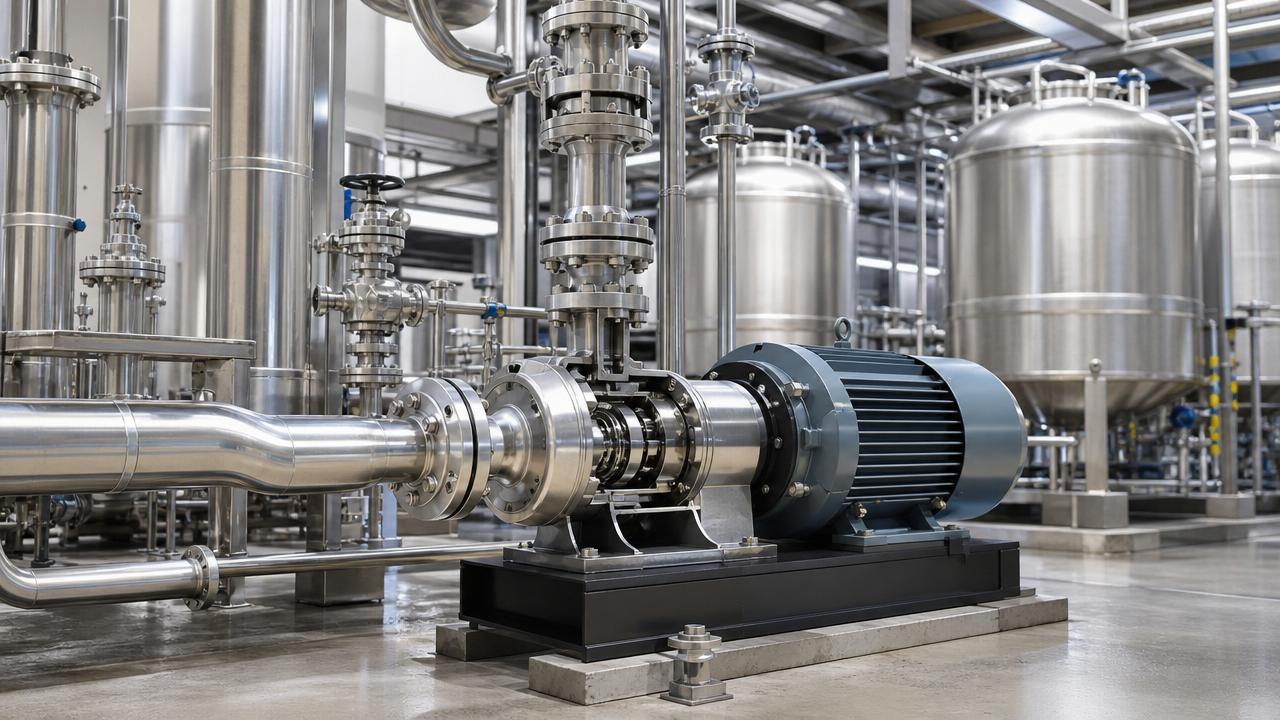
For finance approvers, a dual mechanical seal OEM upgrade is not just a maintenance choice—it is a capital decision tied to risk, uptime, and total cost of ownership. When leakage, unplanned shutdowns, and compliance exposure start eroding margins, the right seal strategy can quickly justify its premium. This article explains when the investment pays off and how to evaluate the true financial return.
Why application context matters more than the seal itself
A dual mechanical seal OEM decision rarely succeeds when it is treated as a simple parts replacement. In practice, the financial case depends on where the seal operates, what fluid is being contained, how expensive a shutdown is, and what level of environmental or safety exposure the plant carries. The same upgrade can be highly profitable in one facility and unnecessary in another.
For finance teams, that means the real question is not “Is a dual mechanical seal OEM better?” but “In which operating scenarios does the upgrade reduce business risk enough to outperform its higher purchase price?” This is especially relevant in integrated industrial environments where pumps, mixers, reactors, and compressors support continuous output, regulatory obligations, and customer delivery commitments.
The value of a dual mechanical seal OEM solution usually appears through avoided costs: fewer leaks, lower product loss, reduced clean-up time, less emergency maintenance, better worker protection, and stronger compliance control. Those savings are highly scenario-dependent, so finance approvers need a framework that connects engineering conditions to measurable return.
Where a dual mechanical seal OEM upgrade most often becomes financially attractive
The strongest business case usually emerges in operations where leakage is costly, downtime is disruptive, or process integrity directly affects revenue. Typical examples include chemical processing, high-purity manufacturing, pharmaceutical support systems, oil and gas auxiliaries, food production with strict contamination control, and utilities handling hazardous or volatile media.
In these settings, finance approvers should look beyond the invoice value of the seal assembly. A lower-priced single-seal arrangement may appear economical until it triggers repeated maintenance interventions, unplanned line stoppages, or environmental reporting costs. By contrast, a properly specified dual mechanical seal OEM package can stabilize operations over a longer maintenance cycle and reduce the volatility that damages budget predictability.
Scenario comparison for investment screening
Typical application scenarios and what finance should examine
Scenario 1: Hazardous, toxic, or volatile fluids
This is the clearest case for a dual mechanical seal OEM upgrade. When a process handles solvents, corrosives, hydrocarbons, or toxic intermediates, even a minor leak can create cascading cost. Direct losses include product waste, spill response, labor, and replacement parts. Indirect losses can be much larger: reporting obligations, damaged audit outcomes, higher insurance pressure, or temporary shutdowns.
In this scenario, finance approvers should prioritize downside protection over initial procurement savings. If one incident can cost more than the upgrade budget for several pumps, the premium for a dual mechanical seal OEM becomes easier to justify. The decision should include not only average maintenance cost, but also low-frequency, high-impact event exposure.
Scenario 2: Continuous-process plants where downtime is expensive
In refineries, large chemical trains, utility support loops, or high-throughput production lines, a pump seal failure is rarely an isolated maintenance problem. It can interrupt upstream and downstream assets, reduce batch completion, trigger overtime work, and delay customer shipments. In these environments, the cost of one hour of lost operation often exceeds the price gap between standard sealing and a dual mechanical seal OEM configuration.
The financial test here is straightforward: estimate the fully loaded value of uptime. Include lost throughput, labor disruption, contractor callout, and restart inefficiency. If the dual mechanical seal OEM reduces failure frequency or improves mean time between repairs in a meaningful way, the payback period may be short even when volumes fluctuate.
Scenario 3: High-purity, contamination-sensitive production
In sectors where process cleanliness is essential, the cost of seal underperformance goes beyond leakage alone. Product contamination can cause rejected batches, additional quality testing, revalidation activity, and customer confidence issues. A dual mechanical seal OEM setup may be selected not because leakage is frequent, but because the consequences of any seal-related process disturbance are commercially severe.
Finance teams should ask how much one contaminated batch costs compared with the installed upgrade. This should include materials, machine time, testing resources, and schedule slippage. In many high-value production settings, the answer makes the return case stronger than a basic maintenance budget review would suggest.
Scenario 4: Remote sites or hard-to-service assets
A dual mechanical seal OEM upgrade is often underestimated in remote operations, offshore support systems, isolated utilities, or assets with restricted service windows. Here, the issue is not only seal reliability but service logistics. Every repair may require specialized labor, travel, downtime planning, and extra inventory support.
If maintenance access is difficult, a more robust OEM sealing solution can lower total intervention frequency and make spare-part planning more predictable. Finance approvers should compare lifecycle support cost, not just unit price, especially where each field visit carries substantial mobilization expense.
When a dual mechanical seal OEM upgrade may not be the right move
Not every application warrants the upgrade. In low-risk utility service, nonhazardous fluids, intermittent equipment, or systems with easy maintenance access and low downtime impact, a dual mechanical seal OEM solution may deliver limited financial upside. If leakage risk is minor, process contamination is irrelevant, and replacement can be completed quickly during routine stoppages, the premium may be difficult to recover.
Finance leaders should also be cautious when the root cause of failures is not the seal design itself. Shaft misalignment, poor flush management, vibration, cavitation, dry running, or incorrect material compatibility can undermine any seal choice. In that case, paying more for a dual mechanical seal OEM package without correcting system conditions may only increase capital outlay without producing measurable savings.
How scenario differences change the approval criteria
A useful finance review should connect application conditions to approval logic. The same keyword—dual mechanical seal OEM—means different things depending on the business model of the plant. A batch producer may care most about contamination and changeover delays. A continuous processor may care about uptime and labor volatility. A regulated operation may focus on leakage control and audit resilience.
Common misjudgments that weaken ROI
One common mistake is approving or rejecting a dual mechanical seal OEM proposal based only on component price. That approach ignores the broader economics of leakage events, labor utilization, production volatility, and compliance exposure. A second mistake is relying on generic ROI assumptions from another plant with very different process conditions.
Another frequent error is failing to distinguish OEM-engineered fit from a nominally equivalent aftermarket substitution. For finance approvers, OEM value should be tested in terms of compatibility, documentation quality, support responsiveness, installation confidence, and long-term performance consistency. If the process is sensitive, those factors can materially affect lifecycle cost.
Finally, some organizations evaluate the upgrade too late—after repeated incidents have already consumed maintenance budgets and damaged output reliability. A better approach is to use failure history and downtime analytics early, before leakage and shutdown patterns become normalized operating losses.
A practical approval checklist for finance decision-makers
Before approving a dual mechanical seal OEM investment, finance teams should ask for a scenario-based justification rather than a technical preference statement. A credible proposal should address the following points clearly:
- What specific application risk is being reduced: leakage, contamination, downtime, safety exposure, or all four?
- What is the current annual cost of seal-related events, including labor, lost output, clean-up, scrap, and contractor support?
- Is the proposed dual mechanical seal OEM design matched to the operating fluid, pressure, temperature, and duty cycle?
- Have root causes outside the seal itself been identified and addressed?
- What payback period, risk reduction, and maintenance interval improvement are expected?
- How does the proposal compare with a lower-cost option on total cost of ownership, not just purchase price?
FAQ: scenario-driven questions about dual mechanical seal OEM upgrades
Is a dual mechanical seal OEM upgrade always better for regulated environments?
Not always, but it is often more defensible where leakage control has direct safety, environmental, or audit consequences. The justification depends on actual process risk and event cost, not regulation alone.
How should finance compare OEM versus lower-cost alternatives?
Compare installed lifecycle value: reliability history, service support, compatibility assurance, documentation, downtime reduction, and incident avoidance. If those factors are material, the dual mechanical seal OEM option may deliver the lower real cost.
What is the clearest sign that the upgrade will pay off?
A recurring pattern of seal-related losses in a high-consequence application. When failures repeatedly trigger production disruption, clean-up cost, or compliance risk, the financial case becomes much stronger.
Final decision: match the upgrade to the cost of failure
A dual mechanical seal OEM upgrade pays off when the application makes failure expensive. That usually means hazardous media, continuous production, high-purity processes, or remote assets where service is costly and disruption spreads quickly across the operation. In these scenarios, the premium is less about buying a better component and more about purchasing lower operational volatility.
For finance approvers, the most reliable path is to request a scenario-specific business case built on real plant data: leakage frequency, downtime cost, quality loss, labor burden, and compliance exposure. When the proposal is framed around business impact rather than technical preference, the decision on a dual mechanical seal OEM investment becomes clearer, faster, and easier to defend.
Industry Briefing
Get the top 5 industry headlines delivered to your inbox every morning.