Construction Equipment Sourcing: Compare Quality, Lead Time, Cost
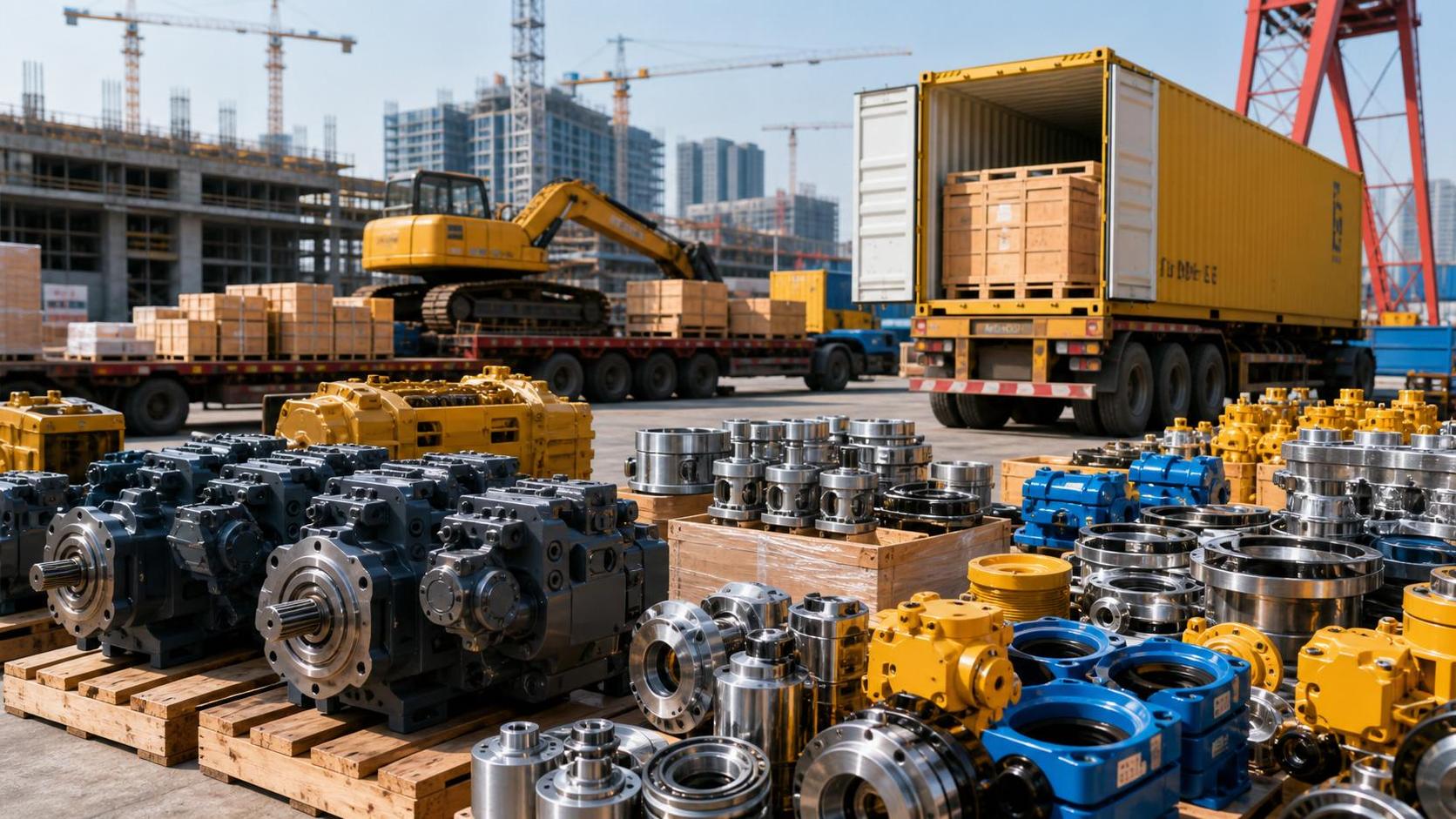
Construction equipment sourcing is no longer a simple price comparison. In complex projects, the real decision sits at the intersection of equipment reliability, supplier responsiveness, and total lifecycle cost. For teams managing schedules, risk, and technical compliance, equipment sourcing for construction industry work demands a more disciplined way to compare options before purchase orders are issued.
Why sourcing decisions carry more weight now
Construction projects operate under tighter delivery windows, stricter safety expectations, and rising capital pressure. Equipment delays affect more than one work package. They can disrupt subcontractor sequencing, commissioning plans, and even financing assumptions.
At the same time, sourcing channels have become more global. That creates choice, but it also introduces uneven quality systems, documentation gaps, and long lead-time exposure. In practice, equipment sourcing for construction industry programs often fails when selection is based on unit price alone.
This is especially relevant where construction overlaps with high-spec industrial environments. Facilities tied to energy, advanced manufacturing, process control, or containment systems need equipment that performs consistently under demanding operating conditions.
That is where a technical intelligence perspective becomes useful. G-PCS, with its focus on containment, flow control, sealing performance, and compliance benchmarking, reflects a broader reality: sourcing quality depends on understanding how equipment behaves inside critical systems, not only how it looks on a quotation sheet.
What construction equipment sourcing really involves
In broad terms, construction equipment sourcing covers the identification, qualification, comparison, and procurement of equipment needed to execute or support a project. That can include earthmoving assets, lifting equipment, pumping systems, valves, sealing assemblies, pneumatic devices, and specialized site machinery.
The best sourcing processes do not treat all categories the same. A mobile crane, a dewatering pump, and a precision valve package create different risk profiles. Some items are schedule-critical. Others are safety-critical. Some are both.
Because of that, equipment sourcing for construction industry environments should be treated as a structured evaluation process. The aim is not merely to find a supplier. The aim is to secure operational fit, acceptable lead time, documented quality, and predictable ownership cost.
Three decision drivers that usually determine success
Most sourcing reviews come back to three variables: quality, lead time, and cost. These are connected, but they should not be blended into a vague overall impression.
- Quality covers design integrity, material suitability, manufacturing control, testing records, and field reliability.
- Lead time includes production capacity, logistics readiness, spare parts availability, and the supplier’s ability to handle schedule changes.
- Cost should include acquisition, transport, installation, maintenance, downtime risk, and replacement frequency.
When one variable dominates the decision too early, downstream problems usually become more expensive than the initial savings.
How to compare quality beyond product claims
Supplier brochures often describe performance in ideal terms. Real quality assessment is more evidence-based. It starts with specifications, but it should quickly move into verifiable manufacturing and operational data.
For equipment sourcing for construction industry projects, useful quality signals include material traceability, weld procedures, pressure ratings, seal compatibility, fatigue resistance, environmental tolerances, and inspection records.
In technically sensitive applications, the details matter. A valve that meets nominal flow requirements may still fail if sealing materials are not compatible with temperature cycles or aggressive media. A pump may look cost-efficient until seal degradation creates leakage, maintenance burden, and unplanned shutdowns.
This is where knowledge drawn from specialized sectors becomes valuable. G-PCS emphasizes international benchmarks such as ISO, API, SEMI, and MIL-SPEC because those frameworks help translate technical claims into decision-ready evidence. Construction procurement benefits from the same mindset, especially when the project interfaces with utilities, process systems, or high-pressure operations.
Useful quality checks during supplier review
Lead time is more than a delivery date
Lead time is often treated as a single number. In reality, it is a chain of commitments. Design approval, raw material allocation, factory slotting, inspection, packaging, shipping, customs, and site readiness all shape actual delivery performance.
For equipment sourcing for construction industry schedules, a supplier with a slightly longer quoted lead time may still be the safer choice if it has better planning discipline and clearer milestone visibility.
More worth watching is variability. A supplier that delivers in ten weeks one quarter and sixteen weeks the next can undermine project control. Long-lead items should therefore be evaluated against schedule confidence, not only nominal speed.
This applies strongly to specialized components that support containment and flow. High-pressure valves, sealing systems, actuators, and custom assemblies often sit inside wider mechanical packages. A delay in one critical component can stall fabrication, installation, or commissioning across several trades.
Questions that expose lead-time risk
- Is the quoted lead time based on current production capacity or an estimate?
- Which parts are sourced externally, and how stable are those sub-suppliers?
- Can the supplier provide milestone reporting before final shipment?
- Are spare parts and service kits available locally or regionally?
- What happens if specifications change after order confirmation?
Cost comparison works better when lifecycle risks are visible
A lower purchase price can be attractive during budget review, but it rarely tells the full story. Equipment that requires frequent service, replacement seals, rework, or unplanned shutdown support usually costs more over the project timeline.
That is why equipment sourcing for construction industry decisions should include total cost of ownership. The most practical models compare direct spend with expected operating burden and schedule exposure.
In demanding environments, technical details drive these costs. Poor sealing performance can create leakage events, contamination issues, and repeated maintenance calls. In pressure or flow-sensitive systems, the wrong component selection may also increase energy consumption or shorten adjacent equipment life.
A more balanced sourcing review often reveals that mid-priced equipment with stronger documentation and service backing delivers better commercial outcomes than the lowest bid.
Where sourcing choices differ by project scenario
Not every project uses the same sourcing logic. Decision criteria should follow the actual risk profile of the work.
This is one reason broad sourcing templates often underperform. The right comparison model should reflect whether the equipment supports simple site execution or mission-critical operational integrity.
A practical framework for better sourcing decisions
A workable sourcing framework does not need to be complicated. It needs to be consistent. The most effective teams define critical requirements early, then compare suppliers against the same measurable standards.
- Separate must-have technical requirements from preferred features.
- Score quality evidence, not marketing language.
- Break lead time into reviewable milestones.
- Model cost over installation, operation, and maintenance.
- Check service capability before committing to specialized equipment.
- Use standards-based documentation to reduce disputes later.
Where the equipment touches pressure control, sealing reliability, or precision flow performance, deeper technical benchmarking can materially improve outcomes. Insights aligned with the G-PCS approach are useful here because they focus attention on failure mechanisms, compliance expectations, and component-level reliability that generic sourcing reviews may overlook.
What to review before the next RFQ goes out
Better equipment sourcing for construction industry work usually starts with sharper internal preparation. A clearer RFQ reduces supplier ambiguity and improves comparison quality.
Review the equipment’s operating environment, expected duty cycle, compliance requirements, maintenance assumptions, and commissioning dependencies. Then map those factors to supplier evidence, not just bid totals.
If the project includes technically sensitive flow, sealing, pressure, or actuation systems, it is worth adding a standards and reliability checkpoint before final selection. That extra step often prevents expensive corrections later.
In the end, strong sourcing decisions are rarely the fastest to make, but they are usually the easiest to defend. When quality, lead time, and cost are compared in context, construction equipment sourcing becomes less reactive and far more predictable.
Industry Briefing
Get the top 5 industry headlines delivered to your inbox every morning.