How to Vet a Carbon Graphite Seal Factory for Consistent Quality
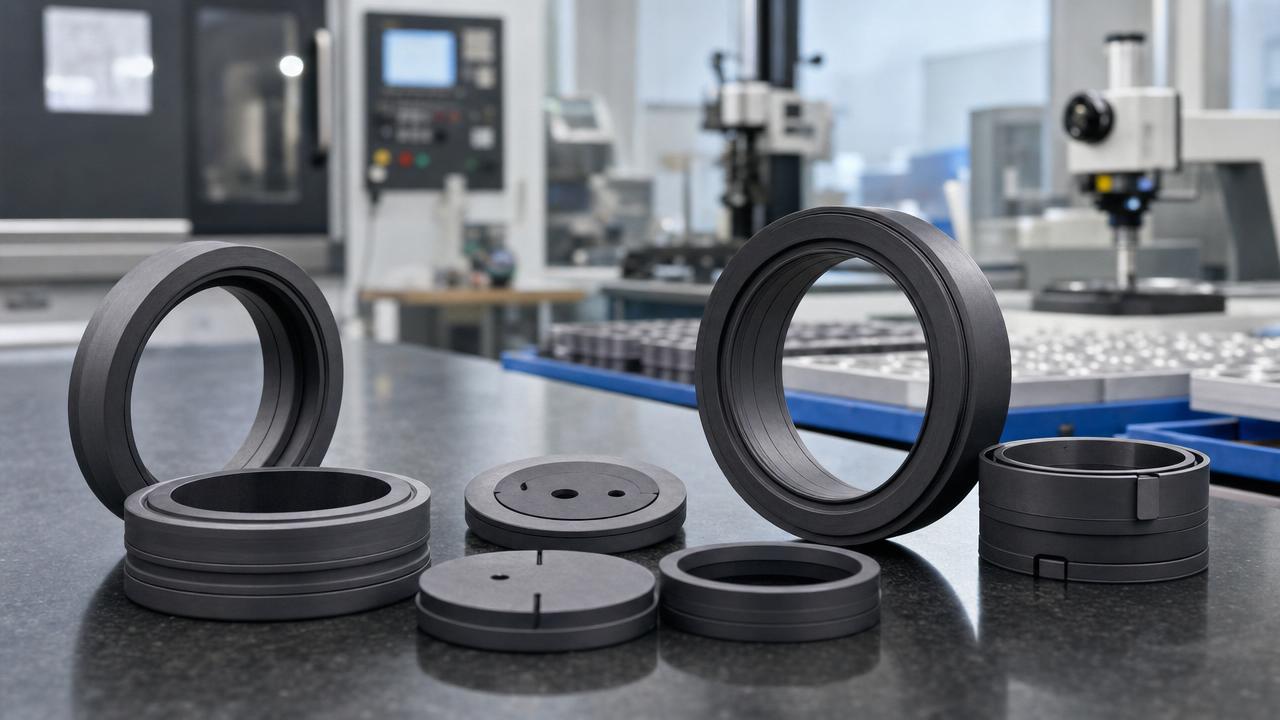
Choosing a carbon graphite seal factory is not just a sourcing task—it is a quality and risk-control decision that directly affects equipment safety, leakage prevention, and service life. For quality-control and safety professionals, a structured vetting process helps verify material consistency, machining precision, testing capability, and traceability before supplier approval.
Why does vetting a carbon graphite seal factory require more than a price comparison?
In critical sealing applications, the factory behind the part matters as much as the drawing itself. A carbon graphite seal may appear simple on paper, yet its field reliability depends on raw material formulation, density control, impregnation process, dimensional stability, surface finish, and inspection discipline. If one of these variables drifts, leakage rates, wear behavior, and thermal shock resistance can change quickly.
For quality and safety teams, the practical concern is not whether a supplier can make samples. The real question is whether the same carbon graphite seal factory can deliver stable batches under production pressure, maintain traceability during engineering changes, and support root-cause analysis when a seal fails in service.
This matters across the broader containment-and-flow ecosystem covered by G-PCS. In UHP valves, industrial microwave systems, extreme-environment mechanical seals, and precision actuation assemblies, sealing instability can trigger contamination, process interruption, safety exposure, or costly downtime. That is why supplier approval should follow a technical risk model rather than a basic RFQ exercise.
- A low initial quote may hide weak incoming material control or outsourced machining with limited inspection.
- A polished sample may not reflect normal production capability, especially for tight tolerances or specialty grades.
- An approved supplier without documented change control can become a latent safety risk when tools, resin systems, or sub-suppliers are replaced.
What should QC and safety teams verify first?
The fastest way to evaluate a carbon graphite seal factory is to begin with four control pillars: material integrity, process capability, inspection discipline, and traceability. If a supplier is weak in any one of these areas, long-term consistency becomes difficult to defend.
1) Material integrity
Carbon graphite grades vary widely in grain structure, porosity, purity, hardness, flexural behavior, thermal conductivity, and chemical compatibility. A credible factory should explain which grades are resin-impregnated, metal-impregnated, or antimony-treated where applicable, and how those options affect the sealing environment. It should also define lot identification from raw stock to finished ring or face.
2) Process capability
Machining carbon graphite is not the same as machining metal. Chipping risk, edge integrity, flatness retention, and dust control all affect usable output. Ask how the factory controls tool wear, fixture repeatability, and thermal distortion during precision grinding or lapping. Consistency in these steps is often more important than machine brand alone.
3) Inspection discipline
A carbon graphite seal factory should define which dimensions are 100% checked, which are sampled, and how flatness, perpendicularity, runout, density, or visible defects are judged. Good suppliers can show gauge management, calibrated instruments, inspection records, and nonconformance handling procedures without hesitation.
4) Traceability and change control
Safety teams should confirm whether the supplier can trace each delivered batch to raw material lot, operator, machine route, inspection report, and packaging date. This becomes essential when investigating leakage, abnormal wear, or field fracture. A factory that cannot reconstruct production history should be considered high risk for critical applications.
How to compare a carbon graphite seal factory during supplier qualification
The table below helps QC and safety professionals compare a carbon graphite seal factory using practical qualification criteria rather than broad claims. It can be adapted into a supplier audit checklist or pre-approval scorecard.
A useful qualification outcome is not simply “approved” or “rejected.” It is a risk-ranked view of whether the carbon graphite seal factory is suitable for general service, controlled pilot supply, or mission-critical applications where leakage and contamination tolerance are minimal.
Which technical capabilities separate a strong factory from a risky one?
Technical competence should be checked against the seal’s real operating environment. Carbon graphite components used in dry-running mechanical seals, pump seals, compressor systems, valve seats, and specialty containment assemblies face different stress combinations. A factory that understands these differences can usually ask better questions before quoting.
Core technical signals to verify
- Ability to recommend material grade based on speed, pressure, media, temperature range, and mating face material rather than price alone.
- Control of flatness and lapped face quality for sealing interfaces where micron-level variation can affect startup leakage.
- Understanding of impregnation effects on corrosion resistance, outgassing concerns, and dimensional behavior in aggressive media.
- Packaging methods that prevent edge damage, dust contamination, and face scratches during transport.
G-PCS places special value on this application-centered approach because sealing performance rarely depends on one component in isolation. In high-value systems, carbon graphite must function within a broader chain that includes elastomers, metal hardware, valve architecture, shaft dynamics, pressure cycling, and regulatory documentation.
What documents and process evidence should you request?
Many supplier evaluations fail because buyers request only catalogs and quotations. A better method is to request evidence that reveals how the carbon graphite seal factory actually controls repeatability. The following document set is often more useful than marketing brochures.
- Material data sheet or grade description with key physical properties and application boundaries.
- Sample inspection report showing dimensions, tolerances, and acceptance criteria on a similar part family.
- Calibration list for critical gauges and measuring instruments.
- Process flow chart, including any subcontracted operations such as impregnation, grinding, lapping, or coating support.
- Nonconformance and corrective-action format, proving the supplier can investigate defects systematically.
- Change notification procedure for material source, process route, tooling, or drawing revision changes.
If the factory supports sectors aligned with ISO, API, SEMI, or MIL-SPEC environments, ask how those standards influence documentation, cleanliness expectations, product identification, and acceptance criteria. Even when a specific certification does not directly apply to the seal, the discipline associated with those frameworks often predicts supplier maturity.
How do application scenarios change factory selection criteria?
The best carbon graphite seal factory for one duty may be the wrong choice for another. Selection criteria should reflect actual service conditions, not generic assumptions about carbon graphite. The table below maps common scenarios to the supplier capabilities that matter most.
This scenario view helps avoid a common sourcing mistake: approving a supplier based on generic machining competence while overlooking the specific failure modes of the end-use environment.
What are the most common red flags during a carbon graphite seal factory audit?
Even experienced teams can miss warning signs if the audit focuses too heavily on presentation quality. In practice, several red flags repeatedly appear when a carbon graphite seal factory lacks mature controls.
- The supplier cannot clearly distinguish among carbon graphite grades or explain why one is proposed for your media and temperature range.
- Inspection records exist, but acceptance limits are vague or do not match the drawing and application criticality.
- Critical operations are outsourced, yet subcontractor control and incoming re-verification are weak.
- Production and sample routes differ, meaning the approved sample may not represent normal manufacturing conditions.
- Packaging is treated as an afterthought, increasing the chance of chipped corners, scratched faces, or contamination before receipt.
For safety-driven procurement, any one of these signs warrants deeper review. Multiple signs usually justify conditional approval only, with tighter incoming inspection and a defined corrective-action timeline.
How should you build a practical supplier approval workflow?
A disciplined workflow reduces subjective decisions and aligns sourcing, engineering, quality, and safety. This is especially useful when the carbon graphite seal factory will support high-consequence applications in pressure control, energy systems, or contamination-sensitive equipment.
Recommended approval sequence
- Define the application envelope: media, pressure, temperature, speed, leakage tolerance, compliance needs, and expected life.
- Screen the carbon graphite seal factory using document review before requesting physical samples.
- Audit material control, machining route, inspection plan, and traceability practices.
- Approve a first article with documented dimensions, visual requirements, and any application-relevant checks.
- Run pilot supply with enhanced incoming inspection and capture variation data across multiple batches.
- Lock the approved process and define formal notification requirements for any future change.
G-PCS supports this workflow by translating sealing risk into supplier evaluation logic. That is valuable when your organization must connect part-level quality checks with broader system-level reliability, safety, and compliance expectations.
FAQ: questions quality and safety teams often ask
How do I know whether a carbon graphite seal factory really understands my application?
Ask what operating parameters drive its grade recommendation. A capable supplier will ask about media chemistry, pressure range, shaft speed or face velocity, startup conditions, mating material, cleanliness requirements, and acceptable leakage behavior. If the discussion stays at drawing dimensions only, technical understanding may be limited.
Is certification alone enough to approve a supplier?
No. A certificate may indicate a managed quality system, but it does not prove carbon graphite process capability for your specific seal geometry or duty. Approval should combine system review, process evidence, sample validation, and batch-level traceability.
What incoming inspection should be used for early orders?
For initial batches, many teams increase dimensional checks on critical features, verify visible defects more strictly, review lot records, and confirm packaging condition on receipt. If the seal is used in a high-risk system, pilot orders should also be correlated with assembly and field performance results before routine release is allowed.
Can a lower-cost carbon graphite seal factory still be acceptable?
Yes, but only if lower price comes from process efficiency, stable sourcing, or geometry familiarity rather than reduced controls. The right question is total risk-adjusted cost. A cheaper seal becomes expensive when it increases leakage, downtime, containment events, or supplier management effort.
Why choose us for technical evaluation and sourcing guidance?
G-PCS helps quality-control and safety professionals evaluate a carbon graphite seal factory with a system-level mindset. Our perspective is built around the logic of containment and flow across UHP controls, industrial microwave and RF systems, extreme-environment seals, precision actuators, and advanced gasket materials. That means we do not look at a seal as an isolated commodity. We assess how supplier capability connects to leakage control, service reliability, compliance demands, and field risk.
You can consult us for application parameter confirmation, factory screening criteria, material-grade discussion, sample evaluation priorities, documentation review, delivery-risk assessment, and change-control expectations. We also support conversations around custom geometries, pilot approval logic, certification-sensitive supply requirements, and quotation comparison when multiple factories appear technically similar.
If your team is qualifying a new carbon graphite seal factory, troubleshooting batch inconsistency, or comparing suppliers for a critical sealing program, reach out with your drawing, service conditions, target lead time, and compliance concerns. That allows a faster discussion around suitable factory profiles, validation checkpoints, sample support expectations, and risk-based sourcing decisions.
Industry Briefing
Get the top 5 industry headlines delivered to your inbox every morning.